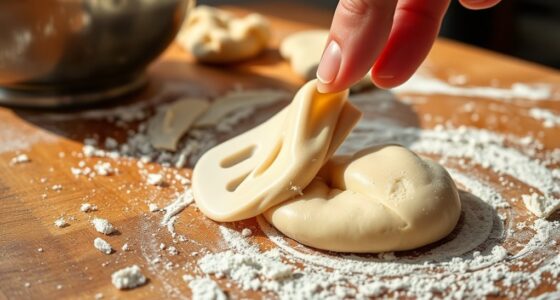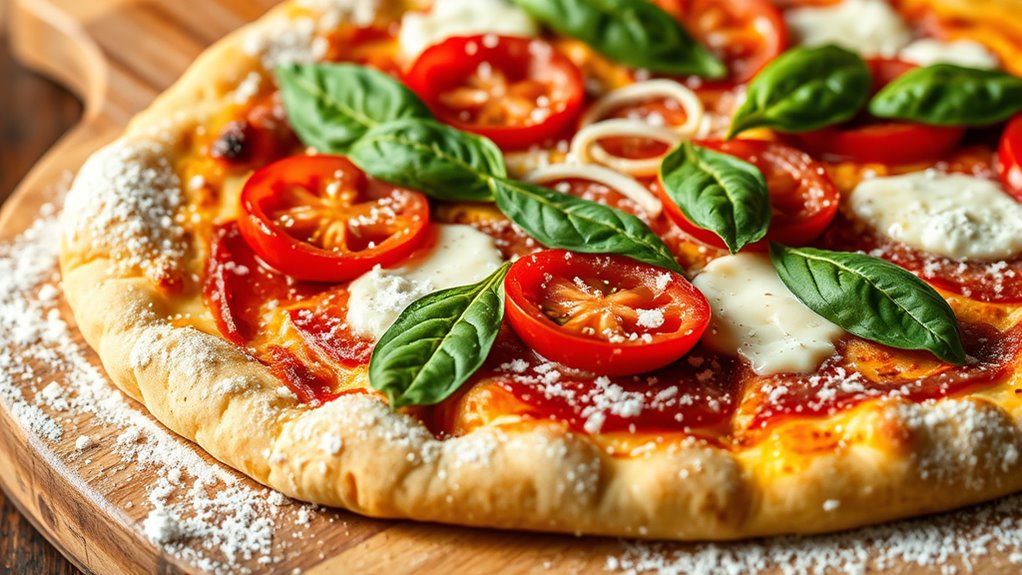

To prevent your pizza from sticking to the peel, generously dust it with flour, cornmeal, or a mix before placing the dough. Keep the surface lightly floured during assembly for easy handling and add more flour underneath if it resists during launch. Use a quick, confident jerk to slide the pizza onto the oven. Choosing the right peel material and mastering proper dusting techniques will make launching smoother—continue exploring for more tips to perfect your pizza game.
Key Takeaways
- Use a generous, even layer of flour or cornmeal on both the work surface and peel to prevent sticking.
- Lightly dust the dough and peel before assembling to create a non-stick surface during launch.
- Gently shake or jerk the peel to check if the pizza slides freely; add more flour underneath if resistance occurs.
- Choose a peel material suited to your oven; wooden peels absorb moisture, while metal peels enable quick launches.
- Ensure proper preparation and handling techniques to minimize sticking and improve successful pizza launches.
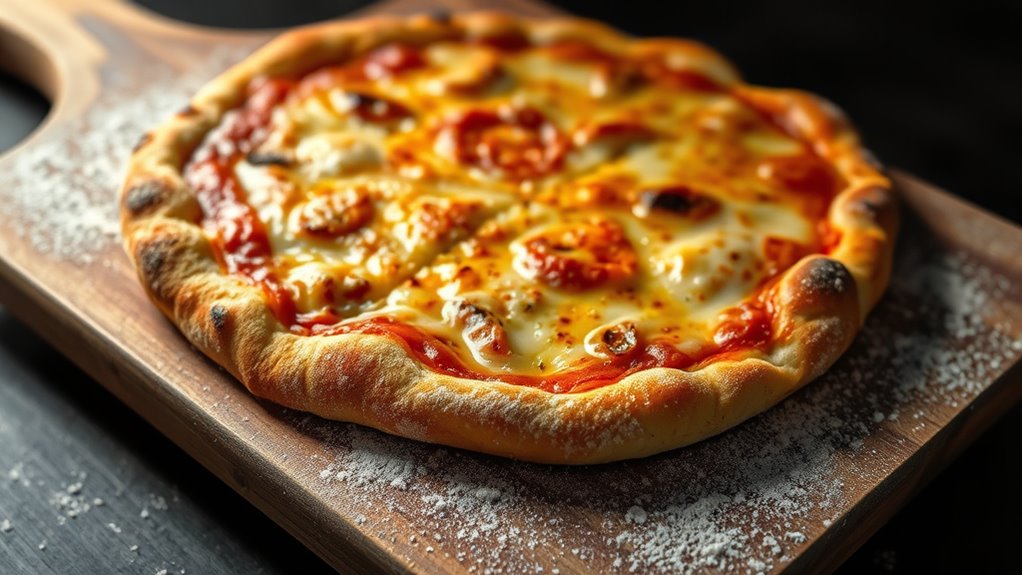
If your pizza keeps sticking to the peel, it can be frustrating to get it onto the oven safely. The key to preventing sticking lies in mastering techniques for flour application and choosing the right peel material. When you prepare your pizza, start by sprinkling a generous but even layer of flour, cornmeal, or a mix of both on your work surface and the peel. Using the right amount of flour is essential—too little, and the dough will stick; too much, and it can create a tough, floury crust. Lightly dust the peel with flour before placing the dough on it, then stretch or shape your pizza. As you assemble it, keep the surface lightly floured to prevent the dough from grabbing onto the peel. When it’s time to launch the pizza into the oven, give the peel a gentle shake or a quick jerk to see if the pizza moves freely. If it resists, adding a little more flour underneath can help loosen it. Proper preparation techniques can make a significant difference in your pizza’s success.
Choosing the right peel material makes a significant difference. Wooden peels are traditional and absorb moisture, which can help prevent sticking if you properly flour the surface. However, they tend to be more absorbent, so you need to be diligent with flour application. Metal peels, typically made of aluminum or stainless steel, are smoother and less absorbent, making it easier to slide the pizza onto the oven with a quick, confident jerk. They’re especially useful for high-temperature ovens or when you want to quickly launch multiple pizzas. Some bakers prefer composite or non-stick peels, which are designed specifically to prevent sticking; these are coated with non-stick surfaces that require less flour. Ultimately, your choice depends on your oven type and personal preference, but understanding the characteristics of each material helps you pick the best tool for your pizza-making process.
Applying flour correctly and choosing the right peel material are straightforward steps that can dramatically improve your pizza launching experience. Practice gentle, even flouring to prevent dough from sticking without creating a floury crust, and select a peel material suited to your oven and baking style. With these adjustments, you’ll find launching your pizza becomes smoother and more reliable, reducing frustration and helping you achieve a perfectly cooked pie every time. Remember, a little preparation and the right equipment make all the difference in ensuring your pizza slides onto the oven effortlessly, giving you more time to enjoy your delicious creation.
Frequently Asked Questions
What Types of Flour Are Best for Dusting Pizza Peels?
You should use rice flour or gluten-free flours for dusting your pizza peel. Rice flour is ideal because it’s fine and creates a non-stick surface, helping your pizza slide easily onto the oven. Gluten-free flours work well too, especially if you’re gluten-intolerant. Avoid regular wheat flour, as it can burn or cause sticking. Dust generously before launching your pizza for smooth, easy transfer.
How Do I Tell if My Peel Is the Right Size?
To tell if your peel is the right size, consider your pizza’s dimensions and your workspace. The peel material should be sturdy enough to support the dough without bending, and its size should comfortably fit the pizza with some room for maneuvering. A good rule of thumb is to choose a peel that’s at least a few inches wider than your pizza, ensuring easy transfer and handling during baking.
Can I Reuse Leftover Dust From My Peel?
You can reuse leftover dust from your peel, but be cautious—about 10% of flour can become contaminated over time. To guarantee dusting safety, sift out clumps and discard any old or contaminated flour before reusing. Reusing dust reduces waste and keeps your process efficient, but always check for signs of moisture or clumping that could cause sticking. Properly stored, clean leftover dust can be safely reused for several pizza launches.
What Alternative Tools Can I Use Instead of a Peel?
You can use a baking sheet or a pizza pan as alternative tools for dough handling and launching your pizza. These surfaces provide a stable platform and help prevent sticking, especially if you dust them lightly with flour or cornmeal. Just transfer the dough onto your chosen baking surface, then slide it onto the oven or baking stone. This method simplifies dough handling and guarantees a smooth launch without sticking.
How Do I Prevent Sticking When Making Thin-Crust Pizzas?
To prevent sticking with thin-crust pizzas, master your pizza dough handling by ensuring it’s well-floured and evenly stretched. Keep the dough cool until ready to launch, and use a well-dusted peel to slide it onto the hot oven surface. Maintaining precise oven temperature control creates a quick bake that reduces sticking. Pay close attention during transfer; a confident, swift motion helps keep your pizza intact, revealing a perfect, crispy crust.
Conclusion
To prevent your pizza from sticking, make sure to generously dust your peel with flour or cornmeal before launching. A quick, confident slide into the oven also helps prevent tears and sticking. Did you know that over 90% of home pizza enthusiasts report easier launches with proper dusting techniques? Master these tips, and you’ll enjoy perfectly cooked pizzas every time—no sticking, no mess, just delicious results you can be proud of!