To prevent overcooked or burnt cheese, you should adjust your oven height and control the heat carefully. Place your dish on the middle rack to ensure even melting and prevent direct heat from causing burning. Keep your oven at a moderate temperature, around 350°F–375°F, and monitor closely as cheeses can melt quickly. Understanding your oven’s behavior and cheese types helps improve results, and if you keep exploring, you’ll discover more tips to master perfect cheese melts.
Key Takeaways
- Place cheese dishes on the middle rack to ensure even heat distribution and prevent burning.
- Preheat the oven to a moderate 350°F–375°F and monitor temperature accuracy regularly.
- Adjust oven rack height based on cheese type; higher for softer cheeses, lower for firmer varieties.
- Remove cheese promptly if it starts browning or smoking to avoid overcooking or burning.
- Use oven calibration tools to maintain accurate temperatures and avoid overheating during melting.
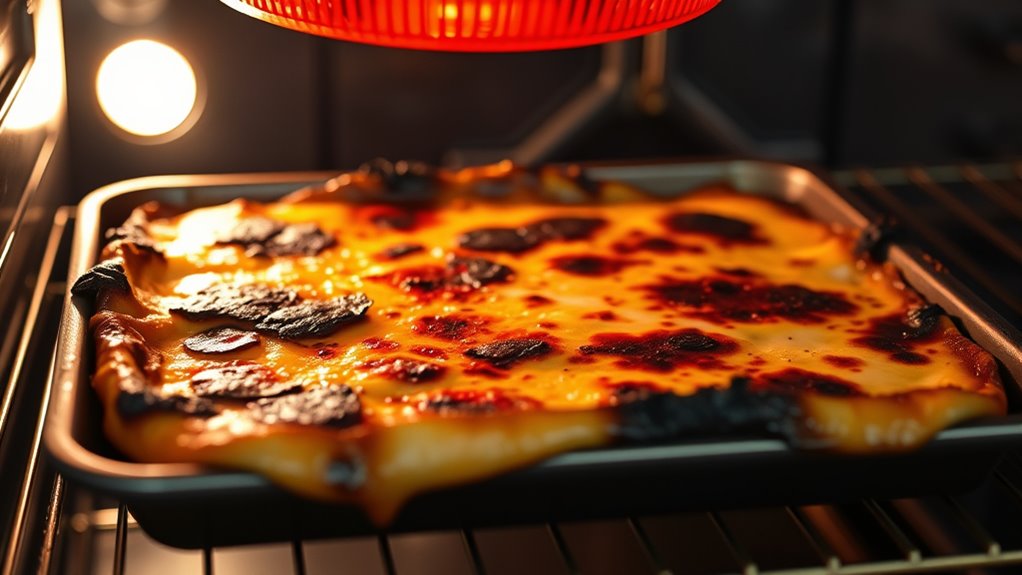
Have you ever wondered why your cheese ends up overcooked or burnt even when you’re just trying to melt it perfectly? It’s frustrating to see your carefully chosen cheese turn into a greasy, charred mess, especially when you’ve invested time and effort into your meal. The key to avoiding this disappointment lies in understanding oven safety and the nuances of different cheese varieties. When you’re melting cheese, it’s essential to pay attention to oven temperature and placement, as these factors directly influence the melting process and prevent burning.
First, consider oven safety. Many home cooks overlook how vital it is to monitor oven heat and position your rack correctly. Too high of a temperature can cause cheese to melt rapidly and then burn, especially on the top surface. Always preheat your oven to a moderate temperature—around 350°F to 375°F—and keep a close eye on the process. Using the middle rack often provides a more even heat distribution, which helps melt the cheese uniformly. If you notice the cheese starting to brown or smoke, it’s time to remove it promptly. Remember that oven safety isn’t just about preventing accidents; it’s also about protecting your food from overexposure to heat, which leads to burnt cheese.
Monitor oven temperature and use the middle rack to prevent burnt cheese.
Next, understanding cheese varieties is essential. Different cheeses melt at different rates and temperatures. For example, softer cheeses like Brie or Camembert melt quickly and can become greasy if left too long or exposed to high heat. On the other hand, firmer cheeses like Parmesan or aged cheddar require a slightly higher temperature or longer melting time but are less prone to burning if monitored carefully. When melting cheese, choose the right type for your dish and keep in mind that some cheeses develop a desirable gooey texture, while others turn stringy or oily. Adjust your oven settings accordingly—softer cheeses may need less heat and a shorter time, while harder cheeses can withstand slightly higher temperatures.
Additionally, the type of oven you have—whether gas or electric—can influence how evenly heat is distributed, affecting your melting results. Proper oven calibration ensures the temperature you set is accurate, helping prevent unintended overcooking or burning. Ultimately, managing oven height and heat is about harmony. You want the cheese to reach an ideal melting point without surpassing it into burn territory. Keep the oven at a moderate temperature, position your dish on the middle rack, and be mindful of the cheese’s variety. With these practices, you’ll prevent overcooking and achieve perfectly melted cheese every time. Paying attention to oven safety protocols and understanding how different cheese varieties behave under heat not only enhances your cooking results but also keeps your kitchen safe and your dishes delicious.
Frequently Asked Questions
How Does Oven Material Affect Heat Distribution?
Your oven material crucially impacts heat distribution through its heat conduction. Metals like stainless steel or cast iron conduct heat quickly and evenly, ensuring consistent cooking. In contrast, ceramic or glass ovens might heat more slowly and unevenly, creating hot spots. Choosing an oven with good heat conduction helps you control cooking temperatures better, preventing overcooked or burnt cheese, and ensures your dishes cook uniformly for perfect results every time.
Can Adjusting Oven Vents Prevent Cheese Burning?
Yes, adjusting oven venting can help prevent cheese from burning. Proper venting allows excess heat to escape, reducing hotspots that cause cheese to over-melt or burn. By controlling oven venting, you maintain more even heat distribution, ensuring your cheese melts perfectly without burning. Keep an eye on your oven’s vents and adjust as needed to create ideal conditions for cheese melting without risking overcooking.
What Role Does Ambient Kitchen Temperature Play?
You can’t overlook the power of ambient kitchen temperature, as it’s the backbone of your cooking success. When the kitchen’s warm due to poor insulation or high humidity, heat escapes or fluctuates, making it harder to control oven temperature precisely. Keep your kitchen well-insulated and manage ambient humidity to maintain a stable environment, ensuring your cheese melts perfectly without burning or overcooking. It’s all about keeping things steady as she goes.
Are Convection Ovens Better for Cheese Cooking?
Yes, convection ovens are better for cheese melting because they distribute heat evenly, reducing the risk of burnt spots. You’ll find that they help you achieve a smooth, perfectly melted cheese layer. Just make sure your oven is properly calibrated; inconsistent heat can still cause overcooked or burnt cheese. Using the convection setting guarantees consistent results, making it easier for you to manage oven temperature and achieve ideal cheese melting.
How Do Different Cheese Types Respond to Oven Height?
Did you know that cheese melting points vary from 90°F to 130°F? When you adjust oven height, you directly influence cheese melting and browning. Higher placements expose cheese to gentler heat, promoting even melting without burning. Softer cheeses like Brie melt quickly and brown lightly, while firmer cheeses such as Parmesan need lower heat to avoid overcooking. Proper oven height helps you control cheese texture and achieve perfect browning.
Conclusion
To avoid overcooked or burnt cheese, keep an eye on your oven height and temperature. Raising the rack can prevent direct heat from burning your cheese, and adjusting the heat guarantees even melting. Did you know that cheese burns at just 350°F? This highlights how vital precise control is. With a little attention, you can achieve perfectly melted cheese every time, enhancing your dishes without the risk of burning.