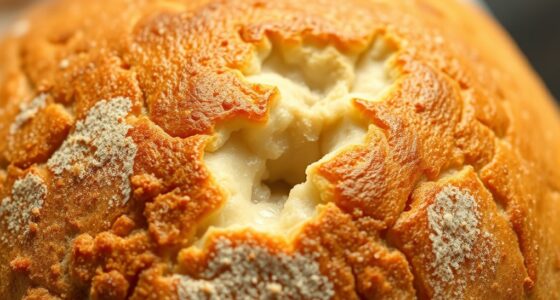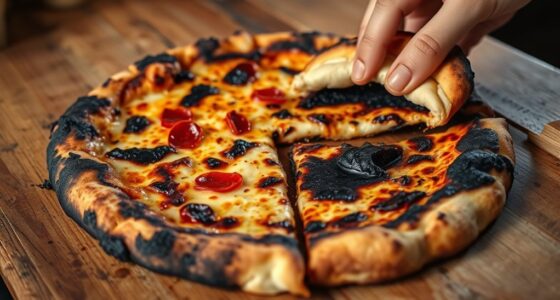
To troubleshoot inconsistent oven temperatures, start by using an oven thermometer to check if the actual heat matches the setting. If there’s a discrepancy, calibrate your oven following the user manual or control panel instructions. Inspect the door seal for gaps or damage, and avoid opening the door frequently during baking. Uneven heat can also be caused by hot spots or faulty thermostats. Continuing with these tips will help you identify and fix common issues for better baking results.
Key Takeaways
- Use an oven thermometer to verify actual versus set temperature and identify discrepancies.
- Recalibrate the oven using built-in options or manual adjustments per the user manual.
- Inspect and replace faulty door seals or gaskets to prevent heat loss and temperature fluctuations.
- Rotate racks and reposition baked goods to mitigate hot spots and promote even cooking.
- Seek professional inspection if calibration and maintenance don’t resolve persistent temperature inconsistencies.
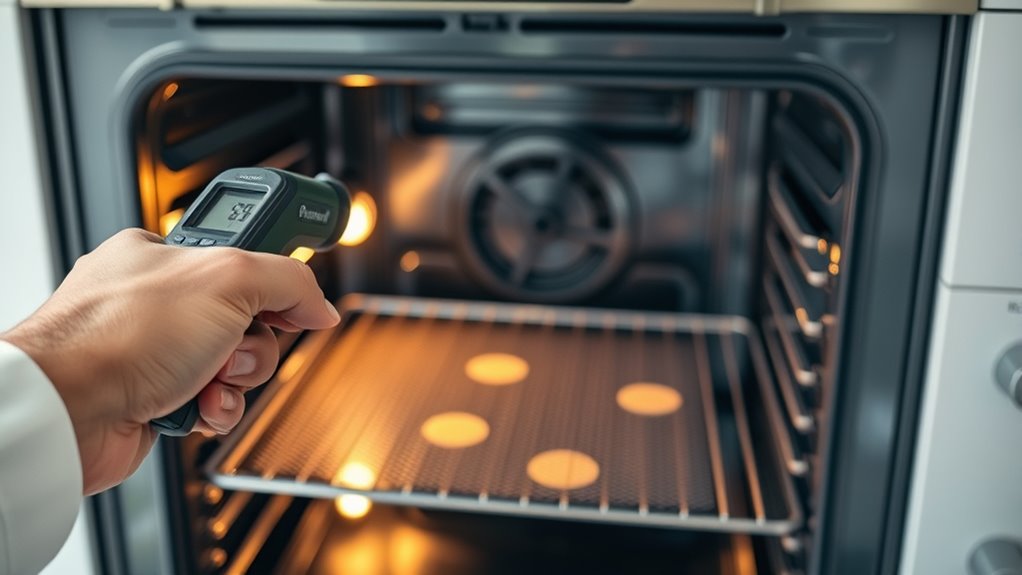
If your oven isn’t cooking food evenly or seems off from the set temperature, troubleshooting can help identify the problem. One common issue is inconsistent heat, which can be especially frustrating when baking with convection. Convection ovens are designed to circulate hot air evenly around your baked goods, but if they don’t, your results can be unpredictable. The first step is to ensure your oven is accurately calibrated. Oven calibration techniques involve adjusting the temperature settings to match the actual oven temperature, which can drift over time due to wear or mechanical issues. Many ovens have calibration options built-in—consult your user manual to see if yours does. Typically, you can set a test temperature using an oven thermometer, then compare the reading to your oven’s display. If there’s a discrepancy, adjusting the calibration setting can bring your oven’s temperature in line with the actual heat.
When you’re baking with convection, even small temperature inaccuracies become more noticeable because the circulating air speeds up browning and cooking times. If your baked goods are browning too quickly or unevenly, it might be time to recalibrate. Keep in mind that some ovens have a dedicated calibration mode, while others require adjusting via the control panel or a hidden menu. After calibration, always test the oven again with a reliable oven thermometer to verify the adjustment. This process can prevent under- or over-cooking and improve overall baking results.
Beyond calibration, check that your oven’s door seals tightly to prevent heat loss, which can cause temperature fluctuations. Regularly inspect the gasket for cracks or gaps and replace it if necessary. Also, avoid opening the oven door frequently during baking, especially with convection ovens, as this disrupts the airflow and temperature stability. If you notice hot spots or uneven heating, consider rotating your baked goods halfway through cooking or repositioning racks to ensure even exposure to the heat. Additionally, understanding the importance of oven maintenance can help prevent future issues with temperature inconsistency.
Lastly, if calibration and maintenance don’t resolve the issue, it might be time to get your oven professionally inspected. Mechanical problems, faulty thermostats, or malfunctioning sensors can all interfere with temperature accuracy. In the meantime, using an oven thermometer during baking offers a quick way to monitor the actual temperature, allowing you to make small adjustments manually or plan for repairs. Proper oven calibration techniques and regular maintenance are essential to achieving consistent, reliable cooking results, especially when baking with convection.
Frequently Asked Questions
How Often Should I Calibrate My Oven Temperature?
You should calibrate your oven at least once a year to guarantee temperature accuracy. If you notice uneven cooking or your baked goods aren’t turning out right, it’s a good idea to check the oven calibration more frequently. Regular calibration helps maintain consistent heat, preventing surprises. Keep an eye on your oven’s performance and adjust the calibration as needed, especially after repairs or if you notice temperature fluctuations.
Can Oven Door Seals Affect Temperature Accuracy?
Yes, your oven door seal can affect temperature accuracy. If the seal is damaged or worn, heat escapes, causing your oven to run cooler than set. Check the oven door and inspect the seal for cracks or gaps. If needed, replace the oven door seal to restore proper heat retention. Ensuring a tight seal helps your oven maintain consistent temperatures, making your cooking more reliable and efficient.
What’s the Best Way to Prevent Hot Spots?
To prevent hot spots, use a baking stone to distribute heat evenly across your oven floor, reducing uneven cooking. Keep the oven fan on or use it periodically to circulate hot air, ensuring consistent temperature throughout. Rotate your baked goods during cooking, and avoid overcrowding. These steps help maintain uniform heat, preventing hot spots and ensuring your baked items turn out perfectly every time.
Do Oven Racks Impact Temperature Consistency?
Oven racks are like the tracks guiding your baking journey—they substantially impact temperature consistency. Proper oven rack positioning ensures even heat distribution, while rack material effects, like metal versus non-stick coatings, can influence heat transfer. Adjusting rack placement and choosing the right material can help prevent hot spots and promote uniform cooking. So, consider your oven rack setup carefully to achieve more consistent temperatures and better baking results.
How Does Altitude Influence Oven Temperature?
Altitude influences oven temperature by causing air pressure to diminish at high elevations, which can affect cooking times and temperature accuracy. When cooking at high elevations, you need to make altitude adjustments to your oven settings, often increasing the temperature slightly or adjusting cooking times. This helps ensure your baked goods cook evenly and thoroughly. Always check your recipe and oven manual for specific altitude adjustment recommendations.
Conclusion
Now that you’ve uncovered the reasons behind your oven’s fluctuations, you’re armed with the tools to bring back balance. Think of your oven as a trusty compass—once calibrated, it’ll point you straight to perfect baked goods every time. Regular maintenance and mindful adjustments turn a temperamental oven into a reliable partner in your kitchen adventures. Trust your instincts, stay vigilant, and soon enough, your oven will be singing a steady tune of deliciousness.