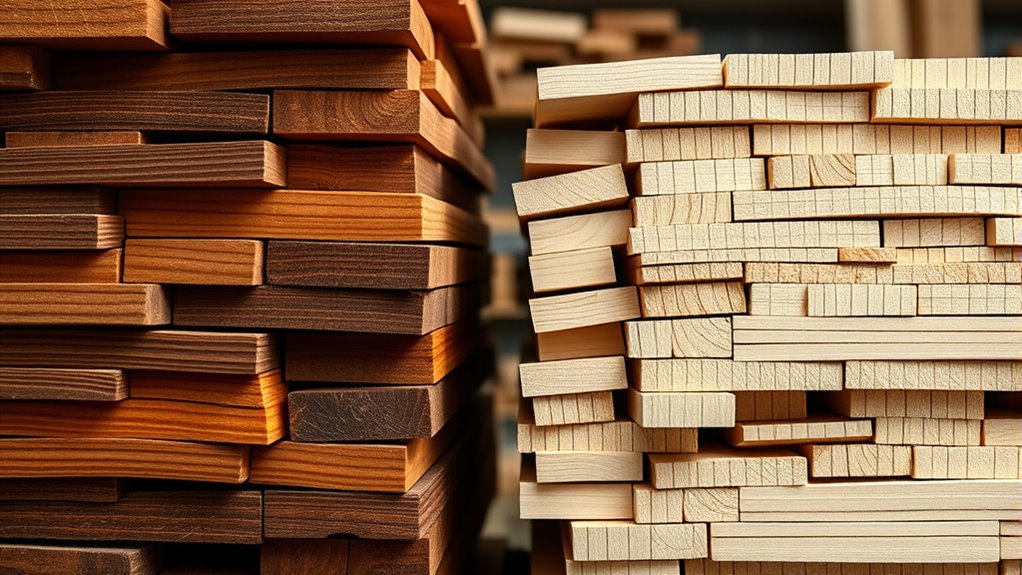

When choosing between kiln-dried hardwoods and softwoods, consider your project’s needs for durability, stability, and appearance. Hardwoods like oak and maple offer long-lasting, stable results, ideal for fine furniture or detailed work, but tend to be more expensive. Softwoods like pine and cedar are more affordable and easier to work with, perfect for framing or rough projects. Knowing how each type performs and their sustainability factors can help you make the best choice—more tips ahead.
Key Takeaways
- Kiln-dried hardwoods offer greater stability, durability, and resistance to defects, ideal for fine furniture and detailed projects.
- Softwoods are generally more affordable, easier to work with, and suitable for framing, paneling, and general construction.
- Both hardwoods and softwoods benefit from kiln drying to reduce moisture content, improving longevity and reducing warping.
- Choose sustainably sourced wood, with certifications like FSC or PEFC, to balance environmental impact and project needs.
- Consider project requirements, budget, and environmental considerations when selecting between kiln-dried hardwoods and softwoods.
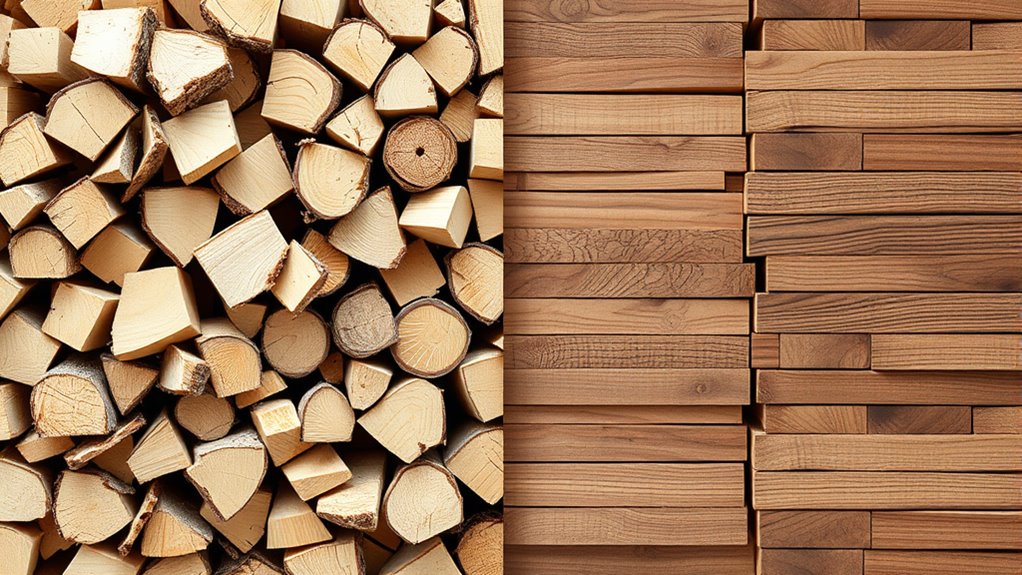
Have you ever wondered how to pick the right wood for your project? It all starts with understanding the importance of moisture content and sustainability. The moisture content of wood influences its stability, strength, and overall durability. When wood is kiln-dried, its moisture level is reduced to a specific range, typically between 6-8%, making it less prone to warping, shrinking, or expanding as it acclimates to your environment. This controlled drying process ensures the wood maintains its shape and integrity over time. In contrast, green or freshly cut softwoods and hardwoods contain higher moisture levels, which can lead to problems down the line if not properly dried before use. Choosing kiln-dried wood means you’re selecting material that’s been prepared to last and perform well, especially in projects requiring precision and stability. Properly dried wood also reduces the risk of cracking or splitting, ensuring a longer-lasting finished product.
Kiln-dried wood offers stability, durability, and optimal performance for your projects.
Sustainability also plays a vital role in your decision. Hardwoods, such as oak or maple, are often sourced from slow-growing trees, which raises concerns about their environmental impact if not harvested responsibly. Softwoods like pine or cedar, on the other hand, tend to grow faster and are more readily available, making them a more sustainable choice when sourced from well-managed forests. When selecting wood, it’s essential to consider not just the type but also the source. Opting for sustainably harvested wood helps ensure forests remain healthy and productive for future generations. Many suppliers now provide certifications, like FSC or PEFC, so you can confidently choose wood that aligns with eco-friendly practices.
Kiln-dried hardwoods are typically more expensive but offer advantages that justify the cost, especially for fine furniture or detailed woodworking. They are less likely to contain hidden moisture, reducing the risk of defects and increasing the lifespan of your project. Softwoods, often less expensive and easier to work with, are ideal for framing, paneling, or projects where appearance isn’t as critical. However, they also benefit from kiln drying, which enhances their stability and minimizes issues related to moisture content. By understanding how moisture content affects wood performance and prioritizing sustainability, you can make more informed choices that balance quality, cost, and environmental impact.
Ultimately, selecting the right wood involves weighing these factors carefully. Whether you choose kiln-dried hardwoods or softwoods, knowing their moisture content and sourcing responsibly will help you create durable, beautiful projects that stand the test of time and contribute to environmental conservation.
Frequently Asked Questions
How Does Wood Moisture Content Affect Burn Quality?
Wood moisture content critically impacts burn quality, as higher moisture levels reduce burn efficiency and produce more smoke. When your wood has too much moisture, it takes longer to ignite and burns unevenly, wasting energy. To maximize burn efficiency, make certain your wood has a moisture impact of around 20%. Properly dried wood burns cleaner, hotter, and more efficiently, helping you get the most out of each fire and reducing creosote buildup.
Are Softer Woods More Eco-Friendly Than Hardwoods?
Softwoods often symbolize freshness and rapid renewal, making them seem more eco-friendly at first glance. While they typically have a lower carbon footprint due to faster growth, sustainability depends on responsible forestry practices and local availability. A thorough carbon footprint analysis reveals that softwoods can be more sustainable if harvested sustainably. Ultimately, your eco-friendliness hinges on how the wood’s sourced, not just its softness or hardness.
What Is the Best Wood Type for Outdoor Use?
For outdoor use, hardwoods like teak, ipe, or cedar are your best options due to their superior outdoor durability and weather resistance. They naturally withstand moisture, insects, and temperature changes better than softwoods. Softwoods may require additional treatment, but hardwoods’ dense fibers give you long-lasting, low-maintenance outdoor furniture or structures, ensuring your investment stays beautiful and functional over time.
How Long Does Kiln-Dried Wood Typically Last?
Kiln-dried wood typically lasts several years if you store it properly. To maximize its lifespan, you should minimize moisture retention by storing it in a dry, well-ventilated area, off the ground, and protected from rain and humidity. Good storage techniques prevent warping, cracking, and decay, ensuring your kiln-dried wood remains in great condition for future use. Proper care is key to extending its longevity.
Can Softwoods Be as Durable as Hardwoods?
Softwoods generally aren’t as durable as hardwoods because they’re softer and more prone to dents and wear. However, durability varies based on the specific type of softwood and how it’s treated. If you want a wood that holds up well over time, hardwoods usually outperform softer woods in the durability comparison. But for certain projects, some softer woods can still offer adequate strength and longevity.
Conclusion
Now that you know the differences between kiln-dried hardwoods and softwoods, you can make a smarter choice for your project. Think about the durability, appearance, and cost that matter most to you. Will you prioritize long-lasting strength or budget-friendly options? Remember, selecting the right wood isn’t just about preference—it’s about ensuring your project stands the test of time. So, which type of wood will you choose for your next masterpiece?