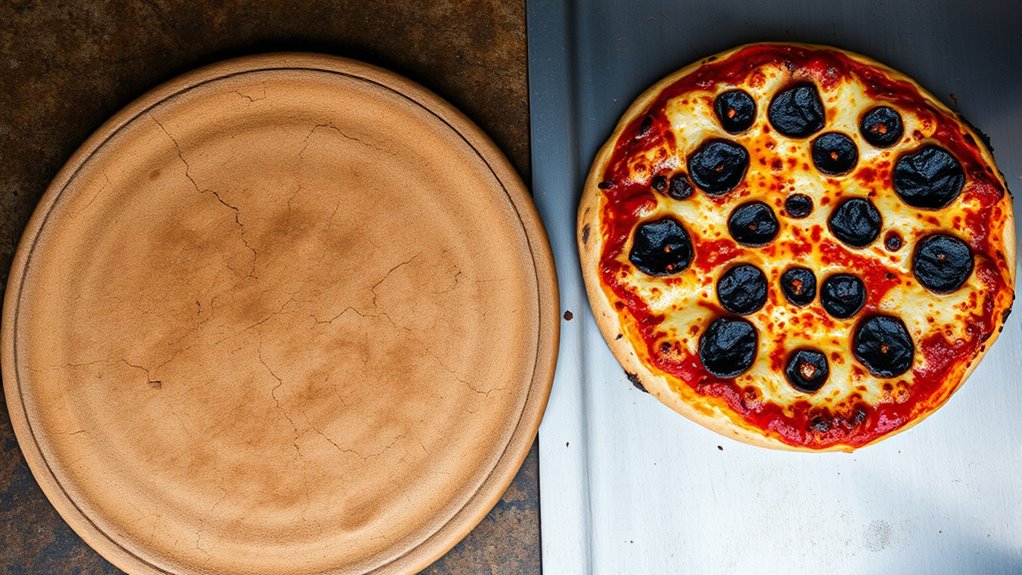

Steel heats up faster and retains heat longer than pizza stones, giving you crisper crusts and shorter baking times. Its quick heat transfer helps achieve better browning, especially with high-hydration doughs. A pizza stone warms more slowly but holds heat longer, offering steady heat for a balanced bake. Choosing between them depends on your baking style—you’ll find more tips to optimize results as you explore further.
Key Takeaways
- Steel conducts heat faster and heats up more quickly, leading to shorter preheat times and crispier crusts.
- Steel retains heat longer during baking, ensuring consistent oven temperature and improved crust crispiness.
- Pizza stones heat more slowly but hold heat longer, providing steady, even heat for a well-cooked crust.
- Proper preheating (at least 45 minutes) maximizes each material’s heat retention and transfer benefits.
- Steel’s superior thermal conductivity benefits high-hydration doughs, producing lighter, crisper crusts faster.
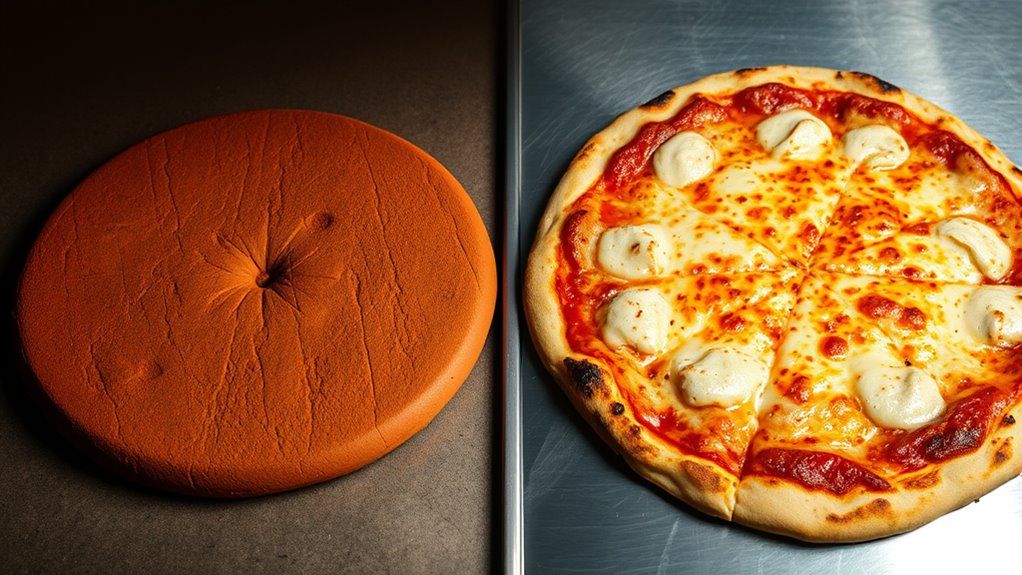
When it comes to achieving the perfect pizza crust at home, choosing between a pizza stone and a steel can make a significant difference. Both options are excellent heat conductors, but their heat retention and ability to produce a crispy crust vary, largely influenced by how you handle oven preheating and dough hydration. Proper oven preheating is essential for both surfaces. You want to give your stone or steel enough time—usually at least 45 minutes—to reach the desired temperature, often around 500°F (260°C). This ensures even heat distribution, which is vital for a well-cooked, crispy crust. If your oven isn’t fully preheated, your pizza can end up with a soggy bottom, regardless of which surface you use. The key is patience; rushing the preheating process undermines the thermal properties of either material, leading to less desirable results.
Dough hydration plays a big role in how your crust turns out, especially when baking on a stone or steel. Higher hydration levels—meaning more water in your dough—create a lighter, airier crust with a better chew. Such doughs benefit from the intense, direct heat provided by these baking surfaces. When the dough hits the hot surface, the moisture inside turns to steam quickly, puffing up the crust and creating a beautiful, crisp exterior. However, a dough with low hydration might not stretch as easily and could result in a denser crust that doesn’t crisp up as well, even at high temperature. Adjusting dough hydration based on your baking surface helps you achieve the ideal texture. For instance, steels, with their quick heat transfer, excel at crisping up high-hydration doughs, giving you that satisfying crunch in less time. On the other hand, stones, which heat more slowly but retain heat longer, can handle slightly lower hydration levels better, producing a more uniform bake.
The difference in heat retention between a pizza stone and steel also impacts how you manage oven preheating. Steel’s superior thermal conductivity means it heats up faster and retains heat longer, so you can often start checking your pizza sooner. With a stone, you need to be more patient, allowing it ample preheating time to reach peak temperature and stabilize. Once hot, both surfaces will give you a crisp, flavorful crust, but the steel’s ability to hold that heat means it’s easier to maintain consistent results. Ultimately, your choice depends on your baking style, but understanding how oven preheating and dough hydration interact with these materials will help you craft the perfect, crispy pizza crust every time.
Frequently Asked Questions
Which Material Is More Durable for Long-Term Use?
Steel is more durable for long-term use because of its superior material longevity and wear resistance. You’ll find that steel withstands frequent use without cracking or breaking, unlike pizza stones which can chip or crack over time. Choosing steel means you’ll enjoy consistent performance, easier maintenance, and a longer lifespan for your baking surface, making it a smart investment for regular pizza-making.
How Does Cleaning Differ Between Stone and Steel?
You should clean your pizza steel with a damp cloth after it cools, avoiding oven cleaning sprays or soap that can cause rust. For a pizza stone, gently scrub off residue with a brush and avoid soaking or using soap, as it can absorb odors. Regular maintenance tips include avoiding sudden temperature changes and never using soap on stone, ensuring both materials stay in great shape for long-term use.
Can a Pizza Stone Crack Under High Heat?
Yes, a pizza stone can crack under high heat due to oven safety concerns. Rapid temperature changes cause thermal shock, which stresses the stone’s material and can lead to cracking. To prevent this, avoid sudden shifts from cold to hot; instead, gradually heat the stone to ensure safety and maintain its integrity. Proper handling helps you enjoy crisp pizzas without risking damage or safety hazards.
Does Steel Require Preheating Like a Stone?
Steel heats up like lightning, so it does require preheating to guarantee even cooking. Unlike a pizza stone, which needs time to absorb heat, steel’s thermal responsiveness means it reaches the desired temperature quickly. Preheating your steel is essential because it helps achieve that perfect crispiness and consistent heat transfer, making your pizza crust golden and delicious without waiting too long.
Which Option Is Better for Baking Thick-Crust Pizzas?
Steel is better for baking thick-crust pizzas because it heats faster and retains heat well, giving you a crispier crust. With steel, you get shorter baking times, which helps keep dough flexible and easier to work with. Plus, steel’s quick heat transfer ensures the crust cooks evenly without over-drying. If you’re aiming for a thick, crispy base, steel is your best choice for efficient baking and dough flexibility.
Conclusion
If you’re aiming for the crispiest crust, both pizza stones and steels have their perks, but steels heat faster and retain more heat—up to 50% better than stones. That means quicker cooking and a more evenly crisp crust. So, if speed and consistent heat are your priorities, a steel might be your best bet. Either way, both tools can elevate your pizza game—just pick the one that suits your style and enjoy that perfect, restaurant-quality pie at home.