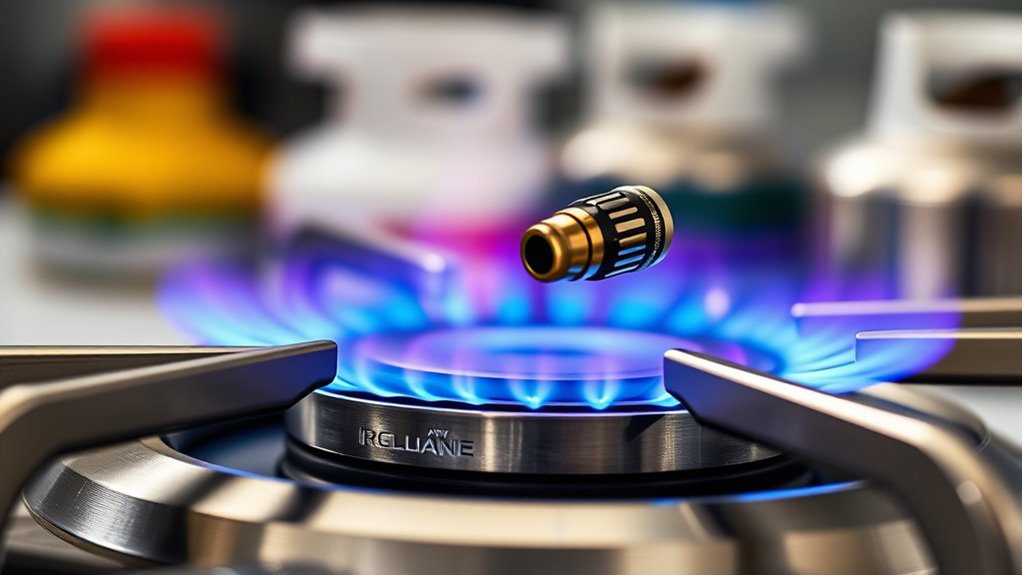

To switch fuel types on your gas burner, you’ll need compatible attachments designed for different gases like propane, butane, or natural gas. First, verify the attachments fit your burner securely and follow manufacturer instructions carefully. Always turn off the gas and check for leaks after installation. Using proper safety precautions and adjusting burner settings ensures safe and efficient operation. For more details on choosing and installing the right accessories, keep exploring the options available.
Key Takeaways
- Ensure attachment compatibility with your burner and fuel type before installation.
- Follow manufacturer instructions carefully and verify secure fitting to prevent disconnections.
- Turn off gas supply and check for leaks using soapy water after attaching new components.
- Use appropriate regulators and safety features for safe and efficient fuel switching.
- Regularly inspect and maintain attachments to optimize performance and prevent hazards.
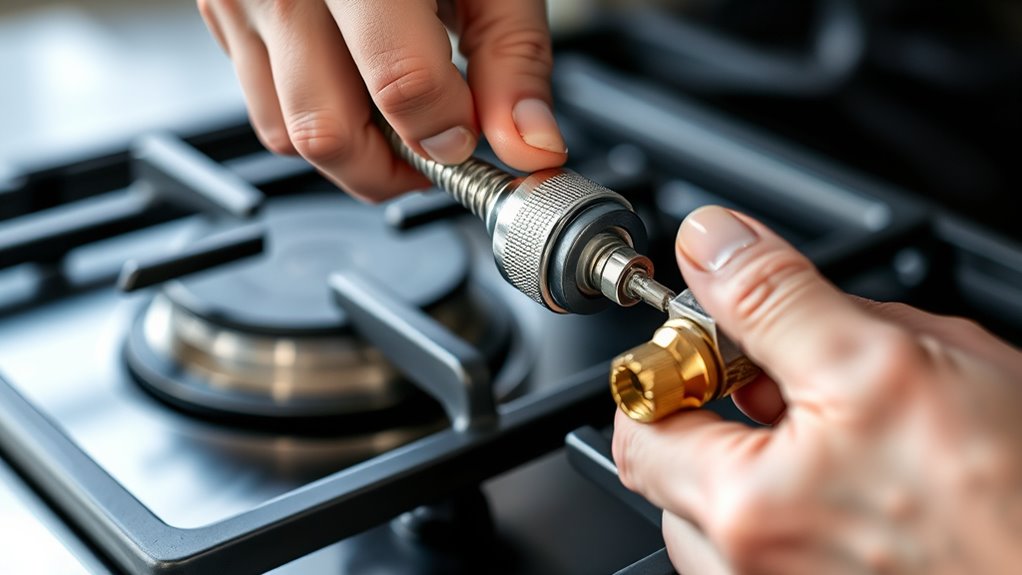
Have you ever wondered how to make your gas burner more versatile and efficient? One way to do that is by exploring different gas burner attachments that allow you to switch fuel types. This flexibility can substantially expand your cooking options, whether you’re camping, doing outdoor catering, or working in a professional setting. To get started, consider the variety of portable accessories designed specifically for this purpose. These attachments are built for easy installation and offer compatibility with different fuel sources, such as propane, butane, or even natural gas. With the right portable accessories, you can quickly adapt your burner to the available fuel, saving time and effort. Just remember, safety precautions are paramount when handling different fuels and installing attachments. Always follow manufacturer instructions carefully, ensure your work area is well-ventilated, and wear protective gear to prevent accidents. Before attaching any new component, turn off the gas supply and check for leaks using soapy water or a leak detection solution. This simple step can prevent dangerous leaks that could lead to fires or explosions. Also, make sure your attachments are securely fitted to avoid any disconnections during operation. When switching fuel types, it’s important to verify that your burner and attachments are compatible with the new fuel. Not all burners can handle every type of gas, so consult the manufacturer’s guidelines or seek professional advice if you’re unsure. Additionally, some portable accessories come with safety features like pressure regulators and shut-off valves, which help maintain consistent flame control and prevent over-pressurization. These safety precautions are essential for protecting yourself and extending the lifespan of your equipment. Using the correct attachments also enhances efficiency, as certain fuels burn cleaner or more evenly, which can improve cooking results. Keep in mind that different fuels may require adjustments to your burner’s settings—be sure to follow the proper procedures for each type to avoid damage or unsafe conditions. Regular maintenance and inspection of your attachments ensure they stay in good working condition, reducing the risk of leaks or failure during use. Moreover, selecting appropriate fuel filters can help prevent debris from clogging your system and ensure smooth operation. Overall, switching fuel types with the right portable accessories, combined with diligent safety precautions, empowers you to make your gas burner more adaptable and reliable. It allows you to optimize your fuel resources, achieve better cooking results, and operate your equipment safely. With a little care and knowledge, you can enjoy the flexibility of using different gases, making your cooking experience more efficient and versatile than ever before.
Frequently Asked Questions
Can Gas Burner Attachments Be Used With Outdoor Grills?
Yes, gas burner attachments can be used with outdoor grills if they offer good attachment versatility. Just verify the attachment’s fuel compatibility matches your grill’s fuel source—whether propane or natural gas. Check the manufacturer’s specifications to confirm it’s designed for outdoor use and compatible with your grill’s setup. Properly attaching and ensuring the right fuel type will give you safe, efficient performance and expand your grilling options.
What Safety Precautions Are Needed When Switching Fuel Types?
When switching fuel types, you need to prioritize safety by ensuring proper ventilation to prevent gas buildup and potential explosions. Always check for leaks before igniting the burner, using a soap solution to detect any gas escapes. Turn off the supply, disconnect the old fuel line, and carefully connect the new one. Regularly inspect connections and maintain good airflow around the appliance for safe operation.
Are There Different Attachments for Specific Fuel Types?
Yes, there are different attachments for specific fuel types to guarantee fuel compatibility and peak performance. You should choose attachments designed for your particular fuel, like propane or natural gas, to maximize safety and efficiency. This attachment versatility allows you to switch fuels more easily while maintaining proper operation. Always verify that the attachment matches your fuel type and follow manufacturer guidelines for safe installation and use.
How Often Should I Clean or Replace Burner Attachments?
Think of your burner attachments as the heart of your cooking setup—they need care to keep beating strong. You should clean your burner attachments weekly to prevent buildup and guarantee efficiency. Follow a regular maintenance schedule, and replace them every 1-2 years or sooner if you notice rust, corrosion, or uneven flames. Staying proactive in maintenance and replacement keeps your system running safely and at its best.
Can I Convert a Natural Gas Burner to Propane Permanently?
Yes, you can convert a natural gas burner to propane permanently, but you need to follow proper conversion methods. First, check compatibility considerations to guarantee your burner and its components support propane. You’ll typically replace the orifices and adjust the pressure regulator. Always consult your manufacturer’s guidelines or a professional technician to ensure safety and proper installation, preventing any potential hazards or damage.
Conclusion
Switching fuel types on your gas burner attachments is like changing gears in a car—you might feel a little hesitation at first, but once you get the hang of it, the ride becomes smoother and more efficient. I once struggled with a stubborn attachment, but after switching fuels, it lit up instantly—like flipping a switch. Just remember, proper adjustments and safety checks make all the difference. Embrace the change, and your burner will perform better than ever.