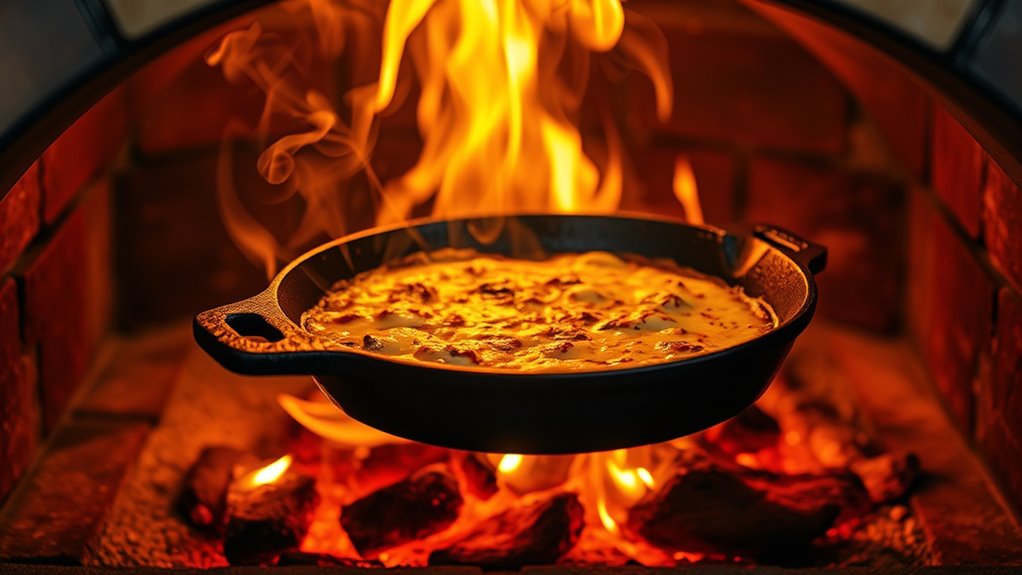

Using cast iron skillets in pizza ovens is great because they retain and distribute heat evenly, helping you achieve crispy crusts and perfectly cooked dishes. Before cooking, make sure your skillet is well-seasoned and dry to prevent rust. Use heat-resistant gloves and tools to handle it safely, and keep flammable materials away. Proper maintenance and safety precautions make certain you get the best results every time. Keep going to discover even more tips for successful outdoor cooking.
Key Takeaways
- Preheat the cast iron skillet in the pizza oven to ensure even cooking and optimal heat distribution.
- Properly season and maintain the skillet to prevent rust and achieve a non-stick surface for cooking.
- Use heat-resistant gloves and appropriate tools when handling hot cast iron inside the oven.
- Incorporate cast iron into your cooking routine for versatile use, such as baking, roasting, or frying in the pizza oven.
- Follow safety guidelines by keeping the area clear of flammable materials and ensuring the oven is on a stable, heat-resistant surface.
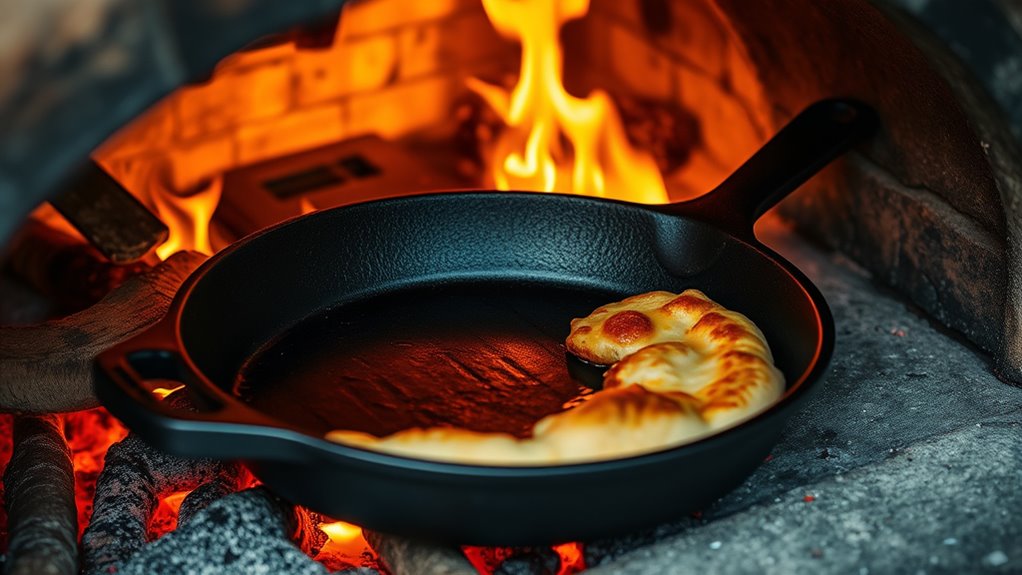
Cooking with cast iron skillets in pizza ovens is a game-changer for achieving crispy, evenly cooked dishes. When you use cast iron, you access a level of heat retention and distribution that’s hard to match with other cookware. This makes it ideal for baking pizzas, roasting vegetables, or even frying foods right inside your pizza oven. But to get the best results and make certain your cooking sessions are safe and successful, you need to focus on proper cast iron maintenance and pizza oven safety.
First, maintaining your cast iron skillet is essential. Before using it in your pizza oven, make sure it’s seasoned properly to create a non-stick surface and prevent rust. Regularly check for any signs of rust or damage, and re-season if necessary. After each use, clean it with hot water and a stiff brush—avoid soap, which can strip the seasoning. Dry your skillet thoroughly to prevent rust, and apply a thin layer of oil before storing. Proper maintenance guarantees your skillet remains non-stick and durable, helping you achieve those perfect crispy edges on your pizza or other baked dishes. Remember, a well-maintained skillet is safer to handle, reducing the risk of food sticking or breaking during high-temperature cooking. Proper cast iron care is essential for longevity and safe use.
Properly seasoned and maintained cast iron ensures safe, non-stick cooking for perfect pizza crusts.
When cooking in a pizza oven, safety should always be your priority. The high heat can be intimidating if you’re unfamiliar. Always use heat-resistant gloves or tools when handling hot cast iron, as the skillet will become extremely hot and can cause burns if not handled properly. Make certain your pizza oven is on a stable, heat-resistant surface, and keep flammable materials away from the oven area. Maintaining good ventilation is also vital to avoid buildup of smoke or fumes that can occur when heating cast iron or cooking certain foods. Never leave the oven unattended when it’s at high temperatures, and always have a fire extinguisher nearby just in case of emergencies.
Incorporating cast iron skillets into your pizza oven routine can elevate your cooking, but safe handling and proper maintenance are the foundation. Learning the ins and outs of cast iron care will allow you to enjoy consistent results and prolong the life of your skillet. Meanwhile, following pizza oven safety procedures protects you and others while you experiment with different recipes. When combined, these practices help you maximize your outdoor cooking experience, ensuring every dish is both delicious and safe to enjoy.
Frequently Asked Questions
Can Cast Iron Skillets Be Used in Wood-Fired Pizza Ovens?
Yes, you can use cast iron skillets in wood-fired pizza ovens, as they are highly compatible due to their durability and heat retention. Just confirm cast iron compatibility with the high temperatures to avoid cracking. Always prioritize pizza oven safety by handling the skillet carefully with proper tools and avoiding sudden temperature changes. This way, you enjoy perfectly cooked dishes without risking damage or injury.
How Do I Prevent Rust When Using Cast Iron in a Pizza Oven?
To prevent rust when using cast iron in a pizza oven, you should focus on proper seasoning maintenance. Always clean your skillet thoroughly after use, dry it completely, and apply a thin layer of oil before storing. Regularly re-season your cast iron to maintain its protective coating. These steps help prevent rust, keep your skillet in top condition, and ensure it performs well in high-heat environments like pizza ovens.
Is It Safe to Cook With Cast Iron at High Temperatures?
Think of your cast iron as a fiery chariot, ready to conquer high heat. Yes, it’s safe to cook at high temperatures if you’ve properly seasoned it and understand heat distribution. Seasoning techniques create a non-stick surface and protect against rust, while even heat distribution ensures your food cooks evenly. Just avoid sudden temperature changes and you’ll have no trouble using cast iron safely in your pizza oven’s blazing heat.
How Do I Clean Cast Iron After Oven Use?
After oven use, you clean your cast iron skillet with warm water and a stiff brush or sponge, avoiding soap to preserve seasoning. For stuck-on food, use a scraper or salt scrub. Dry it thoroughly to prevent rust, then apply a light coat of oil to maintain seasoning. Regular cleaning techniques like this keep your skillet well-seasoned and ready for the next high-temperature cook in your pizza oven.
Can Cast Iron Affect the Flavor of My Pizza?
Yes, your cast iron skillet can affect your pizza’s flavor. Over time, seasoning effects develop, creating a non-stick surface that also influences taste. If you cook different foods in it, flavor absorption can occur, subtly adding new layers to your pizza’s profile. Regularly cleaning and re-seasoning help maintain the skillet’s seasoning effects, ensuring it enhances rather than detracts from your pizza’s flavor.
Conclusion
Using cast iron skillets in pizza ovens not only enhances your cooking experience but also guarantees even heat distribution, giving your pizza a perfect crust. Did you know that cast iron retains heat up to 40% longer than other materials? This means you can achieve that crisp, restaurant-quality finish right at home. So go ahead, experiment with your skillet—it’s a simple trick to elevate your pizza nights and impress everyone around the table.