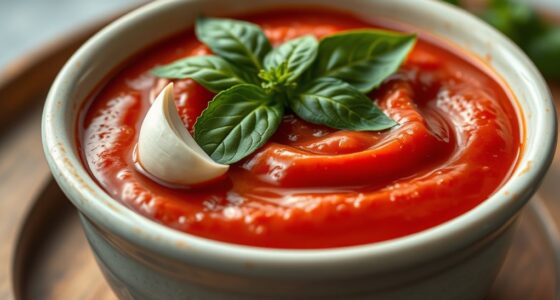
Understanding umami is key to appreciating tomato sauce’s rich flavor, which mainly comes from glutamic acid, a natural amino acid that provides a savory, mouthwatering taste. When you incorporate fermentation, it enhances these umami compounds, making the flavor even deeper and more complex. This process releases and concentrates glutamic acid, boosting the sauce’s richness. Keep exploring, and you’ll discover how fermentation and glutamic acid work together to elevate your cooking and flavor experiences.
Key Takeaways
- Umami is a savory flavor mainly due to the presence of glutamic acid, which enhances taste richness.
- Tomato sauce’s umami quality derives largely from naturally occurring glutamic acid.
- Fermentation increases glutamic acid content, intensifying umami and flavor complexity in tomato products.
- Adding fermented ingredients like miso or soy sauce boosts glutamic acid levels and umami in dishes.
- Understanding fermentation helps create more flavorful, satisfying tomato sauces with deeper umami taste.

Have you ever wondered what gives certain dishes their rich, savory flavor that’s hard to describe? That elusive taste, known as umami, often elevates simple ingredients into something unforgettable. One of the key factors behind this flavor is the presence of glutamic acid, a naturally occurring amino acid that acts as a flavor enhancer. When you think about tomato sauce, for instance, it’s the glutamic acid that lends it that deep, mouthwatering umami quality. But how does this compound develop, and what role do fermentation processes play in boosting this savory essence?
Umami in tomato sauce comes from glutamic acid, enhanced through fermentation and natural flavor development.
Fermentation processes are vital in amplifying umami flavors in many foods, including tomato-based products. During fermentation, beneficial microbes break down complex molecules in ingredients, releasing amino acids like glutamic acid. This biological activity intensifies the flavor profile, making it more complex and appealing. In the case of tomato sauce, traditional methods sometimes involve fermenting tomatoes or adding fermented ingredients like miso or soy sauce to enhance flavor. These processes not only increase the glutamic acid content but also create a richer, more satisfying taste that’s hard to achieve through simple cooking alone.
When you add fermented components to tomato sauce, you’re fundamentally tapping into a natural way of flavor enhancement. The fermentation process transforms raw ingredients, developing umami-rich compounds that deepen the sauce’s flavor. This is why some recipes call for slow fermentation or aging—it’s a way to unlock and concentrate those savory notes. The result is a sauce that offers a more layered and complex taste experience, making every bite more satisfying.
Understanding how fermentation influences flavor can also help you appreciate why certain ingredients work so well together. For example, adding a splash of fermented tomato paste or a dash of soy sauce can elevate a basic sauce into a savory masterpiece. The fermentation process creates a synergy, amplifying the umami and making the overall dish more balanced and flavorful. It’s a subtle but powerful way to enhance taste without artificial additives.
In essence, fermentation processes are nature’s way of boosting flavor enhancement by releasing and concentrating umami compounds like glutamic acid. Recognizing this can inspire you to experiment with different fermentation techniques or ingredients, unlocking new depths of flavor in your cooking. Incorporating fermented ingredients not only boosts glutamic acid levels but also can lead to healthier, probiotic-rich foods. Whether you’re making a simple tomato sauce or exploring other savory dishes, understanding the role of fermentation can help you create richer, more satisfying flavors that truly captivate the palate.
Frequently Asked Questions
How Does Cooking Time Affect Umami Levels in Tomato Sauce?
Cooking time increases umami levels in tomato sauce by enhancing caramelization effects, which intensify glutamic acid’s flavor. However, prolonged cooking can lead to nutrient degradation, reducing overall nutritional value. You should balance cooking duration to maximize umami without compromising nutrients. Shorter simmering preserves fresh flavors, while longer cooking boosts savoriness, but be mindful of overdoing it to avoid losing essential nutrients and affecting the sauce’s overall quality.
Can Adding Cheese Enhance Umami in Tomato Sauce?
Adding cheese to your tomato sauce can truly elevate its umami profile. The cheese pairing introduces additional glutamic acid, amplifying flavor enhancement and creating a richer, more satisfying depth. Imagine the moment you stir in that melting cheese—suddenly, your sauce transforms into a savory masterpiece. Don’t hold back; experimenting with different cheeses can uncover new layers of umami, making every bite irresistibly flavorful.
Are There Any Health Risks Associated With High Glutamic Acid Intake?
High glutamic acid intake generally isn’t a concern for most people, but you should be aware of health concerns like headaches or allergic reactions if you’re sensitive. Allergy risks are rare but possible, especially if you have a history of food allergies. If you notice any adverse symptoms after consuming foods rich in glutamic acid, it’s best to consult with a healthcare professional to rule out sensitivities or allergies.
How Does Umami Influence the Overall Flavor Profile of Tomato-Based Dishes?
Umami enhances the flavor profile of tomato-based dishes by creating flavor harmony and ingredient synergy. It deepens the savory notes, balancing acidity and sweetness, making your dish more complex and satisfying. When you incorporate ingredients rich in glutamic acid, like tomatoes, Parmesan, or mushrooms, you elevate the overall taste. This synergy intensifies the savory experience, making your dish more delicious and well-rounded with each bite.
What Are Natural Sources of Glutamic Acid Besides Tomatoes?
Imagine a treasure chest filled with gems, each representing natural sources of glutamic acid. Besides tomatoes, fermented foods like soy sauce and miso, along with aged cheeses such as Parmesan and Roquefort, are rich in this umami compound. These foods reveal a deeper, savory flavor in your dishes, acting as natural flavor enhancers. Incorporate them to add complexity and richness, elevating your culinary creations effortlessly.
Conclusion
Now that you know how glutamic acid gently enhances tomato sauce’s flavor, you can appreciate its subtle magic. Think of umami as a quiet whisper of savoriness that leaves your taste buds longing for more. By embracing this delicate balance, you’ll find your dishes become more inviting and satisfying. So, next time you cook, remember that a touch of umami can turn simple ingredients into a memorable experience—without overwhelming, just softly alluring.