
Choosing between raw and cooked tomato sauce depends on the flavor and texture you want. Use raw sauce for a bright, fresh taste that highlights seasonal ingredients and vibrant produce, perfect for lively toppings. Opt for cooked sauce when you desire deeper, richer flavors with a smooth, velvety texture that can handle baking and longer simmering. If you’re curious about which method suits your pizza style best, exploring more tips can help you make the perfect choice.
Key Takeaways
- Use raw tomato sauce for a bright, fresh flavor when ingredients are at peak freshness.
- Cook the sauce for a richer, more complex taste with deeper, layered flavors.
- Raw sauces retain a crisp texture ideal for lively, vibrant pizza toppings.
- Cooking thickens the sauce and improves its ability to stay on the pizza surface.
- Choose raw or cooked based on whether you want a fresh-tasting or a more robust, mellow flavor.
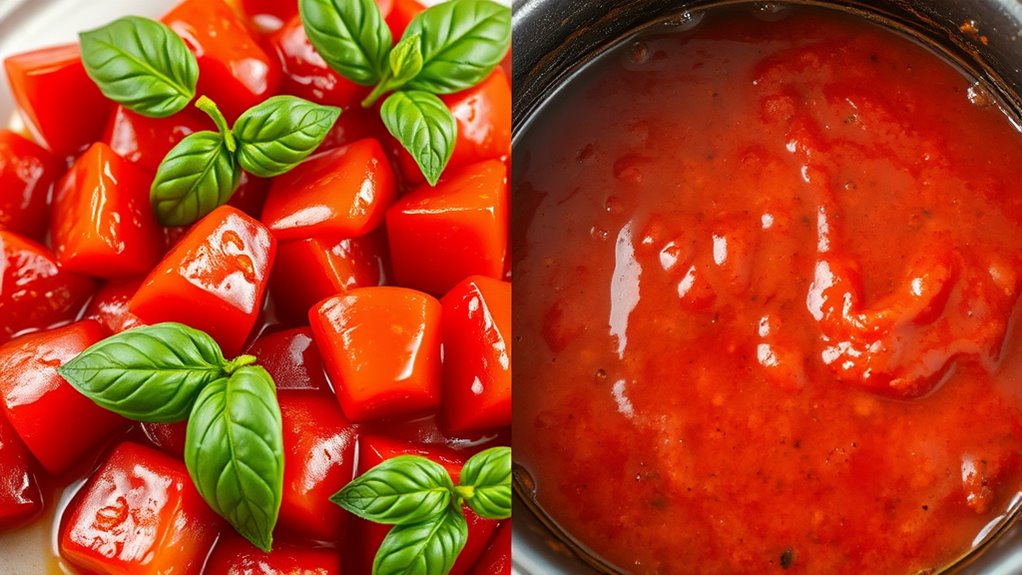
When choosing between raw and cooked sauce, understanding their differences can substantially impact the flavor and texture of your dish. The decision often hinges on how ingredient freshness influences flavor development and how you want your pizza to taste and feel. Raw sauces are typically made from fresh, uncooked ingredients, which means they preserve the bright, tangy flavors of ripe tomatoes and fresh herbs. When you use a raw sauce, you get a vibrant, crisp bite that highlights the natural sweetness and acidity of the produce. This approach works well if your ingredients are at their peak freshness because it allows the true flavors to shine without any cooking process dulling or altering them. However, because raw sauces are less processed, they tend to be more delicate in flavor, making them ideal for toppings that benefit from a fresh, lively taste profile.
On the other hand, cooked sauces undergo a transformation that enhances their depth and complexity. When you cook tomato sauce, the heat encourages flavor development by breaking down the ingredients and concentrating their natural sugars. The longer the sauce simmers, the richer and more robust its flavor becomes, often with a slightly caramelized or roasted undertone that adds depth to your pizza. Cooking also helps to mellow out acidity, smoothing out sharp edges and creating a balanced taste. If your ingredients are not at their peak freshness, cooking can compensate for that by developing a more harmonious flavor profile, making the sauce more forgiving and adaptable. Additionally, cooking can improve texture, thickening the sauce and ensuring it stays put on your pizza without becoming watery or runny. This is especially helpful when working with canned or less-than-ideal tomatoes, as the heat breaks down the pulp and seeds, resulting in a velvety consistency.
Furthermore, natural flavor development during cooking can be significantly influenced by the duration and method of heat application, allowing for greater control over the final taste. Ultimately, your choice depends on the kind of pizza you’re aiming to make. If you want a bright, fresh-tasting pie that highlights the season’s best ingredients, a raw sauce might be your best bet. But if you’re seeking a richer, more layered flavor with a hearty texture, cooking your sauce is the way to go. Both methods have their merits, and understanding how ingredient freshness and flavor development play into each can help you craft a pizza that perfectly suits your taste. Whether raw or cooked, the key is to use high-quality ingredients and adjust your process based on the flavor you want to achieve.
Frequently Asked Questions
Does Cooking Tomato Sauce Affect Its Nutritional Value?
Cooking tomato sauce can slightly affect nutrient retention, especially vitamins like vitamin C, which are sensitive to heat. However, the cooking impact on other nutrients, like lycopene, is positive because heat makes it more bioavailable. So, if you cook your sauce, you may lose some nutrients but gain others. Ultimately, it’s about balancing flavor and nutrition, and cooked sauce still offers plenty of health benefits.
How Does Raw Versus Cooked Sauce Influence Pizza Dough?
Think of raw sauce as a fresh, vibrant splash that adds a lively punch to your pizza, while cooked sauce offers a richer, more mellow depth. Using raw sauce provides a delightful texture contrast and helps retain moisture, keeping your crust tender and juicy. Cooking the sauce beforehand can deepen flavors but may reduce moisture. Your choice shapes the pizza’s final character—choose based on your desired taste and texture!
Can Raw Tomato Sauce Cause Food Safety Issues?
Raw tomato sauce can cause food safety issues if not handled properly, as it may harbor bacteria that lead to food poisoning. Bacterial growth thrives in raw, unpasteurized ingredients, increasing your risk. To reduce this, keep the sauce refrigerated, use it within a few days, and cook it thoroughly if you’re concerned about bacteria. Proper storage and hygiene are key to preventing food poisoning from raw tomato sauce.
Is There a Difference in Flavor Between Raw and Cooked Sauce?
You might find that raw tomato sauce offers a brighter, more vibrant flavor, while cooked sauce develops a richer, deeper taste. Cooking enhances flavor by releasing natural sugars and caramelizing, leading to better flavor enhancement. If you want to preserve freshness, using raw sauce keeps that fresh tomato taste intact. Ultimately, your choice affects the pizza’s flavor profile, so consider whether you prefer a fresh punch or a more complex, cooked depth.
How Long Should Tomato Sauce Be Cooked for Optimal Taste?
You should cook tomato sauce for about 20 to 30 minutes to develop its full flavor. During this cooking duration, the flavors deepen and meld, creating a richer taste. Stir occasionally to prevent sticking and make certain of even cooking. If you prefer a more concentrated sauce, let it simmer longer; for a fresher taste, a shorter cook time works. Adjust based on your flavor preference and desired consistency.
Conclusion
Whether you prefer raw or cooked, the choice boils down to your baking bliss. Raw offers a fresh, fiery flavor, while cooked creates a rich, robust base. Decide based on your desire for depth or freshness. Remember, the right route depends on your taste and time. So, seize your sauce style, savor the process, and serve up your perfect pizza with passion and pizzazz!