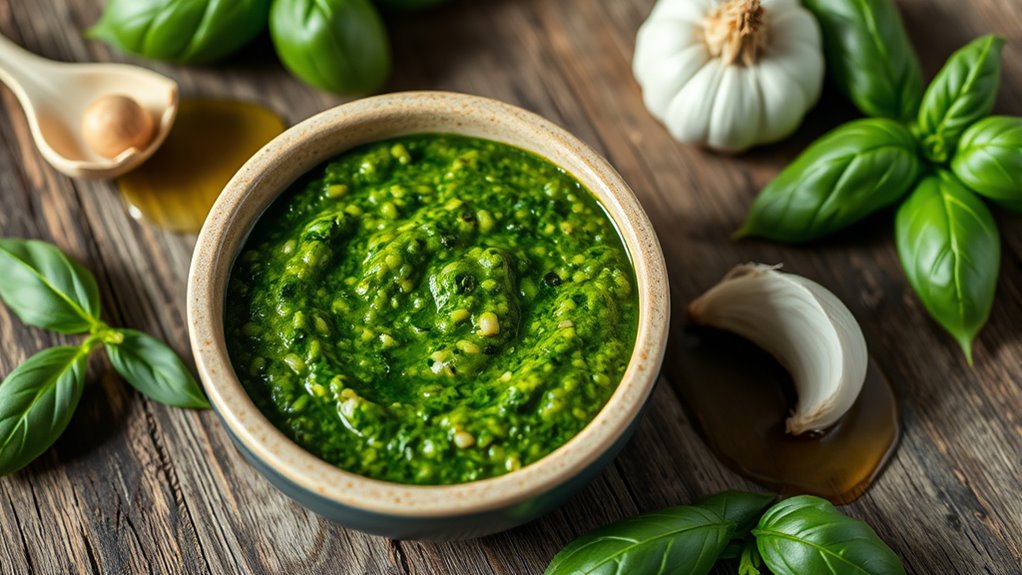

To make pesto pizza sauce, blend fresh basil, spinach, or kale with nuts like pine nuts, walnuts, or cashews until smooth. Add grated Parmesan or Pecorino cheese, garlic (roasted for a sweeter flavor), and olive oil, blending as you go to get a spreadable consistency. Season with salt and pepper to taste. Adjust the oil for your preferred texture, and store in an airtight container for fresh use or freezing. Keep listening to learn more helpful tips!
Key Takeaways
- Combine fresh greens (basil, spinach, or kale) with nuts (pine, walnuts, or cashews) in a food processor.
- Add grated cheese (Parmesan, Pecorino, or vegan cheese) and roasted garlic to the greens and nuts.
- Gradually blend in olive oil until reaching a smooth, spreadable consistency.
- Season with salt and pepper to taste, adjusting for flavor and texture.
- Store in an airtight container in the fridge or freeze in small portions for later use.

Making your own pesto pizza sauce is a simple way to add fresh, vibrant flavor to your homemade pizza. The best part? You can customize it to suit your taste by making ingredient swaps. Classic pesto relies on basil, pine nuts, Parmesan, garlic, and olive oil, but feel free to experiment. For example, if you don’t have basil, spinach or kale can work as a substitute, offering different but equally delicious flavors. If pine nuts are unavailable, walnuts or cashews can be used instead—they bring a different texture and taste but still create a rich, nutty base. You might also swap out Parmesan for Pecorino or skip the cheese altogether for a vegan option. When it comes to garlic, fresh cloves are ideal, but roasted garlic provides a milder, sweeter note if preferred. Olive oil is essential for blending everything smoothly, but you can try avocado oil for a subtler flavor.
Once you’ve decided on your ingredients, blending them into a smooth sauce is straightforward. Use a food processor or blender, starting with the greens and nuts, then gradually adding the cheese, garlic, and olive oil. Season with salt and pepper to taste, and adjust the oil to reach your preferred consistency. Remember, the texture of your pesto sauce should be spreadable but not too runny, so add oil gradually until you get it just right. Incorporating appropriate ingredients can also influence the nutritional profile of your pesto, making it a healthier addition to your meals.
Blend greens, nuts, cheese, garlic, and olive oil until smooth and spreadable.
Storing your homemade pesto pizza sauce properly ensures it stays fresh and flavorful. Transfer it to an airtight container and keep it in the fridge if you plan to use it within a week. For longer storage, you can freeze pesto in small portions—ice cube trays work well for this. Once frozen, pop out the cubes and store them in a zip-top bag or container. This makes it easy to grab just what you need for your next pizza or pasta dish. When storing pesto, always use a clean utensil to prevent bacterial contamination and reduce oxidation, which can turn the sauce brown and affect flavor.
Making your own pesto pizza sauce is flexible, quick, and rewarding. By exploring ingredient swaps, you can tailor the flavor profile to your liking, and with proper storage tips, your homemade sauce stays fresh longer. Whether you stick to tradition or get creative with substitutes, you’ll end up with a vibrant, delicious topping that elevates your homemade pizza to a new level.
Frequently Asked Questions
Can I Use Store-Bought Pesto Instead of Homemade?
Yes, you can definitely use store-bought pesto instead of homemade for your pizza sauce. It’s a quick and convenient option that saves time. Just choose a good-quality store-bought pesto, and feel free to experiment with flavor variations—like adding extra garlic or cheese—to customize it to your taste. Keep in mind that store-bought alternatives may have different textures or salt levels, so adjust your toppings accordingly for the best result.
What Pizza Types Pair Best With Pesto Sauce?
You’ll love pesto sauce with pizza types like margherita, chicken, or veggie pizzas, as they complement the fresh, herbaceous flavors. Pesto sauce variations, such as basil, arugula, or sun-dried tomato, can create exciting flavor combinations. Experiment with toppings like mozzarella, grilled chicken, or roasted veggies to enhance your pesto pizza experience. Your taste buds will enjoy the vibrant, savory, and aromatic blend that pesto brings to different pizza styles.
How Long Can Pesto Pizza Sauce Be Stored?
You can store pesto pizza sauce for up to a week in the fridge. Notably, homemade pesto tends to last about 3 to 5 days, while store-bought varieties often keep a little longer. Follow storage tips like keeping it in an airtight container and always using a clean spoon. The shelf life depends on ingredients and storage conditions, so check for any signs of spoilage before use.
Can I Make Pesto Pizza Sauce in Advance?
Yes, you can make pesto pizza sauce in advance. Store it in an airtight container in the refrigerator for up to 3 days, following proper storage tips to maintain freshness. To prevent browning, drizzle a little olive oil on top before sealing. You can also experiment with flavor variations by adding ingredients like garlic, lemon zest, or cheese. Just give it a good stir before spreading on your pizza for the best results.
Is Pesto Pizza Sauce Suitable for Freezing?
Yes, you can freeze pesto pizza sauce. Use airtight containers or freezer bags with the excess air removed for best results. Label them with the date to keep track of their shelf life. Freezing methods help preserve flavor and freshness, but aim to use the sauce within 3-6 months for ideal taste. Thaw it in the fridge before spreading on your pizza for a quick, convenient meal.
Conclusion
Now that you know how to make pesto pizza sauce, don’t worry if it’s not perfect the first time—practice makes perfect! Even if your sauce isn’t exactly how you pictured, it’ll still taste delicious on your pizza. Plus, customizing it with your favorite herbs or nuts adds a personal touch. So, have fun experimenting, and soon you’ll be turning out flavorful, homemade pesto pizzas that everyone will love. Enjoy the process and savor your tasty creation!