
If you’re looking to avoid excess grease and lower calorie intake, opting for part-skim mozzarella is a good choice because it has less fat and produces less oily residue when cooked. However, if you want richer flavor and a creamier texture, whole milk mozzarella is better, though it can be greasier. To find the best fit for your needs and taste preferences, explore how each type performs in your favorite dishes.
Key Takeaways
- Part-skim mozzarella contains less fat, reducing grease and oily residue in dishes.
- Whole milk mozzarella has higher fat content, which can increase greasiness when melted.
- For less greasy results, choose part-skim mozzarella, especially in baked or layered recipes.
- Whole milk mozzarella offers richer flavor but may produce more visible oil release.
- Consider your dish’s texture and health goals when selecting between the two to manage greasiness.
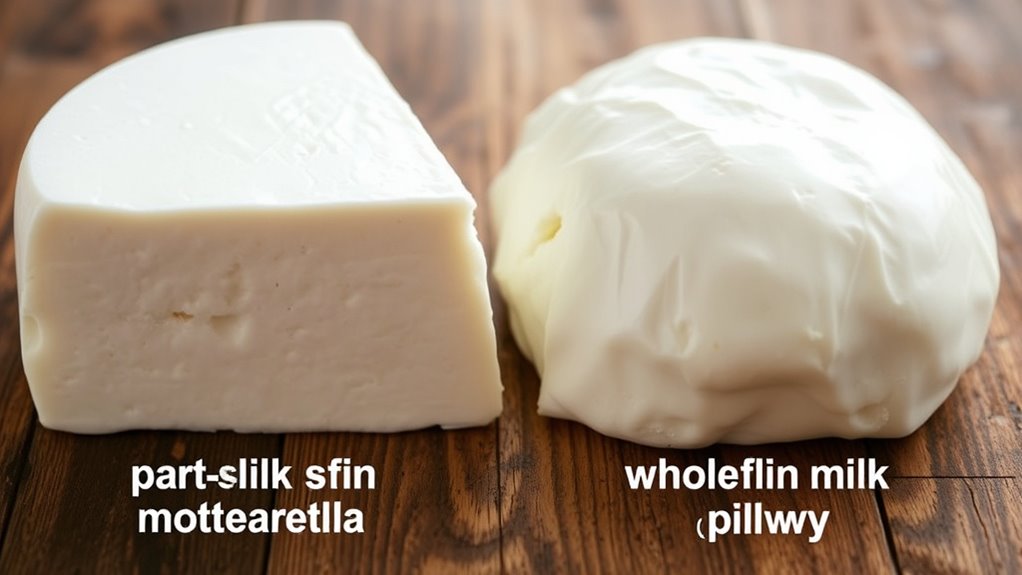
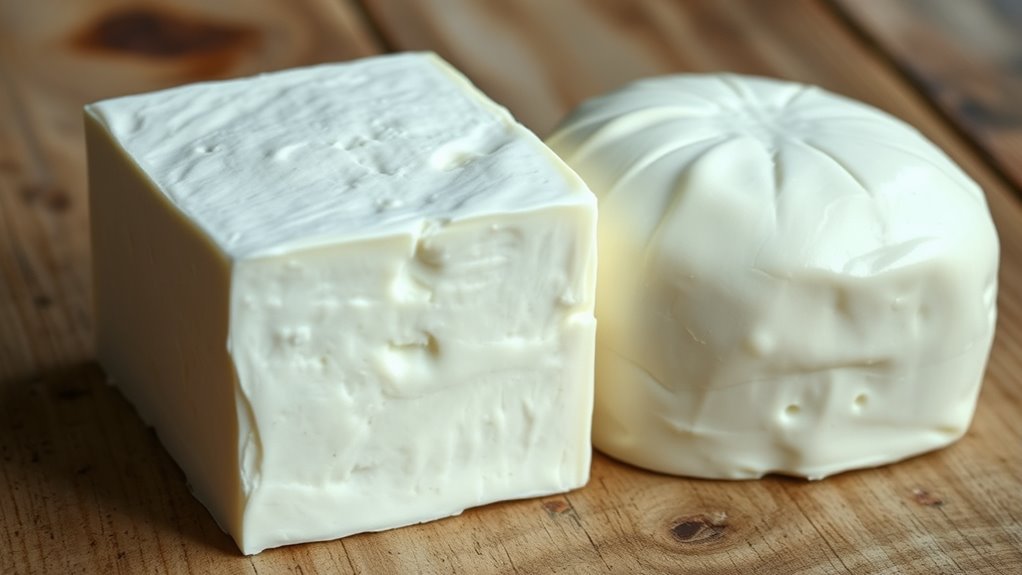
When choosing mozzarella cheese, the decision between part-skim and whole milk varieties often comes down to your health goals and taste preferences. Understanding the nutritional benefits of each can help you make an informed choice. Part-skim mozzarella is made from milk that has had some fat removed, resulting in a lower fat content and fewer calories. This makes it a popular option if you’re aiming to reduce fat intake or watch your calorie consumption without sacrificing cheese entirely. Whole milk mozzarella, on the other hand, retains all the natural fats found in milk, providing a richer taste and creamier texture. If your priority is flavor and a more indulgent experience, whole milk mozzarella might appeal more to you.
Choosing between part-skim and whole milk mozzarella depends on your health goals and flavor preferences.
Nutritional benefits play a significant role here. Part-skim mozzarella generally offers less saturated fat and fewer calories per serving, making it a better option if you’re trying to maintain or lose weight. It still provides essential nutrients like calcium, protein, and vitamin B12, but with less fat contributing to your daily intake. Whole milk mozzarella, while higher in fat, can deliver a more satisfying and authentic cheese flavor, thanks to its natural fat content, which also aids in the absorption of fat-soluble vitamins. If you’re looking for a cheese that provides a richer mouthfeel and more robust flavor, whole milk mozzarella is worth considering, especially if you’re not overly concerned about calorie intake.
Taste differences are subtle but noticeable. Part-skim mozzarella tends to have a milder, slightly less creamy flavor, which some people find less satisfying than the full-fat version. It melts well but might lack the depth of flavor that comes with the natural fats in whole milk mozzarella. Conversely, whole milk mozzarella offers a more pronounced, buttery taste with a creamier texture, making it ideal for dishes where cheese flavor is central. If you enjoy cheese that melts smoothly and delivers a richer flavor, you’ll likely prefer the whole milk variety.
Additionally, some hot rollers and styling tools can help achieve the perfect melt and texture for cheese-based dishes, much like achieving ideal curls or volume in hair styling. Ultimately, your choice depends on your dietary needs and flavor preferences. If you’re prioritizing health and reducing fat intake, part-skim mozzarella provides a nutritious alternative that still delivers essential nutrients. If you’re more focused on taste and a luxurious cheese experience, whole milk mozzarella offers a fuller flavor profile and a creamier texture. Both options can fit into a balanced diet, so consider your goals and enjoy experimenting with each to find the perfect match for your culinary needs.
Frequently Asked Questions
How Does Milk Fat Content Affect Mozzarella’s Melting Qualities?
Milk fat substantially influences mozzarella’s melting qualities because higher fat content lowers the melting point, making the cheese melt more smoothly and evenly. When you choose whole milk mozzarella, the increased milk fat creates a richer, creamier melt, perfect for pizzas or melts. In contrast, part-skim mozzarella, with less milk fat, melts less readily, resulting in a firmer texture. So, your choice impacts how well the cheese melts and its overall texture.
Is Part-Skim Mozzarella Suitable for All Types of Cooking?
Part-skim mozzarella is suitable for many types of cooking, thanks to its balanced cheese texture and culinary versatility. It melts well and offers a lighter option without sacrificing flavor, making it ideal for pizza, salads, and baked dishes. However, if you need a richer, creamier melt for gourmet recipes, whole milk mozzarella might be better. Overall, part-skim mozzarella works well for everyday cooking where you want a lower-fat cheese option.
Does Choosing Skim Milk Mozzarella Impact Flavor Significantly?
You might think skim milk mozzarella loses all flavor, but surprisingly, it preserves most flavor nuances while trimming dairy richness. Choosing skim can give your dish a lighter taste without sacrificing too much depth. So, if you’re after a subtle shift in dairy richness without missing out on flavor nuances, go ahead—skim mozzarella offers a satisfying balance that keeps your dish fresh and less greasy.
Are There Health Benefits to Choosing Whole Milk Over Part-Skim Mozzarella?
Choosing whole milk mozzarella offers some health benefits, like higher calcium content, which aids in better calcium absorption and bone health. It also provides more essential fats that support overall wellbeing. However, these fats can contribute to increased calorie intake and cholesterol. If you’re aiming for lower fat and calorie consumption, part-skim mozzarella might be better. Consider your nutritional goals when selecting, but remember whole milk mozzarella provides more calcium and beneficial nutrients.
How Do Storage and Shelf Life Differ Between the Two Types?
Imagine you buy a block of mozzarella today; if it’s part-skim, you’ll likely store it longer—around one to two weeks—due to its lower fat content, which reduces spoilage risk. Whole milk mozzarella, with its higher fat, tends to spoil faster, usually within a week. Proper storage, like keeping it airtight in the fridge, extends shelf life for both, but part-skim generally offers a longer storage duration.
Conclusion
Deciding between part-skim and whole milk mozzarella isn’t just about calories—it’s about creating crave-worthy, colorful culinary masterpieces. By balancing bold flavors with mindful moderation, you can craft culinary delights that satisfy your senses without sacrificing your health. So, choose wisely, embrace the endless possibilities, and let your palate play. Remember, with a little planning and passion, your perfect pizza or platter is just a mozzarella move away!