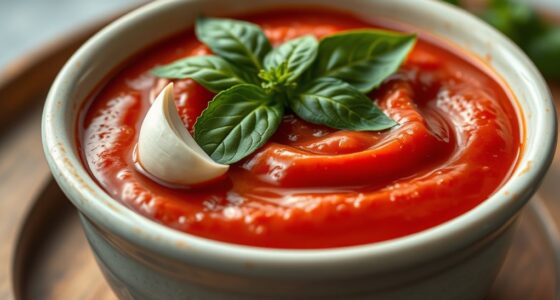
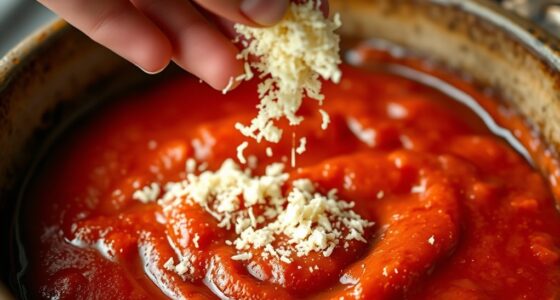
To use fresh basil and oregano in sauce, add oregano early during cooking to develop their earthy, robust flavors. Wait until near the end to stir in basil to preserve its bright aroma and vibrant taste. Rinse and dry herbs gently, then chop finely to release their essential oils. Proper harvest and storage guarantee maximum flavor. Want to discover tips on harvesting and storing herbs for the freshest results? Keep exploring for more helpful advice.
Key Takeaways
- Add basil at the end of cooking to preserve its bright flavor and aroma.
- Incorporate oregano early in the cooking process to develop its earthy, robust taste.
- Rinse herbs gently and dry thoroughly before chopping to prevent excess water in the sauce.
- Finely chop both herbs to maximize flavor release and ensure even distribution in the sauce.
- Use fresh, properly harvested herbs for optimal flavor and aroma in your sauce.

Have you ever wondered how fresh herbs can elevate your dishes? Incorporating vibrant basil and oregano into your sauces can transform a simple meal into something extraordinary. To do this effectively, you need to understand herb harvesting tips and storage techniques. Properly harvesting your herbs ensures they retain their flavor and aroma, making your dishes taste even better. When harvesting basil, pick the leaves early in the morning after the dew has dried for the most potent flavor. Pinch or cut the stems just above a pair of healthy leaves to encourage new growth. With oregano, snip the stems just above a set of leaves, but avoid harvesting more than one-third of the plant at a time. This practice keeps your herbs healthy and productive. Additionally, understanding the seasonal variations can help you select the best times to harvest for maximum flavor seasonal variations.
Once you’ve harvested your herbs, storing them correctly is vital to preserve their freshness and flavor. For basil, it’s best to treat it like fresh flowers. Remove any bottom leaves, trim the stems, and place the bunch in a jar of water at room temperature, covering the leaves loosely with a plastic bag. Keep it away from direct sunlight to prevent wilting. Oregano, on the other hand, can be stored by wrapping the sprigs in a slightly damp paper towel and placing them inside a resealable plastic bag or airtight container in the refrigerator. Alternatively, you can dry oregano by hanging small bunches upside down in a well-ventilated, dark area, then crumble the dried leaves to use later. Proper storage techniques help prolong the herbs’ freshness and preserve their flavor for your sauces.
When it comes to using fresh herbs in your sauce, timing is everything. Add basil towards the end of cooking to preserve its bright, fresh flavor. Oregano can withstand a bit more cooking, so you can add it earlier to develop its earthy aroma. Before incorporating, give your herbs a gentle rinse to remove any dirt or insects, then pat them dry thoroughly. Chopping herbs finely releases their essential oils and enhances their flavor distribution throughout your sauce. Remember, the quality of your herbs directly impacts the taste of your dish, so starting with well-harvested and properly stored herbs makes all the difference.
Frequently Asked Questions
How Long Do Fresh Herbs Stay Fresh in the Refrigerator?
Fresh herbs like basil and oregano typically stay fresh in the refrigerator for about 1 to 2 weeks. To maximize herb preservation and flavor retention, store them properly—trim stems, place them in a jar with water, and cover loosely with plastic. Keep herbs in the crisper drawer or a cool spot. Regularly check for wilting or spoilage, and use them promptly to enjoy their vibrant flavor.
Can I Substitute Dried Herbs for Fresh in Sauces?
Yes, you can substitute dried herbs for fresh in sauces, but keep in mind that dried herbs have different herb flavor retention and tend to be more concentrated. Use about one-third the amount called for when using dried versus fresh herbs to avoid overpowering your sauce. Dried herbs release their flavors more slowly, so add them early and taste as you go to achieve a balanced, flavorful result.
What’s the Best Way to Store Fresh Basil and Oregano?
Perfectly preserve your produce by planning properly! To store fresh basil and oregano, place them in a glass of water like flowers, cover loosely with a plastic bag, and keep them in the fridge or on the countertop. This herb preservation method helps retain flavor, ensuring your herbs stay fresh longer. Regularly change the water and trim the stems to maximize flavor retention and keep your herbs vibrant and ready to use.
Do Fresh Herbs Lose Flavor When Cooked for Long Periods?
Yes, fresh herbs can lose flavor when cooked for long periods because of the cooking time impact. As you cook, herb flavor retention decreases, especially if you add herbs early in the process. To maximize flavor, add basil and oregano toward the end of cooking. This way, you preserve their fresh, vibrant taste and get the most out of your herbs in your sauce.
How Can I Tell if Fresh Herbs Are Still Good to Use?
You hold a bunch of fresh herbs, and you wonder if they’re still good. Look for herb freshness indicators like vibrant color, firm texture, and a fragrant aroma. If the leaves are wilted, discolored, or slimy, it’s a sign of herb spoilage signs. Give them a gentle sniff—if the scent’s faded or off, it’s time to toss them. Fresh herbs should excite your senses, not dull them.
Conclusion
Now that you’ve learned how to use fresh basil and oregano in your sauce, imagine the flavor surprises waiting to unfold. Will you pick the brightest, most fragrant herbs from your garden? Or experiment with a new combination? Each step adds depth and freshness that elevates your dish. The magic’s in your hands—so go ahead, take that leap. The secret to unforgettable sauce might just be one fresh herb away. Are you ready to discover it?