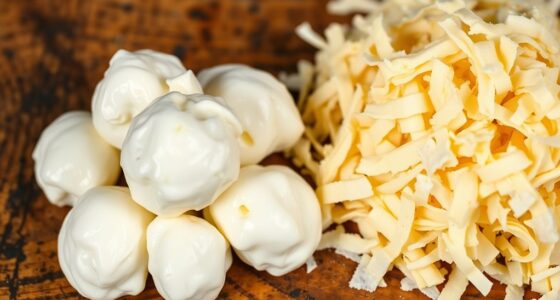
When adding Pecorino or Parmesan to your sauce, do so toward the end of cooking. Gradually stir in finely grated cheese to help it melt evenly, keeping an eye on the texture and flavor. Parmesan adds a nutty, subtle richness, while Pecorino offers a sharper, saltier punch. Both cheeses work best when incorporated gradually and during the final moments—if you keep exploring, you’ll discover tips for perfecting your sauce’s richness.
Key Takeaways
- Add Parmesan toward the end of cooking for a nutty, mellow flavor and to prevent overmelting.
- Incorporate Pecorino during the final stages for a sharper, saltier taste and smooth melting.
- Grate both cheeses finely to ensure even melting and better integration into the sauce.
- Gradually add cheese while stirring constantly to avoid clumping and achieve a creamy texture.
- Use freshly grated cheese to enhance melting quality and prevent added anti-caking agents from affecting consistency.
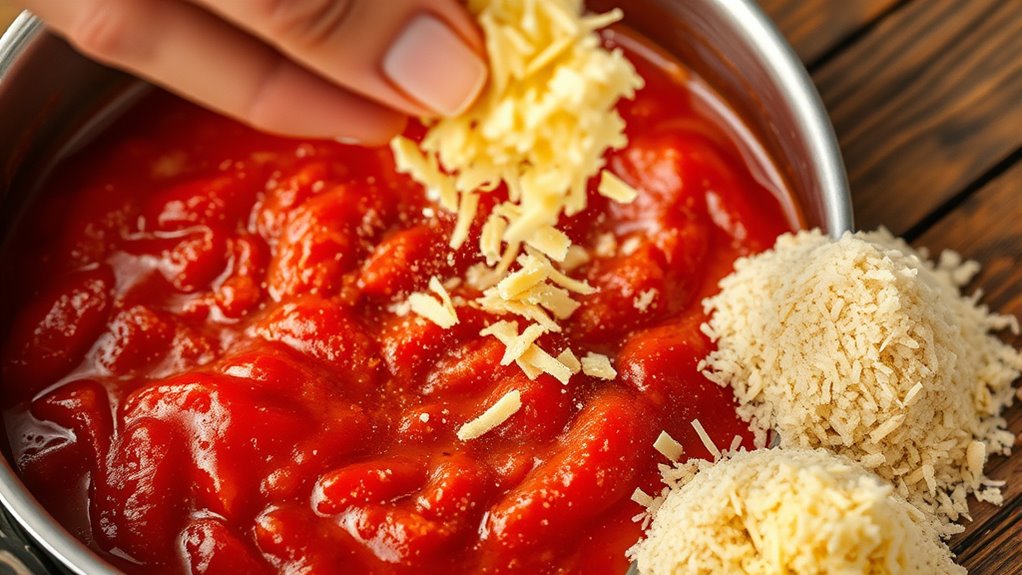
Adding cheese to sauce is a simple way to enhance flavor and create a richer, creamier texture. When you’re preparing a sauce, whether it’s for pasta, vegetables, or meats, the type of cheese you choose markedly impacts the final taste and consistency. One of the most important factors to contemplate is how well the cheese melts into the sauce. Good cheese melting ensures a smooth, velvety finish without lumps or separation. Cheeses like Parmesan and Pecorino are known for their ability to melt smoothly, but they each bring different qualities to your dish.
Cheese melting is influenced by the cheese’s moisture content, fat level, and aging process. Parmesan cheese, for example, is a hard, aged cheese with low moisture, which means it melts slowly and tends to stay granular if not grated finely. Despite this, when grated finely and added gradually, Parmesan dissolves into the sauce, adding a complex, sharp flavor. Pecorino, especially Pecorino Romano, is also a hard, aged cheese similar to Parmesan but with a slightly saltier and tangier profile. It melts well when grated finely and heated slowly, creating a rich, savory note that complements many sauces.
Parmesan melts slowly with a granular texture, while Pecorino Romano melts smoothly, offering bold, savory flavors.
Choosing between Pecorino and Parmesan depends on the flavor profile you want. Parmesan has a nutty, mellow taste, making it versatile for many dishes. Pecorino offers a sharper, saltier punch, which can elevate simple tomato sauces or creamy Alfredo styles. Both cheeses are traditionally grated and added toward the end of cooking to prevent overcooking, which can cause cheese to become rubbery or greasy. When adding cheese to sauce, do so gradually, stirring constantly to promote even melting and avoid clumping.
It’s also worth noting that the texture you desire influences your choice. Parmesan’s granular texture can add a slight crunch if not fully melted, which some cooks find appealing. Pecorino’s more pungent flavor and similar melting properties make it ideal for bold, rustic dishes. Additionally, melting behavior varies among cheeses based on their composition, so experimenting with small amounts can help achieve the perfect consistency. When incorporating either cheese, always use freshly grated varieties, as pre-grated cheeses often contain anti-caking agents that hinder melting.
Frequently Asked Questions
Can I Substitute Pecorino With Parmesan in Any Recipe?
Yes, you can substitute Parmesan for Pecorino in most recipes, but keep in mind that their cheese melting properties differ. Parmesan melts more smoothly, while Pecorino is saltier and has a sharper flavor. Also, consider cheese shelf life; Parmesan tends to last longer. Use Parmesan when you want a milder, creamier texture, but for authentic flavor, Pecorino’s saltiness and tang are better suited.
How Does the Flavor Differ Between Pecorino and Parmesan?
Imagine biting into a sun-warmed meadow—Pecorino’s flavor profile bursts with tangy, sheep’s milk brightness, sharper and more assertive. Parmesan, aged longer, offers a nutty, mellow richness that coats your palate softly. The cheese aging process shapes their distinct tastes: Pecorino’s vibrant tang dances lively, while Parmesan’s refined depth provides a comforting, umami embrace. You’ll notice the lively tang of Pecorino versus the mellow, nutty undertones of Parmesan.
Is Pecorino Suitable for Vegetarian Sauces?
Yes, pecorino can be suitable for vegetarian sauces if it’s labeled as vegetarian cheese, meaning it doesn’t contain animal rennet. You should check the packaging to verify it’s cheese for vegetarians. Pecorino adds a sharp, salty flavor that enhances vegetarian pasta or vegetable sauces, offering a tasty alternative to Parmesan. Just verify its ingredients to make sure it aligns with your vegetarian dietary choices.
What’s the Best Way to Store Leftover Pecorino or Parmesan?
To store leftover pecorino or parmesan, wrap the cheese tightly in wax paper or parchment paper, then place it in an airtight storage container. This method helps maintain proper cheese aging conditions by preventing moisture loss and exposure to air. Keep your cheese in the fridge’s coldest part, ideally between 35-40°F. Use it within a few weeks for best flavor, and always reseal after each use.
Are There Health Benefits Associated With Pecorino Versus Parmesan?
Think of pecorino and parmesan as two siblings with different personalities. Pecorino often has higher protein and lower fat, making it a better choice if you’re watching your dietary restrictions. It also contains more calcium and probiotics, offering digestive benefits. Parmesan, while rich and flavorful, tends to have more sodium. Depending on your health goals, pecorino might give you a slight edge, but both cheeses contribute valuable nutrients.
Conclusion
Next time you add cheese to your sauce, remember that Pecorino offers a sharp, tangy kick, while Parmesan brings a nutty, mellow flavor. Notably, Parmesan is used in over 60% of Italian dishes, making it a household staple. So, choose your cheese based on the flavor profile you want to highlight. With just a little cheese, you can elevate your sauce to restaurant-quality, turning simple ingredients into a memorable meal every time.