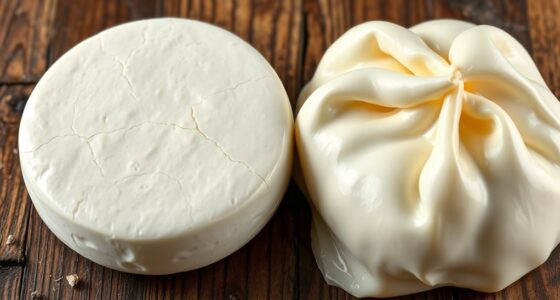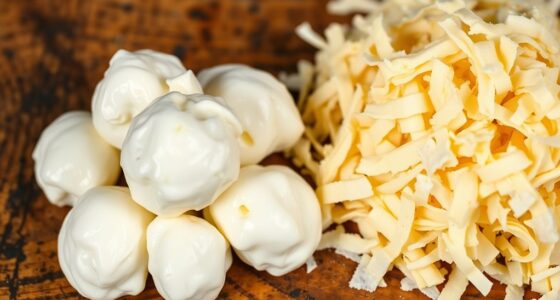
Blending mozzarella with provolone or cheddar can boost your dish’s flavor and texture, making it more delicious and satisfying. Mozzarella melts smoothly for that stretchy, gooey feel, while provolone adds a smoky, rich flavor. Cheddar provides a sharp tang but needs careful melting to avoid greasiness. By combining these cheeses thoughtfully, you create a balanced, flavorful result. Keep exploring to discover tips for perfect cheese blends and elevate your culinary creations.
Key Takeaways
- Blending mozzarella with provolone creates a stretchy, flavorful melt ideal for pizzas and baked dishes.
- Combining mozzarella with cheddar adds a rich, creamy texture with sharper flavor, suitable for sauces and gratins.
- Use gradual heat and frequent stirring to ensure smooth melting and prevent greasy or stringy textures.
- Provolone’s smoky notes complement mozzarella’s mildness, enhancing flavor complexity in mixed cheese applications.
- Adjust ratios based on desired taste and texture, tasting frequently to achieve the perfect cheese blend.

Combining different cheeses can elevate your dishes by balancing flavors and textures to create a more complex and enjoyable experience. When you blend cheeses like mozzarella, provolone, and cheddar, you’re not just mixing ingredients—you’re crafting a harmony of taste and texture that can transform simple meals into culinary delights. Understanding cheese melting properties is essential here, because each cheese behaves differently when heated. Mozzarella melts smoothly, becoming stretchy and gooey, making it perfect for dishes like pizza or lasagna. Provolone also melts well but offers a slightly firmer texture with a mild, smoky flavor that can add depth. Cheddar, on the other hand, tends to melt into a creamy consistency but can also become greasy if overheated, so it’s best to add it gradually and at the right temperature.
When combining these cheeses, you want to *think about* their melting properties to ensure a cohesive, appealing result. For example, blending mozzarella with provolone can produce a stretchy, flavorful cheese layer that maintains integrity when melted. This combination is ideal for sandwiches or baked dishes where you want a balance of stretchiness and flavor. Adding cheddar to this mix can introduce a sharper note, but you should be mindful of its melting behavior. To avoid a greasy or stringy outcome, grate the cheddar finely and stir it in slowly, allowing it to melt evenly without overheating.
Additionally, consistent temperature control is crucial to achieve the best melting and texture when combining cheeses. Flavor pairing tips also come into play when blending cheeses. Mozzarella’s mildness pairs well with the more assertive flavor of cheddar, creating a balanced profile that appeals to many palates. Provolone’s subtle smokiness complements both mozzarella and cheddar, adding complexity without overpowering the dish. When combining cheeses, think about the overall flavor you want to achieve—whether it’s a creamy, mild melt or a sharper, more robust taste. Taste as you go, and don’t hesitate to experiment with small amounts until you find the perfect blend.
You should also *take into account* the context of your dish. For a classic pizza, a mix of mozzarella and provolone provides stretch and flavor without overpowering toppings. For a cheese sauce, blending cheddar with mozzarella can deliver a rich, smooth texture with a tangy kick. Remember, the key to successful cheese blending isn’t just about the cheeses you choose but also how you handle them—gradually melting, stirring frequently, and paying attention to their melting properties. By keeping these tips in mind, you’ll craft cheese combinations that elevate your recipes and satisfy your taste buds.
Frequently Asked Questions
How Do Cheese Blends Affect Melting Properties?
Cheese blends influence melting consistency by creating a smoother, more elastic texture, making dishes like pizzas and sandwiches more appealing. When you combine cheeses like mozzarella with provolone or cheddar, you enhance heat resistance, preventing the cheese from becoming greasy or rubbery. This blend ensures a balanced melt, offering both stretchiness and flavor, so your dishes achieve the perfect melt-in-your-mouth quality every time.
Are There Flavor Pairings That Complement Cheese Blends?
You’ll find that certain flavor pairings enhance cheese blends beautifully. For example, fresh herbs like basil or oregano complement mozzarella and provolone, while smoky or spicy ingredients like jalapeños or paprika add depth to cheddar blends. Think about balancing creamy, mild cheeses with tangy or savory flavors for a harmonious taste. Experimenting with complementary flavors helps create irresistible dishes, whether in sandwiches, pizzas, or cheese boards.
Can Cheese Blends Be Used for Dairy-Free Alternatives?
You can’t use traditional cheese blends for dairy-free options, but you can explore vegan cheese alternatives made from nuts, soy, or root vegetables. These vegan cheeses mimic the flavor and texture of traditional blends, so you can create dairy-free options that suit your taste. Experiment with blending different vegan cheese alternatives to find the perfect flavor combinations, just like you would with regular cheese, but without any dairy.
What Are the Best Storage Methods for Mixed Cheeses?
Imagine blending mozzarella and cheddar for a cheese platter—storing it properly guarantees freshness. You should use airtight storage containers to prevent moisture loss and odor absorption. For longer storage, consider aging techniques like wrapping in wax paper then foil, which helps maintain flavor and texture. Keep cheeses in the fridge’s vegetable drawer or a dedicated cheese drawer, maintaining consistent temperature and humidity to maximize freshness and prevent mold growth.
How Do Cheese Blends Influence Nutritional Content?
Cheese blends can alter nutritional content, offering variations in fat, protein, and calcium levels. When you mix cheeses like mozzarella with provolone or cheddar, you’ll notice differences in sodium and calorie counts, impacting health considerations. These nutritional variations can influence your diet, so it’s wise to check labels or portion sizes. Blending cheeses is tasty, but staying mindful of their combined nutritional profile helps you make healthier choices.
Conclusion
Blending mozzarella with provolone or cheddar lets you craft a cheese symphony that’s both harmonious and exciting. Think of it as painting with flavors—each cheese adding its unique brushstroke to create a masterpiece on your plate. Don’t be afraid to experiment and find your perfect balance. With a little creativity, you’ll turn simple ingredients into a culinary orchestra that delights every time you take a bite. Happy blending!