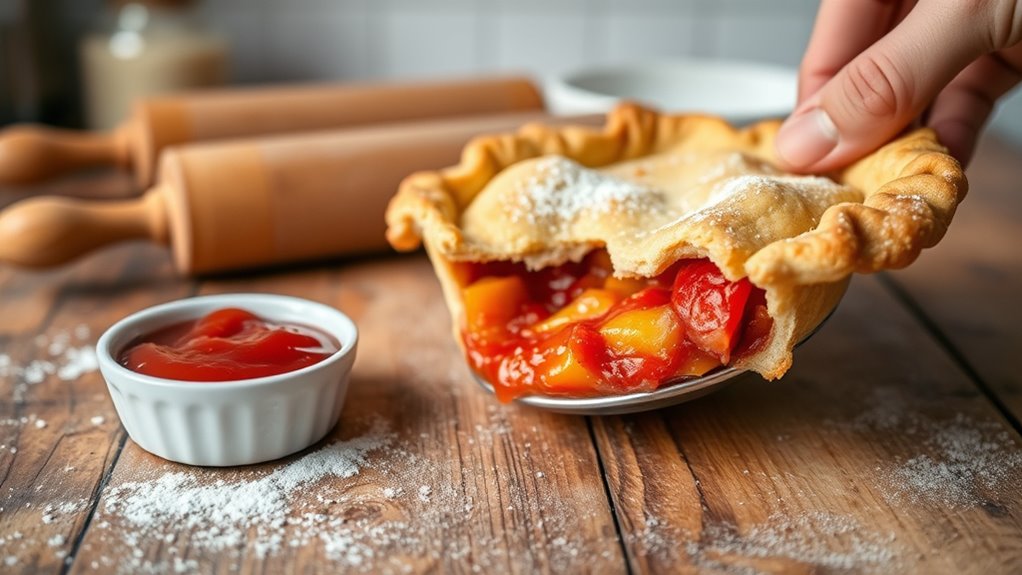
To avoid greasy pies, understanding common myths about fats and mastering proper techniques matter most. Greasiness often results from overmixing dough, using too much fat, or handling it improperly rather than the type of fat itself. Using cold ingredients, chilling dough well, and handling it gently help create flaky, non-greasy crusts. If you want to learn how to perfect your pie crust and steer clear of greasiness, uncover practical tips and proven methods ahead.
Key Takeaways
- Proper fat distribution and gentle handling prevent greasiness in pie crusts.
- Overmixing dough increases gluten, leading to greasy, tough textures.
- Using cold ingredients and chilling dough enhances flakiness and reduces greasiness.
- Fats like butter, shortening, or lard can be used effectively with correct techniques; fat type isn’t the main issue.
- Baking at the right temperature and time ensures a crisp, non-greasy crust.
Common Causes of Greasiness in Pie Crusts
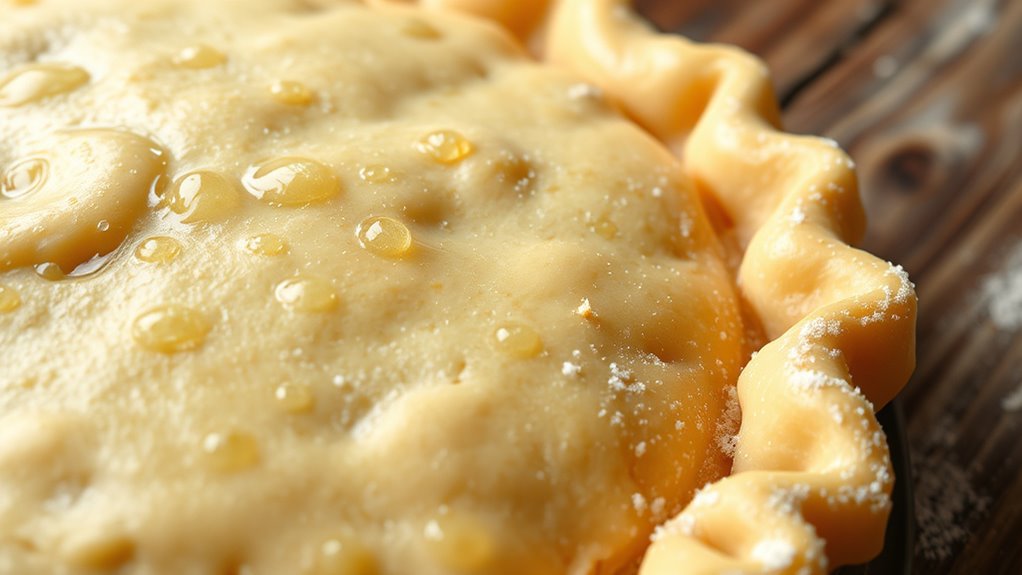
One common cause of greasiness in pie crusts is using too much fat or butter in the dough. When you add excess fat, it can create a greasy texture, especially with sweet fruit fillings that already release moisture. Overmixing the dough or using high-fat ingredients can also contribute to this problem, making the crust heavy and greasy. Additionally, attempting decorative crust designs often involves handling the dough more, which can cause the fat to melt unevenly, increasing greasiness. To avoid this, use cold butter and measure your ingredients carefully. Properly chilled dough handles better, and a balanced fat-to-flour ratio ensures a crisp, flaky crust that holds up well against sweet fillings without becoming greasy. Maintaining proper temperature of ingredients is essential for optimal dough handling and texture.
Debunking Myths About Fat Types and Greasiness
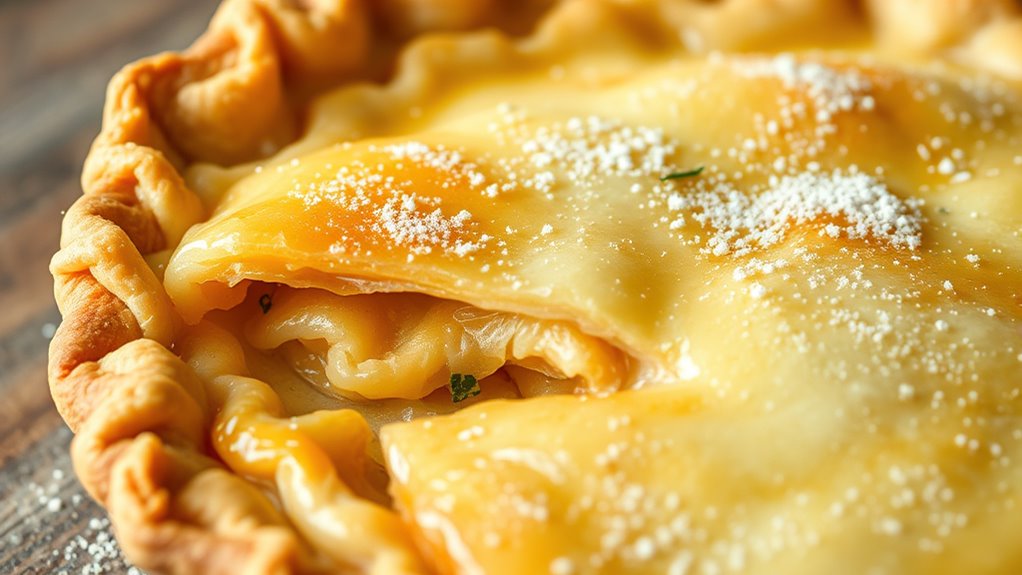
Many people believe that switching to a different type of fat can prevent greasiness in pie crusts, but this is often a myth. The key to avoiding a greasy texture lies more in understanding the role fats play in desserts and how they affect pie crust stability. Different fats, like butter, shortening, or lard, each influence the crust’s structure and moisture content, but none inherently cause greasiness if used correctly. Greasiness often results from overworking the dough or using too much fat, not the fat type itself. Fats in desserts can improve flavor and texture, but it’s how you incorporate them that makes the difference. Proper technique guarantees a stable crust without excessive greasiness, regardless of the fat chosen. Additionally, using the right technique for handling fats can significantly reduce greasiness and improve the overall texture of your pies.
The Role of Fat in Achieving a Flaky, Non-Greasy Crust
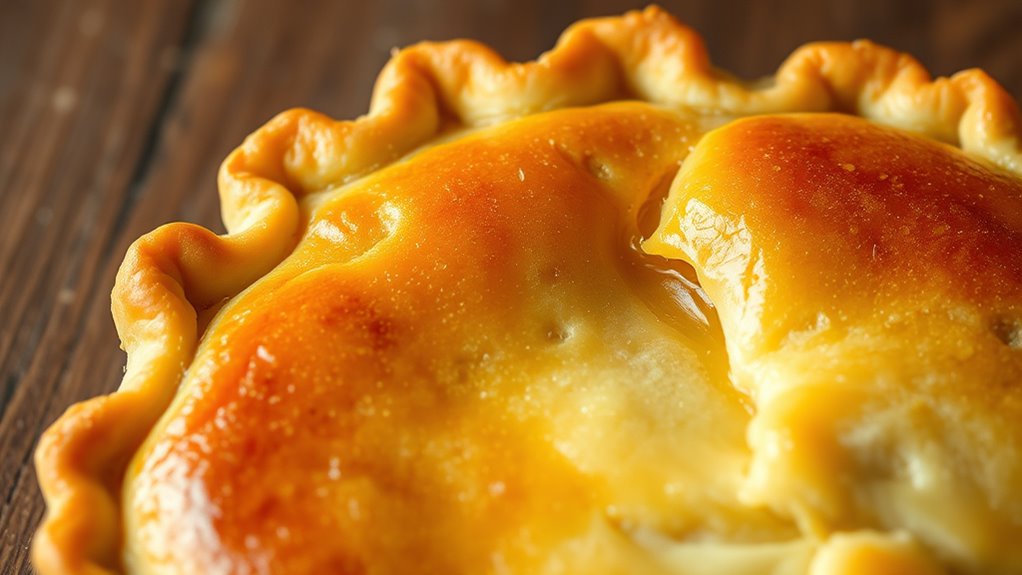
The type of fat you use directly affects how flaky and non-greasy your crust turns out. Properly distributing the fat throughout the dough helps create that perfect, tender layers without excess greasiness. Paying attention to fat choices and placement makes all the difference in your pie’s texture.
Types of Fats Matter
Choosing fats with appropriate melting points ensures your crust remains flaky without becoming greasy. A good understanding of macronutrient ratios can also help optimize your baking process and results.
Proper Fat Distribution
Achieving a flaky, non-greasy pie crust heavily depends on how evenly you distribute fat throughout the dough. Proper fat distribution ensures each bite has a balanced butter flavor and a uniform crust color. To do this, cut the butter into small, pea-sized pieces and mix gently with the flour. Use a pastry cutter or your fingers to incorporate the fat until the mixture resembles coarse crumbs, avoiding overmixing. This method creates pockets of butter that melt during baking, producing flaky layers without excess grease. Be mindful not to leave large chunks of butter unincorporated, as uneven fat distribution can lead to greasy spots or uneven crust color. Consistent mixing and proper fat dispersion are key to a perfect, flaky texture. Additionally, understanding the role of fat in baking can help you refine your technique for even better results.
How Mixing and Handling Techniques Affect Greasiness
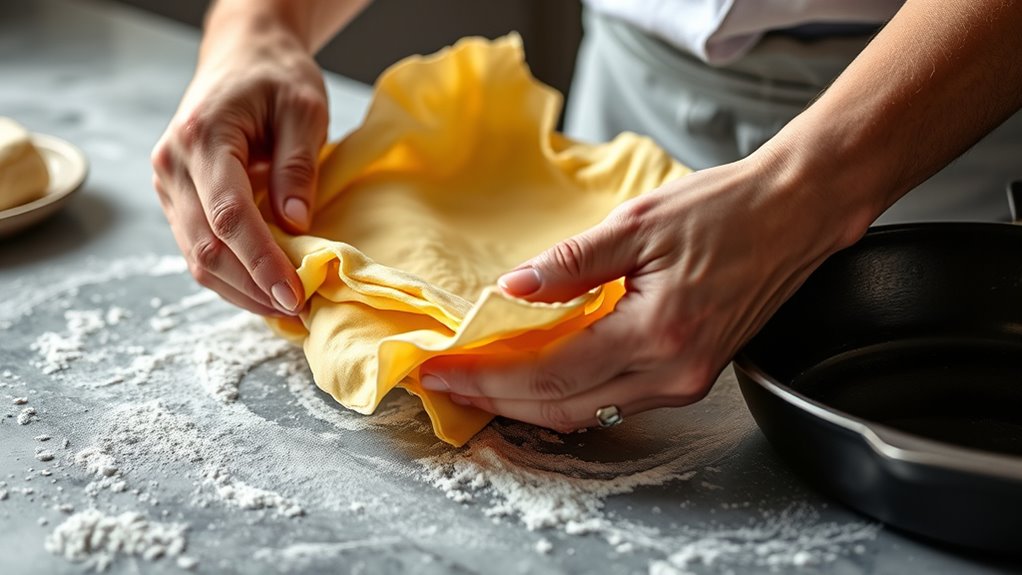
How you mix and handle pie ingredients directly influences how greasy the final product turns out. Overmixing can cause gluten development, leading to a tough, greasy crust. When preparing lattice crusts or decorative edges, gentle handling prevents excess fat absorption. Using cold ingredients and minimal mixing keeps fat in small pockets, resulting in a flaky, less greasy crust. Proper handling also ensures even distribution of fats, avoiding greasy spots. Be cautious with rolling and shaping; too much pressure can release excess fat.
| Technique | Effect on Greasiness |
|---|---|
| Overmixing | Increases greasiness and toughness |
| Gentle handling | Maintains flakiness, reduces greasiness |
| Cold ingredients | Prevents excess fat absorption |
| Overworking dough | Leads to greasy, tough crust |
| Careful shaping | Ensures even fat distribution |
Tips for Properly Chilling and Baking Your Pie Crust
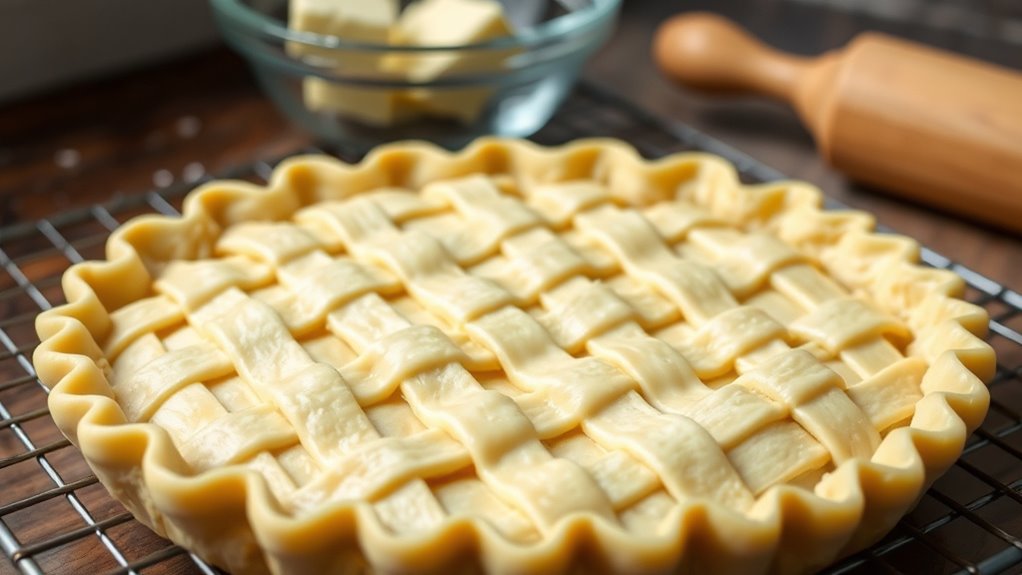
To get a perfect, non-greasy crust, make sure you chill your dough thoroughly before baking. Keep an eye on your baking time and guarantee your oven maintains even heat throughout. These simple steps help you achieve a flaky, well-cooked crust every time. Additionally, using a proper storage method can prevent your pie crust from becoming greasy or spoiled.
Chill Dough Thoroughly
Chilling your pie dough thoroughly is essential for achieving a flaky, tender crust. Proper dough resting and chilling techniques help relax gluten and solidify fats, resulting in a better texture. To guarantee effective chilling, imagine these steps:
- Wrap the dough tightly in plastic wrap, like a cozy blanket, to prevent dryness.
- Place it on a plate or tray, making it easy to handle later.
- Chill in the refrigerator for at least 1 hour, giving the dough time to rest and develop flavor.
- For even better results, chill overnight, allowing the dough to firm up fully.
This process prevents shrinkage, improves workability, and ensures a crisp crust. Proper chilling techniques are key to avoiding greasy or tough pies, setting you up for perfect baking every time. Additionally, using a high-quality airless sprayer for kitchen cleanup or other projects can make the process easier and more efficient.
Use Proper Baking Time
Once your dough has been properly chilled, paying attention to baking time guarantees your crust turns out perfectly. Too short, and the crust may be underdone, resulting in a bland pie flavor and a soggy texture. Overbaking can lead to a burnt crust that looks unattractive and diminishes overall crust aesthetics. Use a timer and check for a golden-brown color as your cue. For a flaky, tender crust, follow the recommended baking duration closely, especially if your recipe calls for pre-baking. Keep in mind that oven differences may require slight adjustments. Proper baking time ensures your pie crust develops the right flavor and appealing appearance, setting the stage for a delicious, visually appealing pie. Additionally, understanding asset division laws can be crucial if your baking process involves sharing or selling pies, ensuring fair and legal distribution of profits.
Maintain Even Oven Heat
Maintaining even oven heat is essential for achieving a perfectly baked pie crust. If the oven temperature fluctuates, your crust may turn greasy or unevenly browned, affecting its aesthetics and texture. To guarantee consistent heat, follow these steps:
- Preheat thoroughly so the entire oven reaches the desired temperature.
- Use an oven thermometer to monitor accuracy, avoiding hot spots.
- Rotate your pie halfway through baking for even coloring.
- Avoid opening the oven door frequently, which can cause temperature drops.
These practices help you control oven heat precisely, resulting in a crust with ideal color and texture. Consistent oven temperature prevents greasy patches and promotes a beautiful, crisp pie crust, elevating your baking game and impressing everyone with your pie’s appearance.
Ingredient Substitutions and Their Impact on Greasiness
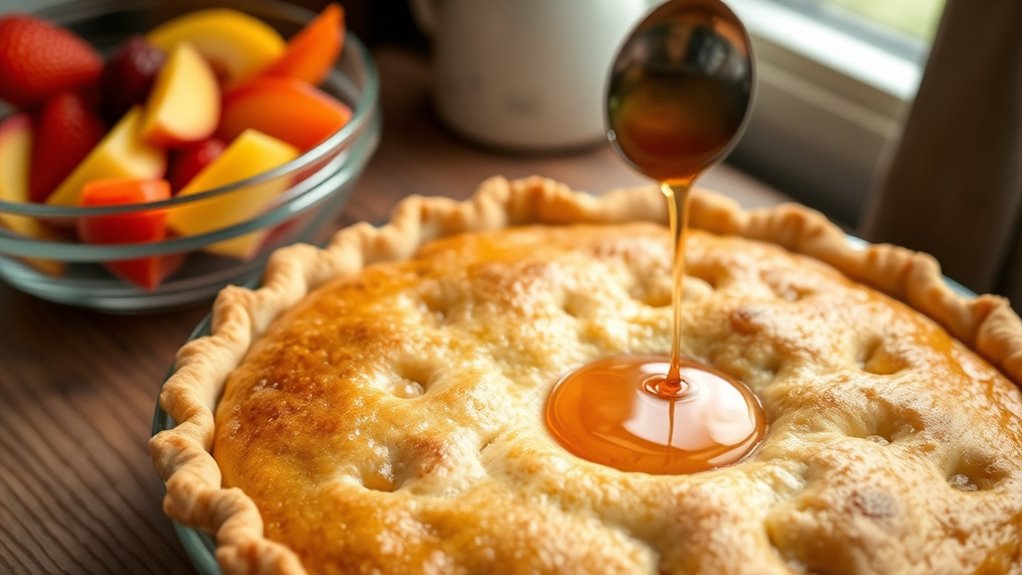
Choosing the right ingredient substitutions can substantially influence the greasiness of your pie. Opting for alternative ingredients like low-fat dairy or plant-based oils can reduce excess oil and fat. Health-conscious swaps, such as using applesauce or mashed bananas instead of butter, can also cut down greasiness without sacrificing flavor. Be mindful that some substitutions may alter texture or taste, so select those that complement your recipe. For example, replacing traditional fats with lighter options helps create a crisp crust without becoming greasy. Incorporating aesthetic wall organization ideas can also help you prepare and present healthier, less greasy pies more effectively. By choosing these smart swaps, you control the fat content and improve the overall health profile of your pie. Experimenting with different ingredient combinations allows you to enjoy delicious, less greasy pies tailored to your preferences.
Troubleshooting Tips for a Perfectly Non-Greasy Pie
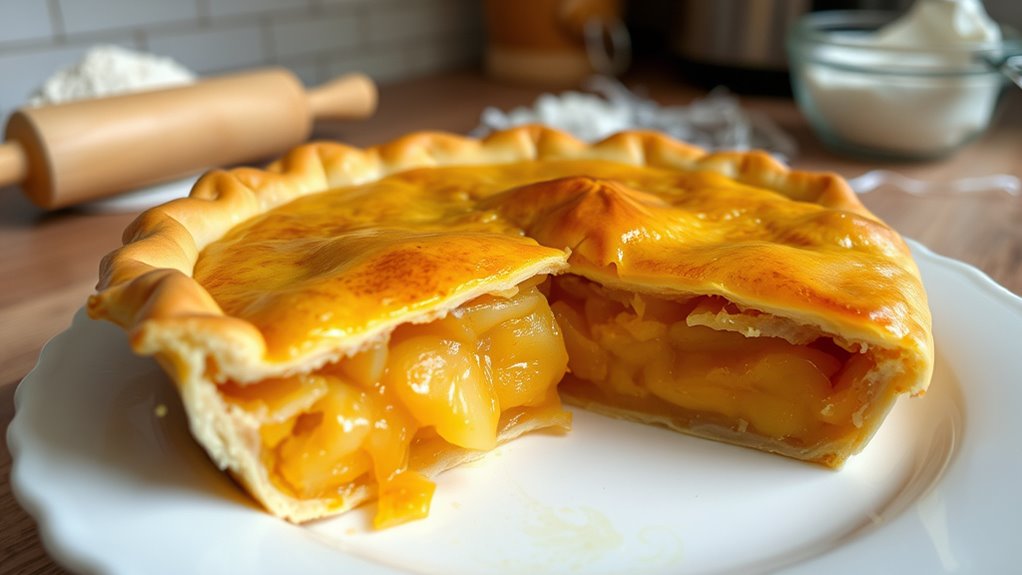
If your pie turns out greasier than you’d like, quick troubleshooting can make a big difference. To improve crust texture and enhance pie flavor, try these steps:
- Drain excess oil by placing the pie on a paper towel for a few minutes before serving.
- Adjust baking time—baking a little longer helps excess fat evaporate, resulting in a crisper crust.
- Use a thicker crust layer to prevent greasiness from seeping through, giving the pie a sturdier texture.
- Apply a light egg wash before baking; it creates a barrier that reduces greasiness and promotes a golden crust.
- Consider the type of fat used in your crust, as some fats can contribute more to greasiness than others, and choosing the right kind can help achieve a less greasy result fats and oils.
These tips help you troubleshoot effectively, ensuring your pie has a perfect crust texture and the ideal pie flavor—less greasy and more delightful.
Frequently Asked Questions
Can Using Alternative Flours Reduce Pie Greasiness?
Yes, using alternative flours can reduce pie greasiness. Many alternative flours, like almond or oat flour, have lower gluten content, which helps create a tender, less greasy crust. They absorb less fat and moisture, resulting in a lighter texture. By choosing these options, you can enjoy a less greasy pie crust without sacrificing flavor, making your baking healthier and more satisfying.
How Does Humidity Influence Pie Crust Greasiness?
Think of humidity as the weather’s whisper in your pie-making journey. High humidity can make your dough more elastic, leading to a greasier crust if not controlled. To keep greasiness at bay, it’s essential to manage humidity by adjusting water content and chilling your dough properly. This way, you maintain the perfect dough elasticity, ensuring your crust stays flaky without becoming greasy, even on damp days.
Is There a Difference Between Store-Bought and Homemade Crust Greasiness?
Yes, store-bought crusts tend to be greasier because they often contain preservatives and added fats to enhance shelf life and texture. Homemade crusts, on the other hand, usually have less greasiness since you control the ingredients and can choose healthier fats or less butter. If you prefer a less greasy pie, making your own crust allows you to adjust the fat content, resulting in a lighter, flakier crust.
Do Different Pie Fillings Affect Crust Greasiness Levels?
Did you know that fillings with higher moisture levels can make your crust seem greasier? Different pie fillings definitely affect crust greasiness—those with more fat content or excess moisture transfer fats into the crust, making it feel greasy. To keep your crust crisp, choose fillings with balanced moisture and fat. Properly draining or pre-cooking wet fillings helps, ensuring your pie’s crust stays flaky rather than greasy.
Can Adding Vinegar or Lemon Juice Prevent Greasiness?
Adding vinegar or lemon juice can help prevent greasiness in your pie crust. Vinegar effects include tenderizing the dough and reducing gluten development, which leads to a flakier crust. Lemon juice impact is similar, as its acidity weakens gluten strands. Both ingredients also help inhibit excess fat absorption, resulting in less greasy pies. Try incorporating a teaspoon into your dough for a noticeable difference in crust texture and greasiness.
Conclusion
Don’t let fears of greasiness hold you back from baking perfect pies. With the right techniques and ingredients, you can achieve a flaky, tender crust that’s not greasy at all. Even if you worry about using fats or handling the dough, trust the tips in this guide—you’ll be surprised how easy it is to master a non-greasy crust. Keep practicing, and soon you’ll be enjoying delicious, perfectly textured pies every time!