
Many people assume that just having a railing at the right height keeps a deck safe, but proper fastening and supporting structure are just as important. Overloading, ignoring signs of decay, and skipping local codes can weaken your deck. Proper spacing, safety features, and lighting also play essential roles. If you want to guarantee your deck is truly safe and durable, there’s more to understand about the key details behind safe placement and maintenance.
Key Takeaways
- Railing height alone doesn’t ensure safety; proper fastener placement and secure connections are essential.
- Over-tightening or under-tightening fasteners can compromise deck stability; regular inspections prevent these issues.
- Ignoring weatherproofing and corrosion-resistant materials leads to fastener and support deterioration over time.
- Failing to adhere to local building codes and permits can result in unsafe and illegal deck structures.
- Neglecting routine maintenance and safety features like proper lighting increases slip, trip, and fall hazards.
Assuming Railing Height Is Always Sufficient
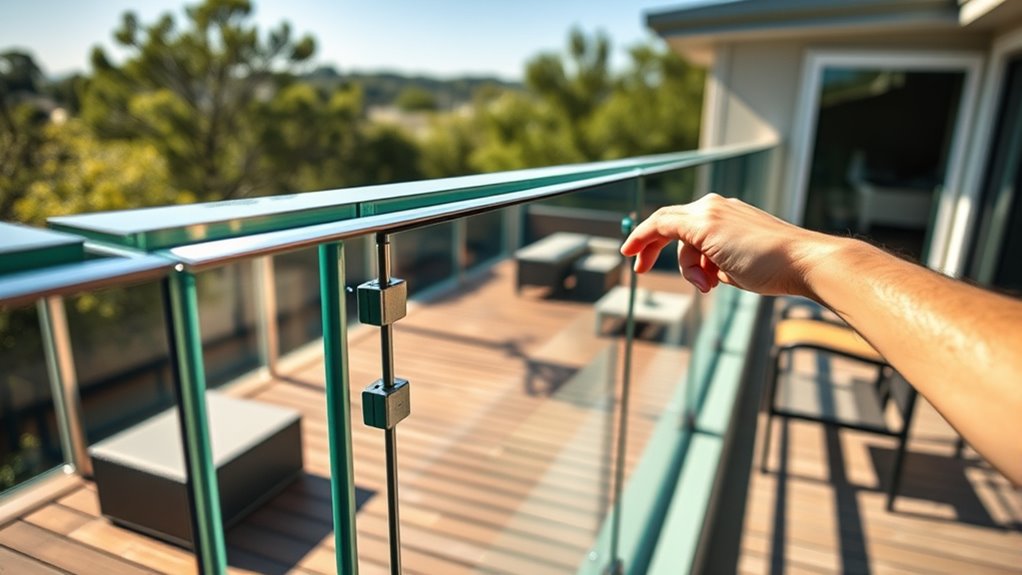
Many people assume that a railing’s height alone guarantees safety on a deck, but that’s not always the case. While building codes specify minimum railing height, it’s essential to consider other factors like fastener techniques that ensure stability. Railing height is crucial, but if your fasteners aren’t secure, the entire system can fail under pressure or weather conditions. Proper fastener techniques, such as using the right anchors and ensuring tight connections, prevent wobbling or detachment. Railing height alone doesn’t account for potential impacts or accidental leaning. You need both a compliant height and solid fastening methods to create a truly safe barrier. Ignoring either aspect can give a false sense of security, risking injury or worse on your deck. Additionally, precise installation practices play a vital role in ensuring the longevity and safety of your railing system.
Overlooking the Importance of Proper Fastening Techniques

You might think any fastener will do, but choosing the right ones is vital for safety. Proper tightening ensures your deck stays secure, while regular inspections catch issues early. Overlooking these techniques can compromise the entire structure, so don’t skip these essential steps. Additionally, selecting appropriate fastening methods that suit your deck’s materials and design can greatly enhance stability and longevity.
Correct Fastener Selection
Choosing the right fasteners is essential for deck safety, but selecting them without considering proper fastening techniques can lead to issues like loosening, rust, or structural failure. Proper fastener selection involves understanding factors like fastener corrosion resistance and screw compatibility with deck materials. Using corrosion-resistant fasteners, such as stainless steel or galvanized options, helps prevent rust that weakens connections over time. Additionally, ensuring the fasteners are compatible with your deck’s wood or composite material avoids issues like splitting or poor grip. Incorrect fastener choices can compromise the deck’s integrity, especially in harsh weather conditions. Always match fastener type and material to your specific decking surface, and opt for high-quality fasteners designed for outdoor use to guarantee longevity and safety. Selecting the right fasteners is also crucial, as it minimizes the risk of fastener failure and extends the lifespan of your deck.
Tightening Procedures Matter
Proper tightening procedures are crucial to guarantee your deck remains safe and durable over time. When installing deck lighting or securing railings, using the right torque ensures fasteners hold firm without causing damage. Over-tightening can strip threads or crack materials, compromising railing aesthetics and safety. Under-tightening leaves components loose, increasing the risk of accidents and reducing the lifespan of your deck. Always follow manufacturer guidelines for torque specifications and use a quality torque wrench. Consistent, precise tightening maintains the integrity of your fasteners and keeps your deck looking polished. Remember, proper fastening techniques are essential not just for safety but also for preserving the visual appeal of your railing and overall deck structure. Don’t overlook these procedures—they’re the foundation of a safe, attractive outdoor space.
Regular Inspection Practices
Regular inspection practices keep your deck safe and long-lasting by catching loose or damaged fasteners early. Regularly check the fastening points, especially around areas with a deck stain that may hide corrosion or wear. Make certain that the railing height remains secure and compliant with safety standards, as loose fasteners can compromise stability. Proper fastening techniques prevent rust and deterioration, which can weaken the structure over time. Tighten any loose screws or bolts and replace damaged ones promptly. Don’t forget to inspect the ledger board and joists, as they’re vital for safety. Consistent inspections help you identify potential hazards before they become costly repairs, guaranteeing your deck remains a secure, enjoyable space for years to come. Incorporating professional voiceover techniques during inspections can also improve your understanding of structural issues and ensure thorough evaluation.
Misjudging the Weight Capacity of Deck Boards
Many homeowners underestimate how much weight deck boards can support, which can lead to dangerous situations. Overloading your deck without considering the proper weight capacity causes stress on the deck joist and ledger attachment points. To avoid this, keep these key points in mind:
- Always check the load limits specified for your deck boards.
- Ensure the deck joist spacing can support heavier loads.
- Verify the ledger attachment is secure and rated for increased weight.
- Avoid placing too much weight in one area, like large gatherings or heavy furniture.
- Understanding sound vibrations and their effects can help in assessing the overall health and stability of your deck structure.
Understanding the true weight capacity helps prevent structural failure. Remember, misjudging this can lead to sagging or even collapse, especially if you don’t account for how much weight the deck can handle safely. Proper assessment keeps everyone safe.
Neglecting to Check for Structural Damage or Decay

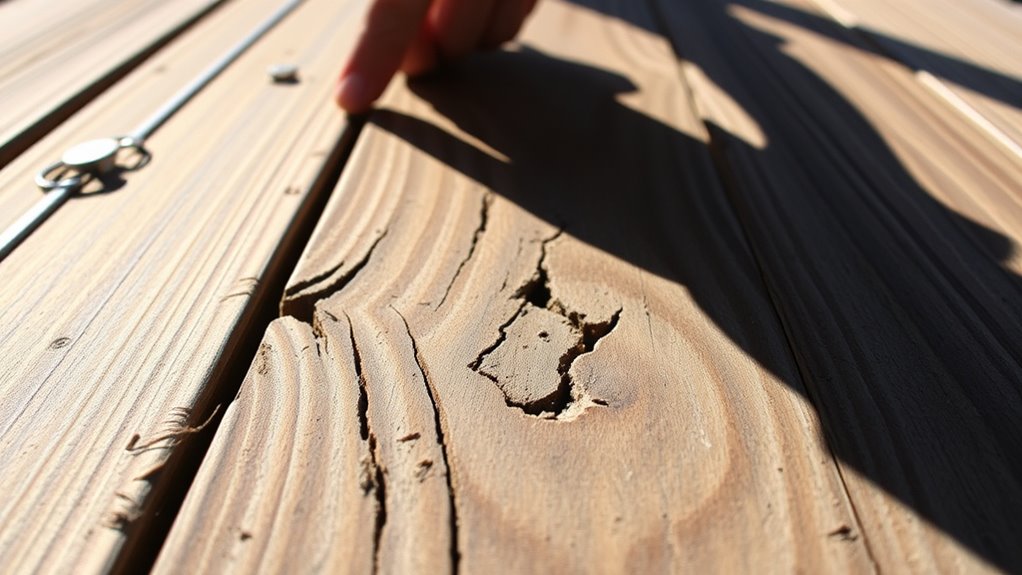
Ignoring signs of structural damage or decay can severely compromise your deck’s safety. Over time, wood can rot, especially beneath the deck surface, weakening support beams and joists. Check for soft spots, splinters, or discoloration that indicate decay. If compromised, your deck might not support weight safely, risking collapse. Also, inspect the railing height to ensure it meets safety standards; a railing too low won’t prevent falls, especially if the structure is weakened. Do not overlook loose or rusted fasteners, as they can cause instability. Regularly examining these elements helps you catch problems early, preventing accidents. Additionally, the increasing use of automation technologies in construction can improve safety inspections through robotics or sensors, ensuring thorough checks. Remember, a structurally sound deck isn’t just about aesthetics—it’s essential for safety and peace of mind. Neglecting these checks puts everyone at risk.
Ignoring Local Building Codes and Regulations
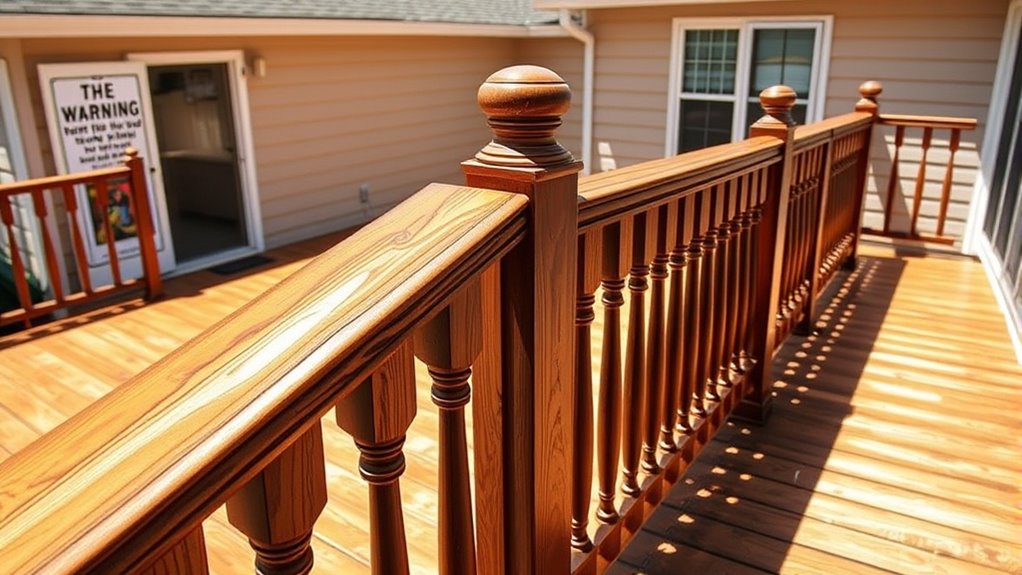
Overlooking local building codes and regulations can undermine the safety of your deck just as much as neglecting structural inspections. Ignoring these rules, including local codes and zoning laws, risks penalties and unsafe construction. Here are four key points to contemplate:
Neglecting local codes risks safety, penalties, and costly legal issues—always verify regulations before building your deck.
- Permits and approvals: Always obtain necessary permits before building or modifying your deck.
- Setback requirements: Zoning laws dictate how close your deck can be to property lines or structures.
- Load limits: Local codes specify weight capacities to prevent overloading.
- Material restrictions: Some areas have regulations on materials to ensure safety and compliance.
Failing to follow these regulations can compromise safety and lead to costly legal issues. Always check with local authorities before starting your project. Additionally, understanding building standards ensures your deck meets safety and durability expectations.
Using the Wrong Materials for Weather Resistance
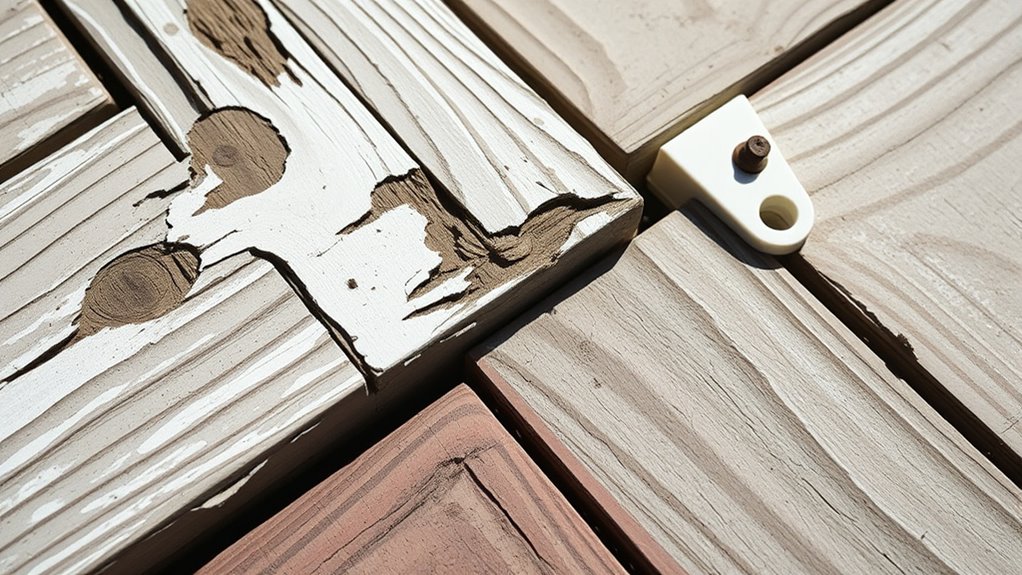
Choosing the right materials for weather resistance is essential to guarantee your deck remains safe and durable over time. Using weatherproof materials like treated lumber, composite decking, or sealed wood prevents rot and decay caused by moisture exposure. Avoid cheap or untreated wood, which can deteriorate quickly in harsh weather conditions. Additionally, always select corrosion resistant fasteners, such as stainless steel or coated screws, to prevent rust and weakening of the deck structure. Regularly inspecting and replacing fasteners ensures your deck stays solid and safe. Ignoring these details can lead to structural failure and costly repairs. Prioritizing weather-resistant materials and fasteners helps your deck withstand the elements, maintaining its safety, appearance, and longevity for years to come.
Underestimating the Impact of Proper Support Posts and Footings

You might think support posts and footings are minor details, but they’re actually vital for your deck’s stability. Proper placement of posts ensures even weight distribution, while strong footings prevent shifting or sinking over time. Ignoring these elements can compromise safety and cause costly damage down the line. Utilizing anti-corrosion materials can help prolong the lifespan of support structures and maintain their effectiveness.
Importance of Support Post Placement
Proper placement of support posts is essential because it directly affects the stability and safety of your deck. Incorrect placement support can lead to sagging, shifting, or even collapse. To guarantee proper support post placement, consider these key points:
- Position support posts at load-bearing points, especially under corners and joists.
- Maintain consistent spacing to evenly distribute weight.
- Use level posts to prevent uneven settling.
- Verify that posts are anchored securely to prevent movement.
- Incorporate vertical storage solutions to keep your deck organized and ensure that the support structure remains unobstructed and properly maintained.
Role of Footings in Stability
While support posts are essential for deck stability, neglecting the importance of properly installed footings can undermine the entire structure. Footing stability is vital because it distributes the load evenly and prevents sinking or shifting over time. Without solid, well-placed footings, the foundation integrity of your deck is compromised, making it vulnerable to movement and structural failure. Proper footings ensure that your support posts remain secure, even under heavy loads or adverse weather conditions. Many overlook this step, assuming support posts alone are enough, but weak footings can lead to uneven settling and dangerous wobbling. To keep your deck safe and durable, prioritize installing footings that are appropriately sized, deep enough, and correctly positioned to support the entire structure effectively.
Failing to Regularly Inspect and Maintain Deck Components

Failing to regularly inspect and maintain deck components can lead to serious safety hazards over time. Overlooking issues may cause deck surface deterioration or compromised railing height, risking falls and injuries. To stay safe, check these key areas:
Regular deck inspections prevent hazards and keep your outdoor space safe.
- Examine the deck surface for cracks, rot, or loose boards.
- Ensure railing height meets safety standards and is secure.
- Look for rust or corrosion on metal fasteners and supports.
- Tighten or replace loose or damaged bolts and nails.
Regular inspections help identify problems early, saving you from costly repairs or accidents later. Maintaining the integrity of your deck isn’t just about aesthetics—it’s about safety. Prioritize these checks periodically to keep your deck safe for everyone.
Being aware of deck safety guidelines and proper maintenance routines can further help prevent accidents and ensure longevity.
Overloading the Deck With Heavy Furniture or Decorations
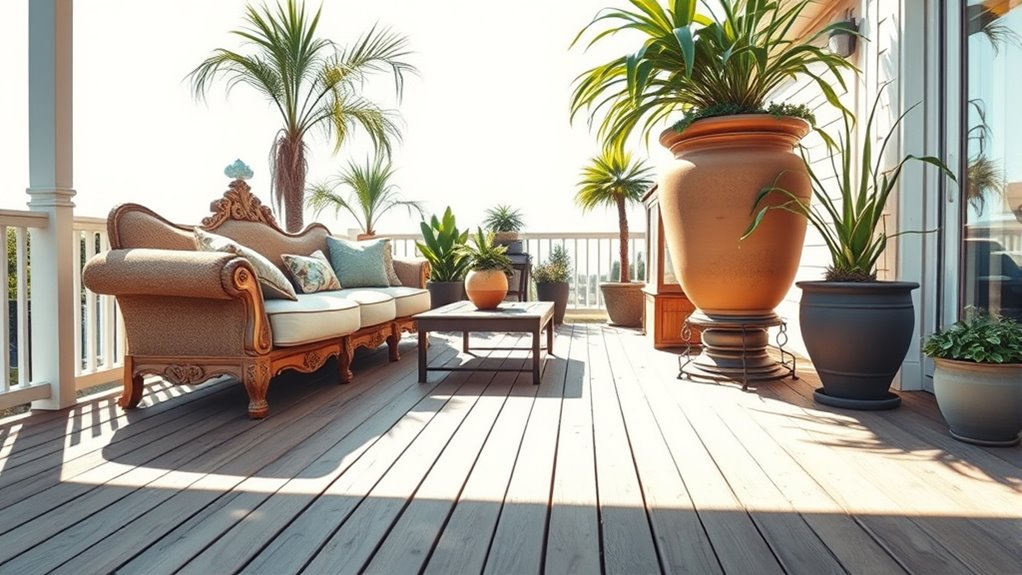
Overloading your deck with heavy furniture or decorations can substantially compromise its safety. Excess weight from large furniture or numerous decorative items can strain the deck’s structure, increasing the risk of sagging or collapse. Proper furniture placement is essential; distribute weight evenly and avoid concentrated loads in one area. Be cautious with decorative items like large planters, statues, or heavy planters, as they add unnecessary weight that the deck may not support. Before adding heavy furniture or decorations, check your deck’s weight capacity, typically found in the manufacturer’s specifications or consult an expert if unsure. Overloading not only weakens the structure but also creates potential hazards for everyone using the space. Keep safety in mind by managing the weight and placement of all items on your deck.
Not Considering Proper Spacing Between Deck Boards for Drainage

Proper spacing between deck boards is essential for effective drainage and preventing water accumulation. When boards are too close, water can pool, reducing drainage effectiveness and increasing the risk of rot. To guarantee proper decking water runoff, consider these key points:
- Maintain a gap of about 1/8 to 1/4 inch between boards to promote water flow.
- Use proper fasteners to prevent shifting that could close gaps over time.
- Select durable, weather-resistant materials to withstand moisture exposure.
- Regularly inspect and clear debris from gaps to maintain drainage efficiency.
Overlooking the Significance of Safe Stair and Railing Design

Your deck’s stairs and railings play a vital role in safety and usability. Poor design can lead to accidents and increased maintenance costs over time. Choosing the right materials and paying attention to design details make all the difference in keeping your deck safe and durable.
Design Impact on Safety
Have you ever pondered how the design of stairs and railings directly affects deck safety? The way you choose and design these elements impacts both safety and deck aesthetics. Poorly designed stairs can cause trips, while unsafe railings increase fall risks. Your color choices also matter—they can highlight hazards or make steps more visible. Here are four key points to consider:
- Make sure stairs have uniform rise and run for safe footing
- Use high-contrast color schemes to improve visibility
- Opt for sturdy, well-placed railings that are easy to grasp
- Match railing height and spacing to safety standards and aesthetics
Focusing on these details creates a safer, more attractive deck environment that encourages use without risking injury.
Material and Maintenance Considerations
Choosing the right materials and maintaining them properly are vital for ensuring deck safety, especially when it comes to stairs and railings. Your deck surface influences how well materials hold up over time, affecting safety and stability. Opt for durable materials like treated wood, composite, or metal that resist wear, rot, and corrosion. Regular inspections and upkeep are essential; loose or damaged components can create hazards. Clean your deck surface regularly to prevent debris buildup, which can cause slips. Pay close attention to railing connections and stair supports, replacing worn or compromised parts immediately. Proper material selection and ongoing maintenance not only extend your deck’s lifespan but also keep it safe for everyone using it. Neglecting these considerations increases the risk of accidents and costly repairs.
Ignoring the Need for Proper Lighting and Safety Features
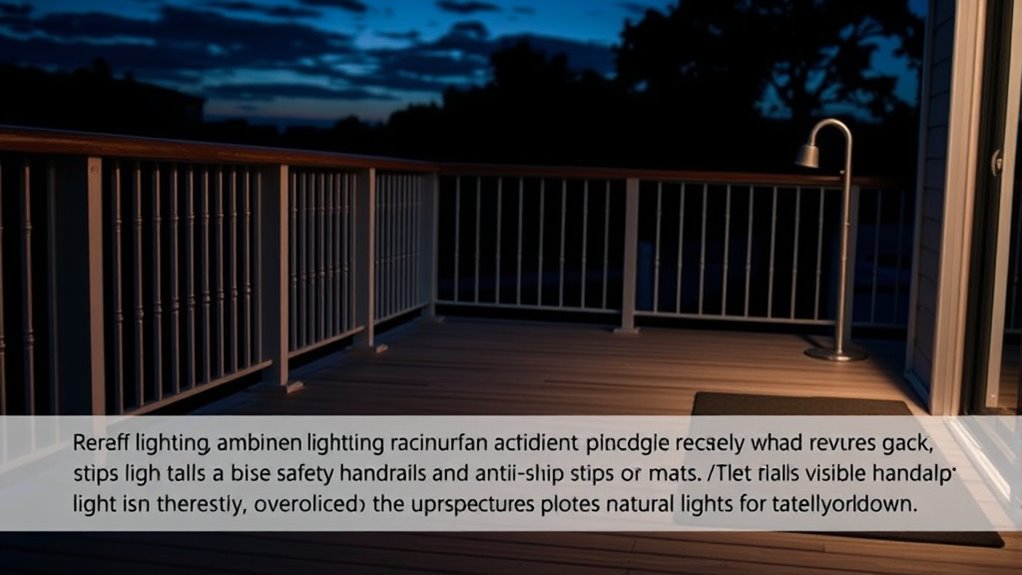
Neglecting proper lighting and safety features on decks can lead to serious accidents and injuries. Without adequate deck lighting, you might trip over unseen objects or miss hazards at night. Safety features like guardrails and non-slip surfaces are essential to prevent falls. Here are four key points to contemplate:
- Install sufficient deck lighting to illuminate walkways and edges.
- Use safety features such as sturdy guardrails and balustrades.
- Ensure lighting is weatherproof and positioned to avoid glare.
- Regularly check safety features for stability and effectiveness.
Ignoring these essentials increases the risk of accidents. Proper deck lighting and safety features aren’t just optional—they’re indispensable for a secure, enjoyable outdoor space. Prioritize these elements to protect yourself and loved ones.
Frequently Asked Questions
How Often Should I Inspect My Deck for Safety Issues?
You should inspect your deck for safety issues at least once a year, and after any severe weather. Regular deck maintenance includes checking for loose boards, rusted nails, or unstable railings. Conduct safety inspections more frequently if your deck sees heavy use or if you notice signs of wear. Staying proactive helps prevent accidents and prolongs your deck’s lifespan. Make safety inspections a routine part of your deck maintenance schedule to keep everyone safe.
What Signs Indicate Deck Structural Decay or Damage?
You should look for signs like deck rot, which shows up as soft, spongy, or discolored wood, and rusted joists, indicating metal components are corroding. Cracks, sagging, or loose boards also signal structural damage. Regularly inspecting these issues helps catch decay early, ensuring your deck remains safe. If you notice any of these signs, it’s essential to repair or replace damaged parts before using the deck again.
Are There Specific Weather Conditions That Weaken Deck Materials?
Certain weather conditions can weaken your deck materials, especially if it’s not properly maintained. Heavy rain and snow can cause water to seep in, compromising deck waterproofing and leading to rot. Strong winds can damage or loosen boards, reducing wind resistance. Over time, exposure to harsh weather accelerates deterioration, so it’s essential to regularly inspect and maintain your deck to guarantee it remains sturdy and safe.
How Can I Ensure My Deck Complies With Local Regulations?
Think of your deck as a story waiting to unfold; to keep it harmonious, you must follow the rules. You guarantee compliance by checking permit requirements and zoning restrictions with local authorities. Obtain necessary permits before starting, and review zoning laws to avoid conflicts. This proactive approach acts as a shield, protecting your vision and investment, ensuring your deck aligns perfectly with community standards and regulations.
What Are the Best Materials for Long-Lasting, Weather-Resistant Decking?
For long-lasting, weather-resistant decking, choose composite materials like vinyl or capped polymer decking, which resist moisture and UV damage. Naturally durable options like cedar or redwood also work well, but require regular maintenance. During decking installation, guarantee proper sealing and ventilation to reduce wear. Regular material maintenance, such as cleaning and sealing, extends your deck’s lifespan, keeps it looking good, and prevents weather-related damage.
Conclusion
So, you might think you’ve got deck safety down, but ignoring these basics could turn your perfect outdoor space into a disaster. It’s funny how we trust that railing is tall enough or that the boards can handle anything, only to realize later there’s a flaw. Remember, a little attention now saves a lot of trouble—and maybe a few trips to the emergency room. Safety isn’t just a suggestion; it’s your deck’s best friend.