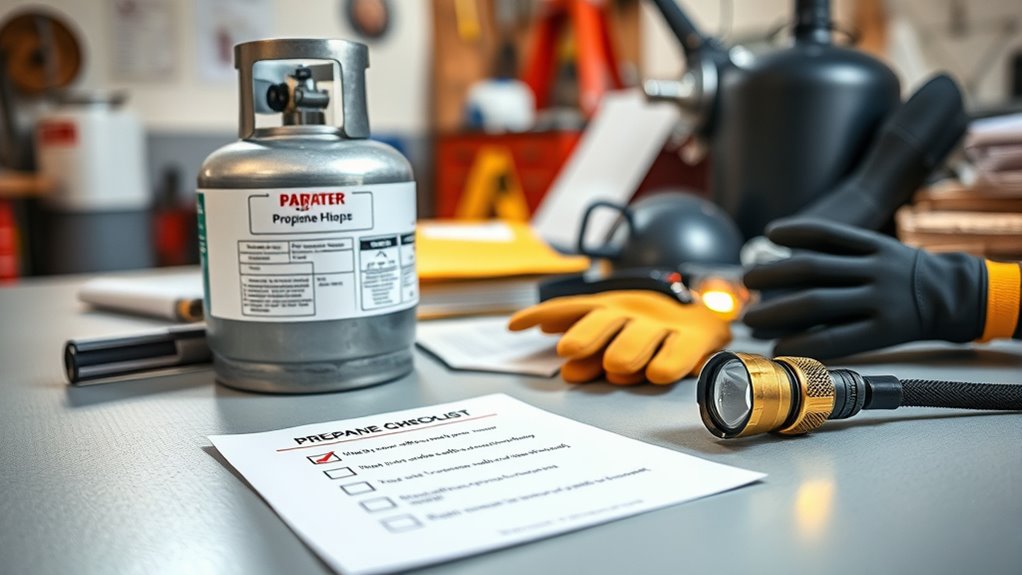

To master propane handling basics in a weekend, start by thoroughly inspecting your equipment for leaks, corrosion, or damage using soapy water. Learn proper storage techniques—keep cylinders upright, in cool, ventilated areas away from heat sources. Practice safe connection and disconnection procedures, always turning off valves first. Develop quick response skills for emergency shutoffs and stay vigilant. Staying disciplined with these steps builds a strong foundation, and if you keep exploring, you’ll become increasingly confident and safe.
Key Takeaways
- Review equipment inspection and maintenance procedures to identify leaks, damage, and ensure safe operation.
- Practice proper storage and handling techniques, including secure connections and safe transport.
- Learn emergency shutoff procedures and regularly rehearse response actions for propane leaks or hazards.
- Ensure storage areas are well-ventilated, dry, and free of heat sources or ignition risks.
- Develop safe handling habits through routine inspections, organized workspaces, and vigilant safety practices.
Essential Safety Practices for Propane Handling
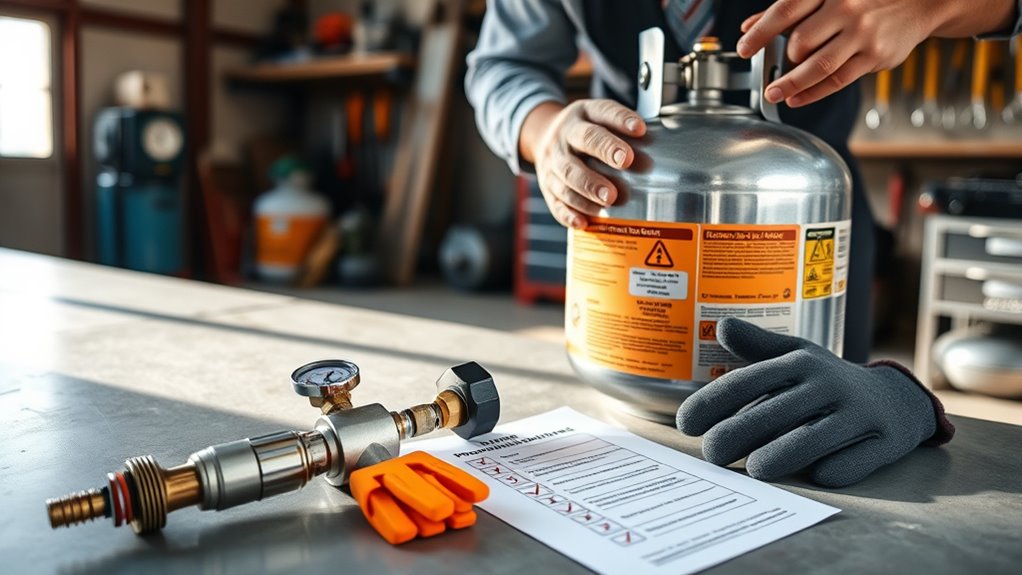
Are you familiar with the essential safety practices for handling propane? If not, it’s imperative that you learn them quickly, especially if you want to master propane handling basics over a weekend. Safety precautions are the foundation of safe propane use, and understanding them helps prevent accidents, injuries, and property damage. First, always inspect your equipment thoroughly before use. Check for leaks, corrosion, or damage to hoses, valves, and cylinders. Using soapy water to detect leaks is a simple but effective method—if bubbles form, you’ve got a leak that needs fixing before proceeding. Proper equipment maintenance is key here because neglected or worn-out parts can be hazardous. Regularly maintaining your equipment ensures it operates safely and efficiently, reducing the risk of dangerous malfunctions. Developing good habits around trust issues such as routine inspections and cautious handling also plays a crucial role in preventing accidents. Next, familiarize yourself with the correct handling procedures for propane cylinders. Always store cylinders upright in well-ventilated areas, away from heat sources, open flames, and direct sunlight. When attaching or detaching regulators and hoses, do so with the cylinder turned off and ensure all connections are tight but not over-tightened, which can damage fittings. It’s essential to handle cylinders carefully, avoiding dropping or knocking them over, as physical damage can cause leaks or ruptures. Keep cylinders away from electrical outlets and sources of static electricity, which might ignite leaked gas. Use protective gloves and goggles during these procedures for added safety. Understanding how to shut off propane quickly is critical. In an emergency, you need to turn off the supply at the cylinder valve immediately. Practice this action so it becomes second nature; quick response can prevent escalation of a problem. Always check that appliances and equipment connected to propane are turned off before disconnecting or performing any maintenance. When storing propane, ensure the area is dry, cool, and free of clutter that could cause tripping or damage. Proper storage and handling reduce the risk of leaks and accidental ignition. Throughout your weekend learning, focus on developing good habits: routine equipment inspections, maintaining a clean workspace, and adhering strictly to safety precautions. These practices not only keep you safe but also prolong the life of your equipment. Remember, mastering propane handling isn’t just about knowing the steps—it’s about cultivating a mindset of safety and vigilance. By the end of your weekend, you should feel confident in your ability to handle propane responsibly, ensuring safety for yourself and those around you. Regularly revisiting these safety precautions and performing equipment maintenance will reinforce your skills and keep your propane operations running smoothly.
Frequently Asked Questions
What Are Common Signs of Propane Leaks to Watch For?
You should watch for signs of propane leaks like a strong gas smell, often described as rotten eggs, or hissing sounds near your tanks or appliances. Leak detection is vital, so regularly check connections and valves for corrosion or damage. Always follow safety precautions, such as turning off the valve if you suspect a leak and ventilating the area. Being alert helps prevent accidents and guarantees safe propane handling.
How Often Should Propane Tanks Be Inspected for Safety?
You should inspect your propane tank at least once every year to guarantee safety. Regular checks include verifying tank labeling for clarity and signs of corrosion or damage. Leak detection is essential; use soapy water around connections and valves to spot leaks quickly. By thoroughly inspecting your tank annually, you minimize risks and guarantee safe propane handling, keeping you and your property protected.
What Should I Do if I Smell Propane Indoors?
If you smell propane indoors, act quickly by ventilating the area immediately. Avoid using any electrical switches or open flames. Perform gas leak detection by carefully checking connections and appliances for leaks. Wear appropriate safety gear, like gloves and eye protection, before attempting to locate the leak. If you can’t identify or stop the leak, evacuate the space and contact emergency services or your propane supplier for assistance.
Are There Specific Clothing Requirements for Propane Handling?
Protective clothing and safety gear are paramount when handling propane. You should wear thick, flame-resistant gloves, sturdy steel-toed boots, and long sleeves to shield against splashes and sparks. Safety goggles protect your eyes from potential leaks, while a helmet or hard hat adds extra security. Always prioritize proper protective clothing to prevent accidents, ensuring your safety while confidently controlling and handling propane with caution and care.
Can I Transport Propane Tanks in My Vehicle?
Yes, you can transport propane tanks in your vehicle, but you must prioritize tank transportation safety. Always secure the tanks upright and in a well-ventilated area, away from heat sources. Confirm the tanks are capped and leak-free before loading. Follow local regulations and manufacturer guidelines to prevent accidents. Proper vehicle safety measures protect you and others on the road, making propane tank transport secure and compliant.
Conclusion
By mastering these propane handling basics, you’re not just learning rules—you’re becoming a guardian of safety. Think of this checklist as your shield against potential hazards, turning chaos into control. Remember, safety isn’t just a checklist; it’s a mindset. Embrace these practices wholeheartedly, and propane handling will become second nature. After all, why just handle propane when you can master it? Your safety journey starts now—are you ready to take the first step?