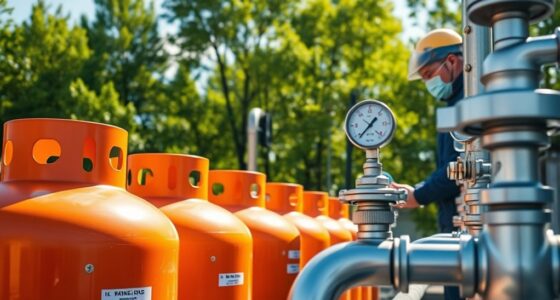
To handle propane safely, follow established safety regulations, inspect tanks and equipment regularly, and store tanks outdoors in well-ventilated areas away from heat sources. Check for leaks using soapy water and tighten fittings carefully. Transport tanks securely and follow road safety rules. Always wear PPE like gloves and goggles, and know emergency procedures if leaks or accidents occur. Staying aware of best practices and updates helps keep everyone safe—continue to explore more essentials for safe propane handling.
Key Takeaways
- Follow proper storage protocols: store tanks upright outdoors in well-ventilated, protected areas away from heat sources.
- Conduct regular inspections of hoses, valves, and fittings for leaks, corrosion, or damage; log maintenance activities.
- Before lighting, check fittings for cleanliness, tighten securely, and verify area is ventilated and free of leaks.
- Use approved ignition sources, keep face and body away during lighting, and follow manufacturer instructions precisely.
- In emergencies, shut off the propane source, evacuate the area, call emergency services, and provide first aid with proper PPE.
Understanding Propane Safety Regulations

Understanding propane safety regulations is essential because they set the standards you must adhere to prevent accidents and guarantee safe handling. Regulatory compliance isn’t optional; it’s necessary to avoid fines and protect everyone involved. You need to familiarize yourself with local, state, and federal rules governing propane use. Safety training plays a critical role in this process, ensuring you and your team understand proper procedures, risk factors, and emergency protocols. Regularly updating your knowledge helps you stay compliant and reduces hazards. By following these regulations and investing in safety training, you create a safer environment, minimize accidents, and promote responsible propane handling. Staying informed and compliant isn’t just about legal requirements—it’s about safeguarding lives and property every step of the way. Additionally, understanding industry trends can help you anticipate future safety standards and implement proactive measures.
Proper Storage Techniques for Propane Tanks
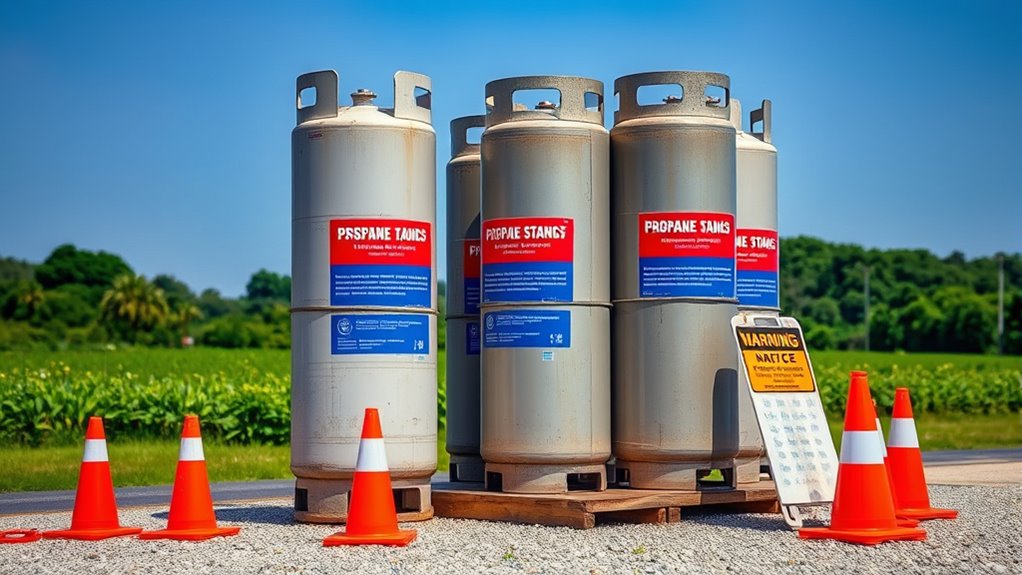
Proper storage of propane tanks is essential to guarantee safety and maintain the integrity of the tanks. Always store tanks outdoors in a well-ventilated area to prevent gas buildup. Keep tanks upright and away from heat sources or open flames. Ensure proper propane tank ventilation by avoiding enclosed spaces that can trap gas. Use a sturdy, non-combustible container if storing multiple tanks. Protect tanks from extreme weather and physical damage.
| Storage Tip | Explanation |
|---|---|
| Outdoor Storage | Keeps gas vented and reduces fire risk |
| Upright Position | Prevents leaks and ensures proper valve operation |
| Ventilation | Avoids gas accumulation in case of leaks |
| Distance from Heat & Flames | Reduces risk of explosion or damage |
| Physical Protection | Shields tanks from impacts and weather |
Inspecting and Maintaining Equipment Regularly
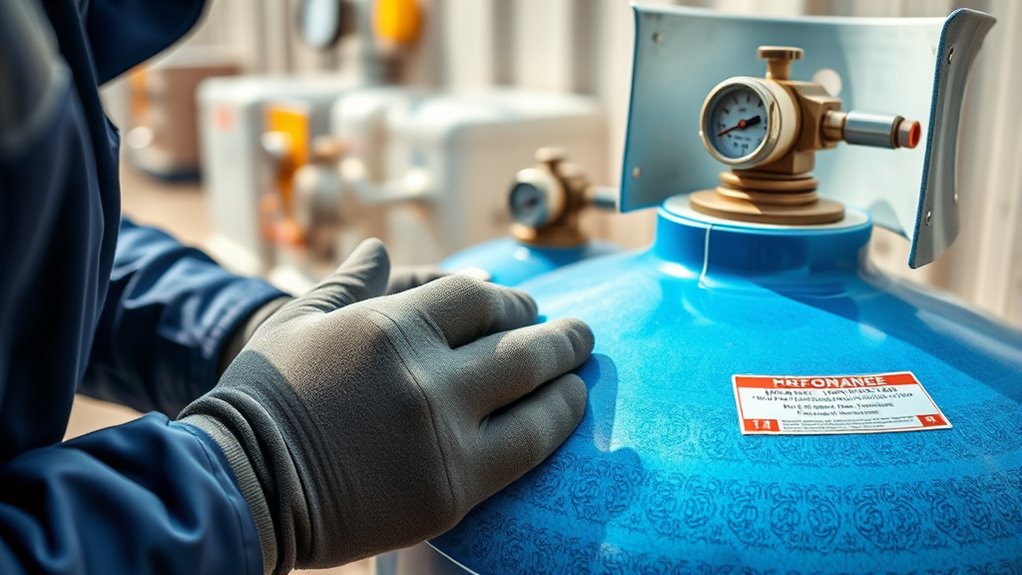
Regularly inspecting and maintaining your propane equipment is essential to guarantee safe and efficient operation. Equipment inspections help identify potential issues before they become serious problems. Check hoses, fittings, and valves for signs of wear, leaks, or damage. Look for corrosion, cracks, or loose connections that could cause leaks or malfunctions. Maintenance routines should include cleaning components and replacing worn parts promptly. Keep a log of inspections and repairs to track the equipment’s condition over time. Ensuring everything is in good shape minimizes safety risks and prolongs the lifespan of your equipment. Remember, proactive maintenance not only keeps your propane system running smoothly but also helps prevent accidents, making safety your top priority. Regular preventive care can significantly reduce the likelihood of unexpected failures and costly repairs.
Handling Propane Connections and Fittings
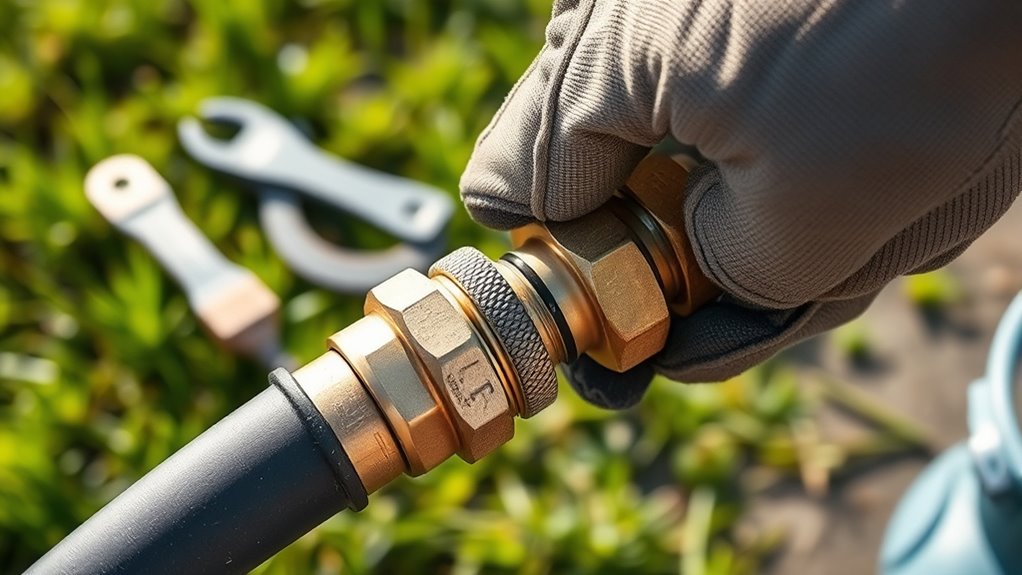
Handling propane connections and fittings carefully is essential to guarantee safe and leak-free operation. Always inspect connection fittings before use, ensuring they’re clean and free of damage. When attaching fittings, use proper coupling techniques—turn the fittings gently by hand to avoid cross-threading or stripping. Tighten connections securely, but avoid over-tightening, which can damage the fittings or cause leaks. Use a wrench carefully, ensuring a snug fit without forcing it. Check that all connections are tight and properly aligned before turning on the gas. Remember, proper handling of connection fittings minimizes leaks and safety hazards. Taking your time and following correct coupling techniques helps maintain safe propane use, preventing accidents and ensuring your equipment functions smoothly.
Recognizing and Addressing Propane Leaks
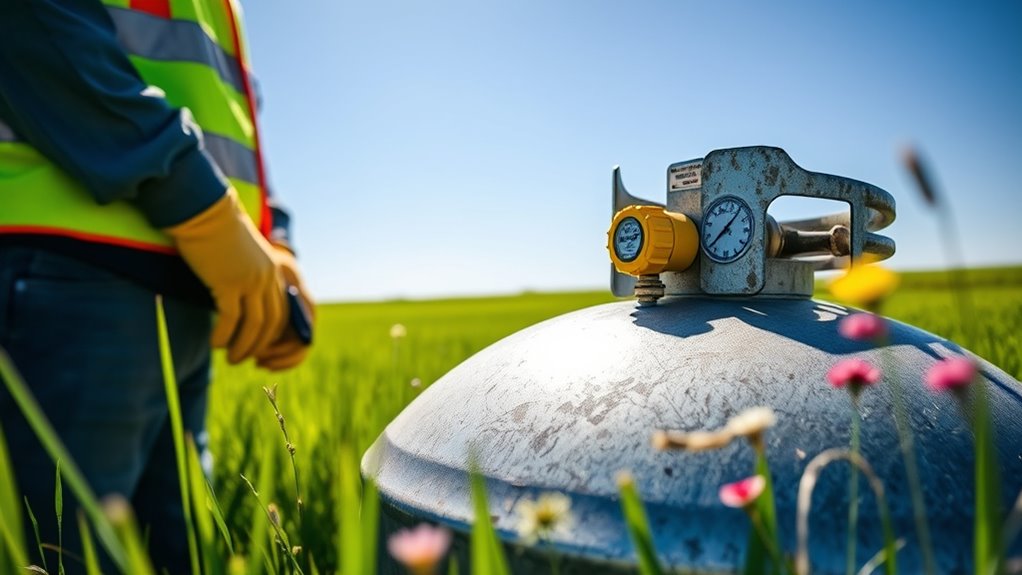
Since propane leaks can pose serious safety risks, it’s crucial to recognize the signs early. One of the most reliable methods is smell detection—propane has a distinctive, sulfur-like odor added for safety. If you notice this smell near your tank, fittings, or lines, stop what you’re doing and investigate immediately. Look for signs like hissing sounds or dirt and debris being blown around the connections. If you suspect a leak, don’t try to fix it yourself unless you’re trained; instead, prioritize leak repair by shutting off the propane supply and ventilating the area. Always contact a professional to handle leak repairs safely. Quick detection and proper response can prevent accidents and ensure safe propane handling. Additionally, understanding safety protocols can help you respond effectively in emergency situations.
Safe Lighting and Operating Procedures

When lighting your propane appliances, always follow proper ignition techniques to guarantee safety. Use matches or lighters carefully, and never attempt to light a stove or heater if you smell gas. Keep safe operating practices in mind to prevent accidents and keep everything running smoothly. Additionally, ensure the installation complies with local fire safety regulations to prevent hazards.
Proper Ignition Techniques
Proper ignition techniques are essential for safely lighting and operating propane appliances. Always use approved ignition sources, such as spark igniters or electronic starters, rather than matches or lighters. Before igniting, ensure the area is well-ventilated and free of leaks. Check for gas leaks by applying a soapy solution around connections—never use a flame. When lighting, turn on the gas supply slowly to avoid a sudden rush of propane. Keep your face and body away from the burner during ignition to prevent injury. To prevent sparks, avoid creating static electricity by touching grounded metal before handling the appliance. Always follow manufacturer instructions carefully. Proper ignition techniques reduce the risk of accidents and ensure safe, reliable operation of your propane equipment. Incorporating natural elements such as plants or water features can also promote a calming and safe environment around your propane appliances.
Safe Operating Practices
To guarantee safe lighting and operation of propane appliances, you must follow specific procedures consistently. Always read and adhere to propane safety signage to understand hazards and proper handling. Before igniting, check that fire extinguisher maintenance is up to date and accessible in case of an emergency. Never bypass safety recommendations; ensure the area is well-ventilated and free of flammable materials. When operating appliances, turn off the gas valve if you notice any leaks or malfunctions. Use proper lighting techniques to prevent flare-ups or accidents. Regularly inspect and maintain safety equipment to stay prepared. Following these practices minimizes risks, keeps you safe, and guarantees the propane system functions reliably. Consistent adherence to safe operating procedures is essential for effective and secure propane use.
Transporting Propane Safely

Have you ever wondered what it takes to transport propane safely? First, verify proper vehicle securing by double-checking the tank is firmly fastened and stable. This prevents movement during transit, reducing risk. Next, plan your route carefully, avoiding congested or unsafe roads, and consider traffic patterns and weather conditions. Always follow regulations regarding distance from other vehicles and safe stopping points. Use appropriate signage and warning labels to alert others on the road. Regularly inspect the vehicle for leaks or damage before departure. Maintain a safe speed and keep your focus on the road. Proper vehicle securing and route planning are essential steps to keep everyone safe and ensure the propane arrives at its destination without incident. Additionally, understanding fuel choices can help you select the safest and most efficient options for your transport needs.
Emergency Response and First Aid Measures
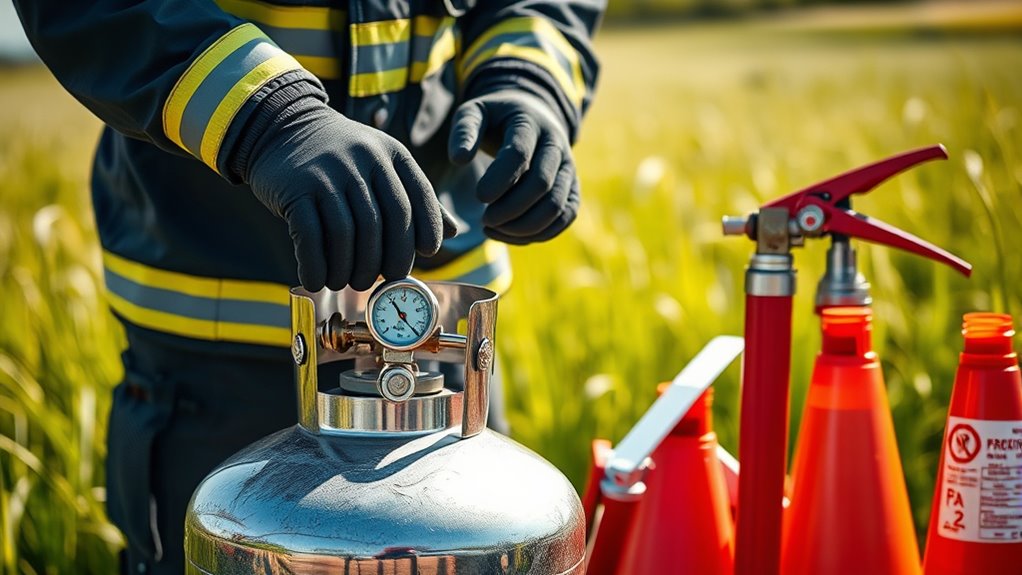
If a propane leak or spill occurs, your first step is to remove yourself and others from danger and shut off the source if possible. You should then ventilate the area and call emergency services immediately. For anyone exposed to propane, follow proper first aid procedures, such as moving them to fresh air and seeking medical attention if symptoms develop.
Immediate Response Actions
In an emergency involving propane, quick and effective response is essential to minimize injuries and hazards. First, identify and eliminate ignition sources to prevent fire spread. If you suspect a leak, turn off the propane supply immediately and evacuate the area. Use leak detection methods, such as listening for hissing sounds or smelling for gas, to confirm the leak’s location. Avoid using electrical switches or open flames, as these can ignite the gas. Once the area is safe, ventilate to disperse accumulated fumes. Call emergency services if the leak is significant or if a fire starts. Remember, fire prevention is your top priority—acting swiftly can prevent disaster. Stay calm, follow established procedures, and prioritize personal safety at all times. Proper response protocols are crucial for effective emergency management.
First Aid Procedures
When someone has been exposed to propane, prompt and appropriate first aid can prevent serious injuries. First, move the person to fresh air immediately to reduce further inhalation risks. If they have a burn, cool the affected area with running water for at least 10 minutes to help with burn prevention and minimize tissue damage. Avoid applying ointments or creams unless directed by medical personnel. Check for signs of inhalation injury, such as difficulty breathing, and provide oxygen if available. Keep the person calm, monitor their breathing and responsiveness, and seek emergency medical care promptly. Proper injury treatment involves preventing infection and supporting recovery. Acting quickly and correctly can substantially reduce the severity of propane-related injuries.
Personal Protective Equipment and Best Practices

Personal protective equipment (PPE) is essential for safely handling propane, as it shields you from potential hazards such as leaks, spills, and exposure to fumes. Wearing proper PPE reduces the risk of injury and exposure to harmful substances. Key items include protective clothing to guard your skin and safety goggles to protect your eyes from splashes or fumes. Always verify your PPE fits well and is in good condition before starting work. Remember to: – Wear flame-resistant clothing to prevent burns – Use safety goggles to avoid eye injuries – Wear gloves to protect your hands from leaks and spills and ensure your PPE is appropriate for outdoor environments to enhance safety during camping and outdoor activities.
Training and Staying Informed on Propane Safety
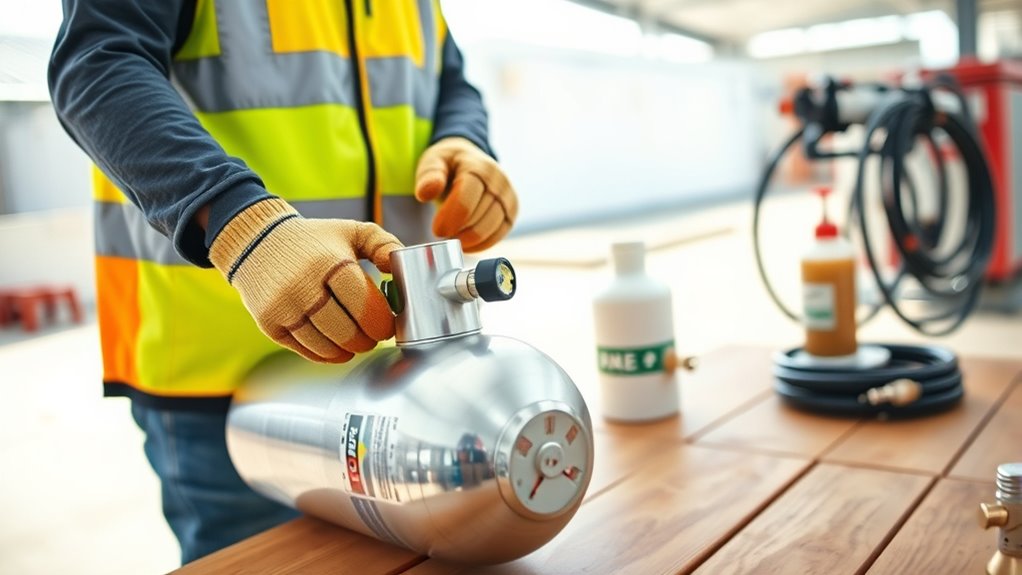
Proper training is the foundation of safe propane handling. Staying informed helps you recognize and dispel propane myths and safety myths that can lead to dangerous practices. Regular training ensures you’re up-to-date on the latest safety protocols and equipment. It also helps you identify misconceptions, like believing propane is always hazardous or that small leaks aren’t serious. By understanding the facts, you can prevent accidents and respond quickly to emergencies. Make it a priority to attend safety workshops, review manufacturer guidelines, and stay connected with industry updates. Continuous education keeps your skills sharp and your knowledge current, reducing risks. Additionally, understanding the importance of proper equipment maintenance can significantly decrease the chances of leaks and other hazards. Remember, well-informed handling isn’t just about compliance—it’s about protecting yourself, others, and the environment every time you work with propane.
Frequently Asked Questions
How Long Can Propane Tanks Safely Sit Unused?
You can safely store propane tanks unused for up to 10 years if you follow proper storage tips and safety precautions. Keep tanks in a well-ventilated, cool, and dry area away from heat sources and direct sunlight. Regularly check for leaks or corrosion, and ensure valves are closed tightly. By adhering to these guidelines, you minimize risks and maintain the tank’s safety and functionality over extended periods.
What Signs Indicate a Propane Tank Needs Replacement?
Your propane tank is crying out for help if you notice rust, deep dents, or corrosion—these signs are as loud as a siren and demand immediate action. Also, if leak detection tests reveal hissing sounds or the smell of gas, it’s time for a replacement. Regular tank maintenance and vigilant leak detection guarantee safety, preventing dangerous leaks or potential explosions. Don’t ignore these signs; your safety depends on prompt replacement.
Can I Connect Multiple Propane Tanks Together?
You can connect multiple propane tanks together, but you must follow proper tank connection procedures and safety precautions. Use approved manifold systems designed for multiple tanks, ensuring all connections are tight and leak-free. Always turn off tanks before connecting or disconnecting, and check for leaks with soapy water. Never connect tanks without proper equipment or if you’re unsure about the process, as it can pose serious safety risks.
How Do Weather Conditions Affect Propane Storage Safety?
Weather conditions, especially temperature fluctuations, markedly impact propane storage safety. You should store tanks outdoors in well-ventilated areas, away from direct sunlight or extreme cold, to prevent pressure build-up or leaks. During hot weather, increased temperatures can cause propane expansion, risking over-pressurization. Cold weather can make propane less vaporized, affecting its flow. Always check your tanks regularly and follow safety guidelines to manage weather impact effectively.
Are There Specific Regulations for Residential Propane Use?
Yes, there are specific regulations for residential propane use to guarantee safety and industrial safety compliance. You should follow local codes and manufacturer guidelines, including proper storage, regular inspections, and ventilation. It’s vital to understand emergency procedures in case of leaks or fires. Always keep propane tanks away from heat sources, and make certain all safety protocols are in place to protect yourself and your family.
Conclusion
By following these propane handling basics, you greatly reduce the risk of accidents. Remember, propane leaks can be detected early with proper inspection—studies show that regular checks can prevent up to 80% of potential hazards. Staying informed and prepared not only safeguards your safety but also ensures smooth operation. Keep safety at the forefront, and you’ll handle propane confidently and responsibly every time.