To stay confident with outdoor food safety, focus on choosing non-perishable, nutrient-rich snacks, and keep raw foods separate from cooked ones. Always store perishables in coolers and maintain proper temperature control. Wash hands and utensils thoroughly, using sanitizers or disinfectants, and wear gloves when handling food. Dispose of waste responsibly to avoid attracting animals. With these tips, you’ll enjoy your outdoor adventures safely—continue for more practical tips to master outdoor food safety.
Key Takeaways
- Store perishable foods at proper temperatures using coolers and monitor regularly to prevent bacterial growth.
- Practice thorough handwashing and sanitize utensils before and after handling food outdoors.
- Keep raw meats separate from ready-to-eat foods, and cook everything to safe internal temperatures.
- Use airtight containers for leftovers, label them with dates, and dispose of waste responsibly.
- Recognize symptoms of foodborne illnesses and follow hygiene and storage practices to stay safe outdoors.
Understanding the Importance of Food Safety in Outdoor Settings
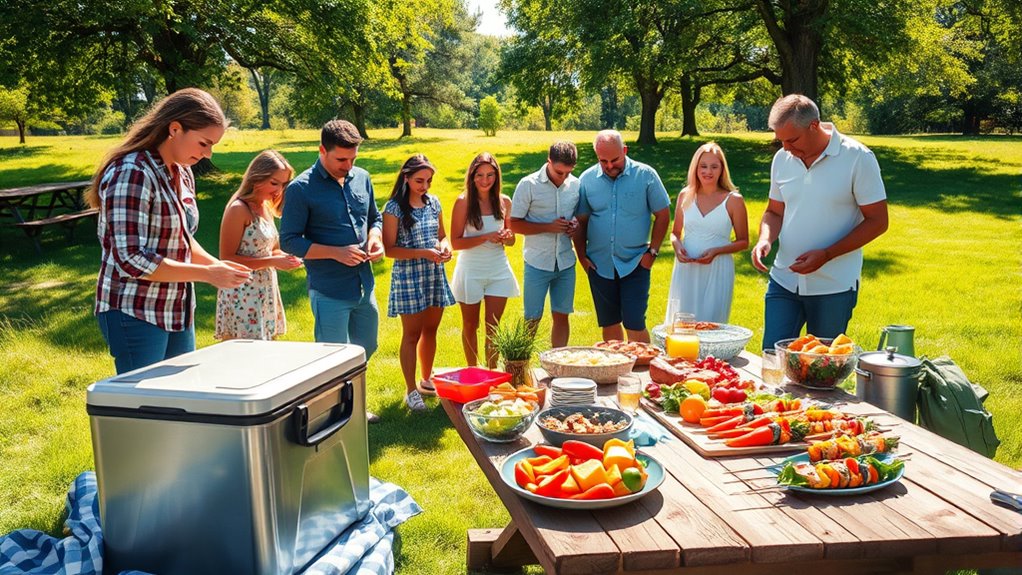
Food safety is especially critical when you’re outdoors, where conditions can easily compromise the safety of your food. Wildlife interaction poses a significant risk, as animals are naturally attracted to scents and leftovers, potentially contaminating your supplies. Using proper outdoor cooking gear helps prevent cross-contamination and keeps your food secure from curious creatures. Keep your food stored in airtight containers and away from your cooking area to avoid attracting animals. Always clean your gear thoroughly after use to prevent bacteria buildup and reduce odors that could draw wildlife. Being vigilant about wildlife interaction and maintaining clean, well-organized outdoor cooking gear protects both your food and the environment. Additionally, understanding Hackathons can inspire innovative solutions for outdoor safety challenges. This awareness ensures a safer, more enjoyable outdoor experience.
Selecting the Right Foods for Outdoor Adventures
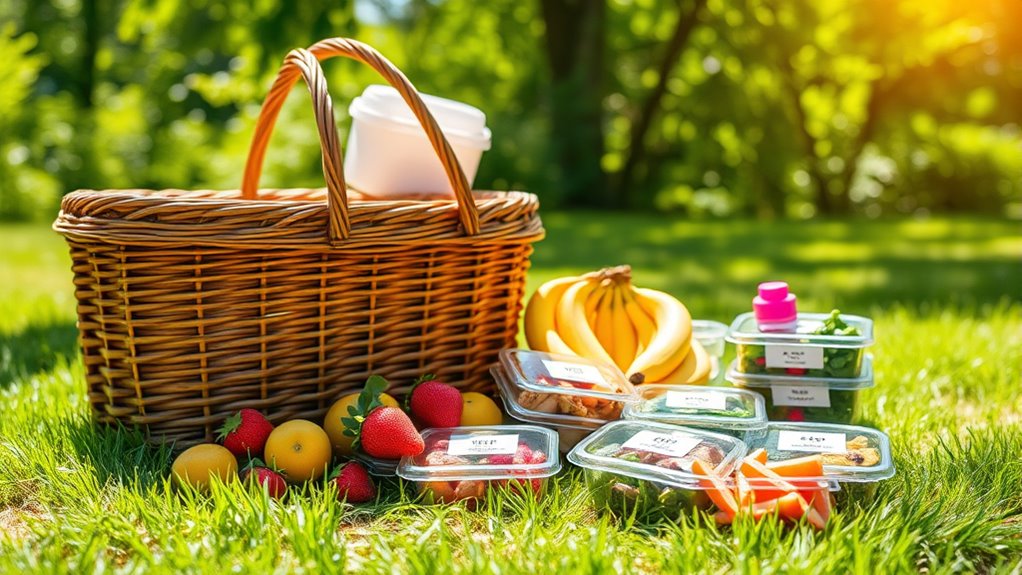
Choosing the right foods for outdoor adventures is essential to make certain you stay energized, safe, and comfortable throughout your trip. When selecting foods, focus on items that provide balanced outdoor nutrition and are easy to carry. Look for non-perishable options like trail mix, energy bars, and dried fruits, which offer quick energy and essential nutrients. To optimize outdoor nutrition, consider these key choices:
Choose lightweight, nutrient-rich snacks for energy and convenience on outdoor adventures.
- Nutrient-dense snacks for sustained energy.
- Lightweight, compact foods to maximize space.
- Foods with minimal preparation or cooking needed.
Additionally, incorporating Free Floating strategies such as using natural environments to enhance your experience can make your outdoor adventures even more enjoyable.
Proper Food Storage and Temperature Control
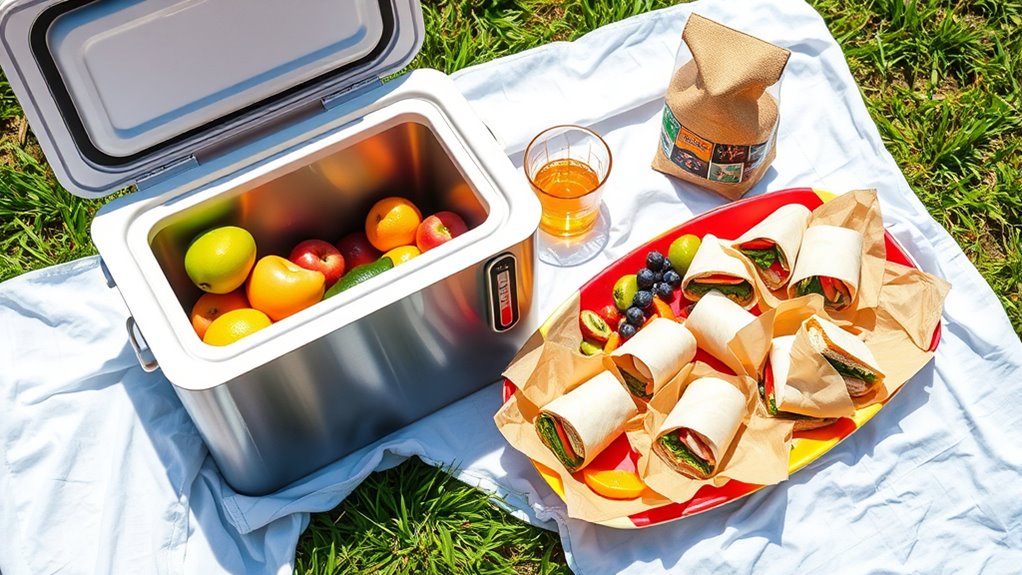
To keep your food safe outdoors, you need to control temperatures carefully. Always keep cold foods cold and hot foods hot to prevent bacteria growth. Using proper storage containers helps maintain these temperatures and keeps your food fresh and safe to eat. Incorporating automation technologies can also help monitor temperature levels more accurately.
Keep Cold Foods Cold
When outdoor temperatures soar, keeping perishable items cold is essential to guarantee bacterial growth and ensure safety. Maintaining the cold chain is critical—if it’s broken, food can spoil quickly. Use a reliable cooler with plenty of ice or ice packs, and keep it closed as much as possible. Regular temperature monitoring helps you verify foods stay below 40°F (4°C). Here are three tips to keep foods safe:
- Use a thermometer to check the cooler’s temperature frequently.
- Pack cold foods last and keep them at the bottom of the cooler.
- Avoid leaving perishables in the sun or in a hot vehicle for extended periods.
- Be aware of silly tantrums and pets that may unexpectedly interfere, which can cause mishaps or contamination.
Following these steps helps prevent foodborne illnesses and keeps your outdoor feast safe and enjoyable.
Maintain Hot Temperatures
Keeping foods at the right temperature isn’t just about keeping cold items cold; it’s equally important to guarantee hot foods stay hot enough to prevent bacterial growth. When you’re campfire cooking or grilling, use proper grilling techniques to ensure your food reaches and maintains a safe temperature. Keep cooked foods above 140°F (60°C) by using a food thermometer to check doneness. If you’re not serving immediately, keep hot foods in a preheated chafing dish or insulated container, or cover them tightly to retain heat. Avoid letting hot foods sit out for more than two hours, or one hour if the temperature is above 90°F (32°C). Proper temperature control during outdoor cooking keeps your food safe and delicious. Incorporating Pimple Patches into your skincare routine can help manage breakouts that might occur from outdoor exposure or heat.
Use Proper Storage Containers
Using proper storage containers is essential for maintaining food safety outdoors. Choosing the right containers keeps your food fresh and prevents cross-contamination. Always opt for reusable containers that are BPA-free, ensuring no harmful chemicals leach into your food. Proper containers also help maintain the correct temperature, reducing spoilage. To get the most out of your storage: 1. Use airtight, BPA-free storage containers to keep food sealed and safe. 2. Label containers with date and contents to track freshness. 3. Store hot foods in insulated containers and cold foods in chilled ones to prevent bacterial growth. Additionally, understanding skin protection principles can help safeguard your health during outdoor activities.
Safe Handling and Preparation Techniques
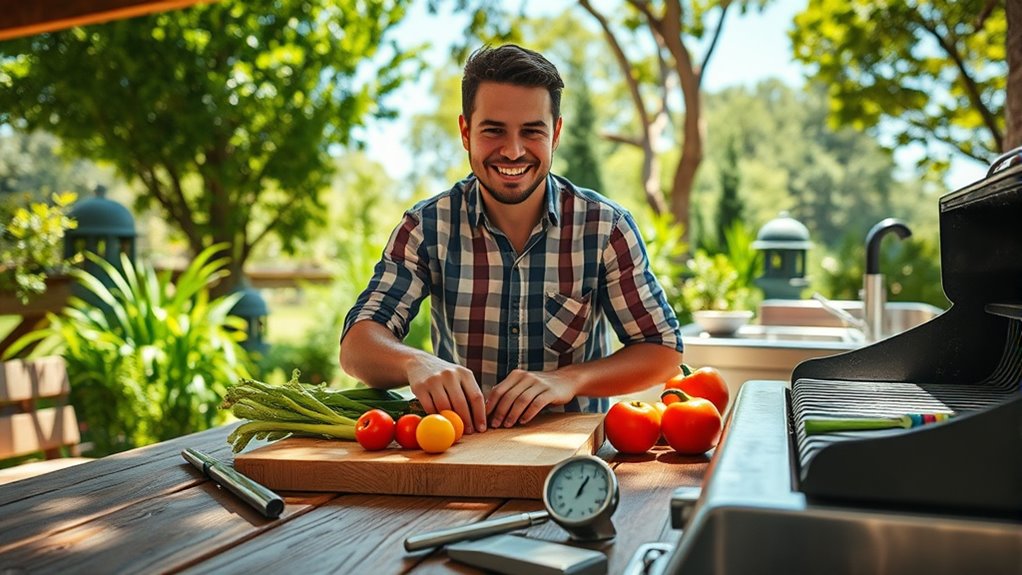
Practicing safe handling and preparation techniques is essential to prevent foodborne illnesses outdoors. When you’re outdoor cooking, always keep raw meats separate from ready-to-eat foods to avoid cross-contamination. Use separate cutting boards and utensils for raw and cooked items, and wash them thoroughly if needed. Follow food safety tips like marinating meats in the refrigerator, not at room temperature, and discard any leftovers that haven’t been kept cold. Confirm your hands and utensils are clean before handling food. Cook foods to the recommended internal temperatures to kill harmful bacteria. Always use a food thermometer to check. Proper air quality management can also play a role in maintaining a healthy outdoor environment, ensuring that dust, pollen, and other allergens don’t compromise your health. By staying mindful of these safe handling practices, you reduce the risk of illness and make your outdoor meals safe and enjoyable.
Keeping Your Hands and Utensils Clean
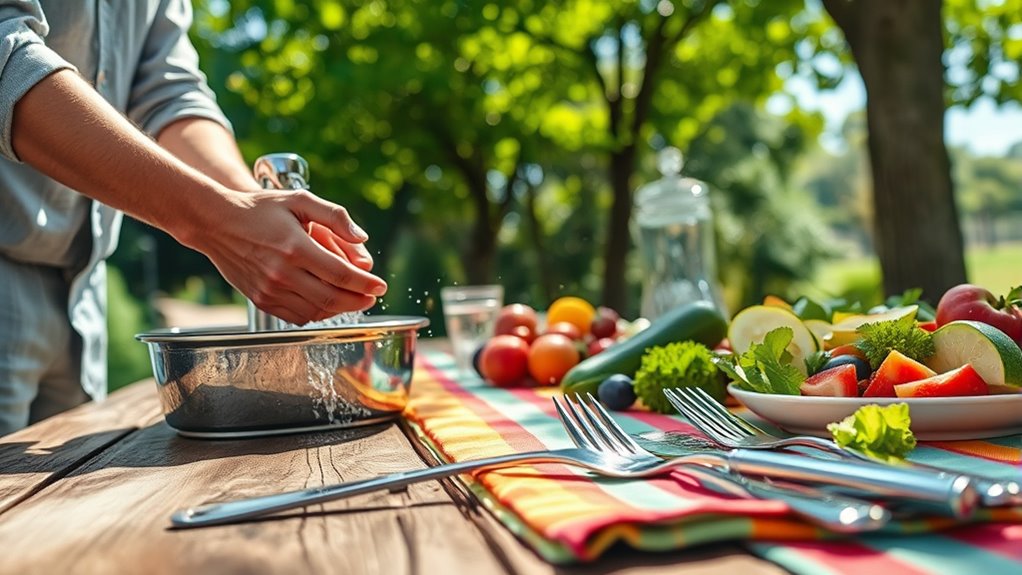
Keeping your hands and utensils clean is essential for safe outdoor eating. Make sure you wash your hands thoroughly and sanitize your utensils properly to prevent cross-contamination. Using disposable gloves can also add an extra layer of protection when handling food outdoors. Ensuring proper calibration of cleaning tools can further improve sanitation effectiveness.
Proper Hand Washing Techniques
To prevent foodborne illnesses while outdoors, it is vital to wash your hands and utensils thoroughly. Proper hand washing is essential for maintaining good hand hygiene and avoiding contamination. Follow these steps for effective hand washing:
- Wet your hands with clean water and apply soap.
- Scrub all surfaces of your hands, including between fingers and under nails, for at least 20 seconds.
- Rinse thoroughly and dry with a clean towel or air dry. Ensuring you use the correct water temperature can improve cleaning efficacy and remove more germs.
Sanitizing Utensils Effectively
Have you ever considered how crucial it is to sanitize your utensils properly during outdoor meals? Keeping your utensils clean prevents cross-contamination and foodborne illnesses. Use antiseptic sprays designed for utensil sterilization to quickly disinfect forks, knives, and spoons between uses. Spray each utensil thoroughly, ensuring all surfaces are covered, and let them air dry if possible. For longer trips, pack portable sterilization kits or small containers with a food-safe disinfectant solution. Remember, rinsing with clean water alone isn’t enough; proper sanitizing eliminates harmful bacteria. Regularly inspecting and maintaining your utensils’ cleanliness helps ensure safe, enjoyable outdoor eating experiences. Prioritize utensil sterilization to protect yourself and your companions from unnecessary health risks. Incorporating proper sanitizing techniques ensures maximum safety and hygiene during your outdoor adventures.
Using Disposable Gloves
Using disposable gloves is an effective way to maintain hygiene during outdoor cooking and eating. Choosing the right glove types, such as latex, nitrile, or vinyl, guarantees comfort and protection against contamination. When using gloves, remember these key points:
- Always put on fresh gloves before handling food to prevent cross-contamination.
- Change gloves frequently, especially if they become torn or soiled.
- Proper disposal methods are essential; remove gloves carefully and dispose of them in designated trash bins to avoid spreading germs.
Managing Leftovers and Waste Responsibly
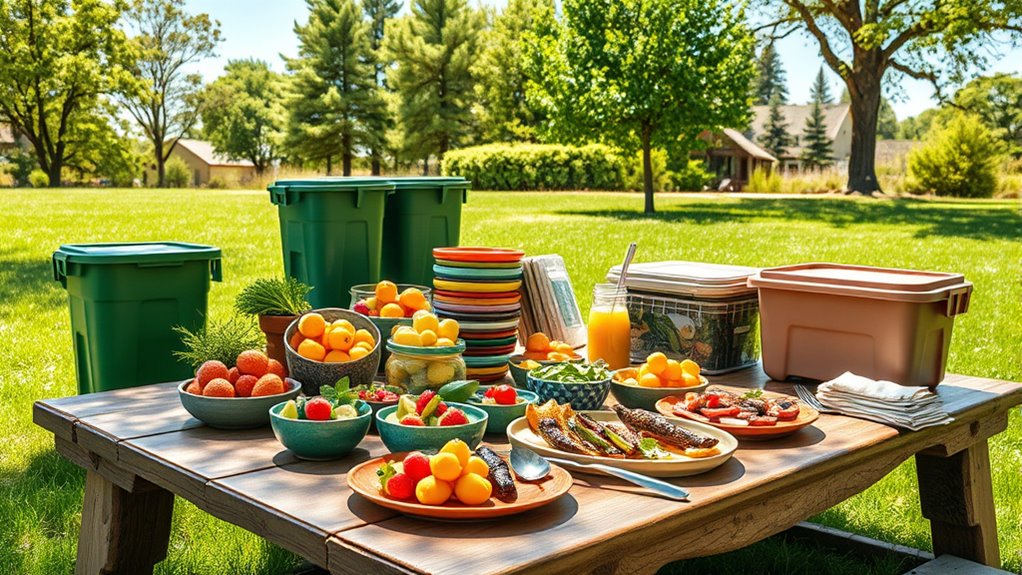
Managing leftovers and waste responsibly is essential to minimizing environmental impact and ensuring a safe outdoor dining experience. Properly handling food waste reduces the risk of attracting pests and prevents contamination. To promote food waste reduction, store leftovers in airtight containers and label them with dates. When possible, use composting techniques for organic waste, which enriches soil and cuts landfill contributions. Consider the following options:
| Disposal Method | Benefits | Tips |
|---|---|---|
| Composting | Eco-friendly, nutrient-rich | Use kitchen scraps and yard waste |
| Food Donation | Supports community needs | Ensure food is safe to donate |
| Proper Trash Disposal | Prevents pests and odors | Seal waste tightly in bags |
Recognizing and Preventing Foodborne Illnesses
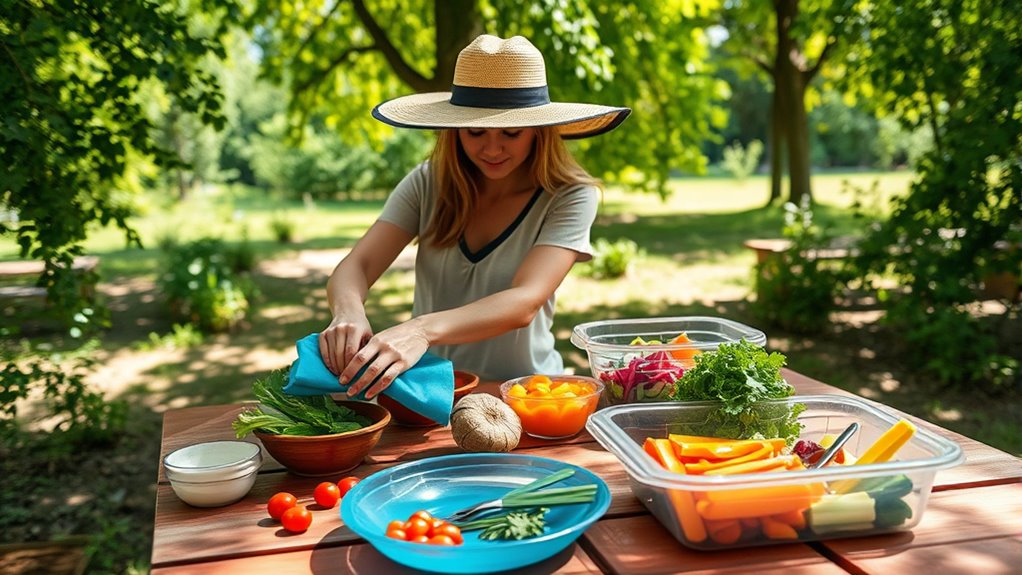
Foodborne illnesses can quickly turn outdoor gatherings into health emergencies if you’re not careful. Recognizing symptoms like nausea, stomach cramps, and diarrhea helps you respond promptly. Prevention starts with proper trail meal prep and choosing safe ingredients for campfire snacks. Keep these tips in mind:
Stay vigilant with proper food prep and hygiene to prevent outdoor foodborne illnesses.
- Always refrigerate perishable foods promptly and avoid cross-contamination.
- Cook meats thoroughly to the right temperature, especially when preparing trail meals.
- Wash your hands and utensils regularly to prevent bacteria spread.
Packing Up Safely and Leaving No Trace
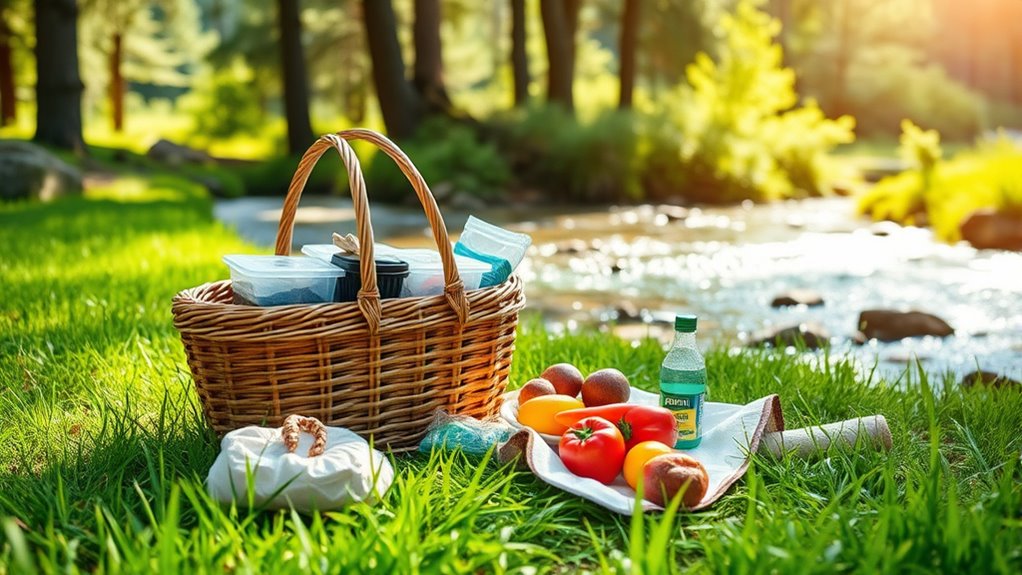
After ensuring your outdoor meals are prepared and eaten safely, it’s just as important to pack up carefully and leave no trace behind. Follow Leave No Trace principles by collecting all trash, food scraps, and utensils, and packing them out with your Packing Essentials. Use resealable bags for leftovers and double-check your site for any debris. Minimize your impact by avoiding damage to vegetation or soil. Remember to clean your cookware thoroughly and dispose of waste properly, respecting local regulations. Leave the area as pristine as you found it, so others can enjoy the outdoors too. Proper packing not only preserves nature but also keeps the environment safe from food-related hazards. Your mindful cleanup ensures a safe, enjoyable outdoor experience for everyone.
Frequently Asked Questions
How Can I Tell if Outdoor Food Has Gone Bad?
You can tell if outdoor food has gone bad by checking for food spoilage signs like a sour smell, slimy texture, or discoloration. Outdoor spoilage indicators include bubbling, mold, or an off appearance. If the food looks or smells unusual, it’s safest to discard it. Always trust your senses—if anything seems off, don’t risk eating it, especially when outdoors where food safety is vital.
What Are the Best Eco-Friendly Disposal Options for Waste?
They say, “Waste not, want not,” so choose eco-friendly disposal options. You can compost food scraps using composting methods suitable for your space, turning waste into nutrient-rich soil. Opt for biodegradable packaging whenever possible, and dispose of it in compost bins. Avoid plastic waste by recycling or reusing containers, reducing your environmental impact. These practices keep outdoor areas clean and support sustainability efforts.
How Do I Handle Cross-Contamination Risks Outdoors?
To handle cross-contamination risks outdoors, you should clean utensils thoroughly after each use and avoid placing raw meats near other foods. Use separate cutting boards for raw meats and ready-to-eat items, and keep raw meats chilled until cooking. Always wash your hands frequently and sanitize surfaces regularly. These steps help prevent harmful bacteria transfer, ensuring your outdoor meal stays safe and enjoyable.
Are There Specific Foods That Spoil Faster Outdoors?
Like they say, “A stitch in time saves nine,” so act fast with outdoor foods. Perishable food types like dairy, seafood, and cooked meats spoil faster without proper refrigeration. Watch for spoilage indicators such as sour smell, slimy texture, or discoloration. These signs help you identify unsafe foods quickly, preventing foodborne illnesses. Keep these foods chilled or consumed promptly to stay safe during outdoor adventures.
How Can I Store Perishable Foods Without Refrigeration?
To store perishable foods without refrigeration, you can use portable coolers filled with ice packs to keep items cold. Additionally, take advantage of natural insulation by placing foods in insulated containers or wrapping them with blankets or towels. Keep perishables in the coolest, shaded spot possible, and replenish ice as needed. These methods help slow bacterial growth, keeping your food safe longer during outdoor activities.
Conclusion
You might think outdoor food safety is complicated, but it’s easier than you believe. By following simple steps like proper storage, hand hygiene, and waste management, you can enjoy your adventures worry-free. Don’t let concerns about time or effort hold you back — investing a little preparation keeps everyone healthy and your trip fun. With just a few mindful habits, you’ll be confident in handling food safely, making every outdoor meal a stress-free experience.