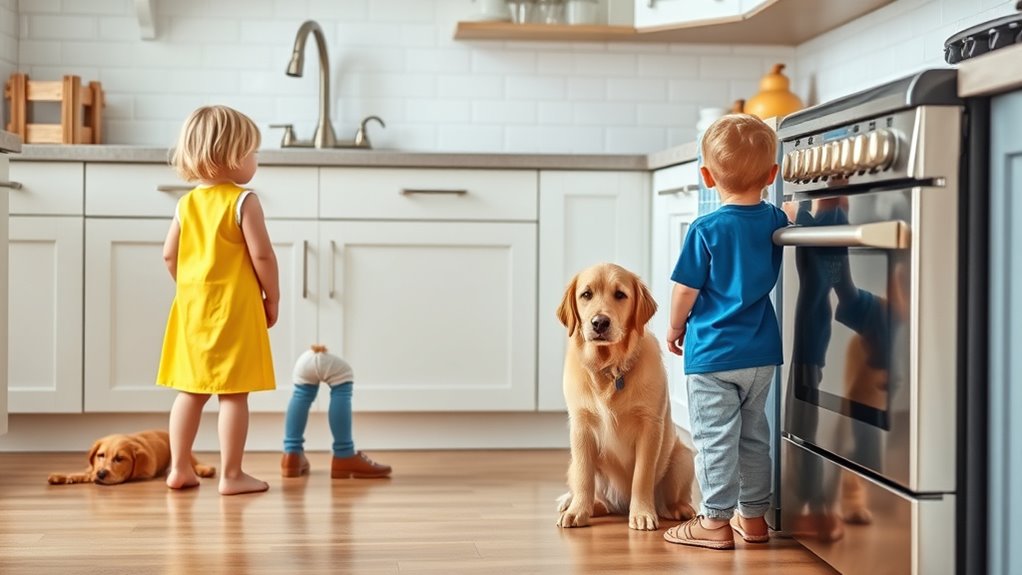
To keep your cooking area safe for children and pets, establish clear boundaries by using gates or barriers, and keep sharp utensils and hot surfaces out of reach. Always supervise closely, especially when cooking, and turn pot handles inward to prevent accidents. Use safety devices like stove knob covers and oven locks to avoid unintended use. If you stay attentive and set consistent safety rules, you’ll create a safer space—discover more tips to protect your loved ones.
Key Takeaways
- Use child-proof gates and barriers to restrict kitchen access for children and pets.
- Keep hot surfaces, sharp utensils, and spills out of reach and immediately clean up hazards.
- Supervise children and pets at all times during cooking, and involve them safely in simple tasks.
- Designate specific areas or playpens to keep pets and children separate from cooking zones.
- Install safety devices like stove knob covers and oven locks to prevent accidental operation.
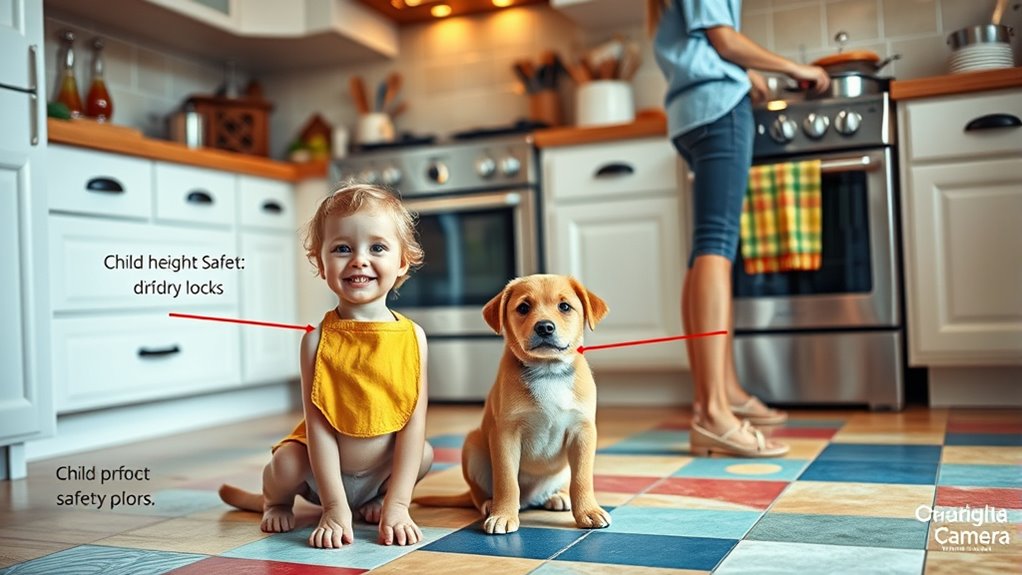
Introducing a pet into your family can be one of the most rewarding experiences, especially when children are involved. However, it also requires thoughtful planning to guarantee everyone stays safe, particularly in the kitchen. The cooking area can be full of hazards for curious little ones and playful pets alike. To keep everyone safe, you need to prioritize kitchen safety and implement effective supervision strategies that prevent accidents before they happen.
Start by establishing clear boundaries around the cooking area. Use child-proof gates or barriers to keep children and pets out of the kitchen when you’re not actively supervising. This minimizes the chance of accidental contact with hot surfaces, sharp utensils, or spilled liquids. When you’re cooking, always stay attentive, keeping children at a safe distance. Never leave them unattended in the kitchen, even for a moment, as this is when accidents are most likely to occur. Supervision strategies should include constant visual contact and setting rules about not touching appliances or hot items.
It’s essential to teach your children about kitchen safety early on. Explain that hot stoves, boiling water, and sharp knives are dangerous and should be handled only by adults. Encourage your kids to stay away from the stove and oven while cooking, and model safe behavior yourself. When pets are involved, teach children how to interact gently and respectfully. Remind them that pets may be startled by sudden movements or loud noises and that they shouldn’t chase or tease animals near the stove or counter. These lessons foster respect and help prevent accidental injuries for both pets and children.
Supervision strategies also include being proactive with cleanup and organization. Keep small items like utensils, knives, and food wrappers out of reach. Wipe up spills immediately to prevent slips and falls. Use stove knob covers and oven locks to prevent pets and children from turning on appliances or opening hot ovens. When cooking, turn pot handles inward and keep hot liquids away from the edges of counters to avoid accidental knocks. Additionally, understanding the importance of educational toys in early development can foster patience and teach children safe ways to engage with their environment, reducing impulsive behaviors near hazards.
Finally, consider setting designated areas for pets and children during meal prep times. For example, a safe spot in the dining room or a playpen keeps pets out of the way while you focus on cooking. If your child is old enough, involve them in simple tasks like setting the table or washing vegetables, which keeps their hands busy and away from potential hazards. By combining strict kitchen safety practices with consistent supervision strategies, you create a safer environment for everyone, making mealtime a positive experience rather than a risky one.
Frequently Asked Questions
How Can I Child-Proof Cabinet Locks Effectively?
You can effectively child-proof cabinet locks by choosing secure, easy-to-install options like magnetic or latch-style locks. Make certain they fit snugly and are installed at heights children can’t reach. Regularly check that the locks are functioning properly to maintain cabinet safety. Avoid locks that are easy for children to open, and opt for those that blend with your cabinets to prevent tampering. This approach keeps your kitchen safe and your little ones secure.
What Are the Best Pet-Safe Cleaning Products?
Prioritize pet-safe cleaning products, pairing powerful pet stain removers with gentle, natural cleaning solutions. Look for labels that specify non-toxic, biodegradable ingredients, ensuring your furry friends stay safe while you clean. Choose products free from harsh chemicals like ammonia and bleach. You’ll confidently clean without concern, creating a safe, spotless space where pets can play and relax peacefully, protected from harmful residues and irritants.
How Do I Teach Children Kitchen Safety Rules?
You should supervise children closely in the kitchen and teach them safety rules early. Show them how to handle knives, hot surfaces, and appliances properly. Use safety equipment like oven mitts and child-proof locks on cabinets. Reinforce these rules consistently, and praise their careful behavior. By actively supervising and setting clear boundaries, you help children develop safe habits and prevent accidents in the cooking area.
Are There Pet-Specific Hazards in the Cooking Area?
Pet-specific hazards pose real risks in your cooking area. You should restrict pet access to prevent pet food hazards, which can cause allergies or poisoning. Keep pet food, treats, and utensils out of paw’s reach to avoid accidental ingestion. Always supervise your pets around hot stoves and sharp utensils, and secure trash cans to prevent pets from rummaging through dangerous leftovers. Prioritize safety to protect both your pets and your household.
How Can I Prevent Pets From Accessing Hot Surfaces?
To prevent your pets from accessing hot surface dangers, use pet access control measures like gates or barriers around your stove and oven. Always stay attentive when cooking, and never leave hot surfaces unattended. Consider installing stove knob covers and using heat-resistant mats to create a safe zone. By actively managing your environment, you reduce the risk of accidents and keep your pets safe from hot surface dangers.
Conclusion
By keeping children and pets out of the kitchen, you create a safe haven amid the chaos of cooking. While your little ones might be curious and your pets enthusiastic for attention, a secure space safeguards their innocence and health. Just as a stove needs careful handling, so does your home—balancing warmth with caution. In this busy environment, safety isn’t just about rules; it’s about protecting the precious moments that matter most.