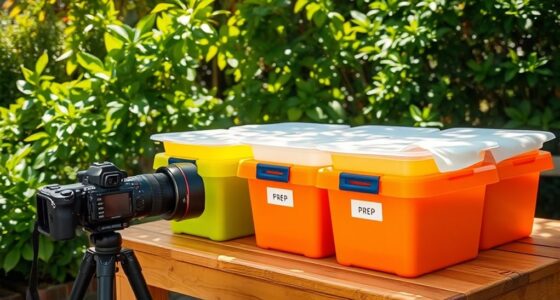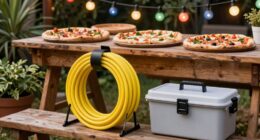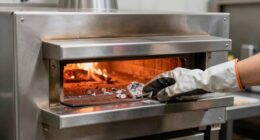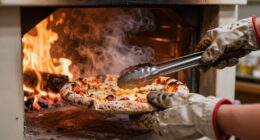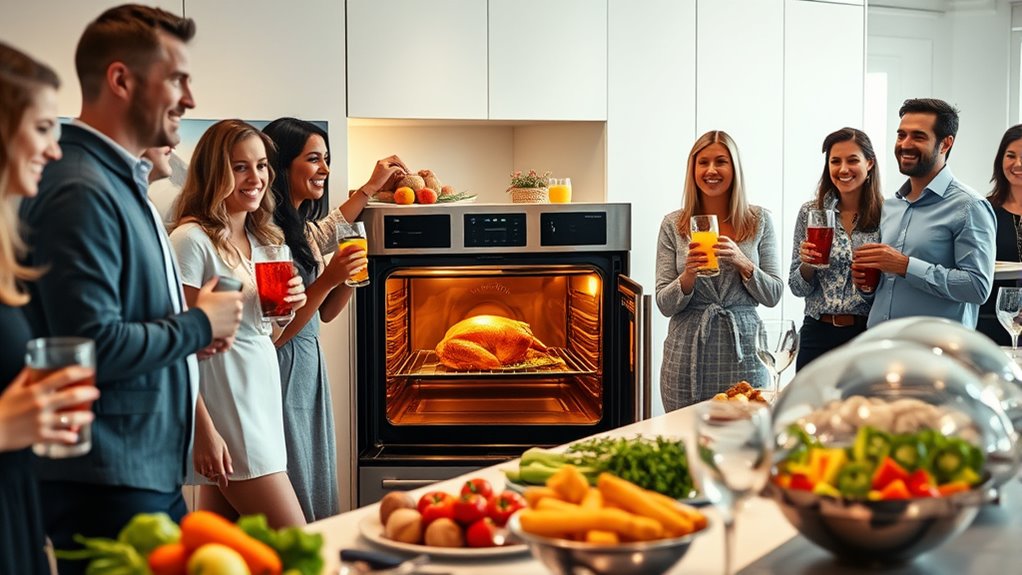

To manage oven load, stagger your guests’ arrivals by inviting close friends and family early, then spreading out others later. Plan your meal prep with a clear schedule, starting with dishes that can be prepared ahead and reserving the oven for last-minute items. Engage your guests with snacks and drinks to keep the atmosphere lively while coordinating cooking times. Continuing this approach will help you create a smooth, stress-free celebration where everyone enjoys the moment.
Key Takeaways
- Schedule guest arrivals in waves to prevent overcrowding and reduce oven demand.
- Invite close family early and others later to distribute oven usage over time.
- Plan and prepare dishes with varying cooking times, starting with make-ahead items.
- Use a visual timetable or checklist to coordinate meal prep and oven use efficiently.
- Maintain ongoing guest flow and timing adjustments to ensure a smooth, stress-free event.

Timing the party can make the difference between a memorable celebration and one that falls flat. When you’re planning, how you coordinate your guests and schedule your event plays a vital role in guaranteeing everything runs smoothly. Proper guest coordination means understanding your guests’ arrival times and preferences, which helps you avoid overcrowding in the kitchen or oven. Meanwhile, effective event scheduling allows you to stagger activities and food preparation, making sure your oven isn’t overwhelmed and everyone stays engaged.
The key is to think ahead about when guests will arrive and how long they’ll stay. Instead of inviting everyone at once, consider spreading out your guest arrivals in manageable waves. This way, you can focus on hosting smaller groups, making it easier to serve hot food and keep the atmosphere lively. You might, for example, invite close family and friends early on, then welcome others later. This staggered approach reduces the load on your oven and prevents bottlenecks during meal prep.
Event scheduling is equally important. As you plan your menu, recognize which dishes need more oven time and which can be prepared earlier or served cold. By timing your cooking, you can have multiple dishes ready simultaneously without overloading your oven. For instance, start with dishes that can be cooked ahead of time, then use the oven for last-minute items. Creating a detailed schedule for cooking and serving helps you stay on track and avoid last-minute rushes. It also gives you the flexibility to adjust if guests arrive earlier or later than expected.
To put this into practice, consider setting specific times for when certain foods should go into the oven. Keep a visual timetable or checklist to track your progress. When guests arrive, engage them with light snacks and drinks while you finish up last-minute preparations. This not only keeps your guests entertained but also helps you manage the oven load by focusing on finishing dishes in a logical order. Additionally, understanding angel number meanings related to timing and harmony can provide insight into the best moments for specific tasks, helping you stay aligned with a smooth flow.
As the party progresses, continue to coordinate guest flow and meal timing so you’re not caught off guard. Ultimately, good timing isn’t just about when guests arrive—it’s about orchestrating an event that flows smoothly from start to finish. By carefully scheduling your cooking tasks and coordinating guest arrivals, you’ll prevent oven overload and create a relaxed, enjoyable atmosphere. When everyone’s seated, eating, and mingling at the right moments, your party will be remembered as well-organized and stress-free. Proper timing ensures you’re in control, so you can enjoy your celebration as much as your guests do.

SANTAMADE Meat Shredder Claws - Stainless Steel Meat Claws for Pulled Pork, Shredded Chicken, Bear Claws for Shredding Meat, Grill, BBQ Smoker Accessories, Grilling Gifts, Stocking Stuffers for Men
【Premium Stainless Steel BBQ Claws】Unlike others' plastic or nylon alternatives that can melt or bend, our metal meat...
As an affiliate, we earn on qualifying purchases.
Frequently Asked Questions
How Do I Determine the Optimal Timing for Each Guest?
To determine the ideal timing for each guest, consider their arrival times and plan your oven cycle accordingly. You want guests to arrive in shifts, so the oven isn’t overloaded and each dish is fresh. Keep track of when you start cooking each dish and stagger guest arrivals around these times. This way, you manage the oven load effectively and guarantee everyone gets hot, delicious food without stress.
What Are Some Quick Dishes to Serve Between Oven Loads?
You can serve quick snack ideas like cheese and cracker platters, veggie sticks with hummus, or fruit skewers to keep guests satisfied. Cold appetizer options such as shrimp cocktail, caprese salad skewers, or deli meat roll-ups work perfectly between oven loads. These dishes are easy to prepare ahead of time and don’t require reheating, helping you keep the party flowing smoothly without overloading your oven.
How Can I Keep Food Warm Without Overcooking?
Imagine your food as a delicate dance, needing warmth without the risk of overstepping. To keep dishes warm, use serving platters with insulated covers or a warming drawer to preserve the perfect temperature. This method guarantees your food stays tender and flavorful, like a gentle embrace, preventing overcooking. Embrace food preservation techniques, so your dishes remain inviting, ready to serve at their best, without losing their initial charm.
Are There Alternative Appliances to Manage Oven Load?
Yes, you can use alternative appliances like slow cookers, warming drawers, or microwave ovens to manage oven load. These oven alternatives help keep food warm without overloading your main oven, ensuring everything stays ready at the right temperature. Using these appliances allows you to free up oven space for main dishes, making your cooking process smoother and more efficient. Just plan ahead to coordinate the timing of each appliance.
How Do I Coordinate Guest Arrival Times for Best Flow?
Think of your party as a well-choreographed dance. You can master the flow by planning guest arrival sequencing and using event timing strategies. Invite guests in groups, staggering arrivals so the space feels lively without chaos. Communicate arrival windows clearly, and consider timing activities or appetizers to guide the flow smoothly. With thoughtful coordination, your event will glide seamlessly from start to finish, creating an enjoyable experience for everyone.

SANTAMADE Meat Claws for Shredding, Solid Heavy Duty Chicken Shredder Tool Bear Claws - Funny Smoker Accessories for BBQ Grilling Christmas Gifts for Men Dad - One Pair
Super BBQ Gifts 2026: This is the funniest BBQ Griiling Gift for men or women, dads or moms,...
As an affiliate, we earn on qualifying purchases.
Conclusion
By timing your guests’ arrivals like a maestro conducting an orchestra, you guarantee your oven’s symphony plays flawlessly. Just as the Greeks carefully scheduled their festivals to honor the gods, your thoughtful staggering transforms a potential chaos into a harmonious celebration. With patience and precision, you turn a simple dinner into a memorable event—proof that, like Icarus, who mastered flight before falling, mastery of timing elevates your party from ordinary to legendary.

LOPE & NG Meat Handler Shredder Claws Set Of 2 - Wood Stainless Steel BBQ Pulled Pork Paws For Shredding Handing Carving Food
Product Material - This Barbecue Claw Is Made Of Stainless Steel, Not Easy To Corrode, High Temperature Resistance,...
As an affiliate, we earn on qualifying purchases.

GORILLA GRIP BPA-Free Chicken Shredder Meat Claws, Sharp Stainless Steel Food Shredding Fork, Comfortable Handle, Easily Shred Pulled Pork, Taco Meats, Kitchen Smoker BBQ Tool, Dishwasher Safe, Black
EXTRA SHARP STAINLESS STEEL MEAT SHREDDER CLAWS: unlike other brands with plastic claws, ours are constructed from 100%...
As an affiliate, we earn on qualifying purchases.