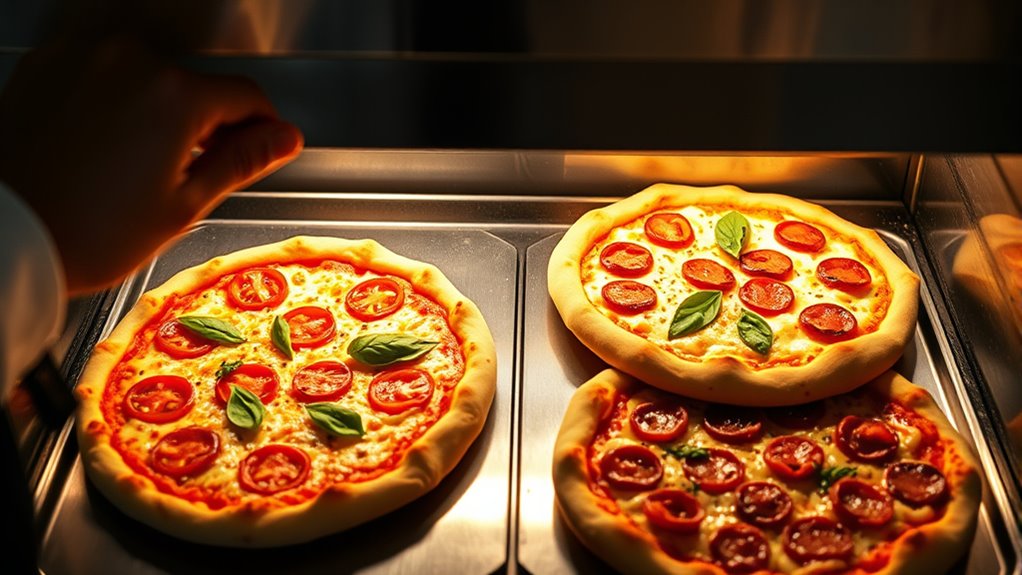

To manage oven flow when cooking two pizzas at once, start by fully preheating your oven to 450°F–500°F and place racks in the middle, spaced apart. Use pizza screens or stones for even heat distribution and rotate the pizzas midway to promote browning. Keep the oven door closed as much as possible to maintain temperature and watch for hot spots. If you want to master perfect results, there’s more to learn right here.
Key Takeaways
- Preheat the oven fully to 450–500°F before placing both pizzas inside.
- Place pizzas on middle racks, spaced apart for proper airflow and even heat distribution.
- Rotate pizzas midway to ensure uniform browning and mitigate hot spots.
- Use baking stones or screens to enhance heat transfer and prevent soggy crusts.
- Keep oven door closed during baking to maintain consistent temperature and oven flow.
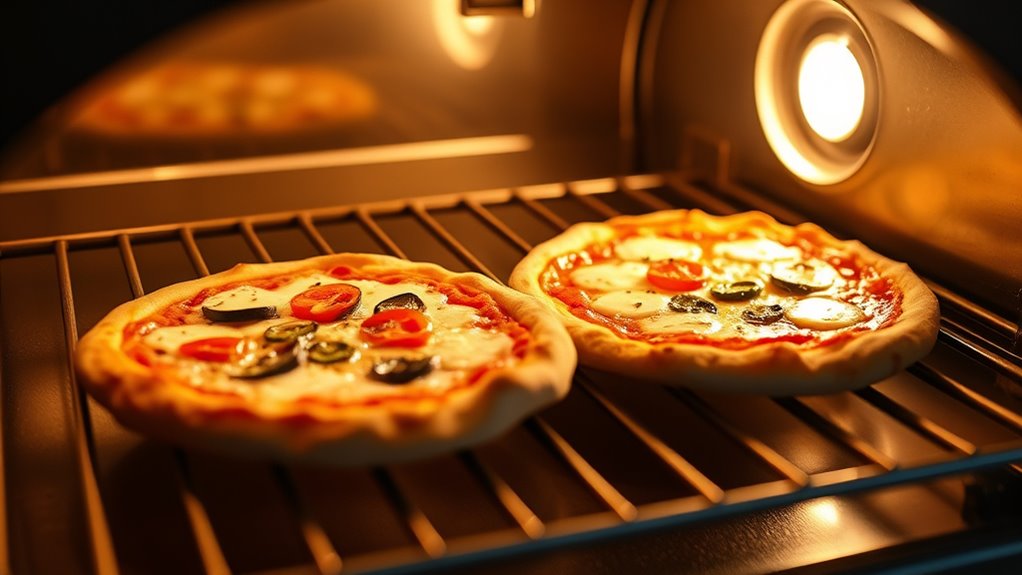
Efficiently managing oven flow is vital to optimize your baking process and guarantee consistent results. When you’re cooking two pizzas at once, the way you handle preheat timing and oven rack placement makes all the difference. If you don’t plan these steps carefully, you risk uneven cooking, longer baking times, or even burnt crusts. To start, verify your oven is fully preheated before placing both pizzas inside. Preheat timing is essential because an oven that’s not hot enough can lead to soggy or undercooked pizza, while overheating might burn the crust. Give your oven enough time—typically 15 to 20 minutes—so it reaches the desired temperature, usually around 450°F to 500°F for pizzas. This guarantees consistent heat distribution, which is key when baking multiple items simultaneously.
Next, focus on oven rack placement. Positioning the racks correctly allows heat to circulate evenly around both pizzas. For two pizzas, place the racks in the middle positions, spacing them apart so each pizza has sufficient room around it. This prevents the heat from becoming concentrated in one area, which can cause uneven cooking. If your oven has multiple racks, it’s best to rotate the pizzas midway through cooking—swap their positions on the racks to promote uniform browning and cooking of toppings. When placing the pizzas on the racks, use baking stones or pizza screens if available, as they help distribute heat more evenly and improve crust crispiness.
Monitoring oven flow also involves understanding how hot spots might affect your pizzas. Some ovens have areas that are hotter than others, so it’s wise to check the pizzas occasionally. Adjust their positions if you notice uneven browning. Additionally, avoid opening the oven door too frequently, as this releases heat and can disrupt the even temperature you’ve worked to establish. Instead, use a window or oven light to check on your pizzas without losing heat.
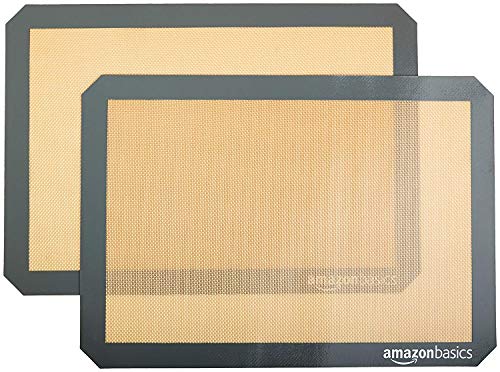
Amazon Basics Silicone Rectangular Baking Mat, Non-Stick, Reusable, Dishwasher Safe, Food Safe, Heat Resistant, 16.5" x 11.6", Beige/Gray, 2-Pack
- Package Includes: 2 silicone baking mats
- Reusable Design: Food-safe and eco-friendly
- Non-Stick Surface: No oil or sprays needed
As an affiliate, we earn on qualifying purchases.
Frequently Asked Questions
How Do I Prevent Uneven Cooking When Baking Two Pizzas?
To prevent uneven cooking when baking two pizzas, place them on different oven racks, ideally one on the top and one on the bottom, to guarantee even heat distribution. Rotate and swap the pizzas midway through baking. Keep the oven door closed as much as possible to maintain consistent temperature, only opening it briefly to rotate or check. This helps avoid hot spots and ensures both pizzas cook evenly.
What Is the Optimal Oven Temperature for Two Pizzas?
Imagine your oven as a warm embrace, gently coaxing perfection from your pizzas. The ideal oven temperature for pizza baking, especially when cooking two at once, is around 475°F to 500°F. This range ensures even heat distribution, preventing uneven cooking and crispy crusts. Keep the oven preheated, rotate the pizzas halfway through, and monitor closely to achieve that golden, bubbly finish you desire.
How Should I Position Pizzas to Avoid Flavor Transfer?
To avoid flavor contamination, position your pizzas with enough space between them, ensuring proper pizza placement. Keep the toppings and cheese side facing away from each other, and avoid stacking or overlapping. Use oven racks or trays that allow hot air circulation around each pizza. This way, you prevent the transfer of flavors, maintaining the distinct taste of each pizza while cooking two at once.
How Long Should I Preheat the Oven for Two Pizzas?
You should preheat your oven for about 15-20 minutes to make certain it’s fully hot before baking two pizzas. Set the oven temperature to the desired level, usually around 450-500°F, and give it enough time to reach that temperature evenly. This preheating duration guarantees consistent cooking and crispy crusts. Remember, a properly preheated oven is key to perfectly cooked pizzas, especially when you’re managing multiple at once.
Can I Use Different Pizza Types Simultaneously?
Yes, you can cook different pizza types at the same time, but consider pizza flavor compatibility to avoid clashing tastes. Also, watch out for ingredient cross contamination by placing separate barriers or using different trays. This prevents flavors from mixing and keeps each pizza’s quality intact. Keep an eye on baking times, as different toppings may cook at different rates, and rotate pizzas if needed for even cooking.

Amazon Basics Non-Stick Silicone Baking Mat, Food Safe, Dishwasher Safe, Heat Resistant, 16.5" x 11.6", Beige/Gray, Rectangular, 4-Pack
- Pack Size: 4-pack baking mats
- Food Safe: Reusable silicone mats
- Non-Stick Surface: Releases food easily without oil
As an affiliate, we earn on qualifying purchases.
Conclusion
So, don’t worry if managing oven flow feels tricky at first. With a little practice, you’ll master how to cook two pizzas simultaneously without sacrificing quality. Some might think it’s too hectic or time-consuming, but once you get the hang of shifting pizzas in and out efficiently, you’ll see it’s quicker and more convenient. Keep experimenting, stay organized, and soon you’ll be effortlessly juggling multiple pizzas like a pro—saving time and impressing your guests.

Pizza Peel 12 Inch, Aluminum Paddle with Cutter, Spatula
- Complete 3-Piece Pizza Set: Includes peel, cutter, and spatula
- Heavy-Duty Aluminum Body: Resists deformation under heavy loads
- Safety Edge Design: Curved back prevents slipping during transfer
As an affiliate, we earn on qualifying purchases.

2 Pack Wooden Pizza Peel, 12 inch Large Pizza Paddle Set for Oven, Stone, Pan or Grill, Spatula for Baking Bread and Cake - Indoor & Outdoor
- Material: Food-grade birch plywood for durability
- Multi-Use: Transfers dough, serves as cheese board
- Size: 11.75 x 16.5 inches with 4.5-inch handle
As an affiliate, we earn on qualifying purchases.