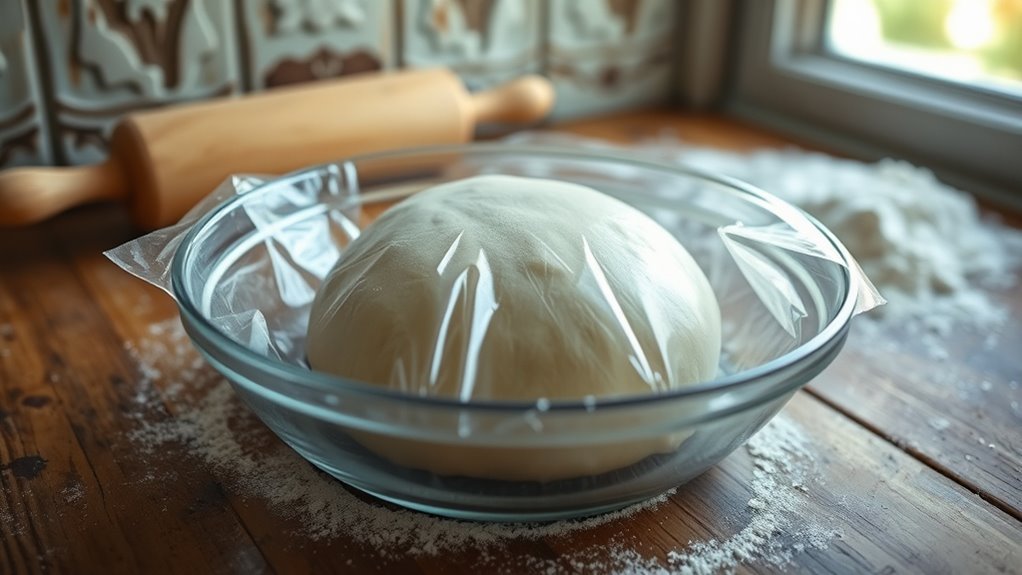

Prepping dough a day before a party is simple with cold proofing. After mixing, shape your dough and store it tightly wrapped or in an airtight container in the fridge. This slows fermentation, allowing the dough to develop richer flavors and better texture overnight. When you’re ready to bake, simply take it out of the fridge, give it a quick proof if needed, and enjoy freshly baked goods with minimal last-minute rush. Keep going to discover more tips for perfect party preparations.
Key Takeaways
- Cold proof dough overnight in the refrigerator to enhance flavor and improve gluten development.
- Use airtight containers or tightly wrap the dough to prevent drying and odor absorption.
- Allow the dough to ferment slowly for 12-24 hours for optimal taste and texture.
- Punch down and reshape the dough if necessary before baking the next day.
- Keep dough manageable and ready for last-minute baking by maintaining proper humidity and coverage.

Getting your dough ready before the party guarantees you won’t be caught off guard when it’s time to bake or serve. One of the most effective ways to do this is by cold proofing your dough a day in advance. This process allows you to manage fermentation timing precisely, giving your baked goods better flavor and texture while easing your last-minute preparations. Cold proofing involves refrigerating the dough after its initial rise, slowing down the fermentation process so you can control when it reaches perfection. Proper dough storage techniques are essential here; you want to keep your dough in an airtight container or tightly wrapped in plastic wrap to prevent it from drying out or absorbing other odors from your fridge.
When it comes to fermentation timing, patience is key. By refrigerating your dough overnight, you allow the yeast to work slowly, developing complex flavors that are hard to achieve with a quick rise. This slow fermentation enhances the taste, resulting in a more flavorful and airy final product. The timing depends on the recipe, but generally, a 12-24 hour cold proof is ideal. During this period, the dough continues to ferment gently, which improves gluten development and structure. This means your baked goods will have better rise, a more open crumb, and a richer taste. You can even prepare the dough several days in advance if you keep it properly stored, giving you flexibility on the day of the party.
Utilizing proper fermentation techniques ensures your dough reaches its full potential and maximizes flavor development. Using the right dough storage techniques is vital to guarantee your dough stays fresh and manageable. Always refrigerate the dough as soon as it has completed its initial bulk fermentation. If your recipe calls for multiple rises, you can punch down the dough, reshape it, and then store it again. Make sure to cover the dough tightly to prevent any drying or crust formation on the surface. Some bakers prefer using a damp cloth or plastic wrap, while others opt for airtight containers. Whatever method you choose, the goal is to maintain a stable, humid environment that keeps the dough in prime condition until you’re ready to bake.
Frequently Asked Questions
Can I Freeze the Dough After Cold Proofing?
Yes, you can freeze the dough after cold proofing. Freezing dough preserves its freshness and allows you to prepare ahead of time. The cold proofing benefits include enhanced flavor and better texture, which remain intact after freezing. Just wrap the dough tightly to prevent freezer burn, then thaw it slowly in the fridge before baking. This way, you enjoy freshly made bread or pastries with minimal effort on the day of your event.
How Do I Tell if the Dough Is Over-Proofed?
Think of your dough as a delicate dance partner—over-proofing signs are like a partner losing rhythm. When dough over-proofs, it loses elasticity, becomes overly bubbly, and doesn’t spring back when gently pressed. You might notice it’s flat, sticky, or has a dull appearance. If these signs appear, your dough has over-proofed. To avoid this, keep a close eye on its elasticity and rise, ensuring it’s perfect for baking.
What’s the Ideal Temperature for Cold Proofing Dough?
You should cold proof your dough at around 38°F to 40°F (3°C to 4°C). This temperature slows yeast activity, reducing the fermentation rate while allowing flavors to develop gradually. Keep your dough in a refrigerator or cold storage to maintain this ideal temperature. This controlled environment helps prevent over-proofing, ensuring your dough maintains the right rise and texture for your party.
How Long Can I Store Cold-Proofed Dough?
Did you know cold-proofed dough can stay fresh for up to 72 hours? You can store it in the refrigerator for this period, but be sure to follow proper refrigeration tips. Keep the dough tightly covered to prevent it from drying out or absorbing fridge odors. After 72 hours, the dough may lose its quality, so plan to bake sooner rather than later for the best results.
Can I Mix Different Types of Flour in One Dough?
Yes, you can mix different types of flour in one dough, but you should consider flour blending and ingredient compatibility. Different flours bring unique flavors and textures, so blending them can enhance your final product. However, guarantee they have similar protein contents and absorption rates to avoid inconsistent dough. Test small batches first, and adjust water as needed to achieve the right dough consistency.
Conclusion
Prepping your dough a day ahead and cold proofing not only saves you time but also enhances flavor and texture, making your baked goods truly exceptional. Some bakers believe that cold fermentation allows enzymes to develop more complex flavors, almost like aging wine. While this theory has merit, recent studies suggest that the slow fermentation process also improves gluten structure, resulting in a chewier, more satisfying bite. So, give it a try—you might discover your new favorite baking secret.