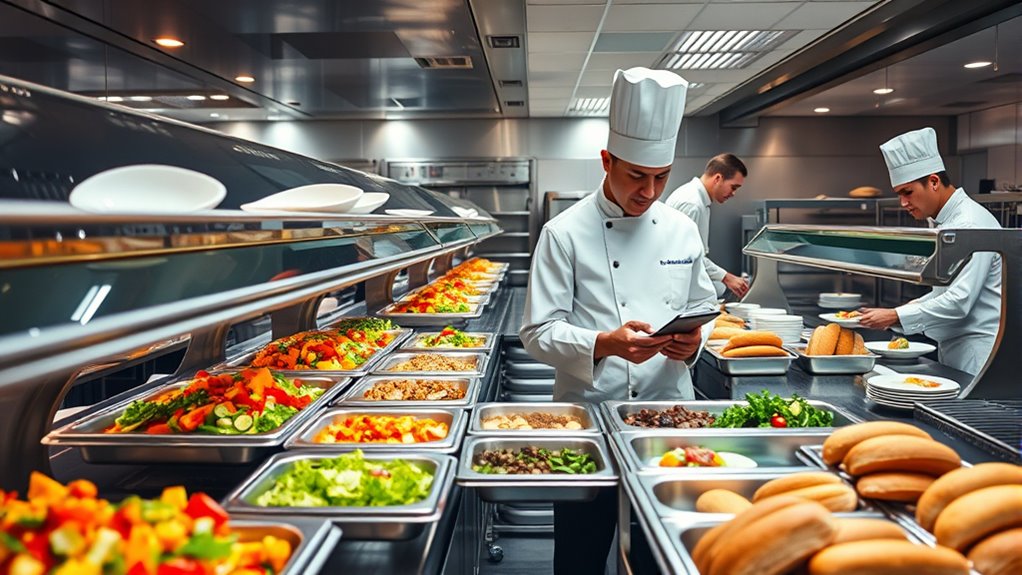

In buffet vs made-to-order setups, you must prioritize temperature control, cross-contamination prevention, and hygiene. Regularly monitor and calibrate equipment, use separate utensils, and maintain proper food storage. Staff training is essential to avoid cross-contact and guarantee safe handling. By following these practices, you reduce safety risks on both setups. Interested in learning more about troubleshooting common issues and best practices? Keep exploring for practical tips to keep your operation safe and efficient.
Key Takeaways
- Buffets require strict temperature monitoring to prevent bacterial growth due to prolonged food exposure.
- Made-to-order setups reduce cross-contamination risks by handling fewer ingredients simultaneously.
- Proper food labeling and dedicated utensils are essential in both methods to manage allergens safely.
- Regular equipment inspections ensure temperature sensors and holding equipment function correctly in both settings.
- Staff training on hygiene, handling procedures, and troubleshooting quick responses are crucial for safety in both models.
Ensuring Proper Temperature Control and Monitoring

Maintaining proper temperature control is essential to guarantee food safety and quality in both buffet and made-to-order setups. You should regularly record temperature logs to track food temperatures over time, ensuring they stay within safe ranges. These logs help identify temperature fluctuations early, preventing spoilage and bacterial growth. Additionally, sensor calibration is critical—incorrectly calibrated sensors can give false readings, risking unsafe food conditions. Make it a routine to calibrate your temperature sensors frequently, following manufacturer guidelines. Accurate readings allow you to take immediate action if temperatures drift outside safe limits. Incorporating temperature management best practices ensures more reliable monitoring and helps maintain the integrity of your food service operation. Combining meticulous temperature logs with properly calibrated sensors ensures consistent monitoring, reduces risks, and helps maintain the integrity of your food service operation.
Preventing Cross-Contamination and Allergen Management

How can you effectively prevent cross-contamination and manage allergens in your food service operation? The key is implementing strict procedures and ensuring staff training. Proper food labeling helps identify allergenic ingredients clearly, reducing risks. Train your team to follow dedicated handling practices, such as using separate utensils and surfaces for allergen-free foods. Regularly review safety protocols and reinforce their importance. Keep allergen information accessible for staff and customers. Also, assign specific staff to handle allergen-sensitive items to minimize errors. Consistently monitor hygiene standards to prevent accidental cross-contact. Incorporating color accuracy into your training can further enhance your team’s understanding of ingredient presentation and allergen management. Remember, clear communication and diligent staff training are essential for safe operations. Incorporating these practices protects your customers and maintains your establishment’s reputation for safety.
Maintaining Hygiene and Safe Food Handling Practices
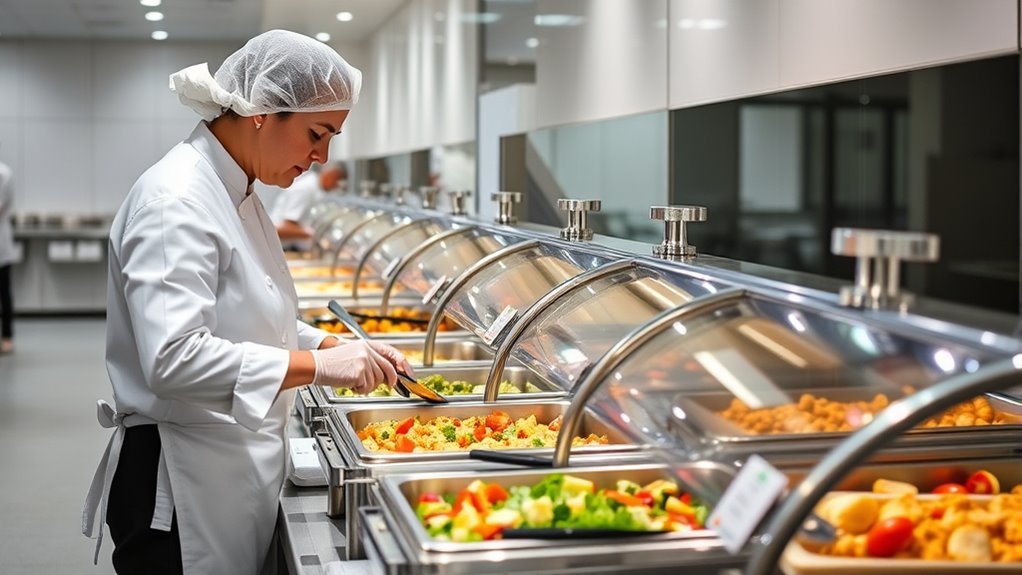
Ensuring proper hygiene and safe food handling practices is fundamental to preventing cross-contamination and safeguarding your customers’ health. When you focus on cleanliness, you enhance food presentation and maintain a smooth customer flow. Proper handwashing, sanitizing surfaces, and using gloves protect both staff and patrons. Keep raw and cooked foods separate to avoid cross-contact. Use this table to guide your practices:
| Practice | Benefit |
|---|---|
| Regular handwashing | Reduces bacteria transfer |
| Proper cleaning schedules | Maintains a hygienic environment |
| Correct food storage | Prevents spoilage and contamination |
| Managing customer flow | Avoids overcrowding and mishandling |
| Using sanitized utensils | Ensures food safety and presentation |
Additionally, implementing vetted product reviews can help you select reliable sanitation products and tools to further enhance safety standards.
Managing Time and Storage to Limit Food Safety Risks
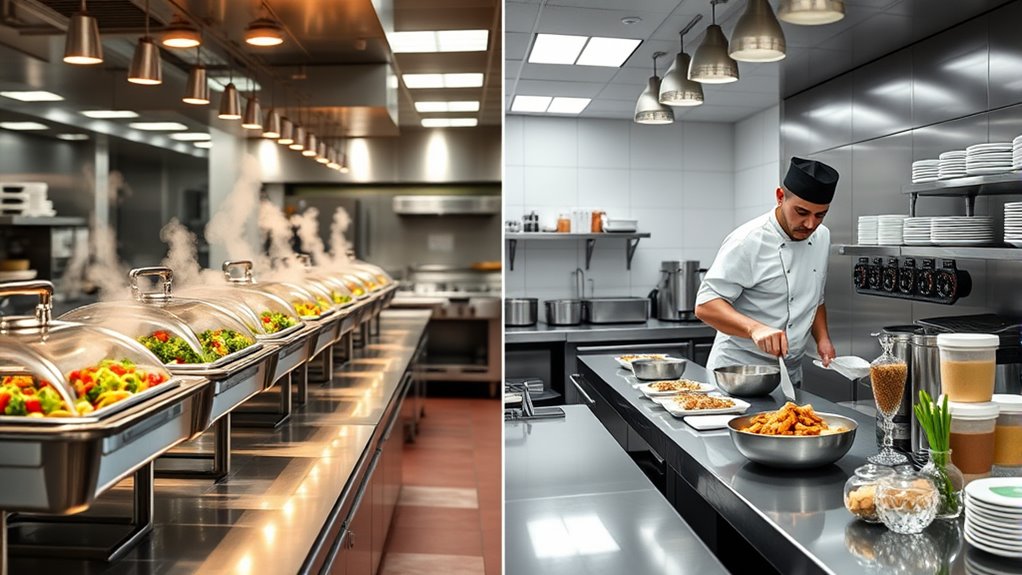
Effective management of time and storage is crucial for minimizing food safety risks in both buffet and made-to-order setups. Properly controlling portions helps prevent excess leftovers that can spoil, reducing waste management issues. Keep hot foods at safe temperatures, and refrigerate or freeze leftovers promptly to avoid bacterial growth. Use clear labeling to track storage times and guarantee freshness. Regularly monitor storage conditions to prevent cross-contamination. Implement portion control to serve consistent amounts, reducing waste and spoilage. Limit the time perishable items stay unrefrigerated, and rotate stock using the first-in, first-out (FIFO) method. Additionally, selecting appropriate vacuum cleaners can assist in maintaining cleanliness and hygiene in storage and preparation areas. By managing these factors, you maintain food quality, safety, and minimize waste. This proactive approach safeguards your customers and sustains your operation’s reputation.
Addressing Equipment and Facility Maintenance for Safety
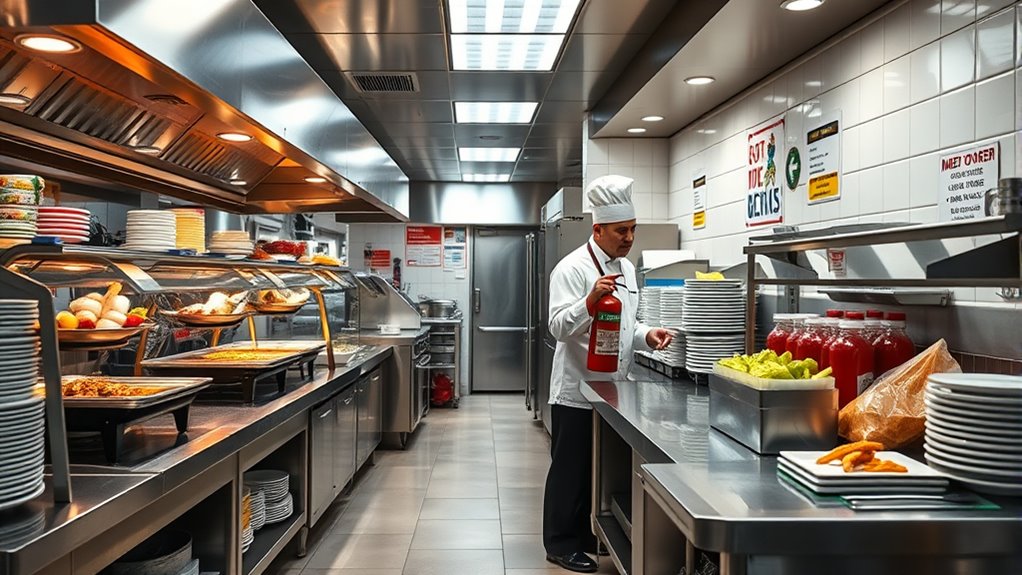
Maintaining equipment and facilities is vital for ensuring food safety in both buffet and made-to-order operations. Regular equipment inspection helps identify potential hazards like faulty thermometers, broken refrigeration, or leaks that could compromise food quality and safety. You should schedule routine checks and promptly address any issues. Equally important, staff training plays a critical role in proper maintenance practices. Your team needs to understand how to perform basic equipment inspections and recognize signs of malfunction. Proper cleaning and maintenance protocols prevent cross-contamination and contamination risks. Keeping facilities well-maintained ensures that food stays at safe temperatures and meets health standards. Additionally, implementing preventive maintenance practices can help reduce unexpected equipment failures and downtime. By prioritizing equipment inspection and ongoing staff training, you reduce safety risks, protect your customers, and maintain a smooth, compliant operation.
Frequently Asked Questions
How Do I Train Staff on Proper Food Safety Procedures Effectively?
You can train your staff effectively by creating engaging training modules that focus on key food safety procedures. Use interactive methods like hands-on demonstrations and real-life scenarios to boost staff engagement. Regularly reinforce training through refresher courses and assessments. Encourage open communication so staff feel comfortable asking questions. By making training engaging and consistent, you guarantee your team understands and follows proper food safety procedures, reducing risks and promoting a safe environment.
What Are the Best Practices for Handling Food Recalls Efficiently?
Did you know that 70% of food recalls are resolved faster with clear communication? To handle food recalls efficiently, follow strict food recall protocols, ensuring traceability and quick identification of affected products. Use effective safety communication strategies to inform staff and customers promptly. Train your team regularly on recall procedures, keep records organized, and act swiftly, minimizing health risks and protecting your reputation.
How Can Technology Improve Food Safety Monitoring in Buffets?
You can improve food safety monitoring in buffets by implementing digital sensors that track temperature, humidity, and other critical factors continuously. These sensors provide real-time alerts if conditions go outside safe ranges, allowing you to act swiftly. This technology helps prevent contamination, guarantees compliance with health standards, and reduces risks, giving you peace of mind and maintaining your customers’ trust.
What Are Common Signs of Equipment Failure Impacting Food Safety?
You’ll notice equipment malfunctions when temperatures fluctuate unexpectedly, which can jeopardize food safety. Look for inconsistent heating or cooling, strange noises, or leaks from appliances. Sharp temperature changes often indicate faulty thermostats or broken sensors. Regularly inspecting and maintaining equipment helps prevent failures. If you spot these signs, address them promptly to avoid contamination risks and guarantee your food stays safe for your customers.
How Do Customer Behaviors Influence Food Safety in Buffet Settings?
You can’t judge a book by its cover, so pay close attention to customer behaviors in buffets. Poor customer hygiene and pacing behaviors can easily compromise food safety, spreading germs or causing cross-contamination. If patrons don’t wash their hands or linger too long at the buffet, risks skyrocket. To keep everyone safe, enforce hygiene rules and monitor pacing, ensuring they don’t rush or linger unnecessarily around food stations.
Conclusion
By mastering temperature control, preventing cross-contamination, maintaining hygiene, managing storage, and keeping equipment in top shape, you’ll turn food safety from a formidable mountain into a manageable hill. Think of it as your secret weapon against foodborne illnesses—protecting your guests like a fortress. Stay vigilant, follow these tips, and you’ll guarantee every bite is safe and delicious, making your food service legendary rather than a risky gamble. Safety isn’t just a step—it’s your foundation.