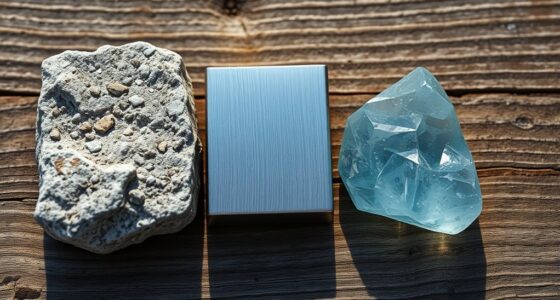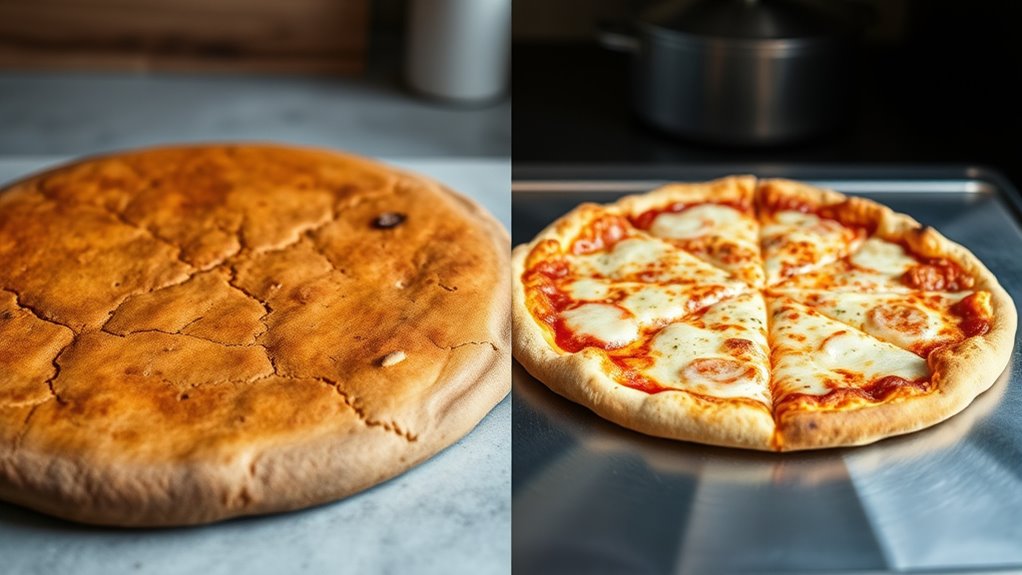
When choosing between pizza stones and steels, steels heat up faster and retain heat better, leading to a crisper, more evenly baked crust with quicker cooking times. Stones, on the other hand, distribute heat more gradually, producing a thicker, more consistently baked crust but requiring longer preheats. Understanding these differences in heat retention and crust texture helps you get the perfect bake—keep exploring to discover more tips and tricks.
Key Takeaways
- Steel heats up faster and reaches higher temperatures, enabling quicker, more intense heat transfer for a crisp crust.
- Pizza stones require longer preheating to achieve optimal heat retention, supporting even baking but delaying readiness.
- Steel’s rapid heat transfer promotes a crispy exterior and tender interior, while stones provide even heat distribution for thicker crusts.
- High thermal conductivity of steel results in better heat retention during baking, enhancing crust texture and crust development.
- Both materials influence crust texture: steel favors quick, crispy results, while stones support gradual, evenly baked, thicker crusts.
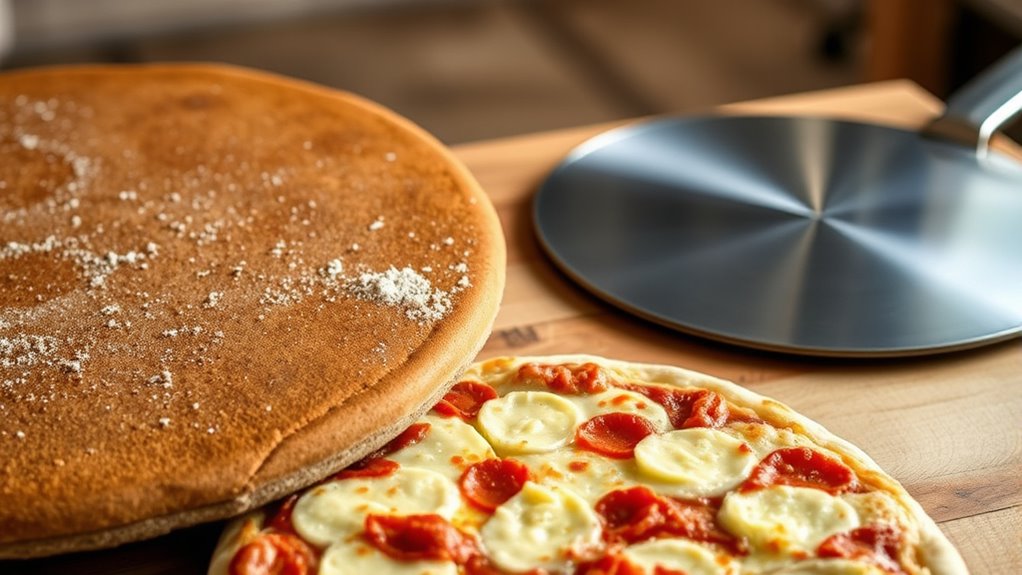
When it comes to achieving that perfect, crispy pizza crust at home, choosing between a pizza stone and a steel can make a big difference. Both tools influence how heat is transferred to your dough, affecting crust texture and overall quality. One key aspect to evaluate is oven temperature. Steel heats up faster and reaches higher temperatures more quickly than a stone, allowing you to crank up the heat without risking damage or uneven heating. This rapid heat transfer is ideal for creating a crust that’s both crispy and well-cooked inside. With a steel, you can often set your oven to its maximum setting and still get a consistent, intense heat, which is harder to achieve with a pizza stone that takes longer to warm thoroughly.
Dough hydration also plays an essential role in how your crust turns out, regardless of whether you opt for a stone or steel. Higher hydration doughs, which contain more water, tend to produce lighter, more airy crusts with a desirable chew. When baking these doughs, the type of baking surface can influence how well they develop that crust. Steel’s superior heat retention helps form a quick, intense sear on the dough’s surface, locking in moisture rapidly and encouraging a crispy exterior. On the other hand, a pizza stone, while excellent at evenly distributing heat, may require a longer preheat time to reach the ideal temperature, especially for high-hydration doughs. This longer preheat can be a drawback if you’re aiming for a quick bake or if your oven struggles to reach high temps.
Furthermore, the way each material interacts with oven temperature and dough hydration affects your baking process. Steel’s excellent thermal conductivity means your oven’s heat is transferred almost instantly when placed inside, making it easier to bake pizzas at high temperatures consistently. This results in a crust that’s crispy on the outside and tender inside, especially when your dough has a good hydration level. A pizza stone, while slower to heat, provides a more gradual heat transfer, which can be beneficial for developing a thick, evenly baked crust, but it demands patience and proper preheating. Both tools have their merits based on these factors, but understanding how oven temperature and dough hydration interplay with each can help you choose the right surface to achieve that ideal crust every time. Additionally, the thermal properties of each material influence how evenly heat is distributed during baking, impacting the final crust quality.
Frequently Asked Questions
Which Material Heats up Faster for Pizza Baking?
Steel heats up faster for pizza baking because it conducts heat more efficiently than stone. This quick heating can give you a crisp crust and shorter preheat times. While steel is durable and may cost more initially, it’s worth it for durability and performance. Stones, on the other hand, take longer to heat but are often cheaper and more forgiving. Choose based on your budget and baking style.
Can Pizza Stones and Steels Be Used Interchangeably?
Imagine the promise of perfect pizza—can you really rely on just one tool? Yes, pizza stones and steels can be used interchangeably, but only if their material compatibility and temperature stability match your baking needs. Steel heats faster and retains heat better, making it ideal for crisp crusts, while stones offer gentle, even heat. Choose wisely, and your pizza will turn out just the way you crave.
How Does Thickness Affect Heat Retention?
Thicker pizza stones or steels improve heat retention because they have better insulative properties, trapping heat more effectively. Their increased thickness enhances thermal conductivity, allowing heat to spread evenly across the surface. This results in a crisper crust and consistent cooking. However, very thick materials might take longer to heat up initially. So, balancing thickness with your baking needs ensures ideal heat retention and crust texture.
Are There Cleaning Differences Between Stones and Steels?
Cleaning methods differ between stones and steels. For pizza stones, you should avoid soap and water; instead, scrub off food debris with a brush and let it cool before wiping. Surface maintenance involves avoiding harsh chemicals to prevent damage. Steel surfaces are easier—they can be cleaned with soap and water, and a quick scrub keeps them in top shape. Regular cleaning ensures ideal heat retention and crust quality.
Which Option Lasts Longer With Regular Use?
Steels generally last longer with regular use because they have better durability and wear resistance compared to stones. You’ll find steels can withstand higher temperatures and frequent handling without cracking or breaking. Stones, on the other hand, may chip or crack over time, especially if subjected to thermal shock. If you want a durable option, steels are your best choice for long-lasting performance and consistent results in pizza baking.
Conclusion
Ultimately, whether you choose a pizza stone or steel, remember that “practice makes perfect.” Both tools can help you craft a delicious, crispy crust, but it’s your dedication and patience that truly make the difference. Steels heat faster and produce a chewier crust, while stones offer better heat retention for a more traditional bite. Whichever you pick, keep experimenting—your perfect pizza is just a few tries away.