To gauge your pizza oven’s flame like a pro, look for a bright orange or yellow hue indicating good combustion and proper oxygen flow. If the flame appears dull, smoky, or red, increase airflow to brighten it. Overly blue or white flames mean too much O2, risking uneven cooking or burning. Monitoring these cues helps you adjust airflow for consistent, perfect heat. Keep exploring to learn more tips for mastering your oven’s flame behavior.

Get baking supplies delivered free with Prime
- Fast, free delivery on millions of items
- Prime Video, Amazon Music and more included
- Member-only deals all year
Key Takeaways
- Observe the flame color: bright orange/yellow indicates proper oxygen levels; dull or smoky flames suggest insufficient oxygen.
- Monitor flame brightness: steady, lively flames reflect efficient combustion; overly bright or blue flames may indicate excessive oxygen.
- Adjust airflow based on flame appearance: increase airflow for dull flames, decrease if flames turn too blue or intense.
- Recognize signs of over-oxygenation: white or blue flames can cause uneven cooking or burning; moderate airflow to balance.
- Use flame cues to maintain consistent oven temperature and ensure even heat distribution for optimal pizza baking.
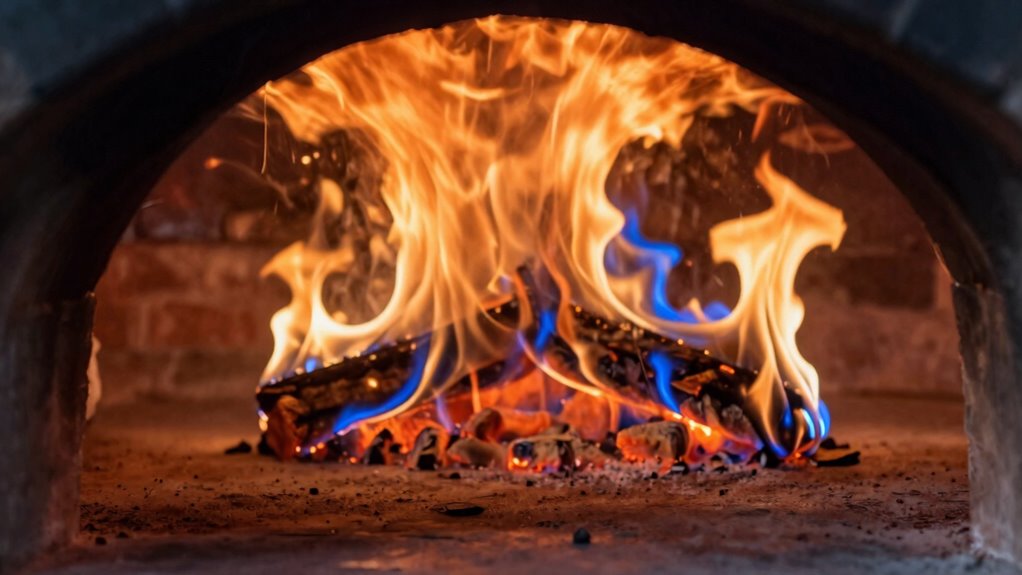
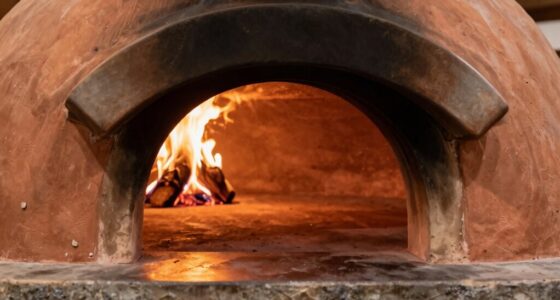
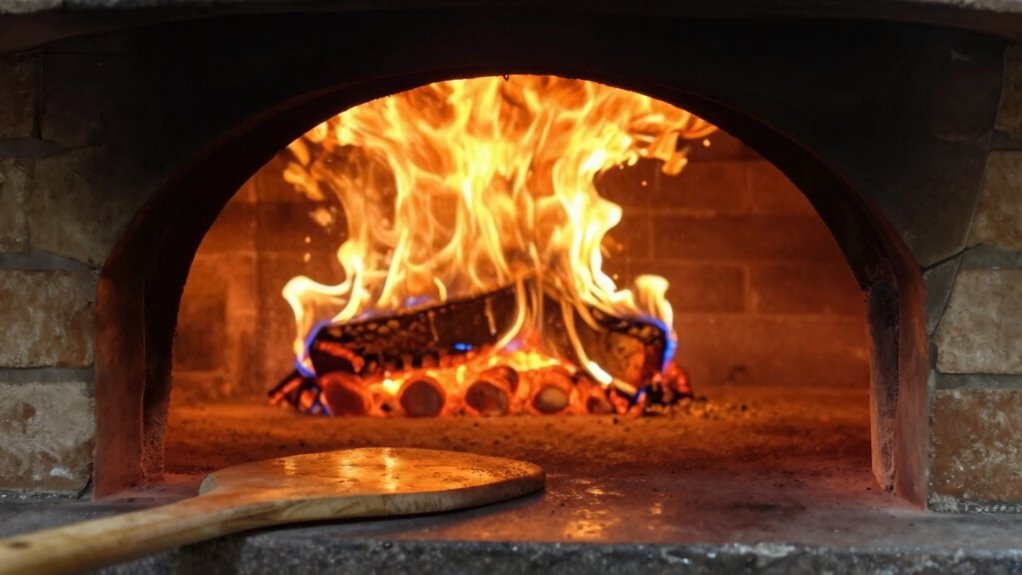
Understanding the flame in your pizza oven is key to achieving perfect pies. When you learn to interpret the flame’s behavior, you gain valuable insight into how your oven is functioning and what adjustments you might need. One of the most noticeable aspects to observe is the flame color. A bright, intense orange or yellow flame often indicates that oxygen levels are sufficient, fueling a lively combustion that produces the right amount of heat. This kind of flame suggests that your oven is operating efficiently, providing even heat distribution, which is essential for baking a well-cooked pizza with a crisp crust and perfectly melted toppings.
On the other hand, if the flame appears dull, dull red, or has a smoky hue, it’s a sign that oxygen levels might be too low. Insufficient oxygen can lead to incomplete combustion, causing the flame to burn weakly or produce excess smoke. When this happens, your oven’s temperature can become uneven, and you might notice that your pizza doesn’t cook as evenly or develops a smoky flavor. To correct this, you should increase the airflow, allowing more oxygen to reach the fire. This adjustment will brighten the flame and restore proper combustion efficiency, ensuring your oven heats up to the right temperature consistently. Additionally, understanding flame behavior can help you troubleshoot and optimize your oven’s performance for better cooking results. Recognizing catalytic combustion is also crucial, as it directly impacts how well your oven heats and cooks.
Conversely, if the flame is excessively bright and almost white or blue, it indicates that oxygen levels are high. While a blue flame often means efficient combustion in many cases, in a pizza oven, an overly intense flame can cause uneven cooking or even burn the crust if not managed properly. You’ll want to moderate the airflow to bring the flame back to a steady, vibrant orange or yellow, which signifies ideal oxygen levels for pizza baking.
pizza oven flame color indicator
As an affiliate, we earn on qualifying purchases.
As an affiliate, we earn on qualifying purchases.
Frequently Asked Questions
Can Flame Color Indicate Oven Temperature Accurately?
Flame color can give you a rough idea of oven temperature, but it’s not always accurate. A bright blue flame usually indicates a hot, efficient burn, while yellow or orange flames suggest incomplete combustion and lower temperatures. Keep in mind, flame color alone isn’t a precise measure of temperature accuracy, so it’s best to use a thermometer for exact readings. Relying solely on flame color can be misleading.
How Does Airflow Affect Flame Behavior?
Airflow actively influences flame behavior by balancing flame stability and ensuring consistent heat. When airflow is controlled carefully, the flame stays steady and burns efficiently, giving off a bright, even glow. Too much airflow can cause flickering flames, while too little can smother the fire. Mastering airflow control helps you manage the flame’s flicker and fizzle, maintaining ideal oven temperature and perfect pizza perfection.
What Flame Patterns Signify Optimal Cooking Conditions?
You’ll notice ideal cooking conditions when the flame exhibits symmetry and steady flickering without excessive dancing. A symmetrical flame indicates proper airflow, ensuring even heat distribution. Gentle flickering shows consistent combustion, which helps cook your pizza evenly without burning. If the flame wavers wildly or is uneven, it signals airflow issues. Keep an eye on these patterns, adjusting your oven’s vents or airflow to maintain a stable, symmetrical flame for perfect pizza results.
Is a Visible Flame Necessary for Perfect Pizza?
A visible flame isn’t necessary for perfect pizza, but it can enhance flavor. You focus on flame height and wood type, like hardwoods such as oak or maple, which produce consistent, steady flames. While a clear flame signals good heat, a glowing ember bed can also cook evenly. So, don’t stress if the flame isn’t constantly visible; instead, monitor heat and wood quality to guarantee your pizza turns out ideal.
How Often Should I Adjust the Flame During Cooking?
You should adjust the flame as needed every few minutes to maintain temperature stability and ideal flame maintenance. Keep an eye on the oven’s heat and make small adjustments to prevent hot spots or uneven cooking. If the flame gets too high or low, tweak it promptly. Regular adjustments help you keep the oven at the best temperature, ensuring your pizza cooks evenly and develops the perfect crust.
wood-fired pizza oven airflow regulator
As an affiliate, we earn on qualifying purchases.
As an affiliate, we earn on qualifying purchases.
Conclusion
So, next time you stare into that fiery pizza oven, remember—reading the flame isn’t just about knowing when to toss your pie in or out. It’s about mastering the art of patience and observation, even if all you really want is a perfect slice. Ironically, the more you try to control the flame, the more it teaches you to go with the flow. Happy cooking—your pizza’s fate is truly in those flickering flames!
pizza oven combustion thermometer
As an affiliate, we earn on qualifying purchases.
As an affiliate, we earn on qualifying purchases.
pizza oven flame adjustment tools
As an affiliate, we earn on qualifying purchases.
As an affiliate, we earn on qualifying purchases.
Halloween Picks
halloween
As an affiliate, we earn on qualifying purchases.