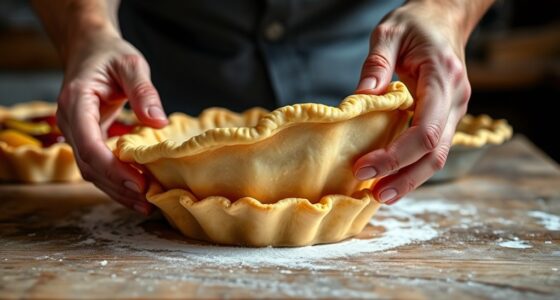
Many believe higher temperatures speed up baking, but they can cause uneven cooking or burning if not monitored closely. Low heat isn’t just for delicate items; it helps control browning and keeps textures tender. You might think oven placement doesn’t matter, but hotspots affect results. Adjusting temperature alone isn’t enough—you need to tweak time and technique. Convection ovens aren’t always better at high heat, and resting baked goods impacts texture. Keep these misconceptions in mind to improve your baking skills.

Get baking supplies delivered free with Prime
- Fast, free delivery on millions of items
- Prime Video, Amazon Music and more included
- Member-only deals all year
Key Takeaways
- High heat speeds baking but risks uneven cooking and burning if not carefully monitored.
- Low heat provides gentle, even cooking but may require longer baking times for proper doneness.
- Oven placement and airflow significantly impact heat distribution; convection fans can help with even baking.
- Proper temperature control and oven calibration are crucial; relying solely on high or low settings can lead to inconsistent results.
- Resting baked goods after baking enhances texture; skipping this step can cause uneven crumb and moisture distribution.
Higher Temperatures Always Speed Up Baking
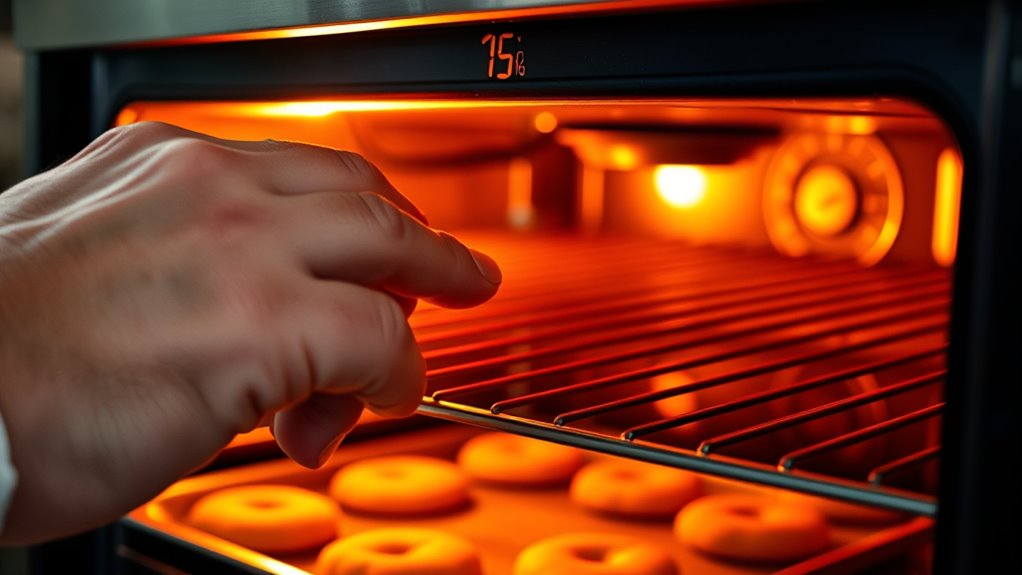
Many people assume that increasing the oven temperature will always speed up baking, but that’s not necessarily true. Higher temperatures can lead to uneven cooking or burning if you’re not careful, and it might compromise oven safety if you’re not attentive. Using the right baking terminology helps you understand how heat affects different ingredients—like knowing that a higher heat can cause rapid crust formation while the interior remains undercooked. Speed isn’t the only factor; quality and safety matter too. For example, cranking up the heat to cut baking time could result in a burnt exterior and raw center, especially in larger baked goods. Understanding how temperature influences baking ensures you get consistent results without risking oven safety. Proper temperature control is essential for achieving the desired texture and doneness in baked items.
Low Heat Is Only for Gentle, Delicate Items
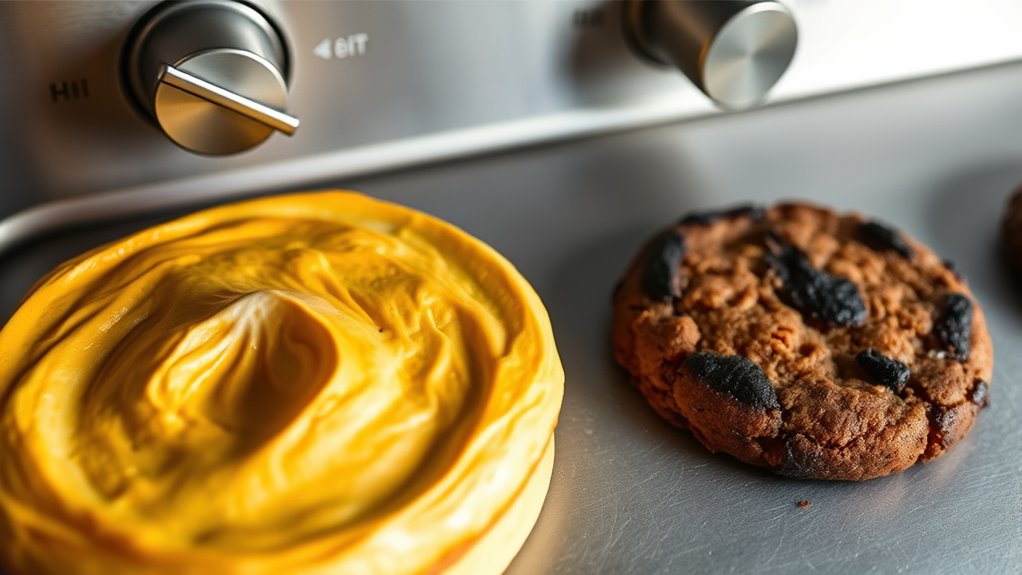
While higher temperatures can speed up baking, using low heat isn’t just for gentle, delicate items. Low heat is excellent for gentle cooking, especially when you need to preserve sensitive textures. It allows baked goods to cook evenly without burning or drying out. For example, slow-roasting nuts or gently melting chocolate benefits from low temperatures, ensuring they retain their structure and flavor. Low heat also helps delicate items like soufflés or custards cook through without collapsing. It’s not limited to fragile recipes; it’s about controlling heat to achieve the desired texture and doneness. Using low heat thoughtfully can prevent over-baking, uneven results, and damage to sensitive ingredients, making it a valuable tool for a wide range of baking tasks. Additionally, understanding the importance of vetted products can help you select the right bakeware and ingredients for optimal results at lower temperatures.
All Ovens Heat Evenly, So Placement Doesn’t Matter
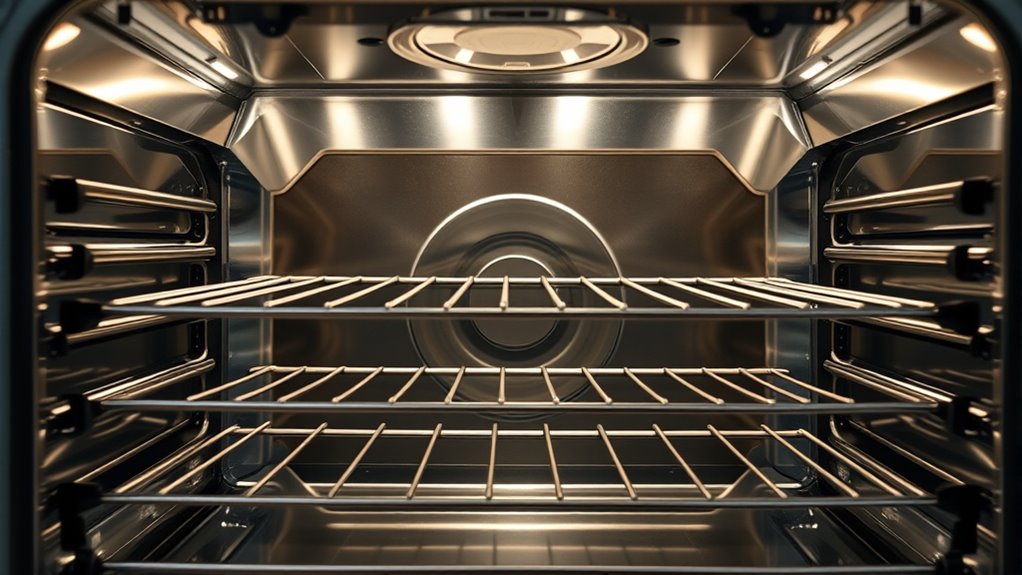
Contrary to popular belief, your oven’s heat distribution isn’t always perfectly even, so placement can still influence your baking results. Even if your oven claims to heat evenly, hotspots or cooler spots can affect how your baked goods turn out. Proper oven placement helps guarantee consistent temperature accuracy and even cooking. Keep these points in mind:
- Hotspots may cause uneven browning or undercooked centers
- Middle rack isn’t always the best for uniform heat
- Rotating pans during baking can improve results
- The type of oven you have, such as a Kia Tuning oven, can impact heat distribution and baking consistency.
Using High Heat Means Less Monitoring
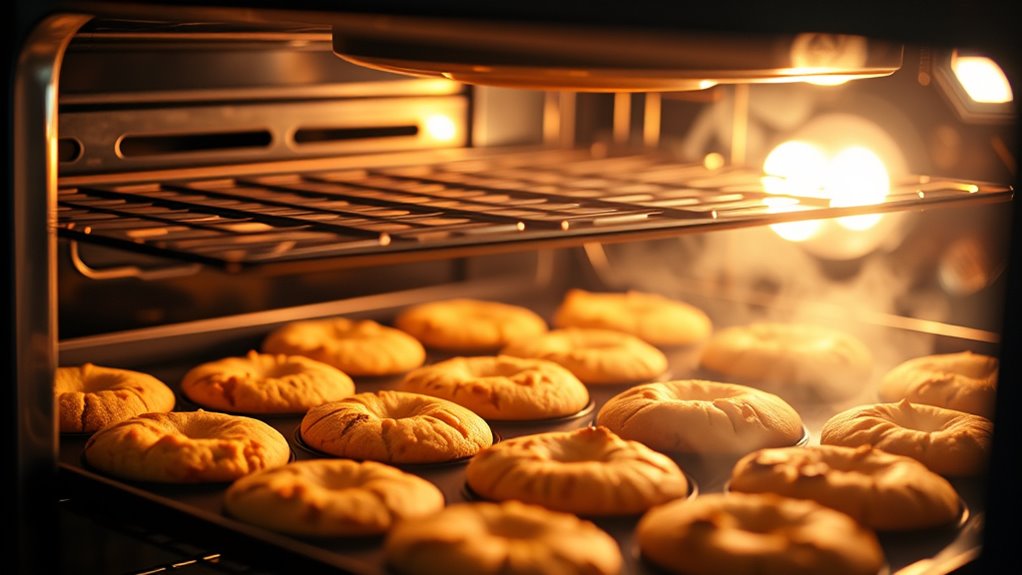
Using high heat might seem like a way to speed up baking and reduce oversight, but it can actually lead to overcooked edges and undercooked centers if you’re not vigilant. Many believe you can skip frequent checks, but high temperatures demand closer attention to ensure oven safety and ingredient flexibility. Without monitoring, you risk burning your baked goods or uneven results. Keep in mind that high heat can accelerate cooking times, but it also increases the likelihood of mistakes. To manage this, understand how different ingredients respond to heat:
| Temperature | Effect on Ingredients | Monitoring Tips |
|---|---|---|
| 450°F+ | Rapid browning | Watch closely, use timers |
| 375°F-425°F | Good browning, control | Check edges often, rotate |
| Below 375°F | Slow cook, even baking | Less frequent checks |
Being aware of how baking temperatures influence outcomes helps prevent common errors and ensures better results. Staying attentive ensures oven safety and better results.
Low Heat Is Less Effective for Browning and Crisping
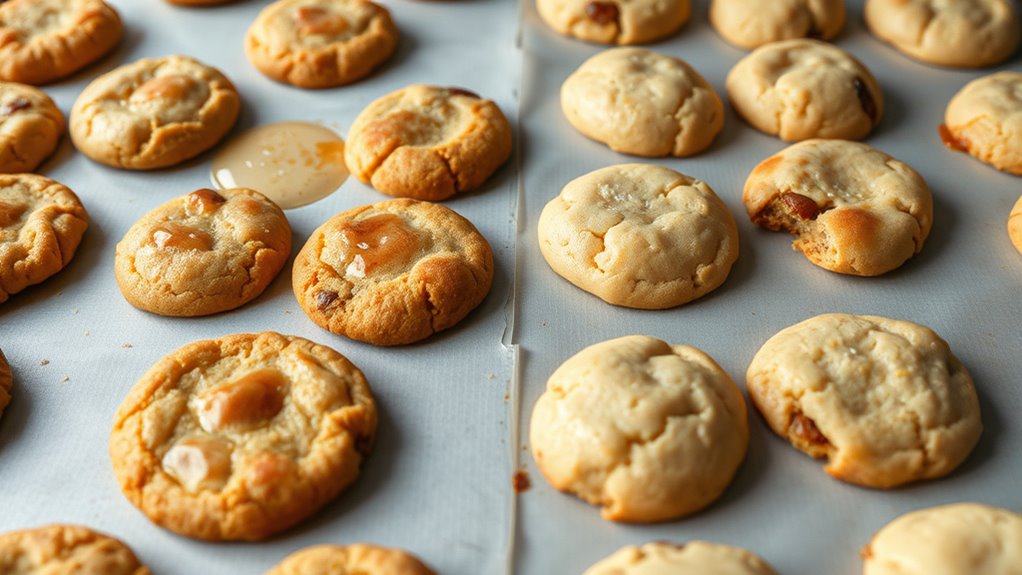
Although low heat allows for gentle, even baking, it often falls short when it comes to achieving a crispy crust or a rich, golden-brown finish. This is because browning techniques and crisping methods typically require higher temperatures to activate the Maillard reaction and caramelization. When you bake at low heat, the surface doesn’t reach the necessary temperature for these processes, resulting in duller, softer textures. To maximize browning and crispiness, you should increase the oven temperature or use techniques like broiling or finishing with a high heat blast. browning techniques and crisping methods rely on quick, intense heat. Low heat prolongs baking, reducing browning efficiency.
Resting Time Doesn’t Impact the Final Texture
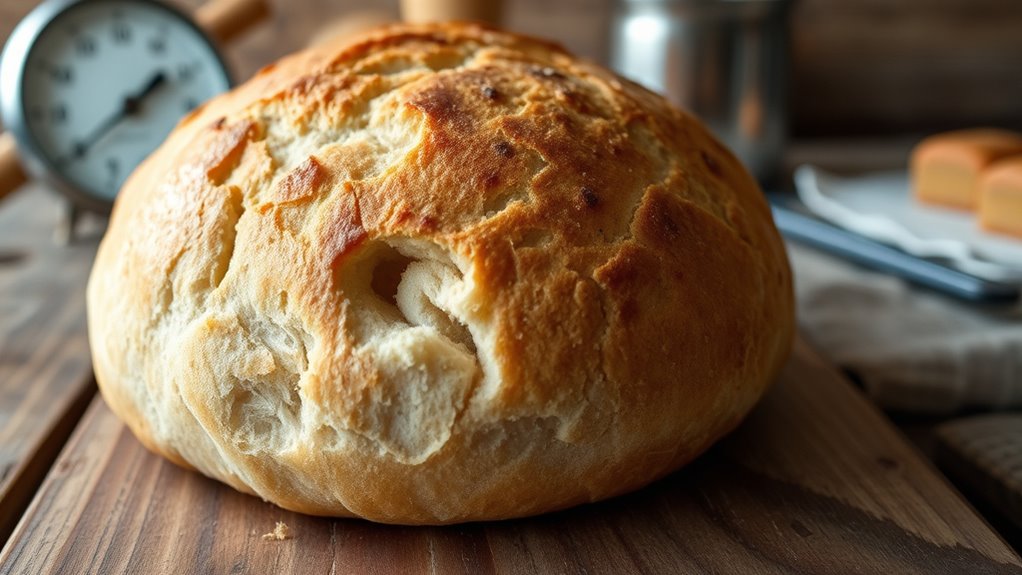
Many people believe that resting baked goods doesn’t affect their final texture, but in reality, resting time is essential. When you allow baked items to sit, it helps the moisture distribute evenly, which can improve the overall crumb and tenderness. Skipping resting time might result in a less cohesive texture, making slices crumble or feel uneven. For bread, resting allows the gluten to relax, enhancing the final texture and chewiness. For cakes and cookies, it helps set the structure, preventing them from being overly fragile. While some baked goods benefit from immediate slicing, most need a brief resting period to reach their ideal texture. Additionally, understanding baking techniques can help you optimize your results and achieve a better final product. Ignoring resting time can compromise the quality, leaving you with a final product that’s less satisfying.
Different Baked Goods Require the Same Heating Approach
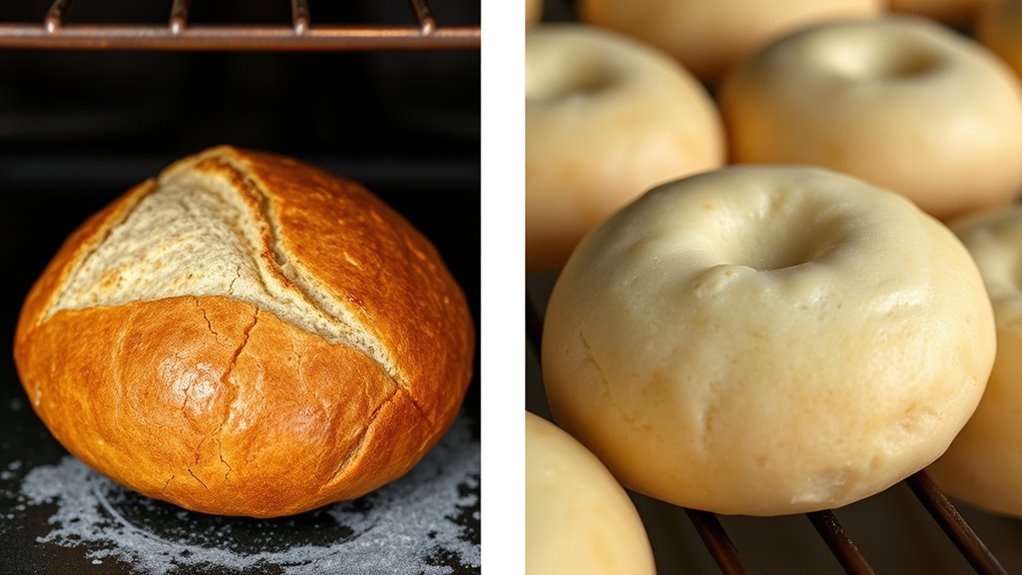
While it might seem convenient to treat all baked goods the same when it comes to heating, each type requires a tailored approach to achieve the best results. Different baked goods need specific baking temperatures and oven placement to develop perfect textures and flavors. For example, delicate items like soufflés demand gentle heat, while crusty bread benefits from higher temperatures and oven placement on the lower rack for ideal crust formation. Additionally, baking temperature adjustments are crucial depending on the desired outcome and the specific item you are preparing. To master this, consider:
- Adjusting baking temperature based on the recipe’s desired outcome
- Positioning items strategically within the oven for even heat exposure
- Recognizing that some baked goods need a quick high heat, while others require slow, consistent warmth
Understanding these nuances helps you avoid common mistakes and ensures each baked good turns out just right.
Convection Ovens Are Always Better for High Heat
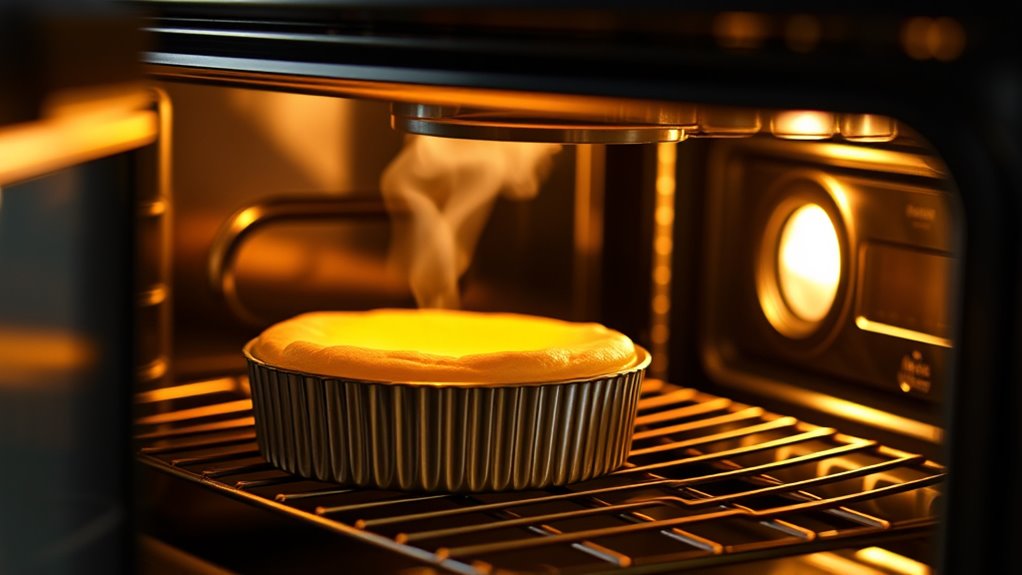
While convection ovens offer benefits like better circulation and even heat, they aren’t always the best choice for high heat baking. Sometimes, the circulating air can cause baked goods to dry out or cook unevenly. It’s important to take into account your specific recipe and oven performance before assuming convection is always superior. Additionally, regional differences in oven types and performance, such as those found in local resources, can influence how well high heat baking turns out.
Convection Circulation Benefits
Convection ovens excel at high-heat baking because their circulating fans evenly distribute hot air around your food. This improves airflow efficiency and enhances temperature uniformity, which is vital for consistent results. With better airflow, heat reaches every surface more effectively, reducing hot spots and ensuring even cooking. This means you can bake multiple trays without worry about uneven browning or undercooked spots. AI security concerns highlight the importance of reliable and predictable performance in such advanced appliances.
Even Heat Distribution
Because convection ovens circulate hot air continuously, they provide more consistent heat distribution across all areas of the oven. This even heat helps guarantee your baked goods cook uniformly, regardless of pan placement. Proper oven calibration is vital for maintaining accurate temperatures, especially at high heat. When using a convection oven, avoid overcrowding, as it can disrupt airflow. Keep in mind that the placement of your pans affects heat exposure; center racks typically offer the best results. To optimize heat distribution, consider preheating thoroughly and periodically rotating pans. Here’s a quick comparison:
| Aspect | Conventional Oven | Convection Oven | Tips |
|---|---|---|---|
| Heat distribution | Less even | More even | Calibrate oven regularly |
| Pan placement | Critical for even baking | Less critical | Use center rack |
| Air circulation | Minimal | Continuous | Avoid overcrowding |
| Baking results | Can be inconsistent | Consistent | Rotate pans as needed |
A consistent heat distribution is essential for achieving evenly baked goods, especially at high temperatures.
Not Always Superior
Although convection ovens excel at providing even heat during many baking tasks, they aren’t always the best choice for high-heat applications. Their enhanced airflow can sometimes lead to uneven browning or over-drying delicate items. When aiming for precise temperature control and baking accuracy, a traditional oven might serve you better. Convection fans can disrupt the delicate balance needed for certain baked goods, especially at very high temperatures.
- Over-aggressive airflow can cause uneven cooking.
- Temperature fluctuations may occur with rapid fan cycling.
- Delicate items may dry out or cook unevenly.
Adjusting Temperature Is Just About Time, Not Technique
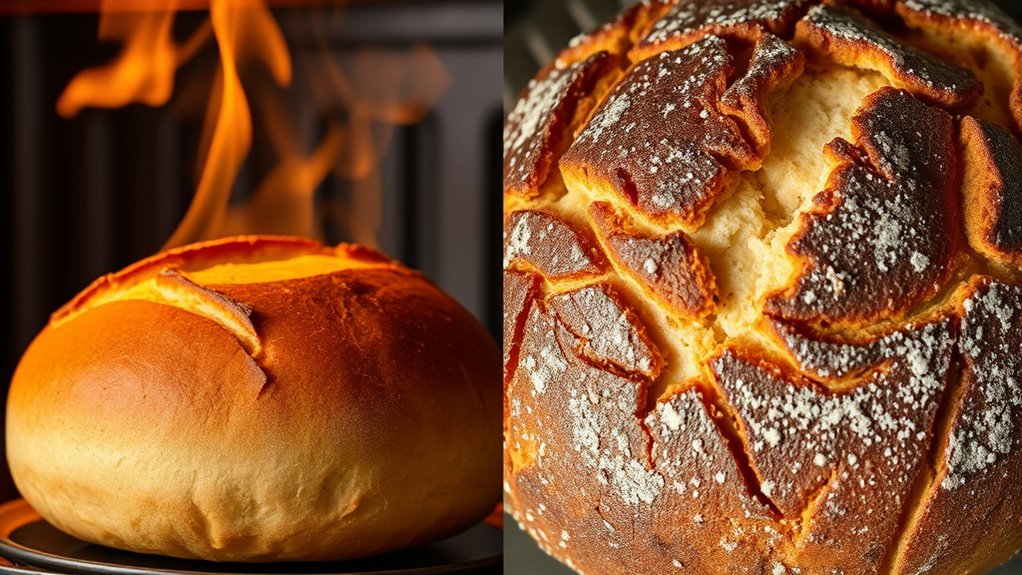
Many bakers assume that adjusting the oven temperature is simply a matter of changing the baking time, but in reality, technique plays a pivotal role. Proper temperature precision requires understanding technique nuances, such as how heat affects browning and texture. Lower temperatures may need longer baking, but technique adjustments—like preheating or rack placement—are equally important. Simply altering time without considering these factors can lead to uneven results.
| Technique Nuances | Impact on Baking |
|---|---|
| Preheating oven | Ensures consistent initial heat |
| Rack placement | Affects heat exposure and browning |
| Using oven thermometer | Maintains temperature accuracy |
| Adjusting baking time | Complements temperature for perfect results |
| Monitoring dough consistency | Influences how heat interacts with batter |
Frequently Asked Questions
Can I Switch Between High and Low Heat During Baking?
Yes, you can switch between high and low heat during baking, but you should do so cautiously. Temperature fluctuations can affect your baked goods, so make sure your oven is fully preheated before adjusting the heat. Rapid changes can cause uneven cooking or burning. It’s best to plan your temperature shifts in advance, and monitor your baked items closely to ensure they turn out perfectly.
How Does Bake Time Change at Different Temperatures?
When you bake at different temperatures, your baking duration changes because higher temperatures usually mean shorter baking times, while lower temperatures extend it. You should adjust your baking duration based on the temperature adjustment you make. For example, if you raise the temperature, check your baked good sooner to prevent overbaking. Conversely, at lower temperatures, you might need to extend the baking time for even doneness.
Are There Specific Baked Goods Best Suited for Low or High Heat?
Certain baked goods, like delicate cookies and soufflés, are best suited for low heat to guarantee even cooking and prevent burning. Conversely, high heat works well for roasting vegetables or creating a crisp crust on bread. You should adjust your baking techniques and ingredient proportions accordingly, such as reducing sugar or moisture for high heat recipes. By tailoring your approach, you’ll achieve ideal texture and flavor every time.
Does Oven Type Affect Optimal Baking Temperature?
Your oven type definitely impacts ideal baking temperature, and ignoring this can turn your baking into a disaster of biblical proportions. Different ovens vary in consistency and heat distribution, so you might need to adjust your temperature based on your baking surface and oven’s quirks. For example, convection ovens often require lower temps, while traditional ones might need higher heat to achieve even baking. Always monitor and tweak to perfect your baked goods.
How Do I Know if My Oven’s Temperature Is Accurate?
You can verify if your oven’s temperature is accurate by using an oven thermometer. Place it in the center and preheat your oven, then compare the reading to your oven’s display. If there’s a discrepancy, consider thermometer calibration. Also, be aware of oven hot spots, which can cause uneven baking. Rotating your baked goods and periodically checking your thermometer helps ensure consistent, accurate results.
Conclusion
Remember, baking isn’t just about cranking up the heat or dialing it down. It’s about understanding how each temperature transforms your ingredients—the way gentle warmth awakens delicate pastries, while fierce heat crisps and browns with purpose. Picture your oven as a canvas, where every degree shapes your masterpiece. So, trust your instincts, experiment with different settings, and let your baking journey unfold with patience and curiosity. The perfect bake is waiting just beyond the next temperature shift.
Fall Picks
fall essentials
As an affiliate, we earn on qualifying purchases.