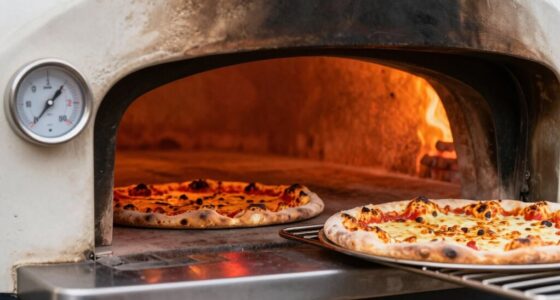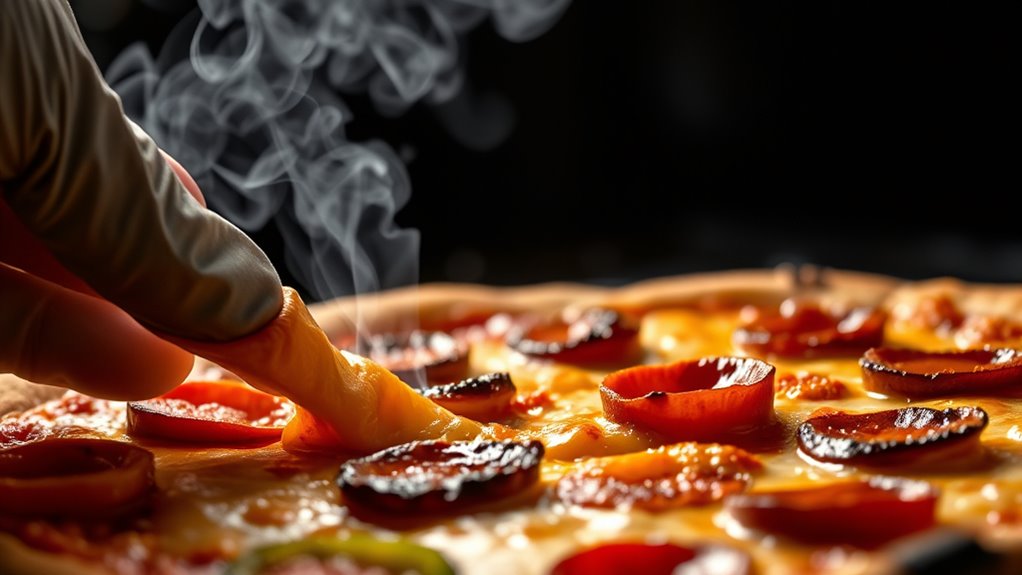
To check your pizza’s doneness, gently lift a corner or the center using a wide spatula or pizza peel. Support the crust firmly to prevent slipping or tearing, and do it briefly to peek underneath. Look for an evenly browned, crisp crust and bubbly, golden cheese with browned spots. If you’re curious about perfect inspection techniques, keep going—more tips will help you master the process.

Get baking supplies delivered free with Prime
- Fast, free delivery on millions of items
- Prime Video, Amazon Music and more included
- Member-only deals all year
Key Takeaways
- Use a wide spatula or pizza peel to gently lift a corner or the center of the pizza for inspection.
- Support the pizza firmly to prevent slipping or tearing during the lift.
- Lift the pizza briefly to check crust color, texture, and cheese doneness without overexposing it.
- Look for an evenly browned, crispy crust and golden, bubbly cheese as indicators of proper doneness.
- After inspecting, carefully set the pizza back down and allow it to rest before slicing.
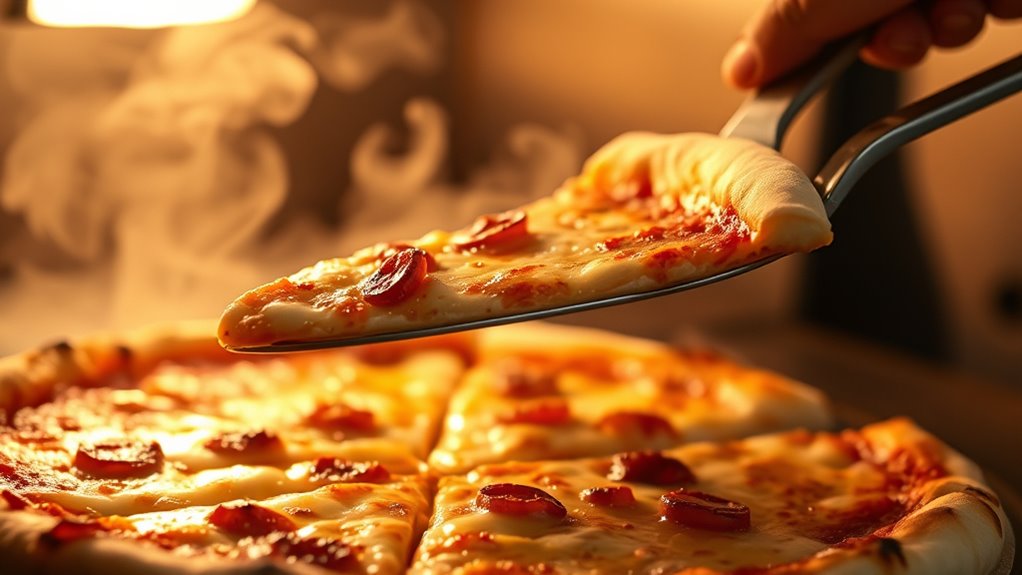
When baking a pizza, it’s tempting to leave it in the oven until the crust looks perfectly golden. But sometimes, appearances can be deceiving, and relying solely on the visual cue of a browned crust might lead to overcooking or undercooking your pizza. To get it just right, you need to pause and check the doneness by lifting the pizza slightly. This simple step helps you see beneath the surface and decide whether it needs more time or is ready to come out. When you lift the pizza, pay close attention to the pizza crust. You want it to be evenly browned and crisp, not burnt or pale. A well-cooked crust should have a firm, slightly puffed edge, with no raw or doughy spots. This indicates that the heat has penetrated properly, giving the crust the perfect texture and flavor.
While inspecting the crust, don’t forget to look at the cheese browning. The cheese plays an essential role in the overall look and taste of your pizza. You want the cheese to be golden and bubbly, with some browned spots indicating caramelization. If the cheese is still pale or melted but not browned, it might need a bit more time. Conversely, if it’s overly browned or burnt, it’s a sign to remove the pizza immediately to prevent a bitter taste. When you lift the pizza, check if the cheese has achieved that inviting, slightly crispy top that signals it’s perfectly cooked.
Lifting the pizza might seem intimidating at first, but it’s a quick and effective way to gauge doneness without cutting into it. Use a wide spatula or pizza peel for steady support, and gently lift a corner or the center to peek underneath. This quick inspection allows you to see if the bottom is nicely browned and crispy, which is essential for a good pizza crust. If the bottom is still pale or soft, slide it back in and give it a few more minutes. If the crust is golden and firm, and the cheese has browned to your liking, it’s time to take it out and let it rest for a couple of minutes before slicing. This pause guarantees you serve a pizza that’s perfectly cooked all around, with a crust that’s crisp and cheese that’s flavorful and well-browned.
Additionally, understanding how to monitor cooking progress helps ensure you consistently achieve the ideal pizza texture and flavor.
pizza peel for inspecting doneness
As an affiliate, we earn on qualifying purchases.
As an affiliate, we earn on qualifying purchases.
Frequently Asked Questions
How Often Should I Check if My Pizza Is Done?
You should check your pizza about 3-5 minutes before the expected baking time, especially if you’re unsure about oven calibration or baking temperature. Keep an eye on it every couple of minutes after that to prevent overcooking. If your oven isn’t calibrated correctly, baking times may vary, so frequent checks help you get that perfect crust and melted cheese without burning. Adjust your checks based on your oven’s performance.
Can Lifting the Pizza Ruin Its Crust?
Lifting the pizza can cause crust damage or topping dislodging if you’re not careful. To prevent this, use a wide spatula or pizza peel to lift the edge gently, supporting the crust evenly. Avoid yanking or lifting too high, which can tear the crust or push toppings off. A gentle, steady approach guarantees your crust remains intact and toppings stay put, keeping your pizza delicious and visually appealing.
What’s the Best Tool to Lift the Pizza Safely?
The best tool to lift your pizza safely is a pizza peel, with a sturdy handle that keeps your hands away from heat. Pair it with oven mitts for extra protection, because who doesn’t love a little drama when checking doneness? Irony aside, using a pizza peel helps prevent crust damage, while oven mitts shield you from burns. So, go ahead—inspect that pie with confidence and style!
How Do I Prevent Toppings From Sliding off When Checking?
To prevent toppings from sliding off when checking your pizza, gently lift it using a wide spatula to maintain topping stability. Support the crust as you lift to avoid crust damage, and lift slowly to keep toppings in place. You can also slightly tilt the pizza to see inside, ensuring toppings stay put without damaging the crust. This careful approach keeps your toppings intact and your crust unscathed.
When Is the Ideal Time to Remove the Pizza From the Oven?
You should remove the pizza from the oven when the crust is golden brown and the cheese is bubbling, usually after the recommended baking time. Keep an eye on the oven temperature; if it’s set correctly, the pizza cooks evenly. Use a timer to track baking time, and check the crust’s color and doneness. When these indicators align, it’s the perfect moment to take your pizza out and enjoy!
As an affiliate, we earn on qualifying purchases.
Conclusion
Remember, taking a moment to lift your pizza and check for doneness guarantees perfect results. Did you know that about 85% of home bakers admit to cutting into their pizza too early? By pausing and inspecting, you avoid undercooked centers or burnt edges. So next time, resist the temptation to rush. Instead, lift that slice, trust your eye, and enjoy a beautifully cooked pizza with a crispy crust and melted cheese—every time.
As an affiliate, we earn on qualifying purchases.
As an affiliate, we earn on qualifying purchases.
Halloween Picks
halloween
As an affiliate, we earn on qualifying purchases.