
TL;DR

Get baking supplies delivered free with Prime
- Fast, free delivery on millions of items
- Prime Video, Amazon Music and more included
- Member-only deals all year
A registered dietitian writing for Good Housekeeping recommends canned pumpkin as a convenient, nutrient-rich pantry ingredient, citing its vitamin A, fiber and versatility. The report advises choosing plain pumpkin puree rather than sweetened pie filling; its nutrition claims are guidance from the dietitian, not a new clinical finding.
A registered dietitian and director of the Good Housekeeping Institute Nutrition Lab is urging readers to treat canned pumpkin as more than a seasonal baking ingredient, pointing to its vitamin A, fiber and uses in both sweet and savory food. The advice focuses on choosing plain pumpkin puree, rather than pumpkin pie filling, and offers ways to use and store leftovers.
The dietitian describes pumpkin as a source of beta-carotene, the pigment that gives it its orange color and that the body converts into vitamin A. The report says a half-cup serving provides 100% of the daily value for vitamin A. Vitamin A supports vision and immune function, according to the article. The source does not specify a product brand or provide the underlying nutrition label or calculation for that figure.
Canned pumpkin also contains fiber and potassium. The report links fiber with digestion and feeling full, and says potassium supports blood pressure, muscle function and fluid balance. It characterizes canned pumpkin as affordable and naturally low in calories, but gives no price comparison or calorie figure. These are nutrition points in a consumer report, not evidence of a newly released study or a change in dietary guidance.
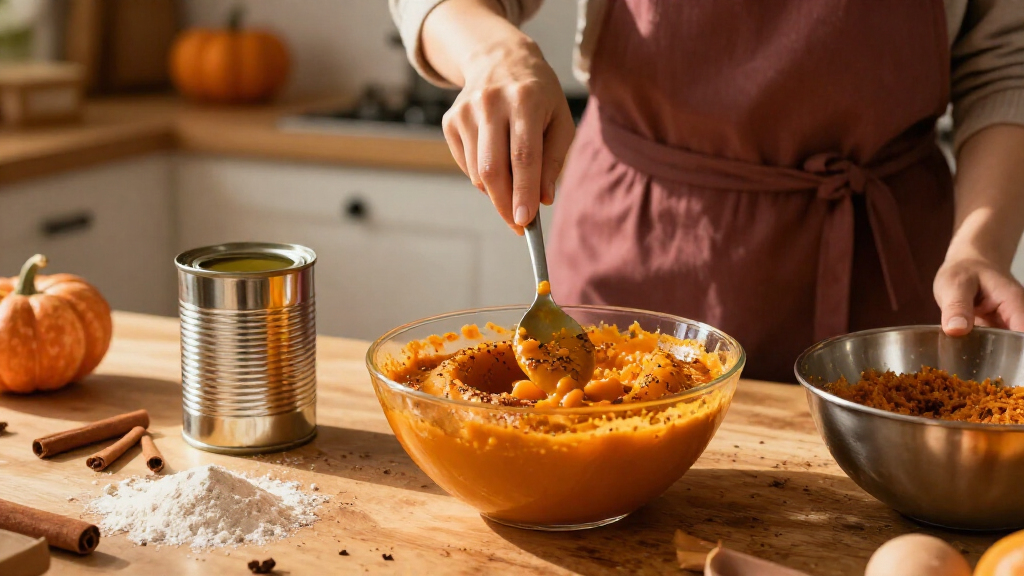
For shopping, the dietitian advises checking the ingredients for 100% pumpkin puree. Pumpkin pie filling, also called pumpkin pie mix, can contain added sugar, sweeteners, fillers and spices. The article recommends considering a BPA-free can where available. Suggested uses include smoothies, oatmeal, yogurt, energy bites, baked goods, soups, salad dressings and macaroni and cheese.
A Pantry Ingredient Beyond Pie
The practical takeaway is that canned pumpkin can be used outside the short fall baking season. A shelf-stable ingredient that can go into breakfasts, snacks and savory dishes may offer home cooks a convenient way to add fiber and vitamin A without preparing a fresh pumpkin. The article’s varied serving ideas also make clear that its recommendation is about convenience and flexibility as well as nutrition.
Readers should distinguish that useful food advice from a medical claim. Calling pumpkin a “superfood” is the dietitian’s characterization; the source does not show that eating it prevents or treats illness, nor does it compare pumpkin with other foods. Nutrition varies by product and serving size, so consumers can check the label on the can they buy.
Products Worth Considering

Instant Pot RIO Wide 7.5-Quart 7-in-1 Electric Pressure Cooker

Instant Pot Dual Action 8-in-1 Multi-Cooker (Sea Salt)

Le Creuset Signature Enameled Cast Iron Saucepan, 2.25 qt., Cerise
As an affiliate, we earn on qualifying purchases.
Puree and Pie Filling Differ
The article’s central shopping distinction is between plain canned pumpkin and pumpkin pie filling. Both may appear similar on store shelves, but pie filling is generally prepared with additional ingredients, according to the report. Checking the ingredient list is the simplest way to tell which product is in the can; plain puree should list pumpkin alone.
Canned pumpkin is already cooked and pureed, so the report says consumers do not need to roast and process a fresh pumpkin to use it. It also notes that canned pumpkin is typically processed soon after harvest, which it says helps preserve many nutrients. The source does not provide a comparison of specific nutrient levels between canned and fresh pumpkin.
““It should say only one thing: pumpkin.””
— The dietitian, describing what shoppers should check
Limits of the Nutrition Claims
The source is a consumer nutrition article, not a clinical trial or a formal review of dietary guidance. It does not give the publication date in the supplied material, identify a particular canned product, or show the calculation behind the claim that half a cup provides 100% of the daily value for vitamin A. The applicable serving and label can vary, so readers should verify product information on the package.
The report also does not quantify affordability, calorie content or nutrient retention, or establish that canned pumpkin offers greater health benefits than other vegetables. Its use of “superfood” is descriptive rather than a regulated nutrition category. No changes to official recommendations or new medical findings are reported.
Check Labels and Store Leftovers
The article gives no scheduled follow-up or next research milestone. Its practical advice is to check the ingredient list when buying pumpkin and to refrigerate opened puree in an airtight container for three to four days. For longer storage, it suggests freezing small portions or ice-cube-tray portions, then transferring the frozen pieces to a freezer bag.
Consumers can use those portions in the suggested recipes and follow the product’s storage directions. The report does not address specific food-safety temperatures or give a separate thawing method.
Key Questions
Is canned pumpkin the same as pumpkin pie filling?
No. Plain pumpkin puree contains pumpkin, while pie filling can include sugar, sweeteners, fillers and spices. Check the ingredient list before buying.
What nutrients does the report highlight?
The dietitian points to beta-carotene, vitamin A, fiber and potassium. The article says a half-cup serving provides 100% of the daily value for vitamin A; check the product label for serving-specific information.
How can canned pumpkin be used besides pie?
The report suggests adding it to smoothies, oatmeal, yogurt, soups, sauces and baked goods, among other options. It can be used in sweet or savory dishes.
How long can opened pumpkin puree be kept?
The article advises keeping leftovers in an airtight container in the refrigerator for three to four days, or freezing portions for later use. Follow any storage directions on the product packaging.
Source: goodhousekeeping.com