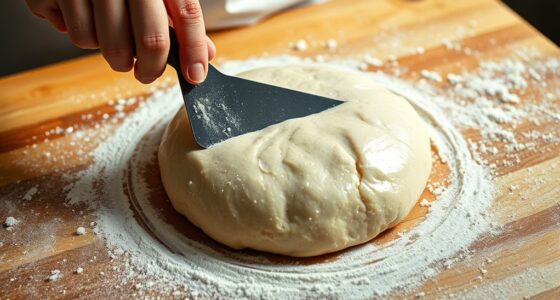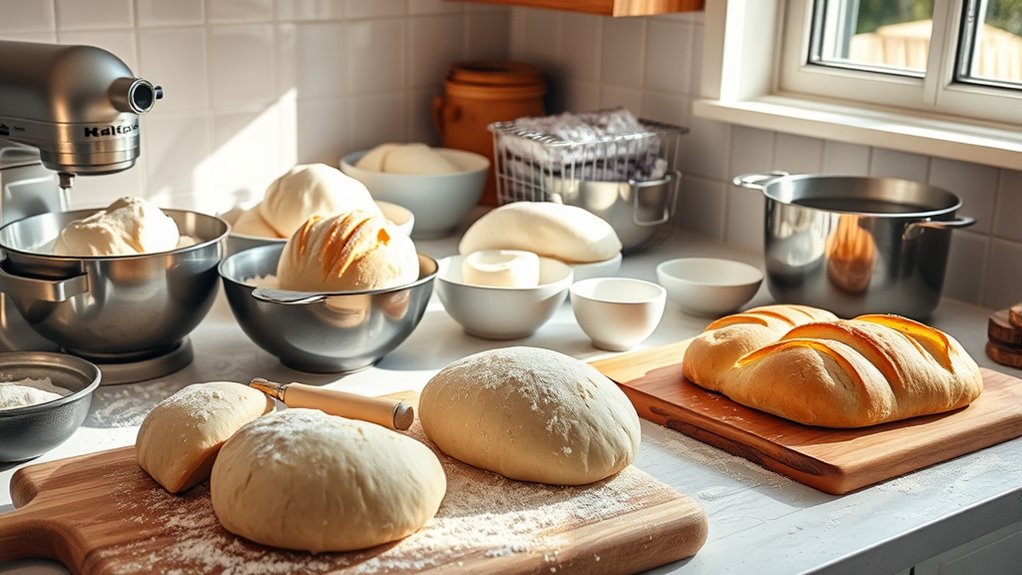

To master same-day dough in a weekend, focus on choosing high-protein flours like bread flour, measuring ingredients precisely, and kneading until the dough is smooth and elastic. Control fermentation by adjusting temperature and timing—avoid over or under-proofing—and shape dough confidently to ensure good structure. Use preheated baking surfaces and keep a close eye on bake times for crispy crusts. Keep experimenting with techniques, and you’ll quickly improve your results. If you keep practicing, you’ll discover even better ways to perfect your dough.
Key Takeaways
- Use high-protein flours and warm water to accelerate gluten development and fermentation, enabling quick dough rise.
- Measure ingredients precisely with a scale to ensure consistency and reliable results in a short timeframe.
- Knead the dough thoroughly until elastic, then allow a short resting period to relax gluten and enhance texture.
- Shape the dough carefully, preheat your oven properly, and bake at high heat for a crisp crust and even baking.
- Monitor proofing times closely, avoiding over- or under-proofing, to achieve optimal flavor, rise, and dough quality in a weekend.
Understanding the Fundamentals of Same-Day Dough
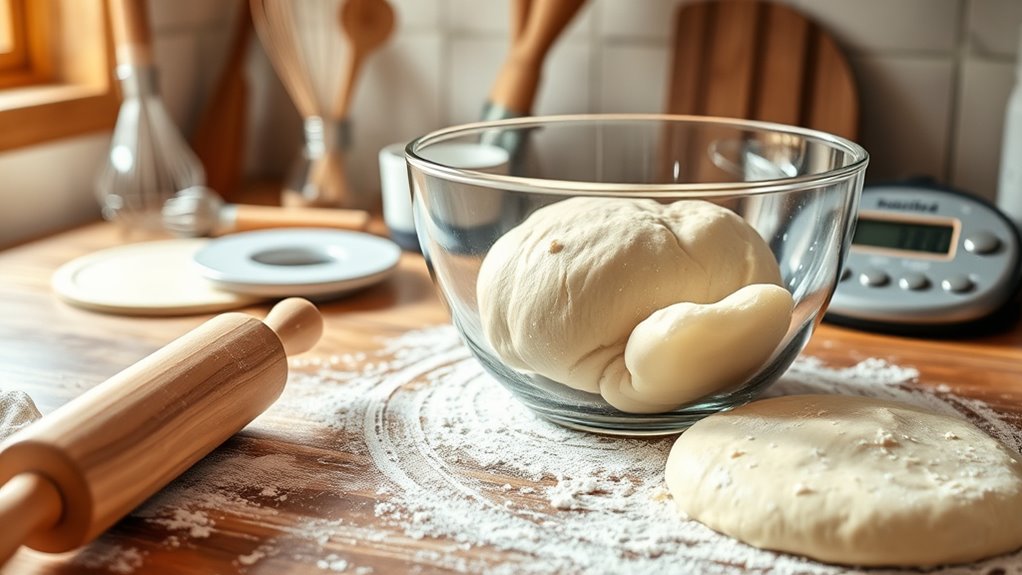
To understand how same-day dough works, it’s essential to grasp the basic ingredients and processes involved. Fermentation science plays a key role, as it explains how yeast converts sugars into carbon dioxide, helping your dough rise quickly. Unlike traditional methods, same-day dough relies on faster fermentation techniques, often achieved through higher yeast activity and warmer temperatures. Ingredient substitutions can also influence results; for instance, using bread flour instead of all-purpose flour can enhance gluten development, giving your dough better structure. Understanding these fundamentals allows you to manipulate variables like hydration and fermentation time to achieve the perfect texture. Additionally, AI-driven insights into fermentation can help optimize your dough-making process for consistent results. By mastering the science behind fermentation and knowing your ingredient options, you set a solid foundation for consistently successful same-day dough.
Selecting the Right Flour and Ingredients
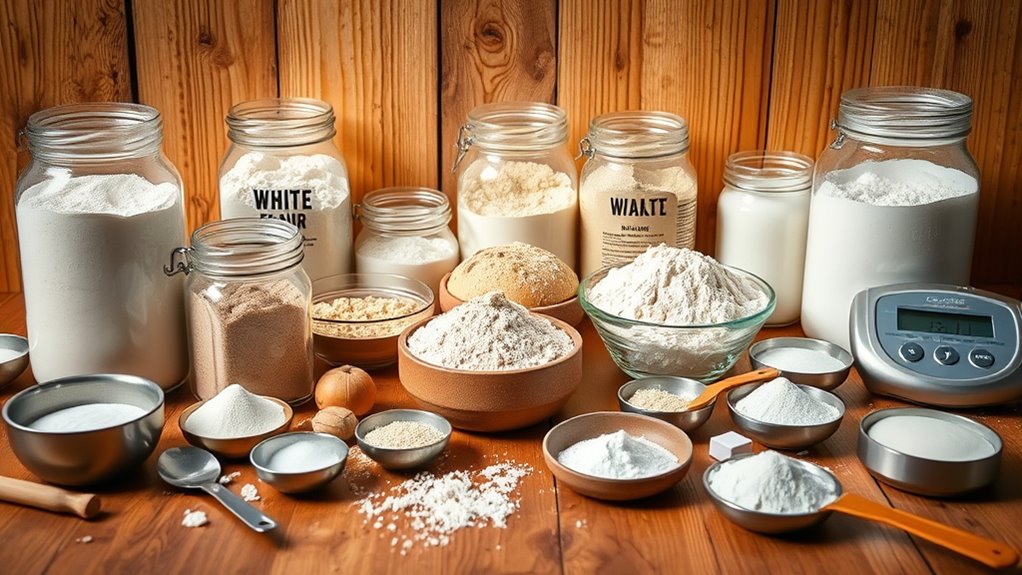
Choosing the right flour and ingredients is key to perfecting your dough. Different flour types serve various purposes, so selecting the best one makes a big difference. Pay attention to ingredient quality and measurement for consistent, reliable results every time. Incorporating whole foods and unprocessed ingredients can also enhance the dough’s texture and flavor.
Flour Types and Uses
Selecting the right flour is essential for achieving the perfect same-day dough. Different flours influence gluten development, which affects dough elasticity and texture. For quicker fermentation speed, choose bread flour or high-protein options that develop gluten faster, helping your dough rise efficiently within a single day. All-purpose flour works well for most recipes, offering a balance between gluten strength and tenderness. If you’re aiming for a softer, tender crumb, consider pastry or cake flour, which contain less protein. Whole wheat or specialty flours add flavor and nutrition but may require adjustments to hydration and kneading time. Understanding how each flour type interacts with your ingredients ensures ideal fermentation and structure, giving you a reliable base for mastering your same-day dough. Legalities and Zoning considerations may influence ingredient sourcing or kitchen setup if preparing dough in a shared or regulated space.
Ingredient Quality Matters
The quality of your ingredients directly impacts the success of your same-day dough. When sourcing ingredients, choose fresh, high-quality flour and other components to guarantee ideal fermentation and texture. Good ingredient sourcing means selecting products with minimal additives and consistent quality, which helps your dough develop better flavor and structure. Using premium ingredients also enhances flavor, giving your baked goods a richer, more satisfying taste. Avoid cheaper or stale ingredients, as they can lead to uneven results and compromise dough elasticity. Remember, even small differences in ingredient quality can markedly affect your final product. Prioritize fresh, well-sourced ingredients to streamline your baking process and achieve the best possible flavor and texture in your same-day dough nutritional quality.
Measuring for Consistency
Achieving consistent results in your same-day dough begins with precise measurement of your ingredients. Using proper measuring techniques ensures accurate ingredient ratios, which is vital for success. For dry ingredients like flour, use a scale for the most accurate results, or spoon and level to avoid overpacking. When measuring liquids, a clear liquid measuring cup works best, allowing you to see the exact level. Pay close attention to ingredient ratios, especially between flour, water, and yeast, to maintain dough consistency. Small deviations can impact texture and rise. Keep your measurements consistent each time you bake by following the same techniques, and you’ll develop a reliable process for perfect same-day dough every weekend. Additionally, understanding the importance of ingredient proportions can help you troubleshoot and refine your dough for optimal results.
Mastering the Mixing and Kneading Process
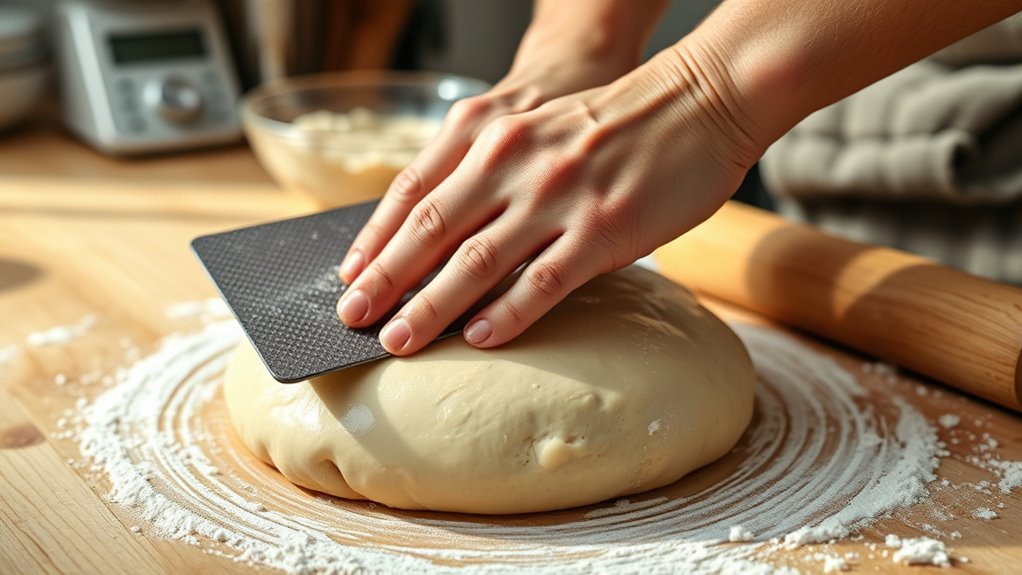
Mastering the mixing and kneading process is essential for creating a dough that rises properly and has the right texture. Proper mixing ensures all ingredients combine evenly, while kneading develops gluten, which gives your dough strength and elasticity. Focus on kneading techniques that involve pushing, folding, and stretching the dough consistently. You want to knead until the dough becomes smooth, slightly tacky, and elastic—this indicates good gluten development. Avoid over-kneading, which can make the dough tough, or under-kneading, which results in dense bread. As you work, pay attention to the dough’s feel and texture. Mastering these steps will set a solid foundation for a beautiful, well-risen loaf that’s light, airy, and flavorful. Gluten development is a critical aspect to monitor during kneading to ensure optimal dough structure.
Perfecting the Proofing and Resting Times
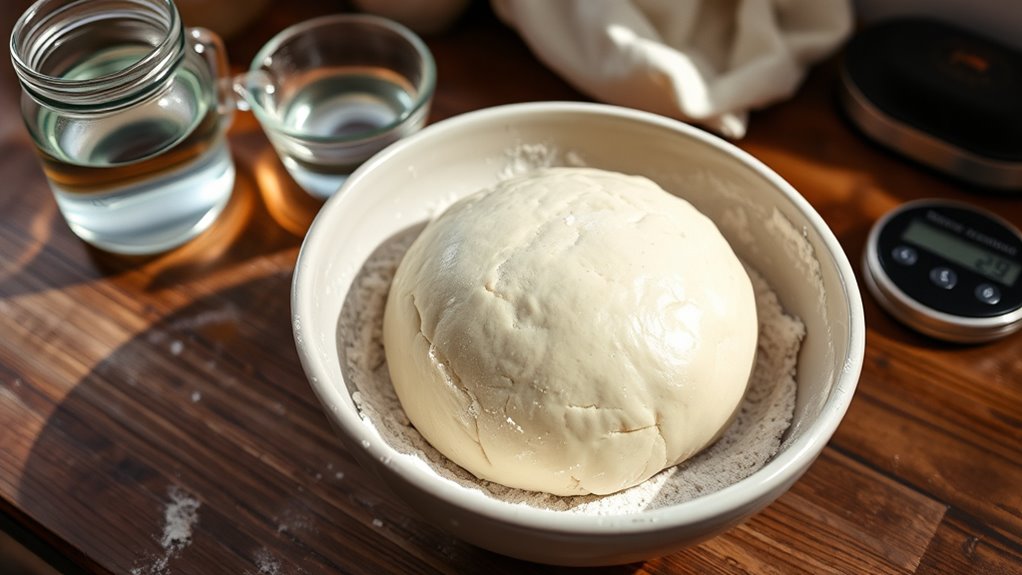
Getting your dough to proof at the right temperature and humidity guarantees it rises perfectly without overproofing. Resting your dough also allows the flavors to develop fully, enhancing the final taste. Paying attention to these times makes all the difference in mastering same-day bread. Additionally, maintaining a cozy, draft-free environment helps ensure consistent proofing results.
Optimal Proofing Conditions
To perfect your proofing process, paying close attention to the ideal conditions is essential. Proper proofing ensures yeast activation occurs best, leading to better dough rise and flavor development. Maintain a warm, humid environment—around 75-80°F—with consistent temperature and humidity. Avoid drafts or sudden temperature changes, which can hinder yeast activity. An environment with steady warmth encourages active fermentation and improves dough elasticity, making it easier to shape later. Use a damp cloth or plastic wrap to cover the dough, preventing it from drying out. Keep an eye on the proofing time; over-proofing can lead to a collapse, while under-proofing results in dense bread. For wireless devices like Bluetooth headphones, firmware updates can enhance performance and stability during proofing. Mastering these conditions ensures your dough develops the perfect rise and texture every time.
Resting for Flavor
Resting your dough after proofing is essential for developing complex flavors and improving texture. During this resting period, fermentation benefits continue as the yeast produces additional flavor compounds, enriching the dough’s profile. Proper resting allows gluten to relax, making the final bread more tender and easier to shape. It also enhances flavor development by giving the yeast time to break down starches and proteins, creating deeper, more nuanced tastes. Keep an eye on your resting times; too short, and you miss out on fermentation benefits, too long, and the dough could overproof. Aim for a balanced rest that maximizes both fermentation benefits and flavor complexity, ensuring your same-day dough delivers delicious, bakery-quality results in just a weekend. Understanding the fermentation process helps in timing your resting period for optimal flavor and texture.
Tips for Achieving the Ideal Dough Consistency
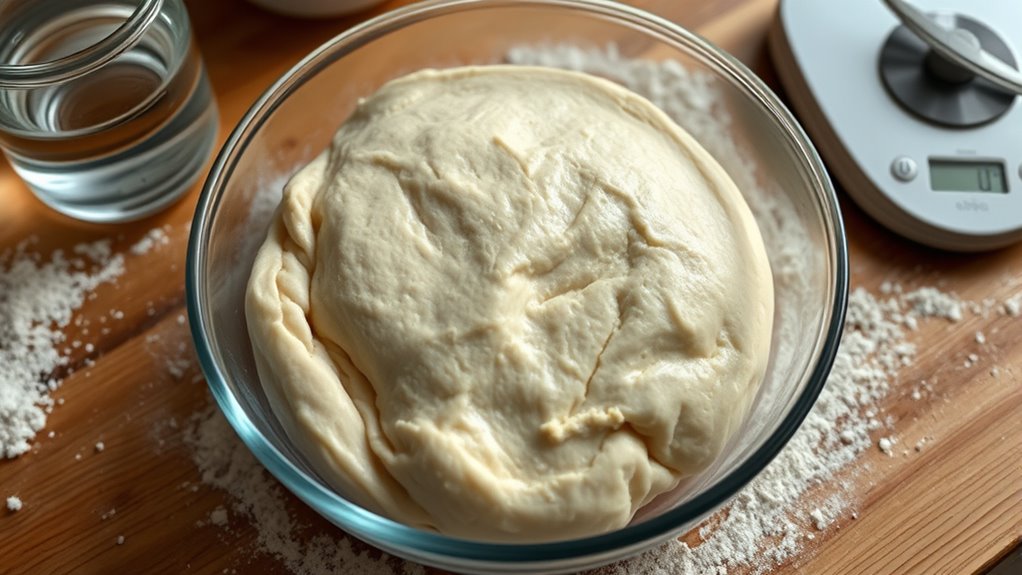
Achieving the perfect dough consistency is essential for a successful same-day bake, and it starts with understanding the right balance of ingredients. To improve dough elasticity, add ingredients gradually and don’t overmix; this helps create a smooth, stretchy dough that holds its shape. Keep an eye on hydration levels—too dry and the dough will be stiff, too wet and it’ll be sticky; aim for a slightly tacky texture. Proper kneading develops gluten, which enhances elasticity and flavor development. Resting the dough allows flavors to meld and gluten to relax, giving you a more manageable, flavorful dough. Adjust flour or water if needed, and work until your dough feels soft, elastic, and just slightly sticky. Achieving this balance ensures a dough that’s easy to shape and rich in flavor.
Techniques for Shaping and Handling the Dough
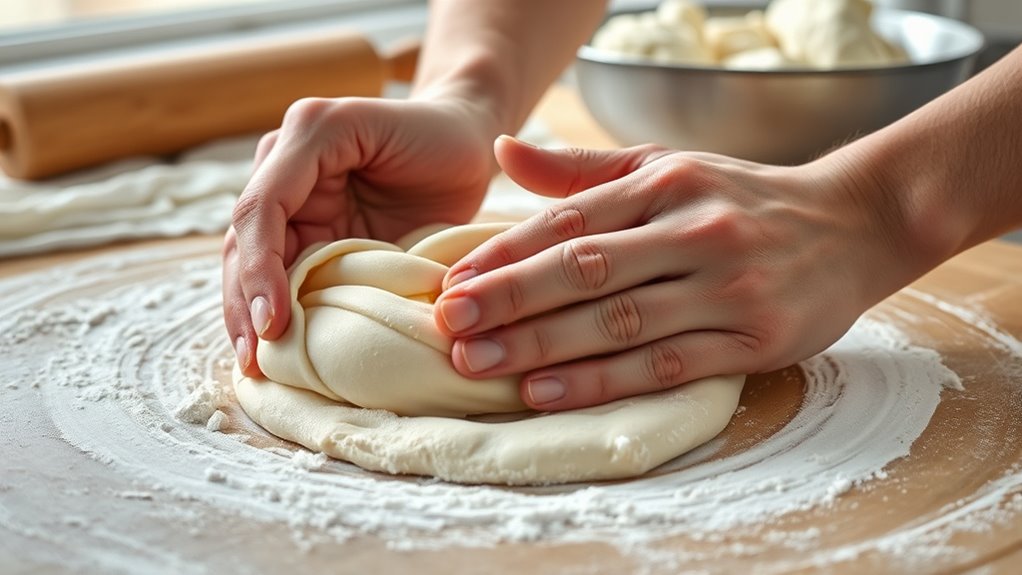
Once your dough has reached the right consistency, handling it properly is key to shaping perfect baked goods. Effective dough shaping and handling techniques ensure even texture and professional results. First, lightly flour your surface and hands to prevent sticking, but avoid over-flouring, which can dry out the dough. Second, use gentle, confident motions when shaping—don’t press too hard, as this can deflate the dough. Third, rest the dough briefly if it becomes resistant, allowing gluten to relax for easier handling. Remember, consistent pressure and minimal handling preserve the dough’s structure. Proper shaping is essential for achieving the best crust and crumb in your baked goods. Additionally, understanding the best heat pump features can help maintain optimal oven temperatures, ensuring your baked goods turn out perfectly every time.
Baking and Finishing Your Freshly Made Dough
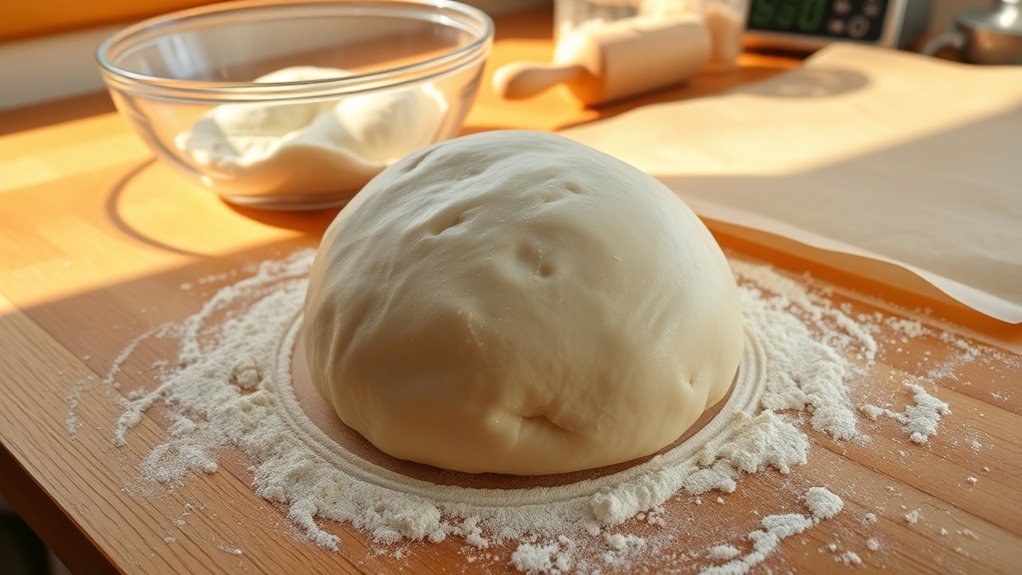
After shaping your dough, it’s time to bring it to life in the oven. Proper baking begins with understanding dough fermentation; it guarantees your bread has flavor and a good rise. Preheat your oven to the right baking temperature—usually between 375°F and 450°F, depending on the recipe. A hot oven activates the dough’s gases quickly, giving you a crisp crust and tender interior. Place your shaped dough on a preheated baking stone or sheet for even heat distribution. Keep an eye on the baking time, which varies based on the size and type of dough. As it bakes, you’ll notice it rising and developing a golden-brown crust. Once done, let it cool briefly to finish the crust and set the crumb before slicing.
Troubleshooting Common Issues and Adjustments
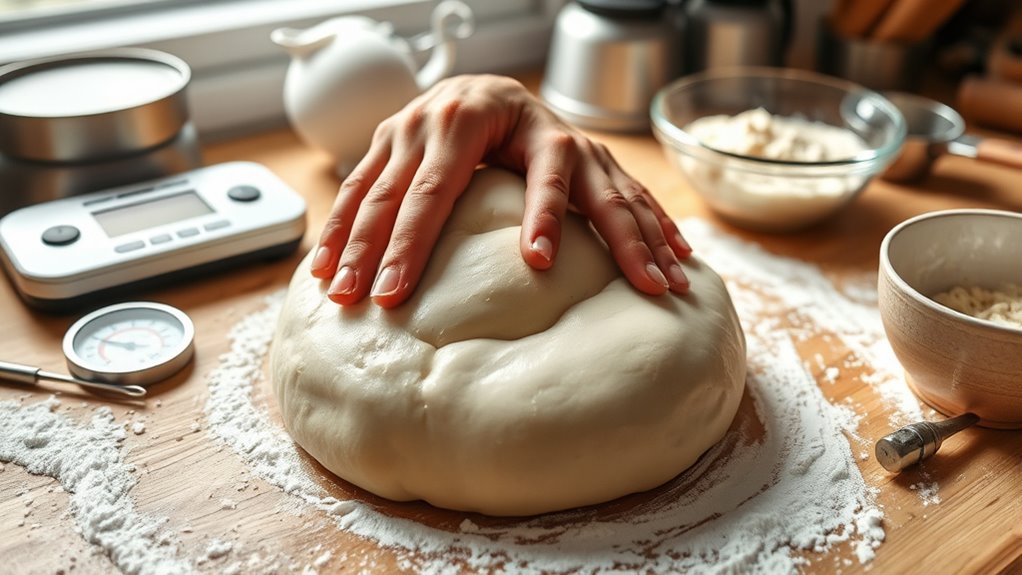
Even with careful preparation, you might encounter issues like bread not rising enough, uneven crumb, or a crust that’s too tough. To fix overproofing issues, reduce the proofing time or lower the temperature. If ingredient substitution caused problems, guarantee the replacements have similar hydration and gluten content, or adjust the flour amount accordingly. Here are some troubleshooting tips:
- Addressing Overproofing: Punch down the dough and allow a shorter second rise.
- Uneven Crumb: Mix ingredients thoroughly and knead longer if needed.
- Crust Troubles: Adjust baking time or oven temperature; a too-tough crust can result from overbaking or too much flour.
These adjustments help you refine your process and get consistent results.
Frequently Asked Questions
Can I Use Alternative Flours for Same-Day Dough?
Yes, you can use alternative flours for same-day dough, but keep in mind that gluten development may differ, affecting the dough’s elasticity. Some gluten-free or whole grain flours require longer baking times or added binders. To get the best results, experiment with small batches, adjusting baking time as needed. This way, you’ll find the right balance between alternative flours and achieving a well-structured, tasty dough quickly.
How Do Humidity and Temperature Affect Dough Readiness?
Humidity effects and temperature control play a vital role in dough readiness. High humidity can make dough stickier and harder to shape, while low humidity dries it out, affecting the texture. Temperature influences yeast activity; warmer environments speed up fermentation, while cooler ones slow it down. Keep your workspace consistent, and adjust ingredients or proofing times based on humidity and temperature to guarantee perfect dough every time.
Is It Possible to Freeze the Dough for Later Use?
Yes, you can freeze dough for later use. Use proper freezing techniques to preserve its quality, like wrapping it tightly in plastic wrap or placing it in an airtight container. Make sure to label the date for dough preservation tracking. When you’re ready, thaw it in the fridge overnight and allow it to come to room temperature before baking. This method keeps your dough fresh and ready whenever you need it.
What Are Quick Tips to Avoid Over-Kneading?
To avoid over-kneading, keep an eye on kneading timing and dough elasticity. Stop kneading as soon as the dough becomes smooth, slightly tacky, and elastic, usually after 8-10 minutes. Use the windowpane test: stretch a small piece of dough into a thin, translucent membrane without tearing. This indicates proper gluten development, preventing overworking the dough and ensuring perfect texture and rise.
How Can I Customize Dough Flavor With Herbs or Spices?
They say, “Variety is the spice of life,” and you can easily customize your dough flavor with herbs or spices. Mix finely chopped herbs like rosemary or basil, or add spices such as cumin or paprika directly into your dough during mixing. For a stronger herb infusion, let the herbs steep in a small amount of warm water before incorporating it into your dough. This simple step enhances the dough flavor beautifully.
Conclusion
Mastering same-day dough in a weekend is doable and rewarding. With just a few simple steps, you can have fresh, homemade bread or pizza in no time. Did you know that achieving the perfect dough increases your chances of bakery-quality results by 80%? So, don’t be discouraged by initial setbacks—practice makes perfect. Before long, you’ll be impressing friends and family with your quick, delicious baked creations every time!