
Proofing and fermenting are two key steps in bread-making with different roles. Proofing is the final rise before baking, where yeast creates gas to expand and relax the dough. Fermentation is a longer process that develops flavors and strengthens gluten using yeast and bacteria. Understanding these stages helps you get the perfect texture and taste. If you want to learn how each process influences your bread, keep exploring the details behind proofing and fermenting.
Key Takeaways
- Proofing is the final dough rise before baking, focusing on physical expansion, while fermentation is a longer process developing flavor and gluten.
- Proofing involves yeast activity mainly producing carbon dioxide; fermentation involves yeast and bacteria breaking down starches and proteins.
- Proofing is shorter and occurs just before baking; fermentation can last from hours to days, deepening flavor and dough structure.
- Proper proofing ensures a light, airy texture; fermentation enhances flavor complexity and dough extensibility.
- Understanding each process allows better control of bread’s texture, flavor, and overall quality during baking.

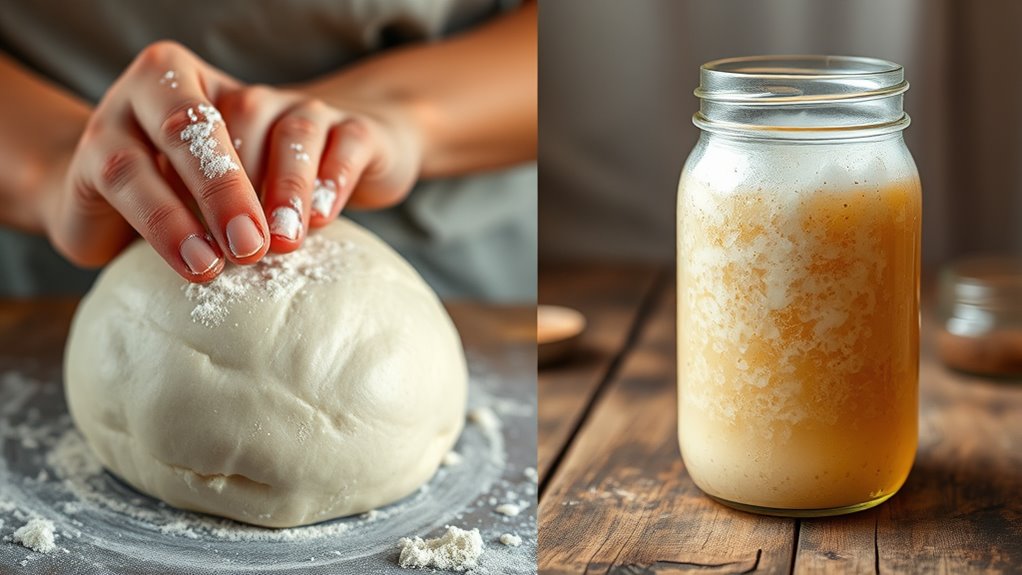
When baking bread, understanding the difference between proofing and fermenting is vital to achieving the perfect loaf. These two stages are integral parts of the bread-making process, but they serve different purposes and involve distinct biological activities. To start, if you’re working with sourdough, you’ll want to pay close attention to sourdough starter development. This process involves nurturing wild yeast and bacteria until they reach a healthy, active state capable of leavening bread. During sourdough starter development, yeast activity dynamics are essential—you’re fundamentally cultivating a living culture that will influence how your bread rises, tastes, and develops its unique character. As the starter matures, yeast activity becomes more consistent, producing carbon dioxide that helps dough rise. This natural fermentation process is quite different from using commercial yeast, where yeast activity happens more predictably and swiftly. Additionally, maintaining proper starter health is key to ensuring successful proofing and fermentation stages.
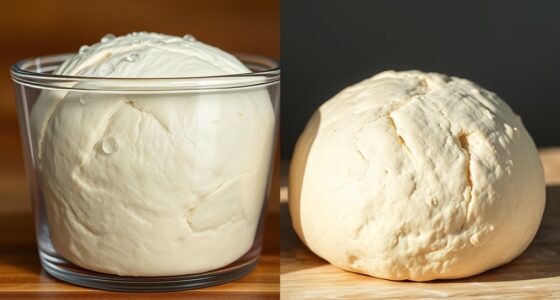
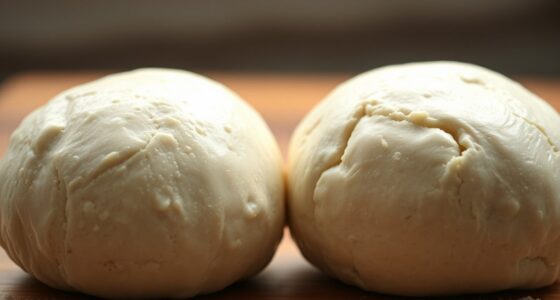
Proofing focuses on the final rise of your shaped dough before baking. It’s the stage where the dough relaxes and expands as the yeast ferments any remaining sugars, producing gas that creates a light, airy structure. During proofing, you’re mainly allowing the yeast to do its work, but the dough isn’t developing new flavors or strengthening gluten notably. It’s more about giving your dough enough time to expand and achieve the right texture. Fermenting, on the other hand, often refers to the longer process of dough development where flavors deepen, gluten strands strengthen, and beneficial acids develop. This stage can vary in duration—from a few hours to several days—depending on the recipe and method. During fermentation, yeast and bacteria work together, breaking down starches and proteins, producing complex flavors and improving dough extensibility.
Understanding the distinctions helps you control your bread’s texture and flavor. Proofing is a shorter, more targeted step designed to guarantee your dough has enough rise and elasticity before baking. Fermentation, especially in sourdough bread, is a more complex, slower process that develops character and depth. When you grasp how sourdough starter development and yeast activity dynamics influence each stage, you can better manipulate timing, temperature, and hydration to craft your ideal loaf. Whether you’re proofing for that final puff or fermenting to build flavor, recognizing the purpose and biological activity behind each step enables you to produce bread with consistency, flavor, and the perfect crumb.
Frequently Asked Questions
Can Proofing and Fermenting Occur Simultaneously?
Yes, proofing and fermenting can occur simultaneously, especially during the final stages of dough preparation. You should monitor proofing timing closely, as it influences fermentation speed. During proofing, yeast continues to ferment, creating CO2 that causes dough to rise. Balancing these processes guarantees your dough develops proper flavor and texture. Keep an eye on dough signs, and modify proofing conditions if fermentation progresses too quickly or slowly.
How Do Temperature Variations Affect Proofing Versus Fermenting?
Imagine a gentle breeze guiding your dough’s journey. When temperature control varies, it influences microbial activity differently: warmer temps speed up proofing, giving your dough a lively rise, while cooler settings slow fermentation, allowing flavors to develop gracefully. Too hot, and microbial activity races ahead, risking over-proofing; too cold, and progress stalls. Maintaining steady temperature helps you master both processes, ensuring perfect texture and flavor in your baked goods.
Are There Specific Signs That Indicate Completion of Proofing or Fermenting?
You’ll know proofing is complete when your dough has expanded noticeably, feeling puffy and soft. Look for signs like dough expansion and the presence of small fermentation bubbles on the surface or inside. These bubbles indicate active fermentation. When the dough no longer springs back when pressed lightly and maintains its shape, it’s ready. Trust these signs over time, and your dough will be perfectly proofed or fermented.
What Are Common Mistakes to Avoid During Proofing and Fermenting?
Did you know improper proofing timing causes up to 30% of bread failures? To avoid this, keep fermentation control in check by not rushing or over-proofing. Watch for over-expansion or deflation as signs of over-proofing, and under-proofing results in dense bread. Always monitor dough closely, adjust proofing times as needed, and maintain consistent temperatures to guarantee perfect proofing and fermentation every time.
How Do Proofing and Fermenting Influence Bread Flavor and Texture?
Proofing and fermenting markedly influence your bread’s flavor and texture by enhancing yeast activity and dough elasticity. During proofing, yeast produces gases that improve rise and develop a tender crumb, while fermenting allows flavors to deepen through slow fermentation, creating complex taste profiles. Proper timing ensures the dough’s elasticity stays ideal, resulting in a well-structured loaf with a rich flavor. Overproofing or underfermenting can compromise both texture and taste.
Conclusion
So, next time you bake, remember that proofing and fermenting might seem similar, but they’re actually different steps that happen by chance just when you least expect it. Maybe your dough rises faster on a warm day, or your bread develops that perfect tang overnight. It’s funny how these little coincidences turn simple ingredients into something delicious. Embrace the process, and you’ll find baking becomes even more rewarding—and a little bit magical—every time.