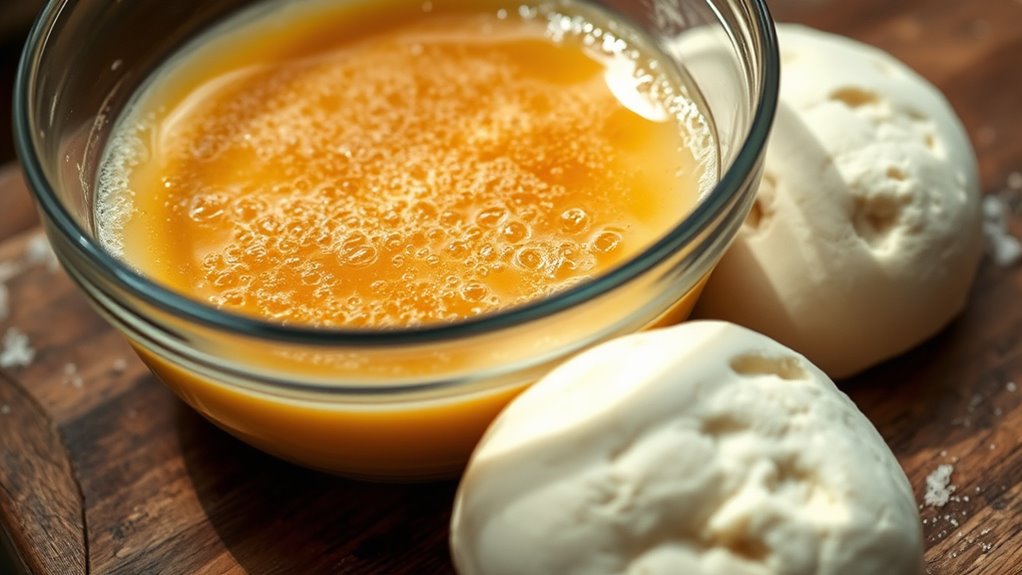
Using pre-ferments in Neapolitan dough boosts flavor, texture, and fermentation control. By starting fermentation early with methods like poolish or biga, you give your dough a head start, resulting in a more complex aroma and layered taste. It also strengthens the gluten, making the dough easier to stretch and shaping a tender, chewy crust. Continue exploring, and you’ll discover how these techniques can elevate your pizza game even further.
Key Takeaways
- Pre-ferments like poolish or biga enhance flavor, aroma, and texture in Neapolitan pizza dough.
- They require 12–20 hours of fermentation, developing complex flavors and bubbly consistency when ready.
- Incorporating pre-ferments promotes more even, predictable fermentation and better gluten development.
- Extended fermentation from pre-ferments creates layered flavors with subtle tanginess and improved dough elasticity.
- Proper temperature control during fermentation maximizes yeast activity and prevents overfermentation, ensuring dough quality.
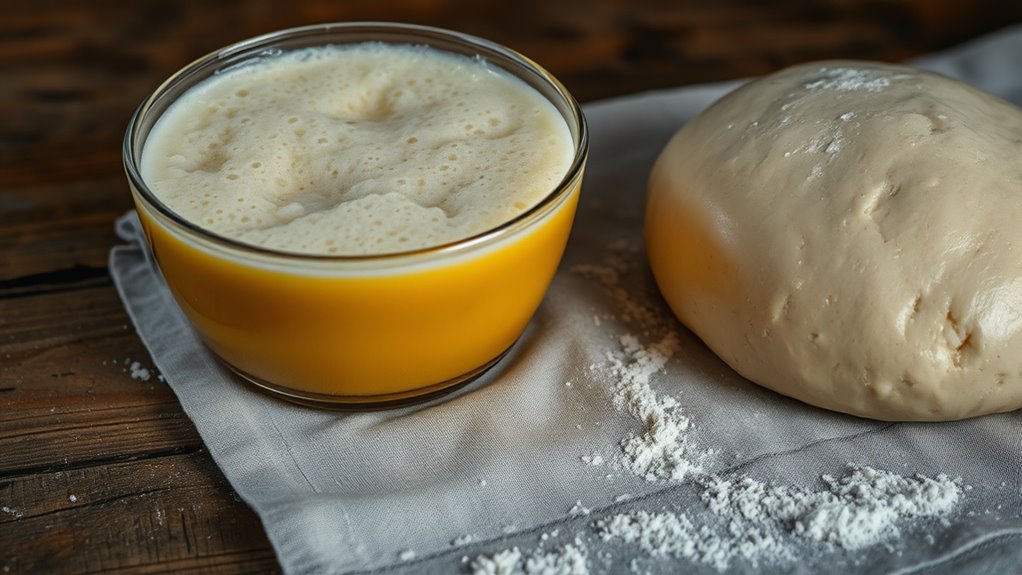
In Neapolitan pizza making, using pre-ferments can considerably enhance the dough’s flavor, texture, and fermentation process. When you incorporate a pre-ferment, you’re fundamentally kickstarting fermentation, which allows for more control over fermentation timing and improves flavor development. This early fermentation stage helps develop complex aromas and a richer taste, giving your pizza dough a depth that’s hard to achieve with direct mixing alone.
By preparing a pre-ferment—such as a poolish or biga—you give the yeast a head start. This means the dough begins fermenting before it hits the oven, allowing the yeast to break down starches and proteins more effectively. As a result, the dough ferments more evenly and over a longer period, which enhances flavor development. You’ll notice a subtle tanginess and layered complexity that come from this extended fermentation, elevating the overall quality of your pizza.
Pre-ferments give yeast a head start, resulting in more even fermentation and richer, layered flavors.
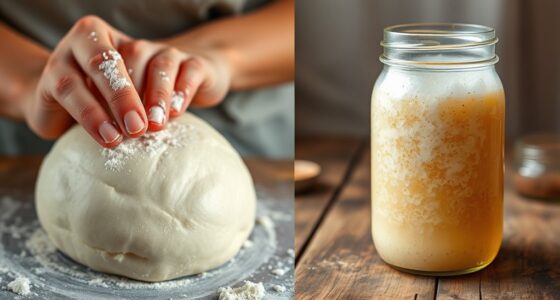
Timing is critical when working with pre-ferments. You want to give the pre-ferment enough time to develop its flavors but not so long that it overferments. Typically, a poolish ferments for 12 to 16 hours at room temperature, while a biga might need 16 to 20 hours. During this period, the pre-ferment becomes bubbly and fragrant, indicating ideal fermentation. When you combine it with the remaining ingredients, you’ll find that the dough benefits from this pre-activation, leading to a more predictable and controlled fermentation process.
Flavor development is noticeably superior when you use pre-ferments. The extended fermentation allows enzymes to act on carbohydrates and proteins, creating more complex sugars and amino acids. These compounds contribute to the dough’s aroma, taste, and overall mouthfeel. As a result, your Neapolitan pizza will have a more nuanced flavor profile, with a balance of acidity and sweetness that’s difficult to replicate with a straight dough. Plus, the improved gluten structure from pre-fermentation yields a dough that’s more elastic and easier to stretch, resulting in a tender yet chewy crust. Additionally, the fermentation process benefits from a proper temperature control, ensuring optimal activity of the yeast and enzymes for the best possible flavor and texture.
Frequently Asked Questions
What Types of Pre-Ferments Work Best for Neapolitan Dough?
You should opt for preferments like biga or poolish with your Neapolitan dough, as they incorporate starter cultures that enhance flavor and texture. Choose a preferment with moderate hydration levels—around 50-60%—to maintain the dough’s elasticity and chewy texture. These pre-ferments develop gluten structure and add complexity, making your pizza crust more authentic and flavorful. Adjust hydration based on your flour’s absorption to achieve excellent results.
How Does Pre-Ferment Timing Affect Dough Flavor?
You’ll notice that ferment timing markedly influences your dough’s flavor development. For example, a longer pre-ferment period can enhance complexity, adding subtle tangy notes and richer aromas. If you ferment too briefly, the flavor remains mild and underdeveloped. Conversely, extended fermentation allows enzymes to break down starches, creating deeper, more nuanced flavors. Adjusting your ferment timing lets you craft a dough that balances aroma, taste, and texture perfectly.
Can Pre-Ferments Reduce Fermentation Time?
Yes, pre-ferments can reduce fermentation time in your dough preparation. By introducing a pre-ferment, you activate fermentation speed, allowing the dough to develop flavor and gluten structure more quickly. This means you spend less time waiting for the dough to rise, making your process more efficient. Incorporating pre-ferments ultimately helps you achieve a well-fermented crust with less overall fermentation, saving you time without sacrificing quality.
Are Pre-Ferments Necessary for Authentic Neapolitan Pizza?
You don’t need pre-ferments for authentic Neapolitan pizza, but they can improve dough hydration and fermentation temperature control. Pre-ferments develop flavor and structure, making your dough more resilient. While traditional recipes often skip them, using one helps manage fermentation time and enhances texture. So, if you want a more consistent, flavorful result, incorporating a pre-ferment is a smart choice, though not strictly necessary for authenticity.
How Do Pre-Ferments Influence Dough Elasticity and Extensibility?
Pre-ferments strengthen your dough’s gluten network, making it more elastic and extensible. This process enhances dough resilience, allowing it to stretch easily without tearing. By developing the gluten structure early, pre-ferments help you achieve a smooth, pliable dough that holds its shape during shaping and baking. Overall, they give you better control, resulting in a more authentic, airy, and well-textured Neapolitan pizza crust.
Conclusion
Incorporating pre-ferments into your Neapolitan dough can transform your pizza from good to legendary. You’ll notice a flavor explosion and a perfect, airy crust that’s as light as a cloud and twice as delicious. Don’t underestimate the power of a simple pre-ferment—it’s like a secret weapon that elevates your baking game to legendary status. So, give it a try and watch your pizza become the stuff of pizza-making dreams!