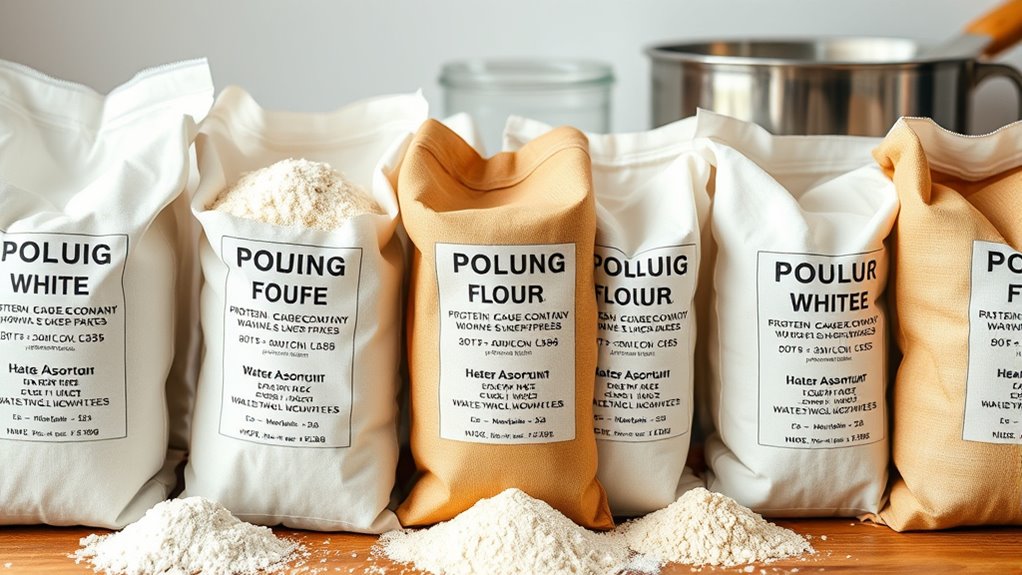

When selecting flour, pay attention to its protein content, as higher levels like in bread flour give you stronger gluten and better structure for chewy, risen baked goods. Water absorption varies with the milling process and affects dough consistency—flours that absorb more water help create softer, fluffier textures. Understanding these factors helps you choose the right flour for your recipe, and if you continue, you’ll learn how to match flour to your specific baking needs for perfect results.
Key Takeaways
- Higher protein content flours, like bread flour, provide stronger gluten networks suitable for chewy, risen baked goods.
- Soft flours with low protein are ideal for tender cakes and pastries requiring minimal gluten development.
- Flours with higher water absorption capacity support better dough structure and volume; adjust hydration accordingly.
- Milling methods influence protein content and water absorption; stone milling preserves natural components, roller milling allows precise control.
- Match flour protein levels and water absorption properties to the specific baked product for optimal texture and performance.
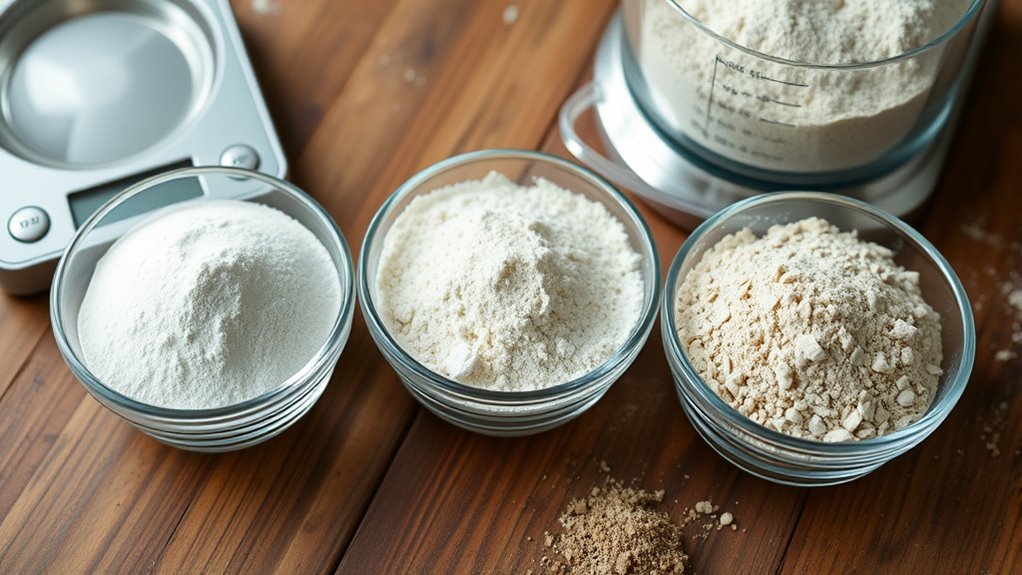
Have you ever wondered how to choose the right flour for your baking needs? It all starts with understanding the role of gluten strength and how the milling process influences flour quality. Gluten strength refers to the ability of the flour’s proteins to develop a sturdy, elastic network when mixed with water. This network traps air and gives dough its structure, which is essential for bread, pizza, and other yeasted baked goods. Flours with higher gluten strength, like bread flour, are ideal when you need a chewy, well-risen result. Conversely, softer flours with lower gluten content, such as cake flour, produce tender baked goods with a fine crumb. Recognizing the gluten strength helps you select the right flour for your specific recipe and desired texture.
The milling process plays a significant role in determining a flour’s protein content and overall performance. During milling, wheat kernels are ground into flour, and this process can be adjusted to produce different types of flour. For example, stone milling tends to preserve more of the wheat’s natural components, resulting in flours with a broader range of protein levels and better water absorption capacity. Modern roller milling, on the other hand, allows for precise control over particle size and gluten development. The degree of milling affects not only gluten strength but also how much water the flour can absorb. Flours with finer particles usually absorb water more efficiently, which impacts the dough’s consistency and the final baked product’s texture. Additionally, the water absorption capacity of flour influences the hydration process, making it a crucial consideration for achieving optimal dough characteristics.
When choosing flour, consider your baking project and the characteristics you want in the finished product. For bread that needs a strong gluten network, pick a flour with higher protein content, often indicated on the packaging. For delicate cakes, opt for a softer flour with lower gluten strength, which won’t develop as much elasticity and will yield a tender crumb. Water absorption is another key factor; flours that absorb more water can create doughs with better volume and structure, but they may also require adjustments in hydration levels. Understanding how the milling process influences these qualities helps you make smarter choices, ensuring you get the best results each time you bake.
Frequently Asked Questions
How Does Altitude Affect Flour Performance?
Altitude baking affects flour performance because lower air pressure causes dough to rise faster and more extensively. You’ll need to adjust your recipes by reducing rising times or using slightly less yeast to prevent over-proofing. Higher altitudes can also dry out flour, so you might need to add a bit more water. Understanding how altitude impacts your flour performance helps you create better baked goods in high-altitude environments.
Can Flour Protein Content Vary by Brand?
Yes, flour protein content can vary by brand, just like different artists use unique brushes. While some brands prioritize protein consistency for reliable baking, others might not. You need to verify labels because brand variation affects your results. High-protein flours develop stronger gluten, perfect for bread, whereas lower-protein types suit pastries. Picking the right brand ensures you get the protein content you need for perfect baking every time.
What Storage Methods Extend Flour Shelf Life?
To extend your flour’s shelf life, store it in airtight containers to prevent moisture and pests. Keep it in a cool, dark place like a pantry or cupboard, away from sunlight and heat sources. For longer storage, consider refrigeration or freezing, which markedly prolongs shelf life by slowing down spoilage. Always label containers with dates to monitor freshness, ensuring your flour stays fresh for months or even years.
Are There Gluten-Free Flours With Similar Properties?
Yes, gluten-free alternatives like rice, tapioca, and potato flours can have comparable absorption, but their protein content varies. You might need to adjust recipes since these flours don’t mimic gluten’s structure, affecting texture and elasticity. Experiment with blends, combining different gluten-free flours to achieve similar properties. Keep in mind, their water absorption might differ slightly, so testing small batches helps you perfect your recipes.
How Does Aging Flour Impact Baking Results?
Aging flour improves baking results by enhancing gluten development, which makes dough stronger and easier to work with. It also boosts flavor, giving your baked goods a richer, more complex taste. When you age flour, moisture evaporates slightly, improving water absorption and creating a better texture. This process helps you achieve more consistent, high-quality baked goods with better structure and flavor, making your baking more successful and enjoyable.
Conclusion
When choosing flour, remember that higher protein content generally means more water absorption, giving your baked goods better structure. Did you know that bread flour typically has around 12-14% protein, while all-purpose flour hovers around 10-12%? This difference can considerably affect your results. So, next time you bake, pick your flour based on the recipe’s needs—your baked goods will turn out just right every time!