Dough temperature after mixing is essential because it impacts fermentation, gluten development, and the final baked texture. Warm dough speeds up fermentation and gluten formation, risking over-proofing and overly elastic dough, while cold dough slows everything down, leading to denser results. Controlling this temperature guarantees consistent, ideal rise and texture. Understanding these effects helps you achieve better baking results—if you want to master this vital step, keep exploring how to fine-tune dough temperature.

Get baking supplies delivered free — and shop member deals
- Fast, free delivery on millions of items
- Access to Prime Big Deal Days deals on October 6–7
- Prime Video, Amazon Music and more included
Key Takeaways
- Maintains proper fermentation speed for consistent rise and flavor development.
- Ensures optimal gluten formation for dough elasticity and structure.
- Prevents over-proofing or under-proofing, avoiding poor texture and density.
- Facilitates predictable baking outcomes by controlling yeast activity.
- Helps achieve desired dough handling properties and final product quality.
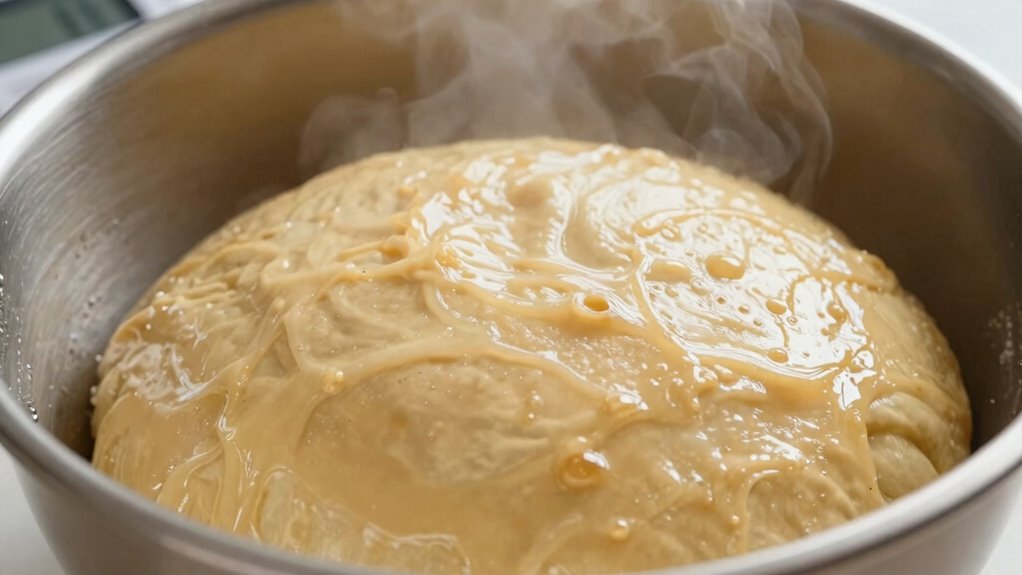
Have you ever wondered why dough temperature matters right after mixing? It’s more than just a number on a thermometer; it’s a critical factor that influences the entire baking process. When you start with the right dough temperature, you set the stage for proper fermentation control and ideal gluten development. These elements are essential for achieving the desired texture, flavor, and rise in your baked goods.
Dough temperature after mixing is key to controlling fermentation and gluten development for perfect baked goods.
If your dough is too warm right after mixing, fermentation accelerates, which can lead to over-proofing. Over-proofed dough loses its structure and becomes sticky or slack, making it difficult to handle. Conversely, if your dough is too cold, fermentation slows down considerably, extending your proofing times and potentially resulting in a denser crumb. Maintaining the correct dough temperature ensures that fermentation occurs at a controlled rate, giving you consistent results every time. This control allows you to plan your baking schedule more accurately and reduces the chances of under- or over-proofed bread.
Gluten development is also highly sensitive to temperature. When the dough is within the ideal temperature range, gluten strands develop uniformly and strengthen properly. This results in a strong, elastic dough that can trap gases effectively during fermentation, leading to a well-risen loaf with a good crumb structure. If the dough is too cold, gluten formation slows down, leading to weaker dough that can result in a flatter, denser baked product. On the other hand, if it’s too warm, rapid gluten development may produce a tight, overly elastic dough that’s difficult to shape and may not proof correctly. Proper temperature control during this stage is crucial for even gluten development and optimal dough strength. In addition, understanding the science behind fermentation can help bakers make informed adjustments to their process to optimize results. By controlling the dough temperature immediately after mixing, you ensure that gluten development happens evenly, which is key for achieving the right texture and volume.
In practical terms, maintaining the proper dough temperature involves adjusting your ingredients, such as milk or water temperature, or employing techniques like dough chilling or heating. Small adjustments can make a noteworthy difference in fermentation control and gluten development, enabling you to produce consistent, high-quality baked goods. Additionally, understanding the science behind fermentation and temperature control can help you troubleshoot issues more effectively, leading to improved baking results. Ultimately, understanding why dough temperature matters right after mixing empowers you to fine-tune your process, resulting in better texture, flavor, and overall success in your baking endeavors.
As an affiliate, we earn on qualifying purchases.
Frequently Asked Questions
How Does Dough Temperature Affect Fermentation Speed?
Dough temperature directly impacts fermentation speed; higher temperatures accelerate fermentation, while cooler ones slow it down. Maintaining dough temperature consistency is vital for predictable fermentation rate control, ensuring your dough rises properly without overproofing or underproofing. If your dough is too warm, fermentation speeds up, risking overproofing. Conversely, cooler dough slows fermentation, extending proofing time. Precise temperature control helps you achieve ideal dough development and consistent baking results.
What Are the Ideal Dough Temperatures for Different Baked Goods?
Think of dough temperatures as the secret spice to perfect baked goods. For bread, aim for 75-80°F to encourage good gluten development and yeast activity. For pastries, keep it cooler around 70°F to prevent over-activation. High dough hydration and flour protein influence these temperatures—more hydration and higher protein flour often require slightly warmer dough to optimize fermentation. Adjust temperatures to match your recipe’s needs for best results.
Can Adjusting Dough Temperature Improve Bread Texture?
Adjusting dough temperature can markedly improve bread texture by affecting dough elasticity and yeast activity. When you control the temperature, you help the dough develop better gluten structure, resulting in a more elastic texture. Cooler temperatures slow yeast activity, leading to a more controlled fermentation and improved crumb. Warmer dough speeds up yeast activity, enhancing rise and aeration. So, managing dough temperature allows you to fine-tune the final bread’s texture and quality.
How Does Ambient Temperature Influence Dough Temperature After Mixing?
Ambient temperature considerably influences dough temperature after mixing because it affects how quickly the dough heats up or cools down. If your proofing environment is warm, it raises the dough temperature, especially if ingredient temperatures are also high. Conversely, a cooler environment helps maintain a lower dough temperature, which can improve fermentation. To control dough consistency, always consider both the ambient conditions and ingredient temperatures during mixing.
What Tools Are Best for Measuring Dough Temperature Accurately?
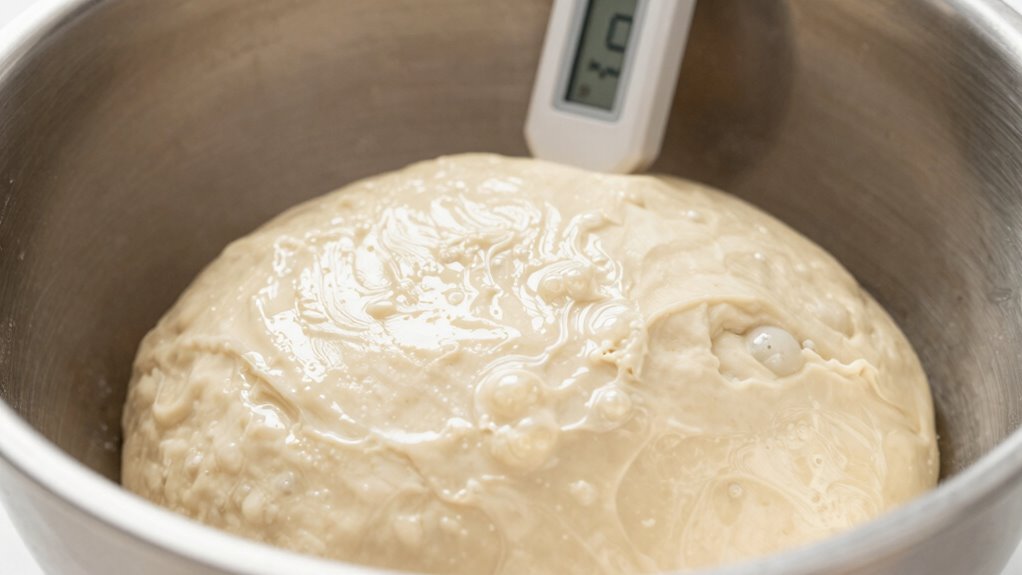
You’d think a simple thermometer would do, but not all are created equal. For accurate dough temperature, invest in a digital instant-read thermometer, known for precision and quick readings. Confirm thermometer accuracy by regularly calibrating it, especially if it’s been dropped or used extensively. Avoid analog or cheap models—they often give misleading readings, and that tiny difference can affect your dough’s rise. Accurate tools make all the difference in baking perfection.
kitchen dough temperature control
As an affiliate, we earn on qualifying purchases.
As an affiliate, we earn on qualifying purchases.
Conclusion
Think of your dough’s temperature as the heartbeat of your bread’s future. When it’s just right, it whispers promise—like a sunrise signaling a new day. Too cold, and it’s like a dormant seed, needing warmth to sprout. Too hot, and it’s a storm ready to disrupt. By mastering this delicate balance, you’re not just baking bread—you’re nurturing a living symbol of patience and care, ensuring your creation rises with purpose and soul.
As an affiliate, we earn on qualifying purchases.
As an affiliate, we earn on qualifying purchases.
Fall Picks
fall essentials
As an affiliate, we earn on qualifying purchases.