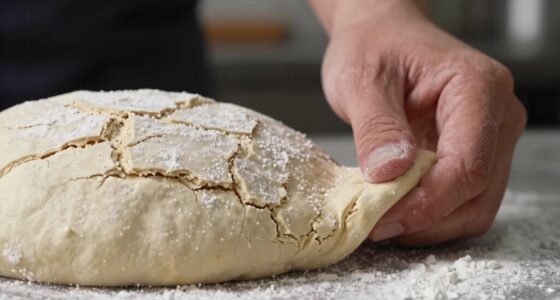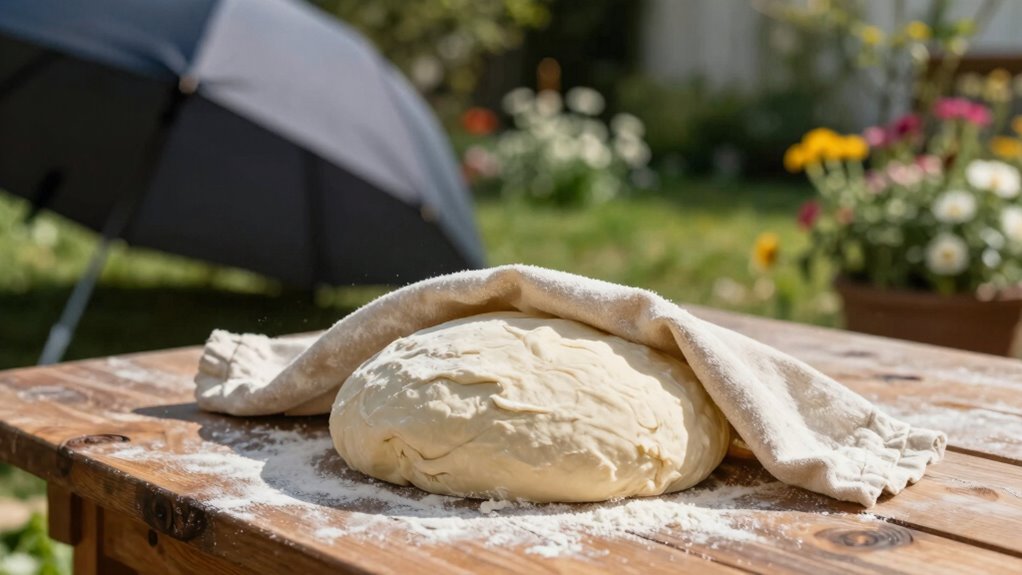

To protect your dough from direct sun during backyard prep, choose shaded spots and use canopies, umbrellas, or large cloths to block sunlight. Keep the dough in cooler areas, like shaded corners or inside coolers, and cover it with damp cloths or plastic wrap to retain moisture. Use fans or chilled surfaces to control temperature and regularly monitor with a thermometer. Staying vigilant helps keep conditions stable for perfect fermentation—more tips below will help you master the process.

Get baking supplies delivered free with Prime
- Fast, free delivery on millions of items
- Prime Video, Amazon Music and more included
- Member-only deals all year
Key Takeaways
- Choose shaded areas or create temporary shelters using umbrellas, canopies, or large cloths to block direct sunlight.
- Cover dough with damp cloths or plastic wrap to retain moisture and prevent drying out.
- Place dough in cooler spots like shaded corners or inside coolers to regulate temperature.
- Use chilled surfaces or containers with cold water to help keep dough cool during outdoor prep.
- Set up small fans to circulate air gently, avoiding direct airflow that can cause uneven drying.
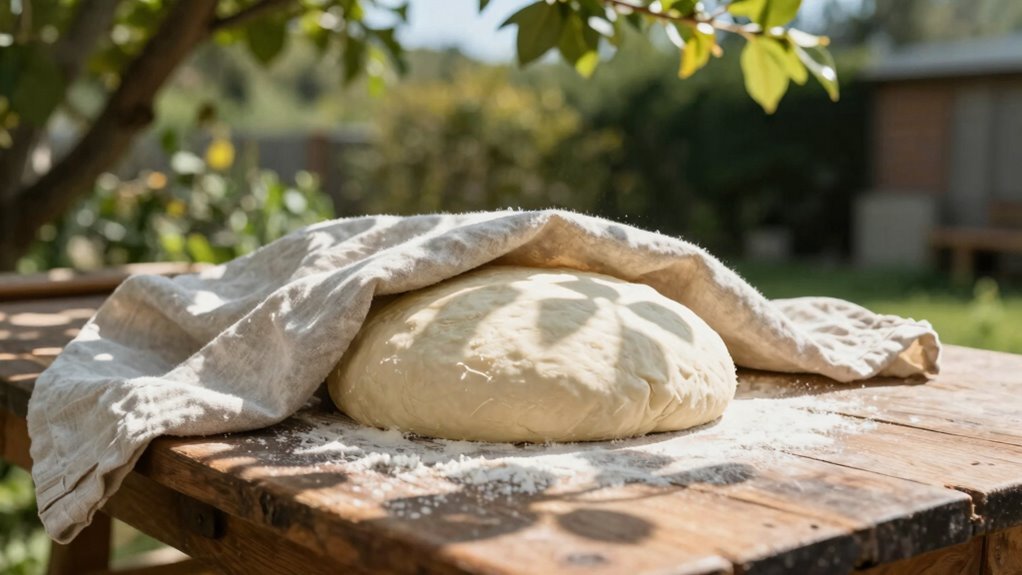
When preparing dough outdoors, direct sunlight can quickly cause it to dry out or overheat, affecting its texture and fermentation process. Sunlight exposure makes it hard to maintain consistent conditions, which are essential for good dough. Overexposure to sunlight can cause the dough’s surface to form a crust prematurely, while the heat can interfere with yeast activity, leading to poor rise and uneven fermentation. That’s why controlling the environment is key to successful backyard baking.
Direct sunlight can dry out and overheat dough, disrupting fermentation and affecting texture.
To protect your dough from the sun, start by choosing a shaded spot. You can set up a canopy, umbrella, or even a large cloth to create a shaded area. This simple step drastically reduces sunlight exposure, helping to keep the dough moist and at a stable temperature. If you don’t have a natural shade, consider building a temporary shelter with lightweight materials that are easy to move around as the sun shifts throughout the day. The goal is to create a consistent environment where sunlight doesn’t directly hit your dough, preventing rapid drying and overheating.
Temperature control is critical when working outdoors. If the temperature is high, the dough can ferment too quickly, which might compromise its texture and flavor. To manage this, you can place your dough in a cooler area, such as inside a portable cooler or a shaded corner of your backyard. Another trick is to keep the dough covered with a damp cloth or plastic wrap to trap moisture and slow down evaporation caused by the sun. This helps maintain proper humidity levels around the dough, preventing it from drying out. Additionally, understanding the importance of environmental conditions can help you better regulate the atmosphere for optimal fermentation. Proper temperature regulation is essential to prevent over-fermentation and ensure consistent results. Being aware of outdoor temperature fluctuations can further assist in adjusting your methods accordingly.
Monitoring the temperature is also important. If it’s particularly hot, consider placing the dough in a container with cold water or on a chilled surface. You can even set up small fans to circulate air and keep the environment cool, but make sure they’re not blowing directly onto the dough to avoid uneven drying. Keeping an eye on the temperature inside your chosen workspace ensures that your dough stays at an optimal level for fermentation, not too hot or cold. Understanding how to manage outdoor conditions can further improve your baking results and help you adapt to varying weather. Additionally, using tracking gear like thermometers or temperature sensors can assist in maintaining precise environmental control.
As an affiliate, we earn on qualifying purchases.
Frequently Asked Questions
Can Sunlight Affect Dough Fermentation Quality?
Sunlight effects can negatively impact dough fermentation because dough is sensitive to temperature changes. When exposed to direct sunlight, the dough warms quickly, which can cause over-fermentation or uneven rising. You should keep dough away from direct sun to maintain consistent temperature and fermentation quality. To protect your dough, cover it with a damp cloth or place it in a shaded area, ensuring it stays cool and ferments properly.
What Materials Are Best for Shading Dough?
You should use breathable materials like cloth, paper, or shade sails to shade dough effectively. These materials help maintain the dough’s color and texture consistency by blocking direct sunlight. Avoid plastic or non-breathable covers, as they can trap heat and affect fermentation. Proper shading prevents dough from drying out or over-fermenting, ensuring it stays soft, smooth, and retains a desirable color while fermenting smoothly in your backyard.
How Long Can Dough Stay Exposed to Sunlight Safely?
Dough should only be exposed to sunlight for a short duration, ideally no more than 10-15 minutes, to prevent it from drying out or becoming over-proofed. For proper dough storage, keep it covered and in a cool, shaded area if you need to leave it out briefly. Prolonged sunlight exposure can negatively affect the dough’s texture and fermentation process, so always monitor and limit sunlight duration during backyard prep.
Does Temperature Impact Dough Rising in Sunlight?
Sure, sunlight’s warmth might seem inviting, but it actually messes with your dough’s rise. Temperature skyrocketing in the sun mimics oven conditions, causing overproofing or uneven fermentation. To prevent this, use humidity control and keep your dough in a shaded spot, away from direct sunlight. Think of it as a mini oven—without the heat—where controlled temperature guarantees your dough rises perfectly, not prematurely.
Are There Alternative Methods to Protect Dough Besides Shading?
Yes, there are alternative methods to protect your dough from sunlight exposure. You can cover the dough with a damp cloth or plastic wrap to maintain moisture and shield it from direct sunlight. Using a proofing box or placing the dough in a cool, dark corner of your kitchen also helps with dough preservation. These techniques prevent uneven rising and keep your dough at an ideal temperature, ensuring better fermentation and texture.
portable dough fermentation cooler
As an affiliate, we earn on qualifying purchases.
As an affiliate, we earn on qualifying purchases.
Conclusion
So, next time you’re prepping dough outdoors, consider if sunlight really speeds up fermentation or if it’s just a myth. While a little warmth helps, direct sun can dry out or overheat your dough, ruining your final product. Keep an eye on the science, and you’ll see that shielding your dough with a cover or working in shade actually leads to better results. Trust me, a little protection goes a long way!
shade canopy for baking outdoors
As an affiliate, we earn on qualifying purchases.
As an affiliate, we earn on qualifying purchases.
As an affiliate, we earn on qualifying purchases.
Halloween Picks
halloween
As an affiliate, we earn on qualifying purchases.