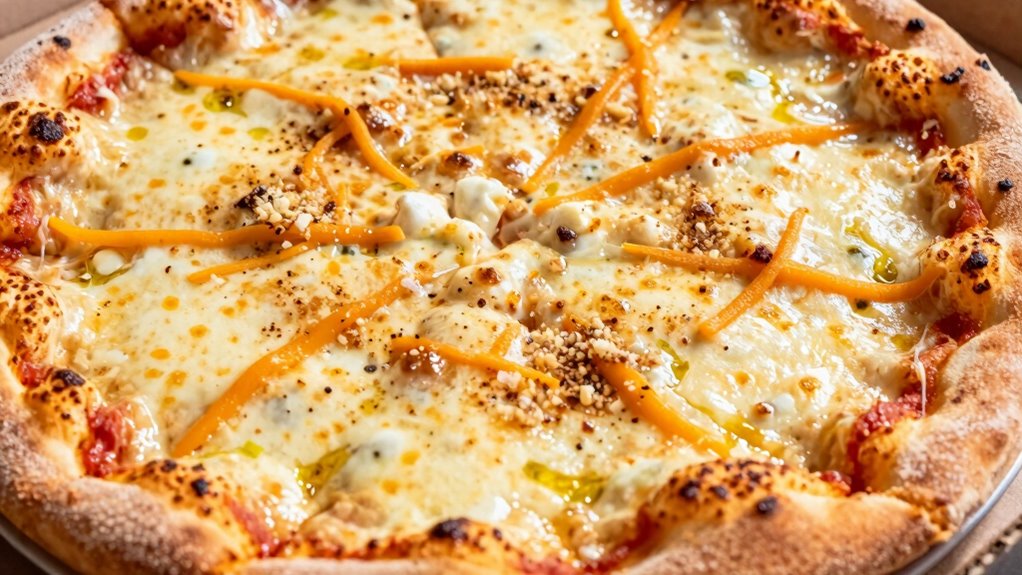

A balanced cheese blend for backyard pizza combines about 70% mozzarella for meltiness and stretch, with the remaining 30% made up of flavorsome cheeses like provolone, fontina, and a small amount of Parmesan or pecorino Romano for added depth. Use soft, creamy cheeses for smooth texture and hard, aged cheeses sparingly for complexity without overpowering. Achieving the right proportions guarantees a delicious, well-rounded flavor and perfect melt—keep exploring to master this essential skill.

Get baking supplies delivered free with Prime
- Fast, free delivery on millions of items
- Prime Video, Amazon Music and more included
- Member-only deals all year
Key Takeaways
- A balanced blend features about 70% mozzarella for stretch and creaminess.
- Incorporate hard cheeses like Parmesan or pecorino Romano sparingly for depth and umami.
- Include soft cheeses such as provolone and fontina for rich flavor and good meltability.
- Ensure cheeses are proportioned to prevent overpowering softer varieties and maintain harmony.
- Evenly distribute cheeses over the pizza for uniform melting and a golden, appealing finish.
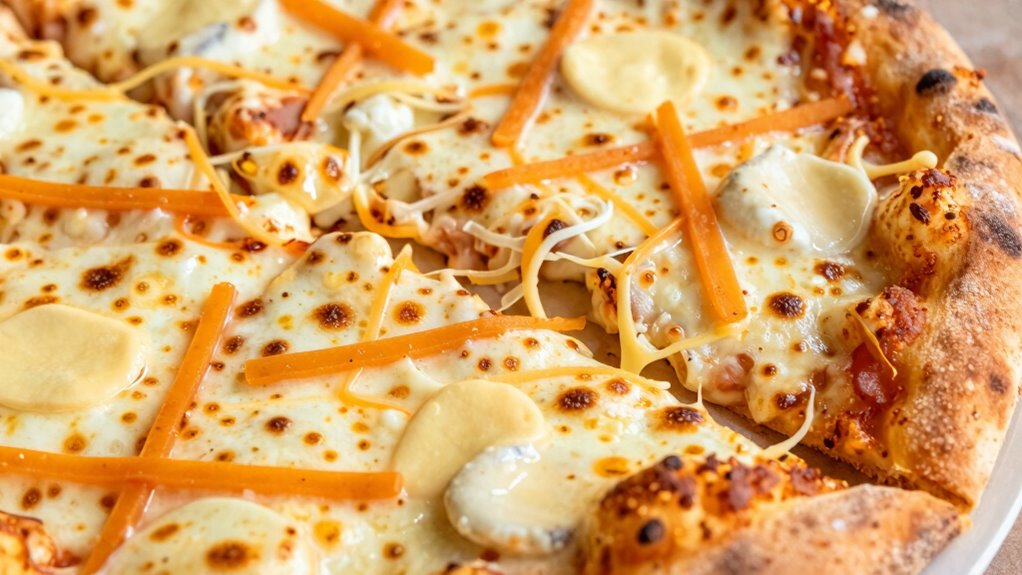
If you’re looking to elevate your homemade pizza game, a well-crafted cheese blend can make all the difference. The right mix of cheeses not only improves the flavor but also enhances the overall texture of your pizza. A balanced cheese blend combines different types of cheese to achieve an ideal harmony—one that delivers an artisan flavor while maintaining excellent melting qualities. When you choose your cheeses thoughtfully, you’ll notice how they complement each other and elevate your backyard creation from ordinary to exceptional.
Start by selecting cheeses that offer distinct flavors and textures. Mozzarella is the foundation for most pizzas because of its smooth melting qualities and mild, creamy taste. It provides that gooey, stretchy consistency that’s essential for a perfect slice. To add depth and complexity, consider mixing in cheeses like provolone or fontina. These cheeses enhance the artisan flavor profile, bringing a richer, more nuanced taste to your pizza. Provolone lends a slightly sharper, tangy note, while fontina adds a buttery, slightly nutty flavor that melts beautifully. These cheeses also contribute to the meltability, ensuring your pizza remains luscious and inviting with each bite.
Select cheeses with distinct flavors and textures like mozzarella, provolone, and fontina for a richer, meltier pizza experience.
For additional flavor layers, sprinkle in some Parmesan or pecorino Romano. These hard cheeses, when used sparingly, add a salty, umami punch that balances the richness of the softer cheeses. They also help create a slightly crispy, flavorful crust when baked, adding texture and visual appeal. Incorporating cheeses with specific melting qualities is essential for achieving the perfect consistency and texture in your cheese blend. If you’re interested in a more complex flavor profile, try incorporating small amounts of smoked cheeses or blue cheese, but keep these in moderation to avoid overpowering the overall taste. Understanding the melting qualities of each cheese can help you craft a more cohesive blend that melts evenly and maintains its texture.
A truly balanced cheese blend isn’t just about flavor; it’s about achieving the right melt and stretch. You want a cheese that melts evenly, creating that desirable, gooey consistency without becoming greasy or stringy. The key is in the proportions—about 70% mozzarella, with the remaining 30% a mix of provolone, fontina, and a touch of Parmesan. This ratio ensures you get the creamy, stretchy qualities you crave, along with the artisan flavor and depth that make your backyard pizza stand out.
When you assemble your pizza, sprinkle your cheese blend evenly over the sauce and toppings. Bake at a high temperature, and watch how the cheeses melt into a luscious, golden blanket that ties all the ingredients together. With the right balanced cheese blend, your backyard pizza will boast a flavor and texture that rivals pizzerias, making every slice a delicious experience.
As an affiliate, we earn on qualifying purchases.
Frequently Asked Questions
Can I Substitute Different Cheeses in the Blend?
Yes, you can substitute different cheeses in your blend. Try alternative cheese options like gouda, fontina, or provolone to create unique cheese flavor combinations. Keep in mind that each cheese has its own melting properties and flavor profile, so experiment to find what complements your toppings best. Adjust the amounts to achieve a balanced melt and taste, ensuring your backyard pizza remains delicious and satisfying with your personalized cheese blend.
How Does Cheese Moisture Affect Pizza Quality?
You’ll notice that cheese moisture content greatly impacts pizza quality, with cheeses containing 40-45% moisture melting smoothly and creating a gooey, flavorful crust. Interestingly, cheese aging reduces moisture, intensifying flavor but risking dryness if overdone. Too much moisture can make your pizza soggy, while too little leads to a dry, rubbery texture. Achieving the right moisture balance guarantees ideal melt, flavor, and crust integrity for your backyard pizza.
Should Cheese Be Shredded or Sliced Before Adding?
You should shred your cheese before adding it to your pizza, as shredded cheese offers better cheese texture and melting properties. Shredded cheese melts more evenly, creating a smooth, gooey layer that enhances your pizza’s overall quality. Sliced cheese tends to melt unevenly and may not distribute flavor as well. So, for a perfectly melted, delicious pizza, shred your cheese beforehand to guarantee ideal cheese texture and melting performance.
How Do I Prevent Cheese From Burning on My Pizza?
Cheese burning is like a sunset fading too quickly—you want to savor it, not miss it. To prevent this, choose cheeses with higher melting points and avoid overloading your pizza. Keep your oven at the right temperature, usually around 450°F, and add cheese later in the baking process if needed. This preserves the cheese’s rich flavor and smooth melt, ensuring your pizza turns out perfect without burning.
What’s the Best Cheese Blend for a Crispy Crust?
For a crispy crust, you should blend mozzarella with sharper cheeses like aged cheddar or provolone. The cheese aging enhances flavor pairing, creating a richer taste that complements the crunch. Use a moderate amount of high-moisture cheese to prevent sogginess, and sprinkle your blend evenly over the crust. This combination guarantees a crispy base with a flavorful, well-balanced cheese profile that enhances your backyard pizza experience.
As an affiliate, we earn on qualifying purchases.
Conclusion
Just like a maestro’s baton guides an orchestra to harmony, your cheese blend sets the tone for a perfect backyard pizza. When you balance mozzarella’s meltiness with the sharpness of provolone and a hint of Parmesan’s depth, you create a symphony of flavors that delight every bite. Remember, the right cheese blend isn’t just an ingredient—it’s your secret to unlocking the magic of homemade pizza, turning your backyard into a culinary masterpiece, reminiscent of legendary feasts of old.
As an affiliate, we earn on qualifying purchases.
As an affiliate, we earn on qualifying purchases.
Fall Picks
fall essentials
As an affiliate, we earn on qualifying purchases.