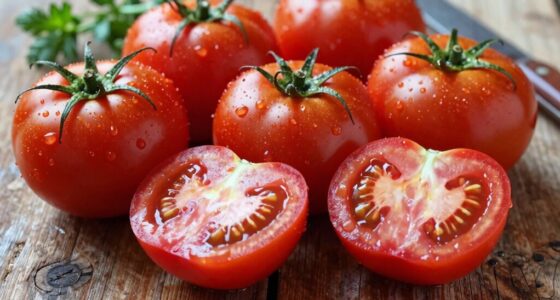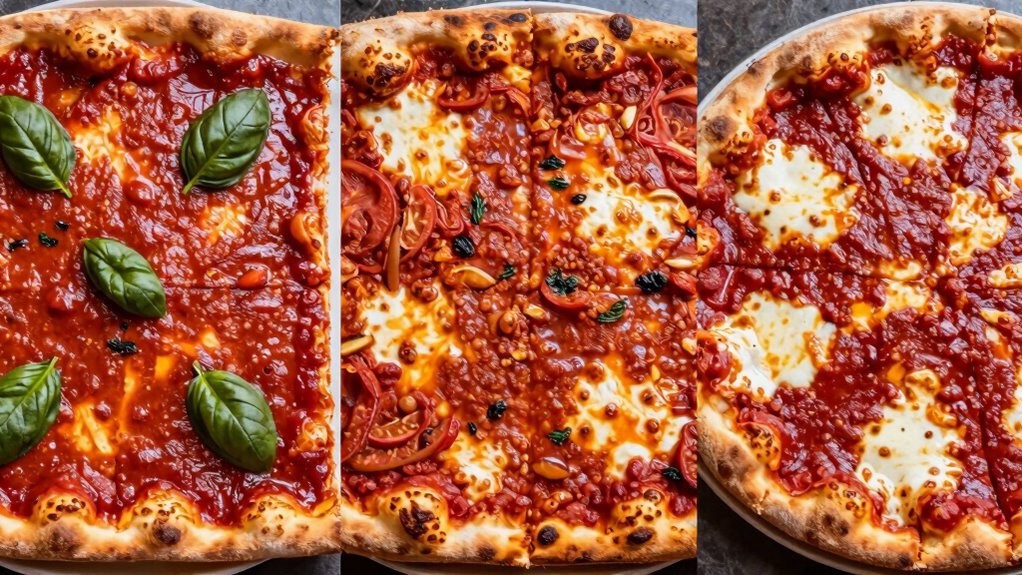

To perfect sauce for Detroit, Sicilian, and round pies, focus on consistency and seasoning. For Detroit-style, make a slightly thinner sauce that absorbs into airy crusts. Sicilian pies need a thicker, concentrated sauce to cling to dense, rectangular crusts. Round pies benefit from a medium, balanced sauce that spreads easily and enhances toppings. Adjust the liquid and seasoning accordingly, and if you’d like insider tips, there’s more to discover below.

Get baking supplies delivered free — and shop member deals
- Fast, free delivery on millions of items
- Access to Prime Big Deal Days deals on October 6–7
- Prime Video, Amazon Music and more included
Key Takeaways
- Adjust sauce consistency: thinner for Detroit, thicker for Sicilian, medium for round pies to suit crust absorption and stability.
- Focus on flavor balance: robust for Detroit, concentrated for Sicilian, nuanced for round pies to complement toppings.
- Use quality ingredients and season thoughtfully with salt, garlic, and a touch of sugar for each style.
- Control liquid content to ensure the sauce stays well on the pie without sliding or becoming paste-like.
- Tailor seasoning and texture to enhance the pie’s overall harmony and flavor profile.
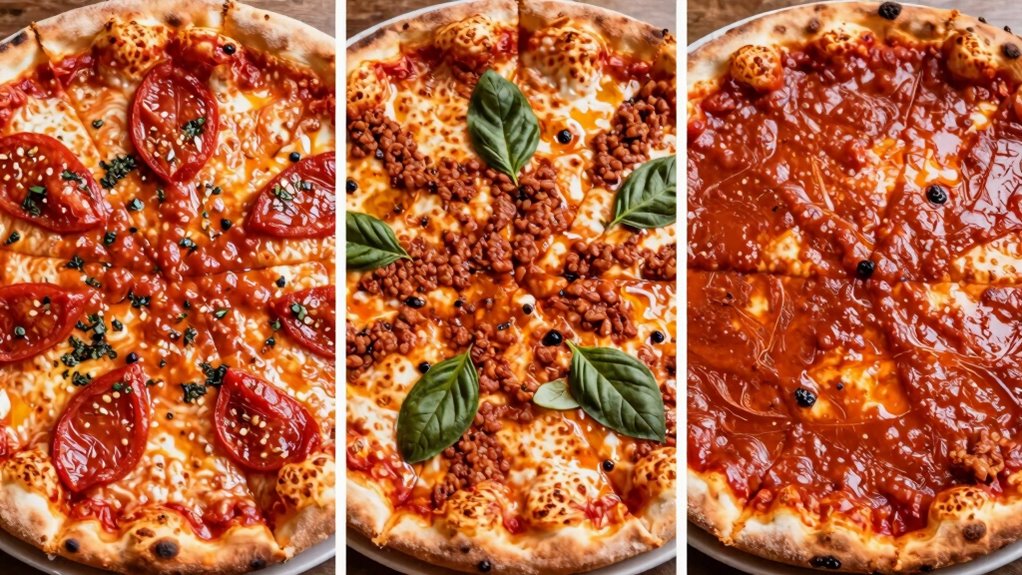
When it comes to making a great pie, understanding how to think about the sauce is vital. The sauce is the flavor foundation, and how you handle its consistency and ingredient balance can make or break your pizza. For Detroit, Sicilian, and round pies, each style demands a different approach to sauce, but the core principles remain the same: get the sauce just right, so it complements the crust and toppings without overpowering them.
First, consider sauce consistency. You want it to be thick enough to stay on the pie without sliding off, but not so dense that it feels like a paste. For Detroit-style pies, a slightly thinner sauce works well because the thick, airy crust absorbs some of the moisture. You need a sauce that’s pourable but not runny, so it spreads evenly across the dough. Sicilian pies, with their thick, rectangular crust, benefit from a sauce that’s a bit thicker—more concentrated—since the sauce won’t spread as thin and needs to cling well to the bread. Round pies usually call for a medium consistency, balancing ease of spreading with a hearty texture that holds up during baking. Adjust your sauce by controlling the amount of liquid you add—more crushed tomatoes or strained sauce for thicker consistency, and a splash of water or broth if it’s too thick.
Next, the ingredient balance is essential. You want your sauce to enhance, not overpower, the other toppings. Use good-quality canned tomatoes or fresh ones if available, and season them thoughtfully. Salt, garlic, and a touch of sugar are standard, but balance is key. Too much salt or sugar throws off the flavor harmony. For Detroit pies, a slightly more seasoned, robust sauce works best since the cheese and toppings are more straightforward. Sicilian pies can handle a richer, more concentrated sauce that pairs with the hearty toppings. Round pies often favor a more nuanced sauce with subtle herbs like basil or oregano, which add flavor without dominating. Additionally, ensuring a balanced flavor profile can elevate your pizza from good to great by harmonizing all the ingredients.
pizza sauce kit for Detroit style pizza
As an affiliate, we earn on qualifying purchases.
As an affiliate, we earn on qualifying purchases.
Frequently Asked Questions
How Does Sauce Influence the Overall Flavor Profile of Each Pie Style?
Sauce plays a vital role in shaping each pie’s flavor profile by creating flavor harmony and balancing ingredients. For Detroit pies, a tangy, thick sauce complements the bold cheese and toppings. Sicilian pies benefit from a hearty, seasoned sauce that enhances the robust crust. Round pies often feature a more delicate sauce that allows the cheese and toppings to shine, ensuring all elements work together seamlessly.
What Are Key Differences in Sauce Preparation for Detroit, Sicilian, and Round Pies?
You should tailor your sauce preparation to each pie style’s unique needs. For Detroit, keep the sauce spicy yet balanced to complement the thick cheese, enhancing its cheese pairing. Sicilian sauce benefits from a robust, simmered flavor, boosting its hearty toppings. Round pies require a fresher, less spicy sauce that highlights the cheese without overpowering it, creating a perfect harmony between sauce spice and cheese pairing.
Can Different Types of Tomatoes Be Used Interchangeably in These Sauces?
You can absolutely use different tomato varieties in these sauces, but keep in mind that each variety impacts the sauce flavor differently. Ripe Roma or San Marzano tomatoes bring sweetness and smooth texture, while heirlooms or plum tomatoes add complexity and acidity. Choosing the right tomato depends on your desired flavor profile, and you can mix varieties to balance richness, tanginess, and depth in your sauce, making each pizza uniquely delicious.
How Does Sauce Thickness Affect the Texture of Each Pie Type?
Thick sauce creates a hearty, dense texture, especially important for deep-dish Sicilian pies where it prevents sogginess and maintains structure. Thinner sauce offers a lighter, more fluid mouthfeel, ideal for Detroit and round pies, enhancing flavor balance without overwhelming toppings. Adjust sauce consistency to match your pie style, ensuring each bite delivers the right texture and flavor, making your pizza perfectly balanced and satisfying.
Are There Traditional Sauce Ingredients Unique to Each Regional Pizza Style?
You’ll find that Detroit, Sicilian, and round pies each have unique sauce ingredients that define their regional flavor profiles. For instance, Detroit’s sauce often features a slightly sweet, chunky tomato base, while Sicilian pies favor a robust, seasoned sauce with herbs like oregano. Round pies typically use a simple, fresh tomato sauce. Ingredient substitutions, like adding garlic or using crushed tomatoes, help you adapt each style to your taste.
thick concentrated pizza sauce for Sicilian pizza
As an affiliate, we earn on qualifying purchases.
As an affiliate, we earn on qualifying purchases.
Conclusion
Remember, the sauce is the soul of your pie. Whether it’s Detroit’s robust, thick style, Sicilian’s hearty layers, or a classic round, each demands its own approach. Trust your taste buds, experiment, and don’t be afraid to tweak until it’s just right. As the saying goes, “You are what you eat,” so make your sauce a reflection of your passion. With this mindset, every slice will be a masterpiece.
medium consistency pizza sauce for classic round pizza
As an affiliate, we earn on qualifying purchases.
As an affiliate, we earn on qualifying purchases.
As an affiliate, we earn on qualifying purchases.
Fall Picks
fall essentials
As an affiliate, we earn on qualifying purchases.