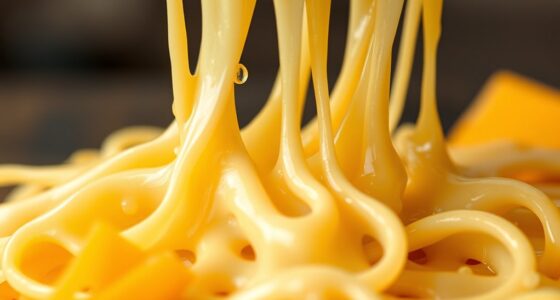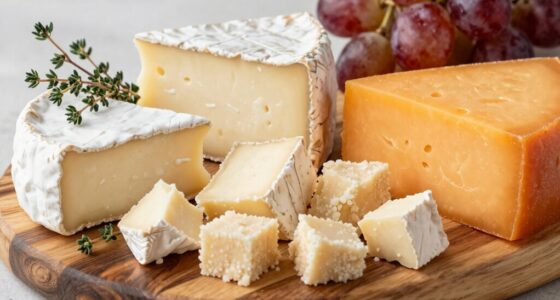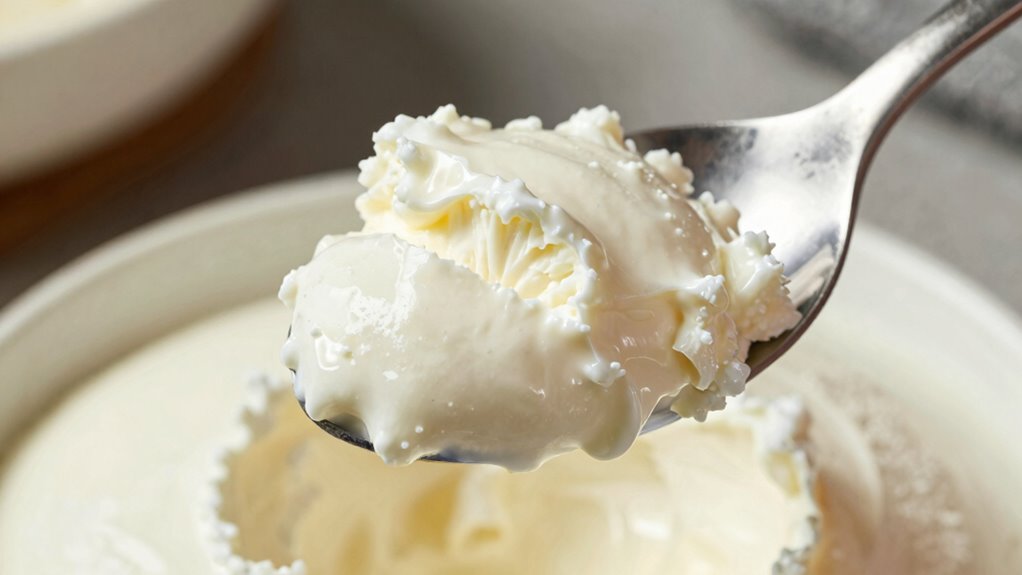

When heated, ricotta softens and becomes creamier, but it doesn’t melt fully like other cheeses. Its unique texture comes from a structure of tiny curds held together by moisture, which stabilizes when heated. This makes it retain some graininess and shape, adding richness without losing its mouthfeel. Because of its cheese composition and dairy consistency, ricotta’s texture changes more subtly. Keep exploring to discover how this influences your dishes and cooking techniques.

Get baking supplies delivered free — and shop member deals
- Fast, free delivery on millions of items
- Access to Prime Big Deal Days deals on October 6–7
- Prime Video, Amazon Music and more included
Key Takeaways
- Ricotta’s creamy, grainy structure is maintained by its production process, preventing complete melting.
- Its moisture content and curdled texture cause it to soften without losing graininess when heated.
- Ricotta’s protein and fat ratios support softening but resist forming a smooth, melted mass.
- Its structural integrity allows it to become creamier without fully liquefying.
- The cheese’s unique composition preserves mouthfeel, creating a contrasting, layered texture in dishes.
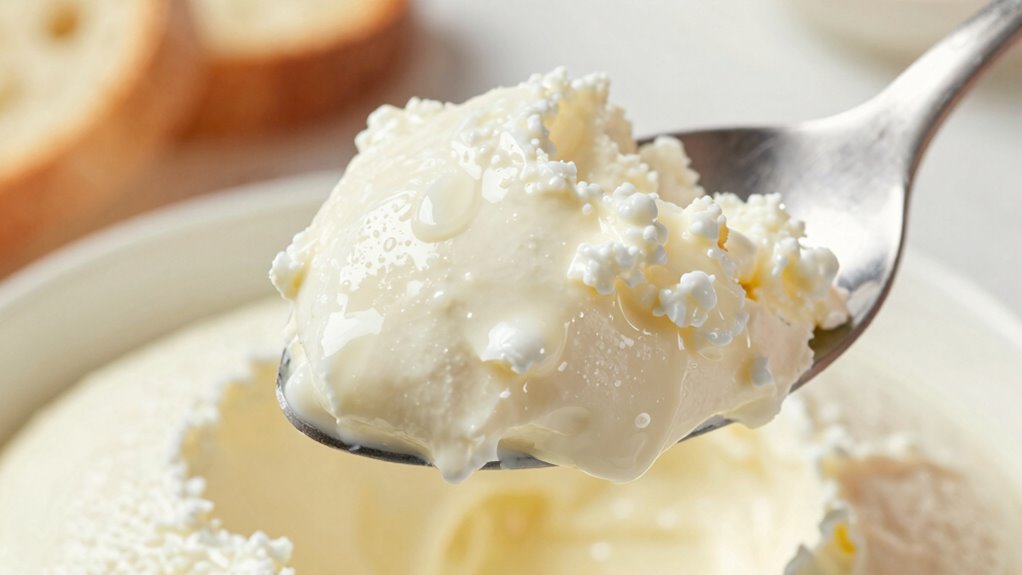
Ricotta cheese is celebrated not only for its mild flavor but also for its unique mouthfeel, which can elevate a dish from good to exceptional. When you consider cheese texture, ricotta stands apart because of its creamy, slightly grainy dairy consistency. Unlike cheeses that melt smoothly into sauces or on bread, ricotta retains a distinct structural integrity, which influences how it feels in your mouth. This difference is vital because it affects the overall sensory experience, making it more than just a flavor but a texture that adds depth to your dish.
Ricotta’s creamy, grainy texture adds depth and unique mouthfeel to dishes, elevating them beyond simple flavor.
Melted cheese transforms because heat breaks down the fats and proteins, causing them to liquefy and create a smooth, uniform consistency. Ricotta, however, doesn’t melt in the traditional sense; instead, it softens and becomes more spreadable. Its dairy consistency remains relatively stable, maintaining its grainy, moist quality even when heated. This is because ricotta’s cheese texture is shaped by how it’s made—by curdling whey with acid or heat, then draining excess moisture. As a result, the dairy structure is less prone to melting completely, and it retains a bit of its original graininess and moisture content.
You’ll notice that when you heat ricotta, it doesn’t transform into a gooey, stretchy mass like mozzarella or cheddar. Instead, it becomes softer and creamier, but still retains those tiny curds that give it that satisfying bite. This is why ricotta’s mouthfeel can change dramatically without melting away—its cheese structure and cheese texture remain, giving dishes a layered sensory profile. When you incorporate ricotta into lasagna or stuffed pasta, you’re adding not just flavor but a contrasting texture that enhances the dish’s complexity. The dairy structure helps it maintain its moist yet slightly grainy quality, creating a creamy bite with a bit of chewiness. Additionally, its ability to hold its shape makes it ideal for layered dishes where texture contrast is desired.
Furthermore, the cheese composition influences how ricotta interacts with other ingredients when heated, allowing it to meld without losing its distinct mouthfeel. In essence, ricotta changes mouthfeel more than melt because of its fundamental cheese structure and dairy consistency. Its stability under heat preserves its distinct texture, which adds richness and depth. Unlike cheeses designed to melt into sauces or onto bread, ricotta’s unique composition ensures it maintains a tactile presence, making every bite more interesting. Understanding cheese structure helps clarify why ricotta’s texture remains intact under heat, contributing to its distinctive mouthfeel. This is why, when you’re cooking with ricotta, you’re not just melting cheese—you’re enhancing the dish’s overall mouthfeel with a unique combination of creaminess and texture that can’t be replicated by melting other cheeses.
As an affiliate, we earn on qualifying purchases.
Frequently Asked Questions
How Does Ricotta’s Moisture Content Affect Its Mouthfeel?
Your ricotta’s moisture content directly impacts its mouthfeel, making it creamier or grainier. Higher moisture levels create a smoother, more luxurious texture, enhancing flavor intensity and making each bite feel richer. Conversely, drier ricotta feels firmer and less indulgent, slightly dulling flavor perception. This moisture variation also influences nutritional content, as wetter ricotta contains more water, slightly reducing protein density, but overall, it profoundly shapes your sensory experience.
Can Aging Ricotta Alter Its Texture and Mouthfeel?
Aging ricotta can indeed alter its texture and mouthfeel by enhancing flavor development and improving shelf stability. As it ages, moisture decreases, making it firmer and creamier, which changes how it feels in your mouth. The continued fermentation also deepens flavors, adding complexity. You might notice a smoother, richer texture over time, making aged ricotta a great option for dishes where a more developed mouthfeel and longer shelf life are desirable.
Does the Type of Milk Used Impact Ricotta’s Mouthfeel?
Yes, the type of milk used impacts ricotta’s mouthfeel, influencing its texture and flavor profile. Using whole milk creates a creamier, richer ricotta, ideal for savory dishes or desserts. Skim or low-fat milk produces a lighter, firmer texture suited for specific culinary applications. Your choice of milk directly affects how ricotta feels in your mouth, shaping the overall taste and versatility in recipes.
How Does Ricotta’s Fat Content Influence Its Texture?
Your ricotta’s fat content directly influences its texture, making it creamier or firmer. Higher fat levels give it a richer, smoother mouthfeel, enhancing its flavor profile and making each bite more indulgent. This added fat also boosts nutritional benefits by providing healthier fats and calories. So, if you prefer a luxurious, velvety texture and richer flavor, opt for ricotta with higher fat content; it’s a delicious upgrade.
Are There Differences in Mouthfeel Between Fresh and Aged Ricotta?
You’ll notice a distinct difference in mouthfeel between fresh and aged ricotta. Fresh ricotta offers a creamy contrast, with a smooth, soft texture that feels luscious on your palate. In contrast, aged ricotta develops a grainy texture, which can make it feel drier and more crumbly. This aging process alters moisture levels and protein structure, creating that noticeable shift from creamy to grainy, impacting your overall sensory experience.
As an affiliate, we earn on qualifying purchases.
Conclusion
So, next time you notice ricotta’s remarkable richness, remember it’s all about the way it wets and works. Its unique texture transforms your taste buds, turning ordinary bites into outstanding sensations. Ricotta’s gentle, grainy grip changes mouthfeel more markedly than mere melting. Marvel at this marvelous, mouthwatering marvel, and master the magic of textures in your culinary creations. Keep experimenting, and let ricotta’s remarkable mouthfeel mesmerize your palate every time!
cream cheese with grainy texture
As an affiliate, we earn on qualifying purchases.
As an affiliate, we earn on qualifying purchases.
As an affiliate, we earn on qualifying purchases.
Fall Picks
fall essentials
As an affiliate, we earn on qualifying purchases.