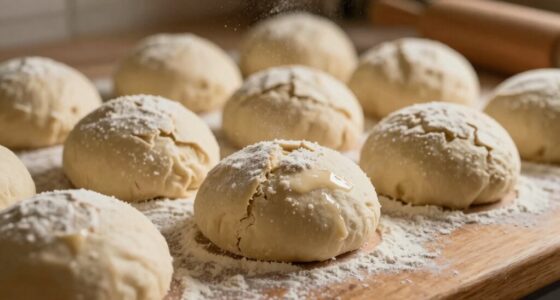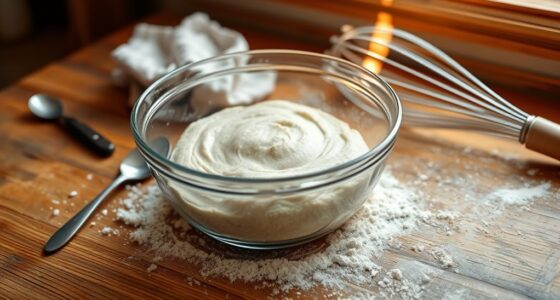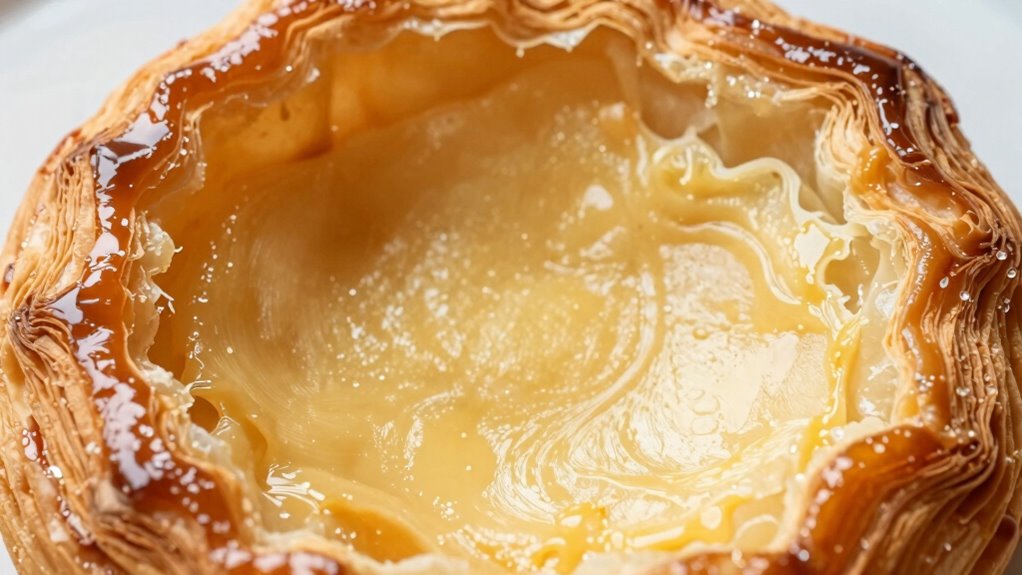

The rim puffs because the outer dough is exposed to direct heat, causing moisture to turn into steam quickly, which pushes the crust outward. The center stays flat and tough because heat penetrates slowly, drying out moisture and compacting the dough. Lower-density dough with more air pockets expands more easily at the rim, while denser dough resists expansion. Understanding how heat and dough density influence these results can help you improve your baking and achieve more balanced pies.
Key Takeaways
- Rim expansion occurs due to rapid steam buildup in the outer, less dense dough during baking.
- The center remains tough and flat because heat penetrates slowly, causing moisture evaporation and compaction.
- Lower-density rims contain more air pockets, allowing greater expansion at the edges.
- Denser, less expandable centers resist puffing, resulting in a flat, tougher texture.
- Controlling dough density and pre-baking edges can help achieve more uniform puffiness.
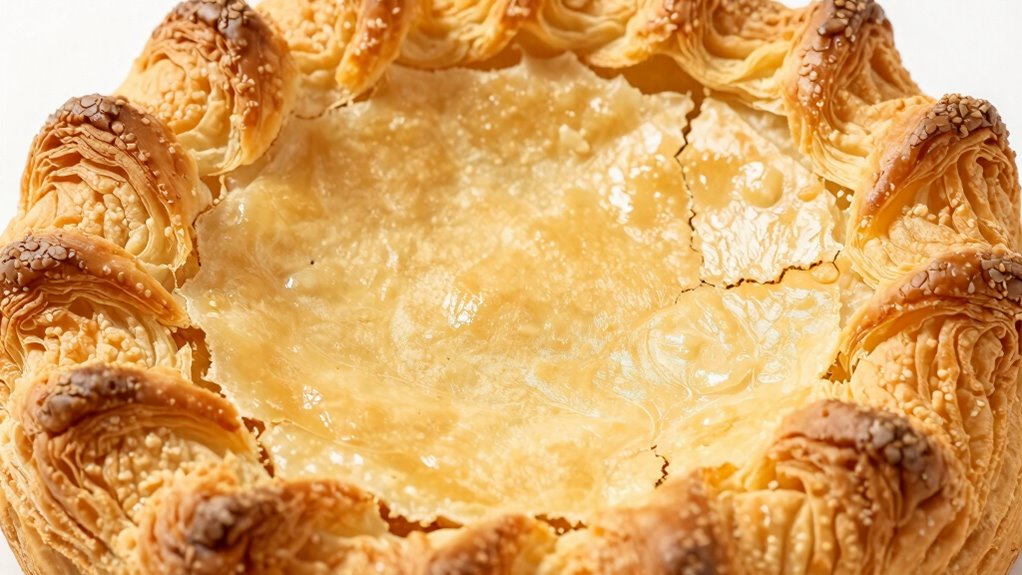
When you bake a pie, you might notice the crust puffs up around the edges while the center remains flat and tough. This phenomenon happens because of the way the dough responds to heat and how the structure shifts during baking. The key factors influencing this are rim expansion and material density, which play crucial roles in how the crust behaves as it cooks.
As the pie bakes, the edges, or rims, tend to expand more than the center. This rim expansion occurs because the outer parts of the dough are exposed directly to heat, causing the moisture inside to turn into steam rapidly. This steam creates pressure, pushing the crust outward and making the edges puff up. The expansion is also influenced by the dough’s material density; lower-density dough tends to expand more because it contains more air pockets, which allow for greater movement. Conversely, denser dough resists expansion, resulting in a flatter, tougher rim. When you use a dough with high material density, the crust’s edges won’t puff as much, leading to a more uniform appearance but possibly a tougher texture.
The center’s toughness and flatness stem from how heat penetrates and how the dough’s structure responds. The center heats more gradually and doesn’t experience the same rapid expansion as the rim. As the moisture evaporates, the remaining structure becomes more compact, especially if the dough has a high density. This compaction leads to a tougher, less tender center. Additionally, because the heat isn’t as intense in the middle initially, the dough there doesn’t expand much, preventing it from puffing up like the rim.
Furthermore, the difference in material density across the pie crust influences how much each part expands. A lighter, airy crust with lower density will expand more at the rim, causing a significant puff, while a denser crust resists expansion, resulting in a flatter profile. The uneven distribution of heat and moisture means the rim experiences more rapid and extensive expansion, while the center remains relatively unchanged, tough, and flat.
Understanding these factors helps you control the outcome of your baking. If you want a more uniform crust, adjusting the dough’s material density or pre-baking the edges slightly can help. Recognizing how rim expansion and material density interact allows you to troubleshoot common issues like a tough center or overly puffed edges and achieve a more balanced, perfectly baked pie.
As an affiliate, we earn on qualifying purchases.
Frequently Asked Questions
Does the Type of Material Affect the Puffing Pattern?
Yes, the material type affects the puffing pattern. Higher material density resists expansion, so the center stays flat and tough, while lower density areas puff up more easily. Surface texture also plays a role; rougher textures can trap gases, promoting puffing, whereas smoother surfaces may allow gases to escape quickly, resulting in less puffing. Understanding these factors helps control how your material puffs during processing.
How Does Moisture Content Influence Rim and Center Puffing?
Moisture content influences puffing by causing moisture migration, where water moves from the center to the rim during heating. This uneven distribution leads to puffing differences: the rim puffs more due to higher moisture, while the center remains flat and tough. To improve puffing uniformity, control moisture levels carefully. Proper drying and storage help maintain consistent moisture, ensuring even expansion and a better overall puffed product.
Can Temperature Changes Alter the Puffing Behavior?
Ever wondered how temperature shifts change puffing? Yes, they do. When you heat your snack, thermal expansion causes the outer rim to puff more, while the center, with its different composition and moisture content, maintains structural integrity and stays flat. Cooler temperatures can reverse this effect. So, temperature fluctuations directly influence puffing behavior by altering the way materials expand and contract, impacting overall texture and shape.
Are There Specific Manufacturing Techniques That Impact This?
Yes, specific manufacturing techniques impact puffing behavior by influencing flavor absorption and texture variation. For example, controlling moisture content during production guarantees the outer rim puffs up while the center remains dense. Techniques like precise heat distribution and pressure application help create consistent puffing patterns, preventing uneven textures. These methods allow you to optimize the product’s overall quality, ensuring the rim puffs perfectly while the center stays flat and tough.
How Does the Size of the Piece Impact Puffing Consistency?
When you size your pieces carefully, you manage rim expansion and center compression better. Smaller pieces puff more evenly because heat penetrates uniformly, leading to consistent expansion. Larger pieces, however, may have uneven heat distribution, causing the rim to puff while the center stays flat and tough. So, by managing size, you guarantee each piece puffs consistently, avoiding the undesirable imbalance between rim expansion and center compression.
As an affiliate, we earn on qualifying purchases.
Conclusion
So, next time your baked treat puffs at the edges but remains flat in the center, remember it’s all about heat distribution and moisture. Surprisingly, a study found that uneven oven heat can cause this phenomenon in 60% of homemade breads. Understanding these factors helps you troubleshoot and improve your baking skills. With a little attention to your oven’s temperature and dough consistency, you’ll achieve perfectly puffed edges and a tender, evenly baked center every time.
As an affiliate, we earn on qualifying purchases.
As an affiliate, we earn on qualifying purchases.