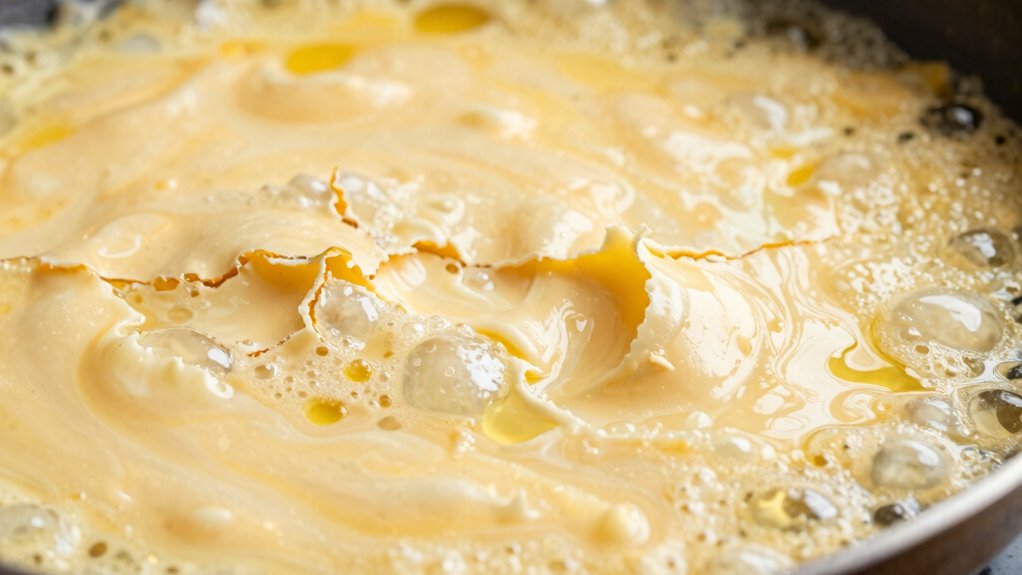

If you heat cheese too quickly or at high temperatures, it’s more likely to split into oil early. Overheating causes the proteins and fats to break down unevenly, especially with cheeses that have high moisture content or softer textures. Rapid or intense heat pushes the cheese beyond its melting point too fast, leading to separation. To prevent this, gentle, controlled heating and gradual addition are key—more tips to keep your cheese from splitting are just ahead.

Get baking supplies delivered free with Prime
- Fast, free delivery on millions of items
- Prime Video, Amazon Music and more included
- Member-only deals all year
Key Takeaways
- Heating cheese too quickly or at high temperatures causes fat and proteins to separate prematurely.
- Using cheeses with dry or crumbly textures increases the likelihood of early splitting.
- Overheating soft or high-moisture cheeses can lead to oil separation during melting.
- Adding cheese directly to boiling liquids or controlling temperature poorly promotes oil release.
- Lack of gradual heating or stirring can cause uneven melting and early oil separation.
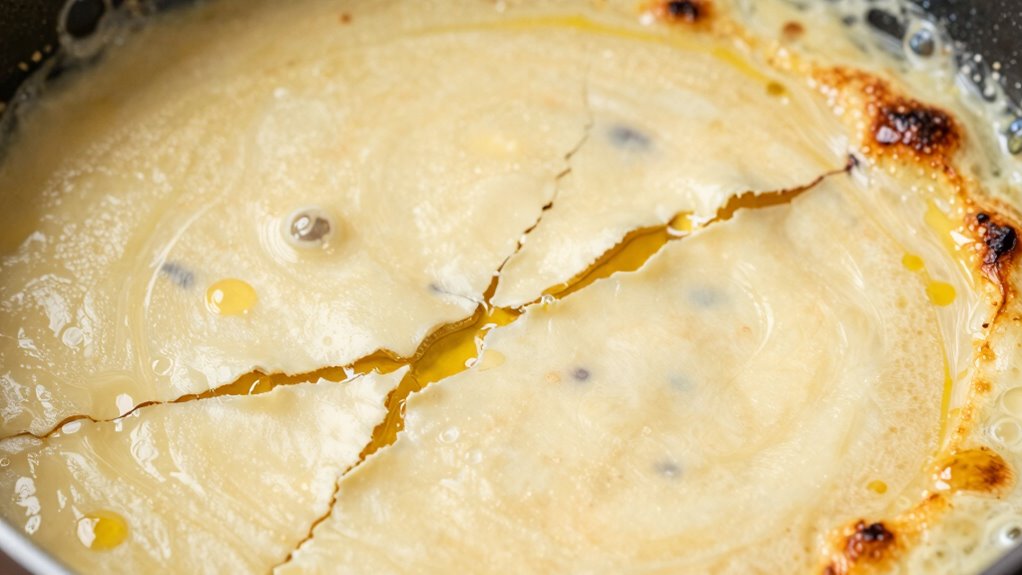
When cheese splits into oil too early during cooking, it can be frustrating and ruin your dish. This often happens because of issues with cheese texture and melting temperature. Cheese texture refers to how firm or soft the cheese is before you heat it, and it influences how smoothly it melts. If your cheese is too dry or crumbly, it’s more likely to break down prematurely, releasing oil before it reaches the desired creamy consistency. On the other hand, cheese with a high moisture content tends to melt more evenly, but if it’s too fresh or soft, it might still split easily.
Understanding melting temperature is key to preventing early splitting. Every type of cheese has a specific melting point, and if you heat it past this point too quickly or at too high a temperature, the proteins and fats separate. When this separation occurs, the cheese releases oil, causing it to split. For example, cheeses like mozzarella and young cheddar melt at relatively low temperatures and are more forgiving when heated gently. Harder cheeses, like Parmesan or aged Gouda, have higher melting temperatures and are less prone to splitting, but they can still break if overheated or cooked too rapidly.
The way you cook your cheese also plays a role. Rapid, high heat can push the cheese beyond its melting temperature too quickly, causing it to split into oil. That’s why slow, gentle heating is usually better, especially when working with delicate cheeses. Using indirect heat or a double boiler can help maintain a steady temperature, giving you more control over how the cheese melts. If you’re making a sauce or a melted cheese dish, stir frequently and keep the heat low to prevent sudden temperature spikes that cause splitting. Additionally, heat control is essential for achieving a smooth, gooey consistency without splitting. Proper temperature management can make all the difference in avoiding premature oil separation.
Another factor is how you handle the cheese before cooking. If you grate or chop it into smaller pieces, it melts more evenly because the heat penetrates faster. Also, adding a little acid, like lemon juice or vinegar, can help stabilize the cheese, especially in sauces, by reducing the risk of oil separation. cheese texture can be affected by age and storage conditions, which influence how it melts and splits. Finally, avoid adding cheese directly to boiling liquids; instead, let the liquid cool slightly or add cheese gradually while stirring constantly. This helps keep the cheese’s texture smooth and prevents it from reaching its melting temperature too quickly, reducing the chance of splitting into oil.
double boiler for melting cheese
As an affiliate, we earn on qualifying purchases.
As an affiliate, we earn on qualifying purchases.
Frequently Asked Questions
Does the Type of Cheese Affect How Quickly It Splits?
Yes, the type of cheese affects how quickly it splits. Cheeses with high moisture or specific textures, like soft or semi-soft varieties, tend to split faster, releasing oil early. This also impacts flavor development, as splitting can alter taste and texture. If you’re cooking with certain cheeses, understanding their texture helps prevent early splitting, ensuring your dish retains the desired consistency and flavor.
Can Adding Salt Prevent Cheese From Splitting Prematurely?
Back in the day, a pinch of salt could’ve been your secret weapon in the kitchen. Salt effects can help prevent cheese from splitting prematurely by stabilizing moisture balance, which keeps the fats and proteins together. Adding salt gradually during heating maintains the right moisture level, reducing the risk of oil separation. Just don’t overdo it, or you might alter the cheese’s texture and flavor.
How Does Storage Temperature Influence Cheese Splitting?
Storage temperature greatly influences cheese splitting by affecting moisture content and microbial activity. If you store cheese at too warm a temperature, microbial activity accelerates, breaking down fats and proteins prematurely, leading to splitting into oil. Conversely, colder temperatures slow down these processes, helping maintain the cheese’s texture. To prevent early splitting, keep cheese refrigerated at a consistent, ideal temperature, ideally between 35-45°F, to control moisture and microbial activity effectively.
Are There Specific Cooking Utensils That Reduce Splitting?
Using the right utensils can make a huge difference—your cheese won’t throw a fiery tantrum! Opt for utensils made of materials like stainless steel or silicone, which guarantee even heat distribution and prevent hot spots. Avoid flimsy or thin tools that focus heat unevenly. By choosing the proper utensil material, you help maintain consistent temperatures, reducing the risk of cheese splitting into oil too early and keeping your dish smooth and delicious.
Does Aging Process Impact Cheese’s Tendency to Split Early?
Yes, aging impacts cheese’s tendency to split early. As cheese ages, its moisture content decreases, and the pH balance shifts, making it more prone to splitting. The lower moisture and altered pH weaken the protein matrix, causing fats to separate sooner during heating. So, if you’re working with aged cheese, be mindful of these changes, as they increase the risk of splitting and oil separation early in the cooking process.
As an affiliate, we earn on qualifying purchases.
Conclusion
So, when your cheese splits into oil too early, it’s like rushing a sunset—things don’t turn out as smoothly as you’d like. Usually, it’s because of high heat, improper aging, or too much acid. To prevent this, keep your temperature gentle, choose the right cheese for cooking, and follow recipes carefully. With patience, your cheese will melt just right, like a calm lake settling after a storm, giving you perfect, creamy results every time.
cheese grater for melting cheese
As an affiliate, we earn on qualifying purchases.
As an affiliate, we earn on qualifying purchases.
As an affiliate, we earn on qualifying purchases.
Halloween Picks
halloween
As an affiliate, we earn on qualifying purchases.