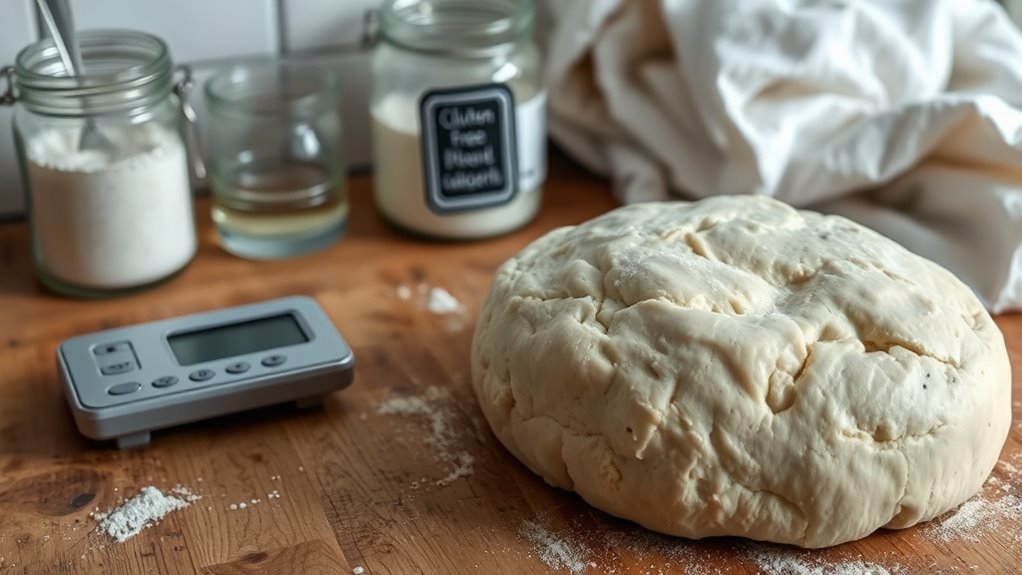

When baking with whole wheat or alternative flours, you should increase the hydration because these flours absorb more water. Add liquids gradually to get a tacky but not sticky dough. Additionally, extend fermentation and proofing times to develop flavor and proper structure. Keep an eye on the dough until it doubles in size and shows bubbles. If you continue exploring, you’ll discover even more ways to perfect your baking with different flours.

Get baking supplies delivered free with Prime
- Fast, free delivery on millions of items
- Prime Video, Amazon Music and more included
- Member-only deals all year
Key Takeaways
- Increase water gradually to compensate for higher absorption in whole wheat and alternative flours.
- Extend proofing and fermentation times to develop flavor and ensure proper dough rise.
- Aim for a tacky, not sticky, dough by adjusting hydration during mixing.
- Monitor dough for doubling in size and bubbling to determine readiness.
- Longer fermentation enhances flavor complexity and improves bread texture with whole or alternative flours.
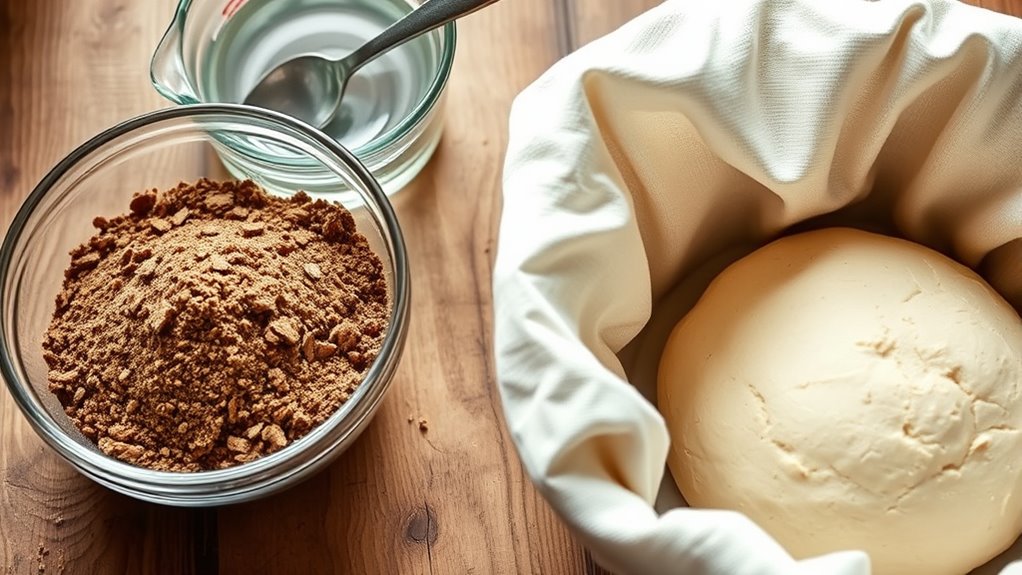
Switching to whole wheat or alternative flours can substantially boost the nutritional value of your baked goods, and it’s easier than you might think. One of the key adjustments you’ll need to make involves hydration. These flours often absorb more water than traditional white flour, so you might need to increase the liquid in your recipes to achieve the right dough consistency. Pay close attention to how the dough feels; it should be tacky but not overly sticky. This change guarantees your dough has enough moisture for proper fermentation, which is vital for developing flavor and texture. When you use alternative flours like spelt, rye, or almond flour, expect different hydration needs, and don’t hesitate to add water gradually to get the ideal consistency.
Fermentation times are another important factor when working with whole wheat and alternative flours. Because these flours contain more fiber and natural enzymes, they often ferment more slowly than white flour. This longer fermentation period allows the flavors to develop fully, leading to richer and more complex taste profiles. It also improves digestibility and overall bread quality. To optimize fermentation, you might need to extend proofing times or adjust your fermentation temperature. Keep an eye on the dough—it’s ready when it has doubled in size and shows visible bubbles, indicating active fermentation. Patience is key here; rushing this stage can result in dense or flat baked goods. Additionally, understanding benefits of raw food can inspire healthier ingredient choices for your recipes.
Longer fermentation enhances flavor, digestibility, and bread quality when using whole wheat and alternative flours.
Flavor enhancements are among the most noticeable benefits of incorporating whole wheat or alternative flours. The extended fermentation times allow natural flavors to deepen, giving your baked goods a nutty, earthy, or more nuanced profile that white flour simply can’t match. These flavors become even more pronounced when you let the dough ferment for longer, allowing the natural enzymes to break down starches and proteins, releasing complex aromatic compounds. Additionally, some alternative flours, like buckwheat or chickpea, contribute their own distinctive flavors, adding variety and depth to your baked treats. To maximize these flavor benefits, consider fermenting your dough a little longer than usual, especially since the natural enzymes and fermentation times work together to enhance flavor.
Adjusting hydration and proofing when using whole wheat or alternative flours might require some experimentation, but the results will be worth it. You’ll notice better fermentation times, more developed flavors, and a noticeable boost in nutritional value. With patience and attention to detail, you can create baked goods that are not only healthier but also richer in taste and texture. Over time, you’ll develop an intuition for how these flours behave and how best to adapt your techniques, making each bake more successful than the last.
As an affiliate, we earn on qualifying purchases.
Frequently Asked Questions
How Do Different Flours Affect Dough Texture?
Different flours impact dough texture mainly through their flour protein content, which influences dough elasticity. Higher protein flours, like bread flour, create a stronger gluten network, resulting in chewier, more elastic dough. Lower protein flours, such as cake or pastry flour, produce softer, less elastic dough. You’ll notice these differences in how your dough handles, rises, and the final crumb texture, so choose your flour based on the desired outcome.
Can I Substitute Gluten-Free Flours Entirely?
You can absolutely substitute gluten-free flours entirely, but keep in mind, gluten-free blends behave differently from traditional flours. Imagine a bakery filled with the aroma of fresh bread—this can happen with proper flour substitutions, but you’ll need to modify hydration and possibly add binders. Experimenting with different gluten-free blends ensures your dough holds together, giving you better texture and rise without gluten.
How Does Hydration Impact Rising Time?
Hydration levels directly impact rising time because higher hydration speeds up fermentation, leading to quicker rising. When your dough has more water, yeast activates faster, producing carbon dioxide more rapidly. Conversely, low hydration slows fermentation, resulting in a longer rise. Keep in mind, adjusting hydration levels helps control fermentation speed, so experimenting with water amounts can optimize your proofing time for the best texture and flavor in your bread.
Are There Specific Proofing Techniques for Alternative Flours?
Think of proofing alternative flours as tuning a delicate instrument. You should extend proofing times to allow for better gluten development and fermentation control, as these flours often absorb more water and ferment differently. Gentle handling and patience help improve rise and texture. Keep an eye on the dough’s behavior, and don’t rush—adjust your techniques based on how your dough responds for ideal results.
What Are Common Mistakes When Adjusting Recipes for Different Flours?
You often make mistakes by not adjusting hydration levels, which affects gluten development and texture. Overworking dough can inhibit proper gluten formation, leading to dense bread. You might also overlook flavor enhancement, missing out on the unique tastes alternative flours bring. To improve, pay attention to hydration needs, avoid over-proofing, and experiment with ingredients to maximize both gluten development and flavor.
As an affiliate, we earn on qualifying purchases.
Conclusion
Think of baking with whole wheat or alternative flours as tending a garden. Just as different plants need unique care—more water or longer sunlight—you’ll find adjusting hydration and proofing helps your bread flourish. With patience and attention, your dough blossoms into a hearty, nourishing loaf. Embrace these tweaks as nurturing your garden, and soon, you’ll harvest the warm, wholesome bread you’ve cultivated with skill and love. Happy baking!
As an affiliate, we earn on qualifying purchases.
As an affiliate, we earn on qualifying purchases.
Fall Picks
fall essentials
As an affiliate, we earn on qualifying purchases.