
Extending fermentation improves your dough’s flavor by allowing natural microbes and enzymes to develop richer, more complex tastes. Cooler, longer fermentations encourage the production of organic acids like lactic and acetic acid, giving your bread a tangy profile. It also enhances gluten development and texture, resulting in a more airy crumb and better shelf life. If you keep going, you’ll discover even more ways to maximize your dough’s potential.

Get baking supplies delivered free with Prime
- Fast, free delivery on millions of items
- Prime Video, Amazon Music and more included
- Member-only deals all year
Key Takeaways
- Extended fermentation enhances flavor development by allowing natural microbes and enzymes to produce complex acids and aromatic compounds.
- Longer fermentation at cooler temperatures intensifies sourdough tanginess and depth of flavor.
- Patience during fermentation improves gluten structure, resulting in a better crumb and overall bread texture.
- Signaling proper fermentation—like dough doubling and slight doming—ensures optimal flavor and texture.
- Controlling fermentation duration unlocks customizable flavor profiles and richer, more resilient bread.
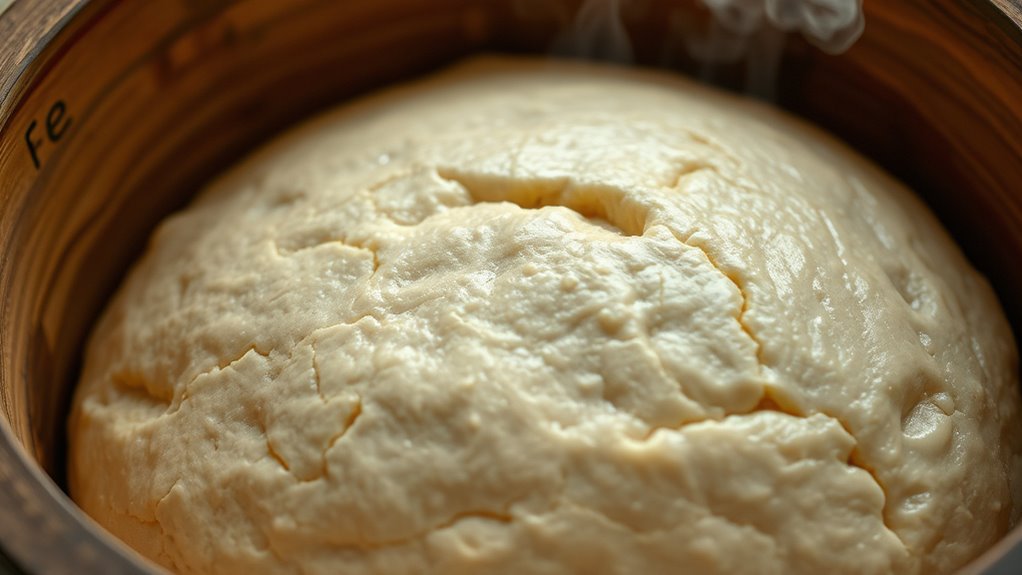
If you want to enhance the flavor of your dough, extending the fermentation process can make a significant difference. When you give your dough more time to ferment, you’re allowing natural processes to develop complex flavors that quick rises simply can’t achieve. This is especially true when working with sourdough starters, which contain a symbiotic culture of bacteria and wild yeast. Over a longer fermentation, these microbes produce carbon dioxide, acids, and other compounds that deepen the dough’s taste. The key to revealing these flavors lies in fermentation enzymes, which break down starches and proteins, releasing sugars and amino acids that contribute to flavor complexity. As fermentation progresses, these enzymes continue to act, transforming your dough into a more aromatic and flavorful product.
Extended fermentation develops complex, flavorful sourdough through microbial activity and enzyme action.
Extended fermentation encourages the growth of beneficial bacteria and wild yeast within your sourdough starter, which in turn produce organic acids like lactic and acetic acid. These acids give your bread a tangy, nuanced flavor profile that’s hard to replicate with commercial yeast. As the acids develop, they also improve the dough’s texture and shelf life, making your bread more resilient and flavorful even days after baking. The longer fermentation also allows for more thorough gluten development, resulting in a better crumb structure and a more satisfying bite. The process of prolonging fermentation isn’t just about flavor; it enhances the overall quality of your bread.
You can control the fermentation time based on your schedule and desired flavor intensity. For a more pronounced sourdough flavor, let your dough ferment slowly at cooler temperatures, sometimes up to 12-24 hours. During this time, fermentation enzymes work steadily, breaking down complex molecules into simpler, flavorful compounds. Keep in mind that patience is key—rushing the process often results in a milder taste and less developed texture. Also, don’t forget to monitor your dough; it should roughly double in size and develop a slightly domed, airy surface. This signals that fermentation has reached its ideal point. When you extend fermentation, you’re fundamentally giving your sourdough starter more time to do its magic, resulting in a loaf with richer, more layered flavors.
In the end, the benefits of extended fermentation come down to your preference for flavor and texture. By giving your sourdough starter and dough more time, you tap into the natural power of fermentation enzymes and microbial activity. The result is a bread with a complex, tangy flavor profile, improved crumb structure, and better overall quality. With a little patience and attention, you can elevate your baking game and enjoy homemade bread that’s truly flavorful and satisfying.
As an affiliate, we earn on qualifying purchases.
Frequently Asked Questions
How Does Extended Fermentation Affect Dough Nutritional Value?
Extended fermentation enhances your dough’s nutritional value by activating fermentation enzymes that break down complex carbs and proteins, making nutrients more bioavailable. This process reduces antinutrients like phytates, which can inhibit nutrient absorption. As a result, your bread becomes richer in vitamins, minerals, and amino acids. By allowing longer fermentation, you boost the overall health benefits of your dough, providing you with more nutritious, easily digestible bread.
Can Extended Fermentation Be Used With Gluten-Free Flours?
Think of extended fermentation as a Swiss Army knife—you can definitely use it with gluten-free flours and alternative flours. Gluten-free fermentation enhances flavor and digestibility, making your dough more appealing. You just need to adjust fermentation times and hydration levels to suit each flour type. With patience, this method works wonders, turning simple gluten-free ingredients into delicious, flavorful baked goods that rival traditional bread.
What Are the Best Temperature Settings for Extended Fermentation?
For ideal fermentation temperature and dough proofing, aim for around 75°F to 78°F (24°C to 26°C). This range encourages active yeast fermentation without overproofing. If you want a slower fermentation for better flavor, keep it cooler, around 65°F to 70°F (18°C to 21°C). Consistent temperature control is key, so use a proofing box or a warm, draft-free spot to maintain the perfect fermentation temperature.
How Do I Know When the Fermentation Is Complete?
You’ll know fermentation is complete when the dough has doubled in size and appears bubbly and airy. During fermentation timing, check for a slightly domed surface and a pleasant, tangy aroma. Gently poke the dough; if the indentation springs back slowly, it’s ready. Trust your senses—dough readiness means it’s developed complex flavors and structure, ensuring ideal results for baking.
Does Extended Fermentation Change the Dough’s Texture Significantly?
You might worry extended fermentation weakens dough elasticity, but it actually enhances texture. Longer fermentation allows gluten to develop fully, resulting in a dough that’s more extensible and easier to shape. While it does change the dough’s texture slightly, it’s usually for the better, giving you a more open crumb and complex flavor. Just keep an eye on fermentation timing to avoid over-proofing, ensuring your dough stays manageable and delicious.
As an affiliate, we earn on qualifying purchases.
Conclusion
By extending fermentation, you open richer, more complex flavors in your dough that simply can’t be achieved quickly. It’s worth the extra time—studies show that longer fermentation can improve bread’s flavor by up to 30%, making every bite more satisfying. So next time you bake, be patient and let your dough ferment longer. The result? A tastier, more aromatic loaf that’ll impress everyone at your table. Trust me, your taste buds will thank you.
As an affiliate, we earn on qualifying purchases.
long fermentation bread container
As an affiliate, we earn on qualifying purchases.
As an affiliate, we earn on qualifying purchases.
Halloween Picks
halloween
As an affiliate, we earn on qualifying purchases.