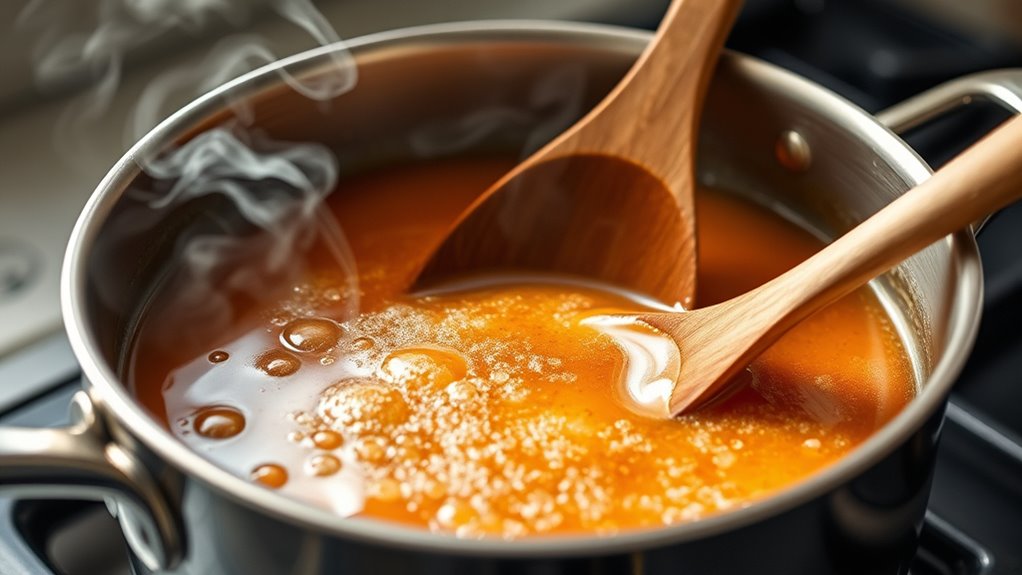

To fix a watery sauce, you should simmer it uncovered over medium-low heat to let excess liquid evaporate, thickening the sauce naturally. Stir frequently to prevent sticking, and consider adding thickening ingredients like tomato paste, cornstarch slurry, or cream for extra richness and body. Be careful not to reduce too much to avoid burning or overly intense flavors. Continuing to explore techniques can help you achieve a perfect, luscious consistency.

Get baking supplies delivered free with Prime
- Fast, free delivery on millions of items
- Prime Video, Amazon Music and more included
- Member-only deals all year
Key Takeaways
- Simmer the sauce uncovered over medium-low heat to promote evaporation and natural thickening.
- Stir frequently and reduce the heat if necessary to prevent burning during the reduction process.
- Add a slurry made of cornstarch or flour mixed with cold water to quickly thicken the sauce.
- Incorporate ingredients like tomato paste, pureed vegetables, or mashed beans for added body and flavor.
- Finish with cream, coconut milk, or grated cheese to enrich and further thicken the sauce.
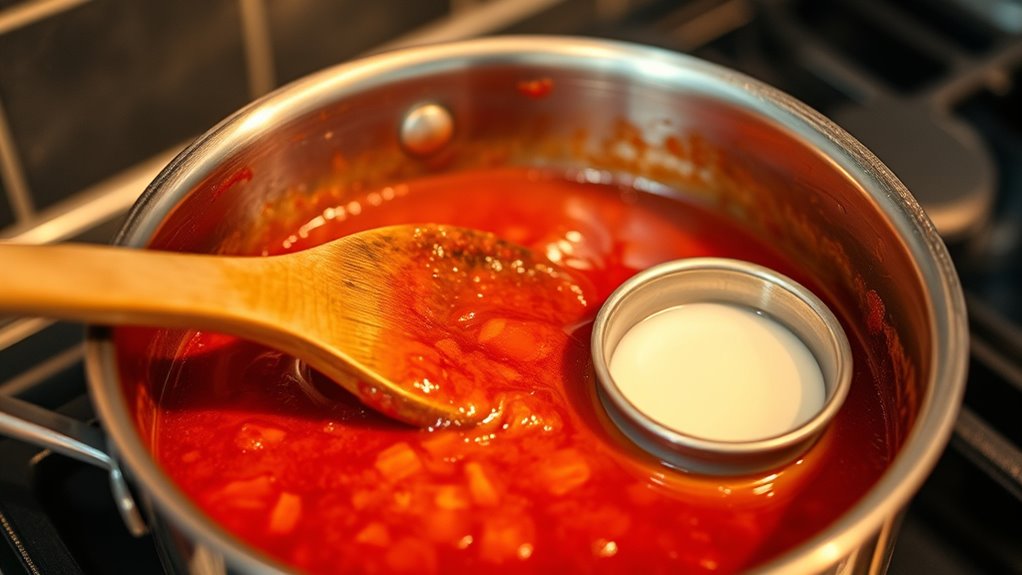
Ever made a sauce only to find it too watery and wondering how to fix it? Don’t worry—there are straightforward ways to improve its consistency. The key is to use effective ingredients substitutions and cooking techniques that can help you thicken your sauce without sacrificing flavor. First, assess what’s in your sauce. If it’s too thin because of excess liquid, you can add ingredients that naturally thicken it. For example, stirring in a spoonful of tomato paste, pureed vegetables, or even a small amount of cornstarch or flour can do wonders. These ingredient substitutions not only thicken the sauce but also enhance its richness and depth of flavor. Keep in mind, when adding thickening agents like cornstarch or flour, it’s best to create a slurry—mix the powder with a little cold water before stirring it into the hot sauce. This prevents clumping and ensures even thickening.
Cooking techniques are equally crucial in fixing watery sauces. One effective method is to simmer the sauce uncovered over medium-low heat. As the liquid evaporates, the sauce naturally thickens. Stir frequently to prevent sticking or burning at the bottom. If you want a quicker fix, you can turn up the heat just slightly, but be cautious not to over-reduce or burn the sauce. Another technique involves reduction, which means cooking the sauce until some of the liquid evaporates, intensifying the flavors and thickening the texture. Just remember, patience is key here—allow the sauce to simmer gently until it reaches your desired consistency. Additionally, understanding the importance of contrast ratio can help you better evaluate the visual and textural balance of your sauce, especially when aiming for a rich, glossy finish.
Simmer uncovered over medium-low heat to naturally thicken and intensify your sauce’s flavor.
You can also incorporate some ingredients substitutions that serve a dual purpose: thickening and flavor enhancement. For example, adding a splash of cream or coconut milk not only thickens the sauce but also gives it a richer, smoother texture. If you’re making a broth-based sauce, adding mashed beans or pureed lentils can work well, providing body and a subtle flavor boost. Additionally, some cooks swear by adding grated cheese or butter at the end of cooking to thicken and enrich the sauce. Just be mindful of how each substitute affects the overall taste.
In essence, fixing a watery sauce is about balancing ingredients substitutions with the right cooking techniques. With a little patience and some quick adjustments, you can transform a thin, watery sauce into a luscious, flavorful masterpiece. Whether it’s simmering to reduce or stirring in a thickening agent, these methods will help you salvage your dish and achieve the perfect consistency every time.
Frequently Asked Questions
Can I Use Cornstarch Instead of Flour to Thicken the Sauce?
Yes, you can use cornstarch instead of flour to thicken your sauce. Cornstarch substitution is a popular thickening alternative because it creates a glossy, smooth texture. To use it, mix a small amount with cold water to make a slurry before adding it to your sauce. Keep stirring until it thickens. Remember, cornstarch thickens quickly, so add it gradually to avoid over-thickening or clumping.
How Long Does It Take to Reduce the Sauce Properly?
You should simmer the sauce for about 10-20 minutes, depending on the volume and desired thickness. Keep an eye on the evaporation rate, as it influences how quickly the sauce reduces. Stir occasionally to prevent burning and guarantee even thickening. If it’s not thick enough after this time, continue simmering and monitoring until you reach your preferred consistency. Patience helps you achieve the best results.
Will Reducing the Sauce Change Its Flavor?
Reducing your sauce is like squeezing a sponge—it intensifies flavors but can also alter the consistency. As you simmer, the flavor preservation depends on how long you reduce; too long, and the flavor may become concentrated or slightly altered. Generally, a gentle reduction preserves most of the original taste while thickening the sauce, but keep an eye on it to prevent over-reduction that could change its overall profile.
Is It Possible to Fix Watery Sauce Without Cooking Longer?
Yes, you can fix watery sauce quickly without cooking longer by adding a thickening agent like cornstarch or flour mixed with cold water. This quick fix helps thicken the sauce without much flavor impact, as it blends in seamlessly. Just stir the mixture into your sauce and simmer briefly until it thickens. This method saves time and preserves your sauce’s original flavor, making it a handy trick for last-minute adjustments.
Can I Save a Sauce That’s Become Too Thick?
Did you know that sauces can thicken by up to 50% during simmering? If your sauce’s consistency is too thick, you can loosen it by adding a small amount of broth, water, or wine, then gently reheating while stirring. This helps restore the right sauce consistency without sacrificing flavor. Adjust the seasoning afterward to ensure your sauce remains delicious and perfectly balanced.
Conclusion
With a gentle touch, you can transform a runny sauce into a luscious, velvety delight. Embrace the slow simmer and patience, allowing the flavors to deepen and the texture to settle into perfect harmony. Remember, even the most fluid beginnings can become beautifully thickened with care and attention. Trust your instincts, and soon you’ll be savoring a sauce that’s just right—rich, inviting, and truly satisfying.
Halloween Picks
halloween
As an affiliate, we earn on qualifying purchases.