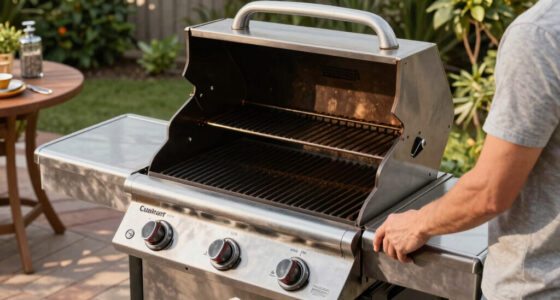

Proper ventilation is key to preventing dangerous carbon monoxide buildup in your home. It helps replace stale, contaminated air with fresh outdoor air, diluting harmful gases from appliances and vehicle exhaust. Installing exhaust fans, maintaining HVAC systems, and using detectors can greatly improve safety. Good airflow actively reduces indoor pollutant levels and protects your health. Keep your home well-ventilated to stay safe, and you’ll find more simple ways to enhance your indoor air quality and safety.

Get baking supplies delivered free — and shop member deals
- Fast, free delivery on millions of items
- Access to Prime Big Deal Days deals on October 6–7
- Prime Video, Amazon Music and more included
Key Takeaways
- Proper ventilation prevents dangerous indoor carbon monoxide buildup by ensuring continuous fresh air exchange.
- It helps dilute and remove harmful gases emitted by gas appliances and heating systems.
- Installing exhaust fans and maintaining HVAC systems improve ventilation effectiveness and safety.
- Regular appliance maintenance and CO detectors are essential to identify and prevent CO leaks.
- Adequate ventilation creates a healthier indoor environment by reducing pollutant concentrations.
Have you ever wondered how proper ventilation can prevent dangerous levels of carbon monoxide indoors? Improving indoor air quality is essential for your safety, and ventilation effectiveness plays a crucial role in this. When your home isn’t properly ventilated, any lingering pollutants, including carbon monoxide, can accumulate to hazardous levels without you realizing it. Good ventilation helps to replace stale, contaminated air with fresh air from outside, diluting any harmful gases and reducing the risk of poisoning. It’s not just about comfort—it’s about protecting your health and that of your loved ones.
Proper ventilation prevents dangerous indoor carbon monoxide buildup, protecting your health and ensuring safer living conditions.
Understanding how ventilation affects indoor air quality is key. Ventilation isn’t just about opening a window; it’s about creating a system that consistently exchanges indoor air with outdoor air in a controlled manner. This process ensures that pollutants like carbon monoxide, which can be produced by heating systems, gas appliances, or vehicle exhaust that seeps indoors, don’t build up over time. When ventilation effectiveness is maximized, you can substantially lower the concentration of carbon monoxide indoors, reducing the risk of poisoning, headaches, dizziness, or worse.
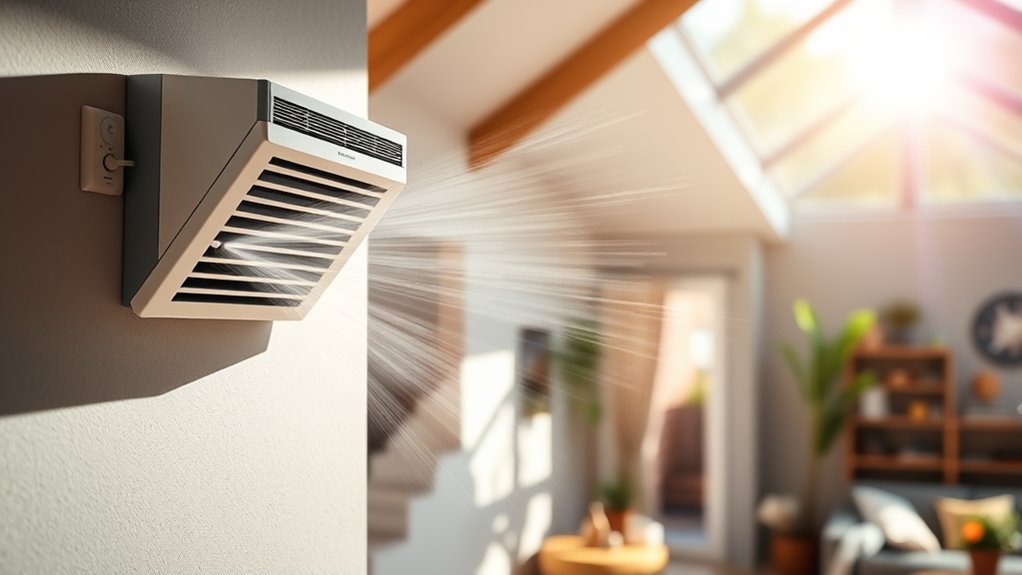
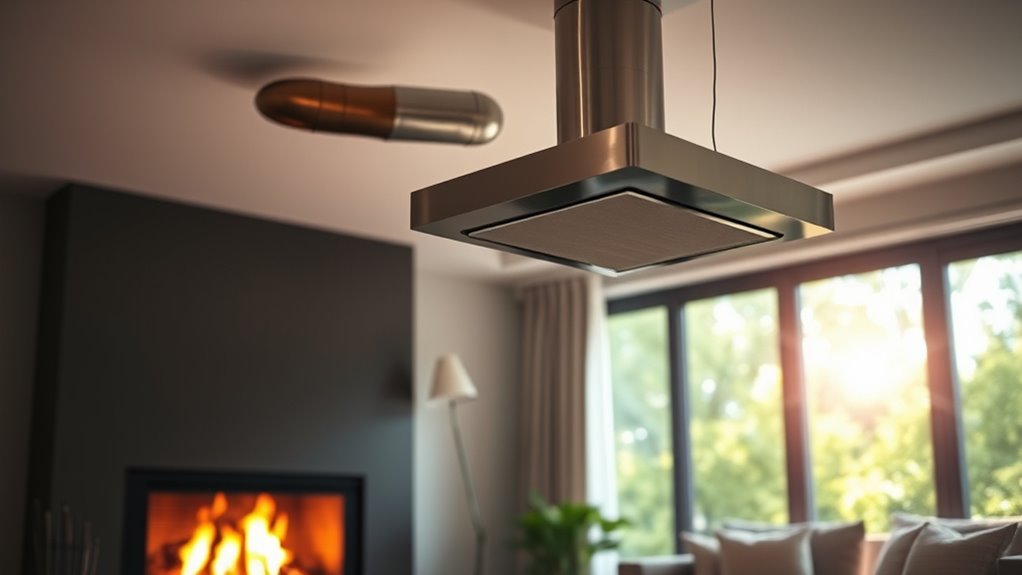
You can improve ventilation effectiveness in several ways. Installing exhaust fans in kitchens and bathrooms helps remove moist, polluted air at the source. Ensuring your HVAC system is properly maintained and equipped with fresh air intakes can also boost air quality. Additionally, using mechanical ventilation systems like heat recovery ventilators (HRVs) or energy recovery ventilators (ERVs) can provide continuous fresh air while conserving energy. These systems work seamlessly to exchange indoor and outdoor air, maintaining a healthy environment without sacrificing comfort. Moreover, increasing awareness of ventilation systems and their importance is crucial in modern building design.
Regularly inspecting and maintaining your appliances is another essential step. Faulty or poorly maintained gas appliances can emit higher levels of carbon monoxide, especially if ventilation isn’t adequate. Installing carbon monoxide detectors throughout your home adds an extra layer of safety, alerting you before dangerous levels build up. Remember, ventilation isn’t a one-time fix; it’s an ongoing process that requires attention and maintenance to ensure your indoor environment remains safe.
In essence, proper ventilation is your best defense against harmful indoor pollutants, including carbon monoxide. By focusing on improving ventilation effectiveness, you actively manage indoor air quality, creating a safer, healthier living space. When you prioritize good airflow and system upkeep, you help prevent the dangerous buildup of carbon monoxide, ensuring you breathe cleaner, safer air every day.
Frequently Asked Questions
How Often Should Ventilation Systems Be Inspected for Safety?
You should inspect your ventilation system at least once a year for safety. Regular maintenance checks help identify any issues early, ensuring proper airflow and preventing carbon monoxide buildup. If your system is outdated or shows signs of wear, consider system upgrades to maintain safety and efficiency. Staying proactive with inspections and upgrades keeps your home safe and guarantees your ventilation system functions effectively year-round.
Can Natural Ventilation Effectively Prevent Carbon Monoxide Buildup?
Natural ventilation can help prevent carbon monoxide buildup by increasing air exchange and improving indoor air quality. When you open windows or doors regularly, you allow fresh air to enter and stale air to exit, reducing the risk of dangerous gases accumulating. However, natural ventilation alone might not be enough in all situations, especially with sources of CO indoors. Combining natural methods with proper mechanical ventilation offers the best protection against carbon monoxide.
What Are the Signs of Carbon Monoxide Poisoning?
You might notice symptoms like headaches, dizziness, nausea, or confusion if you experience carbon monoxide poisoning. Poor indoor air quality caused by inadequate ventilation upgrades can allow CO buildup, which is dangerous. If you suspect poisoning, get fresh air immediately and seek medical help. Regularly checking your ventilation system and ensuring proper setup helps maintain safe indoor air quality, preventing CO from accumulating to harmful levels.
Are Portable CO Detectors Reliable for Home Safety?
Yes, portable CO detectors are dependable for home safety when you pay attention to sensor accuracy and detector placement. You should choose models with high-quality sensors, regularly test them, and position detectors on each level of your home, especially near sleeping areas and fuel-burning appliances. Proper placement ensures accurate readings, helping you detect dangerous CO levels early and keep your household safe.
How Does Ventilation Affect Energy Efficiency?
Ventilation directly impacts your home’s energy efficiency by influencing air exchange rates. When you improve ventilation, you allow fresh indoor air to replace stale air, reducing the need for excessive heating or cooling. Properly managing indoor air quality helps maintain a comfortable environment without wasting energy. By balancing air exchange, you guarantee your home stays energy-efficient while keeping indoor air clean and healthy.
Conclusion
Proper ventilation isn’t just about comfort—it’s essential for safety. Did you know that carbon monoxide poisoning causes around 430 deaths annually in the U.S.? By ensuring adequate airflow and proper setup, you markedly reduce this risk. Don’t wait until it’s too late; always prioritize good ventilation whenever using appliances that produce combustion gases. Your safety depends on it. Take action now to protect yourself and your loved ones from hidden dangers like carbon monoxide.
Evergreen bestsellers Picks
bestsellers
As an affiliate, we earn on qualifying purchases.