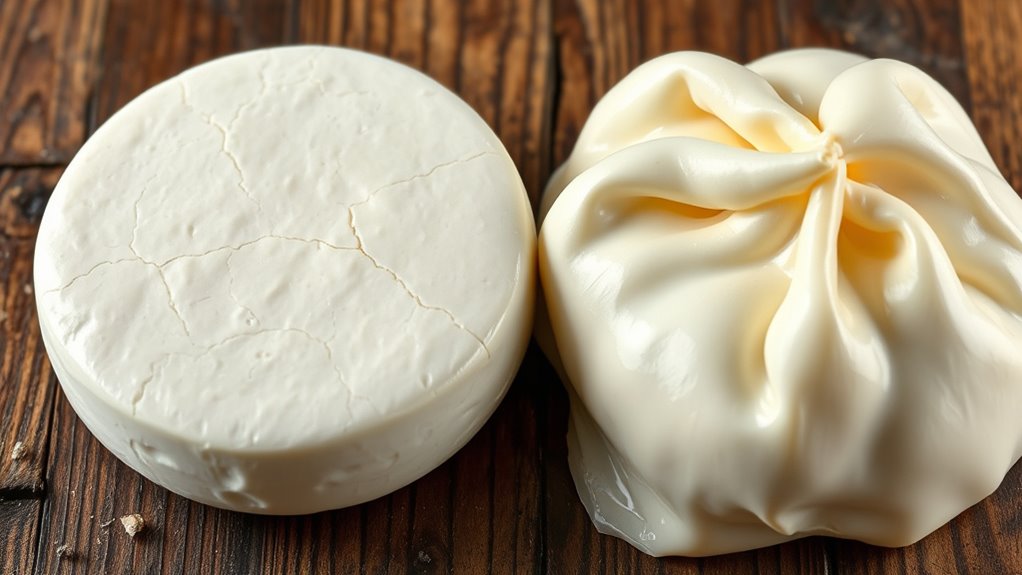

If you’re troubleshooting low moisture versus fresh mozzarella, start by recognizing their differences: fresh mozzarella is soft, moist, and minimally aged, while low moisture has been aged for better melting and longer shelf life. Common issues include sogginess, dryness, or spoilage, which can be fixed by proper storage, draining excess juice, or rehydrating dry cheese. Handling techniques, temperature control, and selecting the right type for your dish are key. Keep exploring for more tips and tricks to perfect your cheese game.

Get baking supplies delivered free — and shop member deals
- Fast, free delivery on millions of items
- Access to Prime Big Deal Days deals on October 6–7
- Prime Video, Amazon Music and more included
Key Takeaways
- Identify the cheese type by texture, moisture level, and appearance to troubleshoot specific issues effectively.
- Address spoilage signs like discoloration or sliminess by discarding affected cheese immediately.
- Manage moisture levels through proper storage, draining excess liquid, and using airtight containers.
- Adjust cooking techniques and temperatures to improve melting and stretching of different mozzarella types.
- Prevent texture problems by handling cheese gently, storing correctly, and avoiding overexposure to moisture or air.
Understanding the Basic Differences Between Low Moisture and Fresh Mozzarella
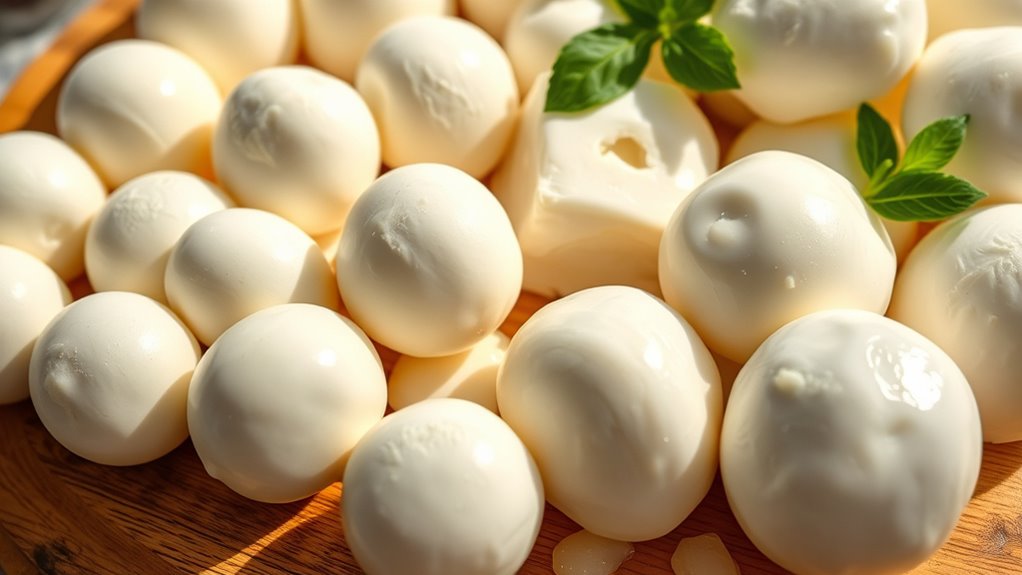
While both low moisture and fresh mozzarella are popular cheese options, they differ considerably in texture, moisture content, and culinary uses. Low moisture mozzarella undergoes cheese aging, which develops its firmer texture and enhances its flavor profiles, making it ideal for melting and baking. Fresh mozzarella, on the other hand, is minimally aged, resulting in a soft, moist texture with a delicate, milky flavor. The aging process influences the cheese’s taste, with low moisture varieties offering a more developed, sometimes slightly tangy, flavor. Fresh mozzarella’s mild flavor remains bright and clean. Understanding these differences helps you choose the right type for your dishes and recognize how cheese aging impacts flavor profiles, affecting how each cheese performs in various recipes. Additionally, shelf life varies significantly between the two, with low moisture mozzarella having a longer shelf life due to its aging process.
Common Texture and Appearance Issues and How to Fix Them
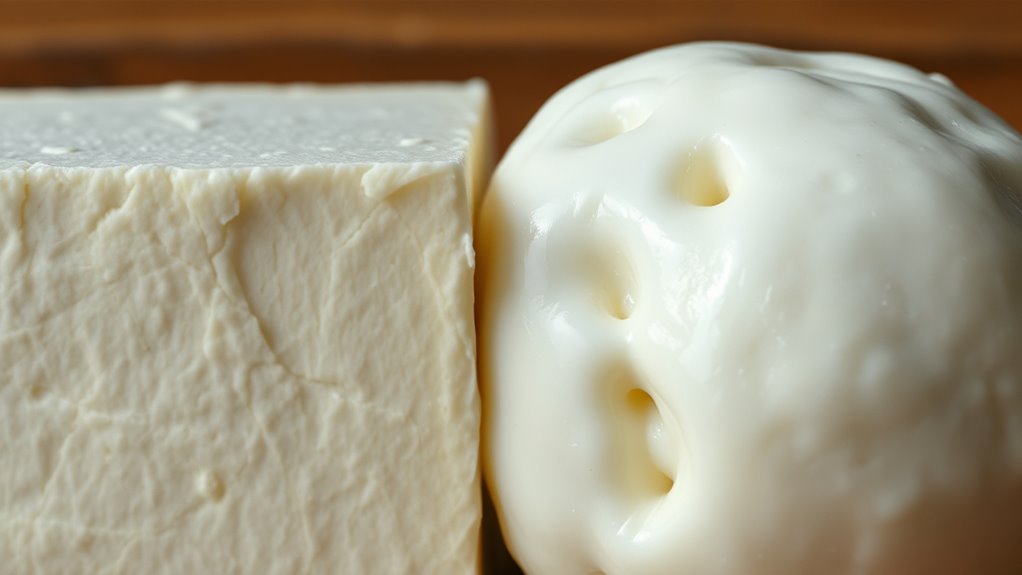
If your mozzarella feels slimy or rubbery, it’s often a sign of improper storage or overprocessing. Discoloration or spots can indicate spoilage or poor quality, so you’ll want to identify the cause and choose better options. Excessive moisture can make your cheese soggy; understanding how to control humidity helps keep it fresh and appealing.
Slimy or Rubberiness
Slimy or rubbery textures often indicate that mozzarella has started to spoil or was improperly stored. This issue can result from excessive moisture exposure or incorrect cheese aging, which hampers natural flavor development. When mozzarella becomes slimy, bacteria may have begun to grow, compromising its safety. Rubberiness can occur if the cheese was stored too long or at the wrong temperature, preventing proper cheese aging and affecting texture. To fix this, guarantee your mozzarella is fresh and stored properly in an airtight container in the fridge. If the cheese shows signs of spoilage, it’s safest to discard it. Proper storage helps maintain the right balance of moisture, supporting flavor development and preventing undesirable textures. Always check expiration dates and keep cheese at a consistent, cool temperature. Additionally, implementing AI-driven quality control measures can help monitor cheese freshness and prevent spoilage.
Discoloration or Spots
Discoloration or spots on mozzarella often signal that the cheese is starting to spoil or was exposed to improper conditions. This issue can result from cheese aging processes that weren’t controlled properly or from inadequate packaging methods. If you notice dark or yellowish spots, it’s a sign the cheese may be developing bacteria or mold, making it unsafe to eat. Proper packaging helps slow down cheese aging and preserves appearance, so check that your mozzarella has been stored correctly. When spots appear, inspect the cheese carefully—if the discoloration is extensive or fuzzy mold is present, it’s best to discard it. To prevent this, always store mozzarella in airtight packaging and consume it before its expiration date. Proper handling and storage are key to maintaining your cheese’s quality. Additionally, understanding storage conditions can help extend the freshness of your mozzarella and prevent spoilage.
Excessive Moisture Content
Excessive moisture in mozzarella can lead to a soggy texture and an unappealing appearance, making it less enjoyable to eat. High moisture levels compromise the cheese consistency, causing it to be overly runny or watery. To fix this, first, drain excess liquid thoroughly and pat the cheese dry with paper towels. If you’re using fresh mozzarella, consider pressing it lightly between paper towels to remove additional moisture. Adjust storage methods to prevent moisture buildup—store mozzarella in a well-ventilated container or wrap it loosely. Avoid overcrowding in the fridge, which can trap humidity. By managing moisture levels carefully, you can maintain the cheese’s proper texture and appearance, ensuring your mozzarella stays firm, moist but not soggy, and visually appealing.
Troubleshooting Melting and Stretching Problems
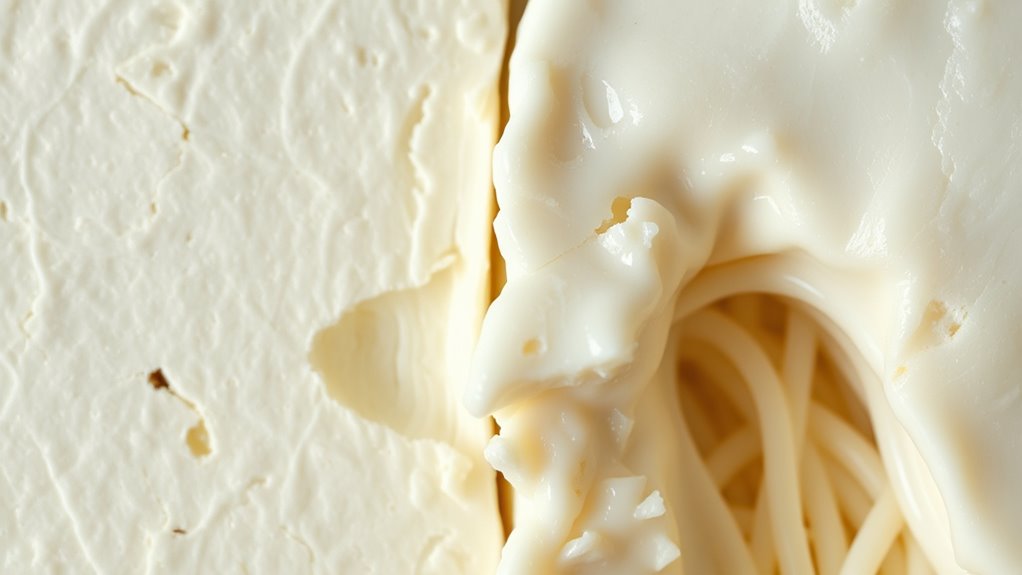
To get your mozzarella to melt and stretch perfectly, you need to focus on temperature control, proper handling, and cooking techniques. If the cheese isn’t melting well, it’s likely due to incorrect heat or how it was prepared. Adjust your approach to these points to achieve the ideal melt every time. Ensuring the right exfoliation can also help improve the overall texture and meltability of your cheese.
Temperature Control Tips
When it comes to melting and stretching mozzarella, controlling the right temperature is essential. Too low, and the cheese won’t melt properly; too high, and it can become rubbery or greasy. For fresh mozzarella, aim for a gentle heat, around 130-140°F, to preserve its delicate flavor profiles. Low moisture mozzarella may require slightly higher temperatures to melt smoothly. Keep in mind that cheese aging impacts how it responds to heat—aged cheeses tend to melt more evenly at higher temperatures. Use a thermometer to monitor your heat and avoid overheating, which can cause the cheese to lose moisture and flavor. Proper temperature control guarantees your mozzarella melts beautifully, with the right stretch and flavor, making your dishes perfect every time.
Proper Cheese Handling
Proper handling of mozzarella is key to achieving the ideal melt and stretch. Start with cheese that’s been properly aged; cheese aging impacts texture and meltability. Fresh mozzarella often offers better stretch, while low-moisture varieties may require different handling. To enhance flavor and ensure even melting, avoid excessive handling or rough cuts, which can cause uneven heat distribution. Keep the cheese at room temperature before cooking, as cold cheese resists melting and stretching. Use a gentle touch when slicing or tearing to prevent breaking the cheese’s delicate proteins. Proper storage also matters—wrap mozzarella tightly and keep it chilled until use. Additionally, understanding the benefits of glycolic acid exfoliating toner can help maintain the overall health of your skin, which can be especially beneficial when handling delicate cheese textures. By handling the cheese carefully and considering its aging process, you’ll improve melt quality and flavor, leading to better results in your culinary creations.
Ideal Cooking Techniques
Achieving perfect melt and stretch in mozzarella depends heavily on choosing the right cooking techniques. To enhance cheese flavor and prevent issues, use gentle heat and avoid overcooking. Properly storing mozzarella in airtight containers helps maintain moisture and quality, which directly impacts melting performance. For ideal results, consider these techniques:
| Technique | Description | Result |
|---|---|---|
| Low and slow | Cook at a gentle temperature, avoiding high heat | Even melting, better stretch |
| Pre-shredding | Shred cheese before heating to distribute heat evenly | Faster, more uniform melt |
| Use fresh cheese | Always use fresh mozzarella for better stretch | Improved cheese flavor and texture |
Applying these methods ensures your mozzarella melts beautifully with ideal stretch and flavor. Additionally, selecting quality cheese can significantly influence the outcome of your melt and stretch.
Identifying and Preventing Mold and Spoilage
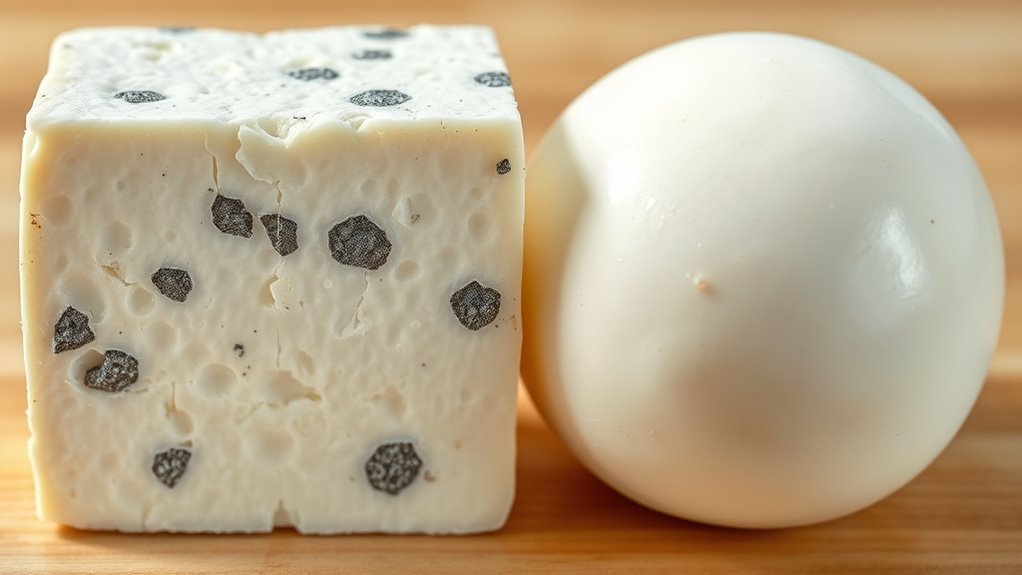
Mold and spoilage are common issues that can compromise the quality and safety of mozzarella. Microbial contamination often leads to mold growth, especially if storage conditions aren’t ideal. To prevent this, always keep your cheese refrigerated at the proper temperature and store it in an airtight container. Check for any discoloration, fuzzy spots, or an off smell, as these are signs of spoilage. Proper handling, like using clean utensils and avoiding cross-contamination, also reduces mold risk. Remember, mozzarella is highly perishable, so consume it within recommended timeframes. Regularly inspecting your cheese and maintaining best storage conditions help you catch issues early and keep your mozzarella fresh and safe to eat. Additionally, understanding Gold IRA options can help diversify your investments and protect your assets over time.
Dealing With Excess Moisture or Dryness in Your Cheese
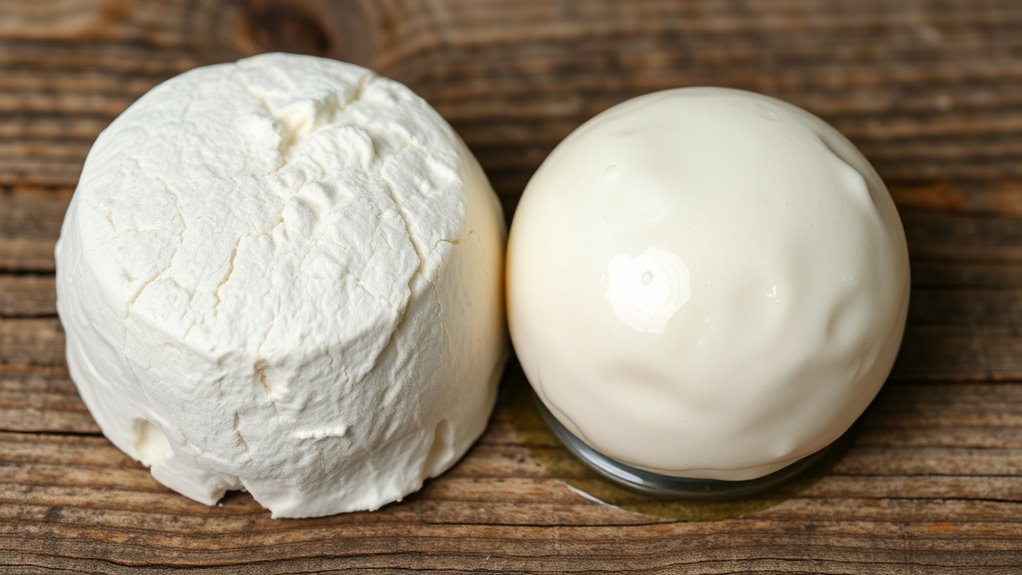
When mozzarella becomes too dry or develops excess moisture, it can affect both texture and flavor. To address dryness, try gently rehydrating your cheese by soaking it briefly in cold, salted water, which can restore moisture and improve mouthfeel. For excess moisture, draining or patting the cheese dry helps prevent a soggy texture. Proper cheese aging plays a role in balancing moisture levels, as it allows flavors to develop fully without compromising texture. If your cheese is too dry, adding a small amount of brine can boost flavor and maintain moisture. Conversely, controlling moisture content during cheese making ensures better flavor enhancement and ideal texture, making your mozzarella more enjoyable in salads, melts, or simply on its own. Additionally, understanding the moisture content in your cheese during production can help prevent these issues from occurring in the first place.
Tips for Proper Storage and Handling
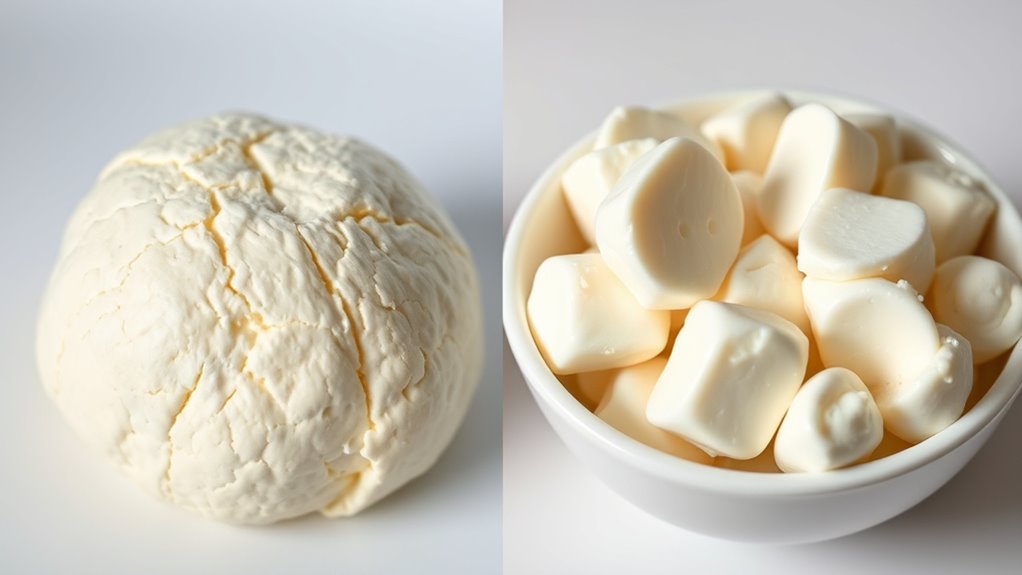
Proper storage and handling are essential to keep your mozzarella fresh and flavorful. To prevent spoilage and guarantee ideal cheese aging, always use airtight storage containers that maintain moisture and prevent contamination. When storing fresh mozzarella, keep it in its brine or lightly salted water to preserve texture and flavor, changing the liquid regularly. For low moisture mozzarella, wrap it tightly in plastic wrap or place it in a sealed container to avoid drying out. Handle the cheese with clean hands or utensils to prevent bacteria transfer. Keep mozzarella refrigerated at the right temperature, ideally between 34-38°F (1-3°C). Electric bikes are a popular eco-friendly transportation option, and using proper storage methods for your cheese can be just as crucial for maintaining quality and longevity. Proper storage not only prolongs shelf life but also preserves its delicate taste and texture, making your cheese experience consistently enjoyable.
Recognizing Freshness and Quality Indicators
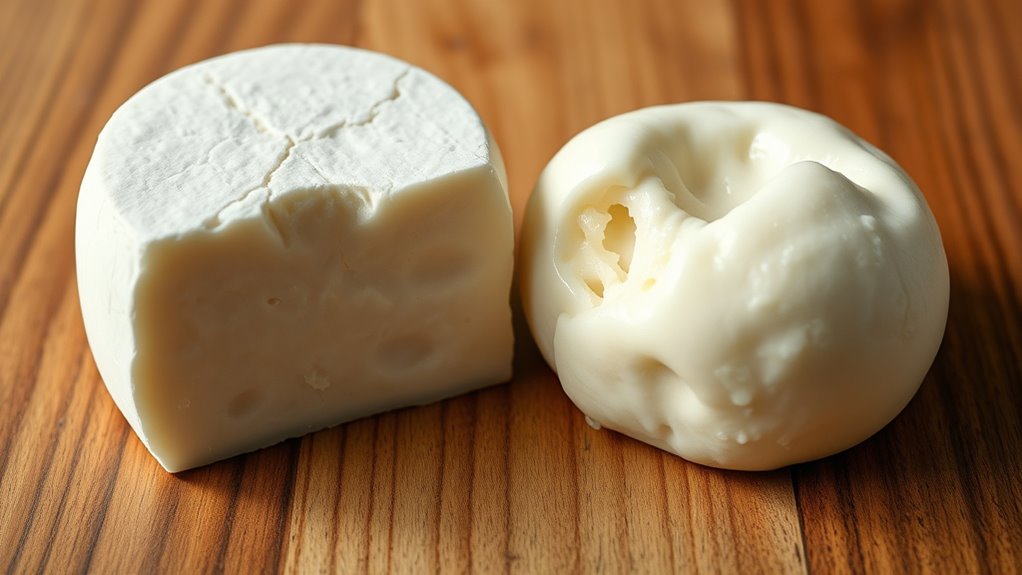
To determine if mozzarella is fresh and of good quality, look for visual and tactile cues that signal its condition. Fresh mozzarella should have a moist, shiny surface with a soft, pliable texture. Check the moisture levels; too dry or cracked cheese indicates it’s past its prime. Feel the cheese: it should be firm yet yield slightly under pressure, not overly hard or slimy. The flavor profile of fresh mozzarella is mild, slightly sweet, and milky, with no sour or off-putting smells. Quality cheese will have a clean, fresh aroma. Avoid mozzarella with discoloration, excessive dryness, or strong odors, as these signs suggest it’s degraded or not fresh. Recognizing these indicators helps ensure you select mozzarella that’s flavorful and of good quality.
Adjusting Recipes Based on Mozzarella Type
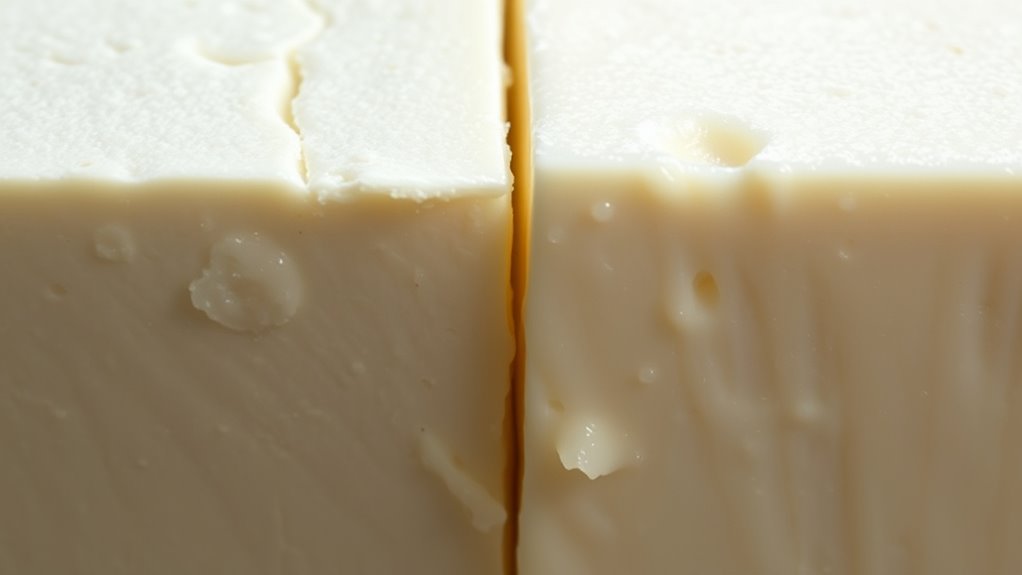
Different types of mozzarella vary in moisture content, saltiness, and meltability, so adjusting your recipes accordingly guarantees the best results. Fresh mozzarella has a delicate flavor profile and high moisture, making it ideal for salads and caprese. Low-moisture mozzarella offers a firmer texture and richer flavor through cheese aging, perfect for baking. Use this quick guide to adapt your dishes:
| Mozzarella Type | Characteristics | Best Use |
|---|---|---|
| Fresh | High moisture, mild flavor | Salads, light dishes |
| Low Moisture | Firmer texture, developed flavor | Melts well, baked dishes |
Knowing your mozzarella type helps you tweak cooking times and seasoning, ensuring optimal meltability and flavor.
Frequently Asked Questions
Can I Substitute Low Moisture Mozzarella for Fresh Mozzarella in Recipes?
You can substitute low moisture mozzarella for fresh mozzarella, but expect some differences. The cheese flavor will be milder, and the texture differs—low moisture is firmer and less creamy, which might affect your dish’s overall feel. Fresh mozzarella melts quickly and adds a soft, moist texture, while low moisture holds shape better. Adjust your recipe accordingly, especially if you want that authentic fresh mozzarella creaminess and flavor.
How Long Does Each Type of Mozzarella Last Before Spoiling?
Mozzarella’s modern_maturity varies: fresh mozzarella lasts about 1 to 2 weeks, while low moisture mozzarella extends to 2 to 3 weeks when refrigerated properly. Pay attention to spoilage indicators like slimy surfaces, sour smell, or mold. You should consume it before expiration periods lapse to guarantee freshness. Remember, timely tasting and thorough checking keep your cheese choices charmingly clean, preventing spoilage and maintaining marvelous munching moments.
Is It Safe to Eat Moldy Mozzarella Cheese?
You shouldn’t eat moldy mozzarella cheese, as mold can produce harmful toxins. To guarantee cheese safety, remove the mold completely if it’s hard cheese; however, with soft varieties like mozzarella, it’s safest to discard the entire piece. Mold removal isn’t effective for soft cheeses because mold spores can penetrate deeper. Always prioritize safety and avoid consuming cheese that shows mold to prevent health risks.
What Are the Best Techniques to Prevent Dryness During Storage?
Your cheese deserves to stay as fresh as the day you bought it! To prevent dryness, focus on moisture retention through proper storage. Keep mozzarella in an airtight container or tightly wrapped in plastic wrap to lock in humidity. Store it in the coldest part of your fridge, ideally in an airtight bag or container, and consider submerging it in brine or water for extra moisture retention, ensuring it stays delicious and moist.
How Does Moisture Content Affect Melting and Browning?
Moisture content greatly impacts melting quality and browning. When you use high-moisture mozzarella, it melts smoothly and evenly, creating a gooey, appealing texture. Conversely, low-moisture mozzarella melts less readily and browns more quickly, which can lead to uneven cooking. If you want perfect melting and browning, choose the right mozzarella based on your dish, and guarantee proper moisture levels to achieve the desired texture and appearance.
Conclusion
Understanding the differences between low moisture and fresh mozzarella helps you troubleshoot issues and choose the right cheese for your recipes. Did you know that mozzarella is one of the most popular cheeses worldwide, with over 2 million tons produced annually? By properly storing and handling your mozzarella, you can enhance its flavor and texture every time. Keep experimenting and trusting your senses—you’ll master your cheese in no time!
Fall Picks
fall essentials
As an affiliate, we earn on qualifying purchases.