
If you want to perfect high-altitude pizza baking, this playbook is your ultimate guide. It shows how to adjust ingredient ratios, tweak yeast and proofing times, and control oven temperature to overcome thinner air challenges. You’ll learn to refine dough handling, enhance crust color and texture, and select toppings that cook evenly. By applying these advanced tweaks, you’ll produce consistently delicious pizzas—plus, you’ll discover even more secrets as you explore further.

Get baking supplies delivered free with Prime
- Fast, free delivery on millions of items
- Prime Video, Amazon Music and more included
- Member-only deals all year
Key Takeaways
- Adjust flour type, hydration, and yeast levels to compensate for rapid rising and moisture loss at high altitude.
- Use higher oven temperatures and proper baking tools to ensure crust color, texture, and doneness.
- Modify dough kneading, resting, and proofing times to improve elasticity and flavor development.
- Incorporate environmental controls like humid proofing environments to maintain dough consistency.
- Experiment with creative toppings, presentation techniques, and flavor layering to develop signature high-altitude pizzas.
Understanding High Altitude Baking Challenges
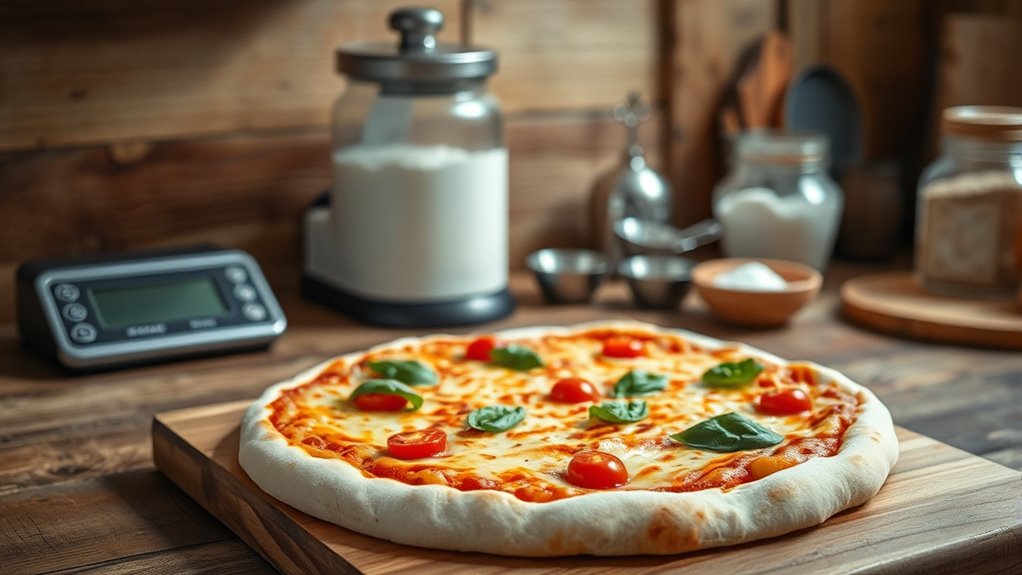
Baking at high altitudes presents unique challenges because the thinner air affects how ingredients behave during cooking. You’ll need an altitude adjustment to counteract these effects. One major issue is maintaining dough consistency; the lower air pressure causes dough to rise faster and become more fragile. Without proper adjustment, your pizza dough can turn out too airy, dry, or difficult to work with. The reduced boiling point also means liquids evaporate more quickly, impacting moisture levels. Understanding these challenges helps you modify your recipes effectively. By recognizing how altitude influences dough behavior, you can adapt your techniques to achieve the desired texture and rise. Additionally, altitude-specific recipes can provide tailored guidance for optimal results. This foundational knowledge ensures your high-altitude pizzas turn out just as delicious as those baked at sea level.
Adjusting Flour and Hydration Ratios for Better Dough Consistency
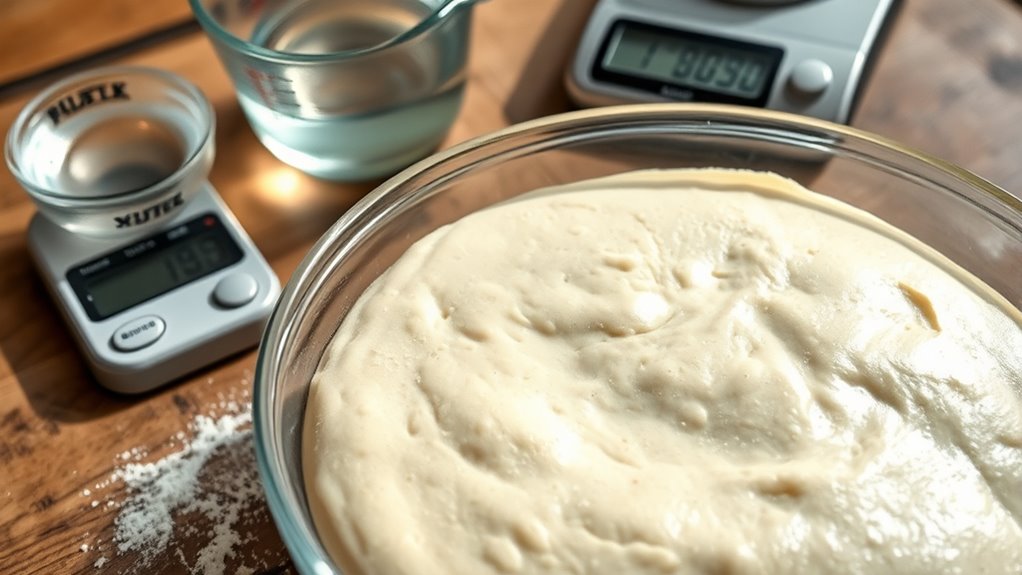
Choosing the right flour and adjusting hydration levels are key to achieving consistent dough at high altitude. You should experiment with different flour types and tweak water amounts to find what works best for your environment. Small changes can make a big difference in dough texture and handling. Additionally, incorporating techniques such as proper mixing and resting times can further improve dough quality in high-altitude conditions, especially when considering bedroom design principles like creating a cozy and comfortable space.
Flour Selection Strategies
Adjusting your flour and hydration ratios is essential for achieving consistent, high-quality dough at high altitudes. Choosing the right grain types and flour protein content directly impacts dough strength and elasticity. Opt for high-protein flours, like bread or bread-style flours, which provide better gluten development and structure. Lower-protein flours, such as pastry or cake types, may produce softer doughs that lack the necessary chew. At high altitudes, you may need to experiment with different grain types to find the best balance for your environment. Keep in mind that the flour’s protein content influences how much water your dough can absorb, so adjusting your hydration accordingly will help you achieve ideal consistency and stretchability. Selecting the appropriate projector technology can also influence the visual quality of your pizza presentation. Choose the right flour to ensure your dough rises perfectly and maintains its shape.
Hydration Adjustment Techniques
Since high altitudes cause rapid evaporation and less atmospheric pressure, tweaking your hydration levels is essential for dough consistency. You need to adjust the water content to optimize water absorption by the flour, preventing a dry or overly sticky dough. Increasing hydration slightly can compensate for moisture loss, but avoid overdoing it, as it can weaken gluten structure. Pay attention to electrolyte balance, as imbalances affect dough elasticity and fermentation. Adding a pinch of salt or minerals helps maintain proper electrolyte levels, resulting in more stable dough handling. Experiment with gradual adjustments, noting how changes influence dough feel and fermentation. Fine-tuning hydration and considering water absorption ensures your high-altitude pizza dough maintains the right consistency and develops better structure during baking. Incorporating best anime movies into your routine can provide a relaxing and inspiring break from baking challenges.
Modifying Yeast Quantities and Proofing Times
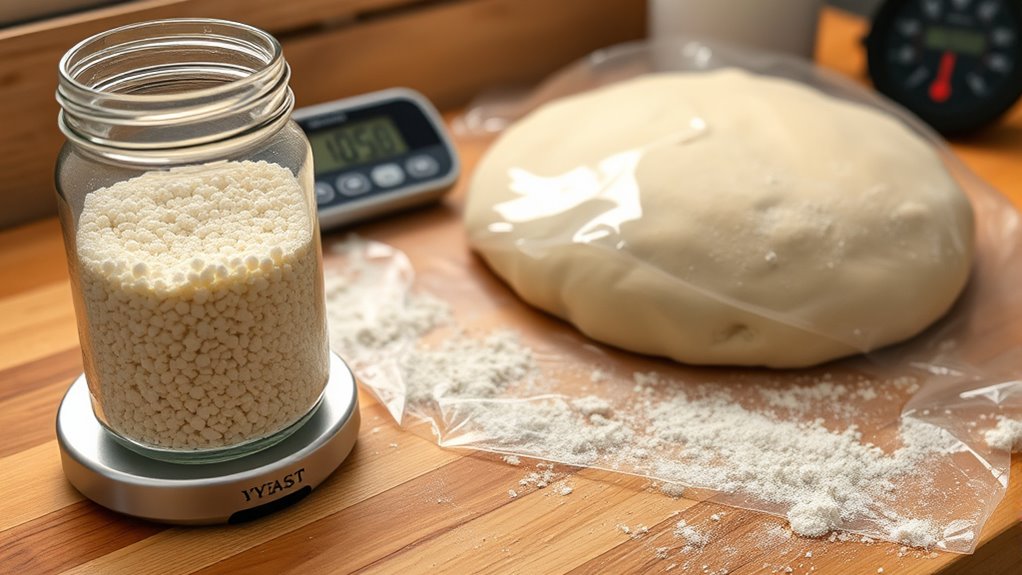
Adjusting the amount of yeast and proofing times can considerably improve your pizza crust at high altitude. By increasing or decreasing yeast, you control fermentation speed, while extending proofing allows flavors to develop fully. Keep an eye on fermentation rates to find the perfect balance for your environment. Properly managing these factors can also help mitigate the effects of regulatory compliance challenges on your baking process.
Adjusting Yeast Amounts
When baking high-altitude pizza, changing the amount of yeast you use can considerably impact your dough’s rise and texture. Adjusting yeast quantity directly influences fermentation speed; more yeast accelerates fermentation, leading to faster rising times, while less yeast slows it down, which can improve flavor development. At high altitudes, you might want to reduce yeast slightly to prevent over-fermentation and a gassy crust. Conversely, if your dough isn’t rising enough, increasing yeast can help. Be careful not to add too much, as excessive yeast can cause uneven rise or yeasty flavors. Experiment with small adjustments to find the perfect yeast quantity that balances rise and flavor, ensuring a consistent and desirable high-altitude pizza crust. Recognizing soulmate angel numbers can also guide you in understanding the best timing for trying new techniques.
Extending Proofing Duration
Extending the proofing duration can be a powerful way to improve your high-altitude pizza dough, especially when you modify yeast quantities. By allowing more time for fermentation, you give the dough a chance to develop better dough elasticity and flavor complexity. Adjust your proofing environment to be slightly cooler or more humid if needed, as this helps slow fermentation without sacrificing rise. Longer proofing times also enhance gluten development, resulting in a more resilient dough that holds its shape better during baking. Be patient—this extended fermentation allows natural enzymes to break down starches and proteins, producing a tastier, more refined crust. Additionally, controlling proofing conditions can help optimize fermentation rate for improved dough texture. With careful control over proofing duration, you’ll achieve a dough that’s both airy and chewy, perfect for high-altitude baking.
Monitoring Fermentation Rate
Monitoring fermentation rate is key to fine-tuning your high-altitude pizza dough. By paying close attention to fermentation monitoring, you can gauge how actively your dough is respiring, which reflects yeast activity. Faster dough respiration indicates vigorous fermentation, possibly requiring reduced yeast quantities or shorter proofing times. Conversely, sluggish fermentation suggests you should increase yeast or extend proofing. Keep an eye on dough expansion, bubbles, and smell as visual cues for fermentation progress. Adjusting yeast amounts and proofing durations based on fermentation monitoring guarantees ideal dough development without overproofing or underproofing. At high altitude, these tweaks are essential because reduced atmospheric pressure accelerates yeast activity. Precise control over dough respiration helps you achieve consistent texture and flavor, ultimately improving your pizza results. Monitoring fermentation rate provides valuable feedback that guides these adjustments effectively.
Fine-Tuning Dough Kneading and Resting Procedures
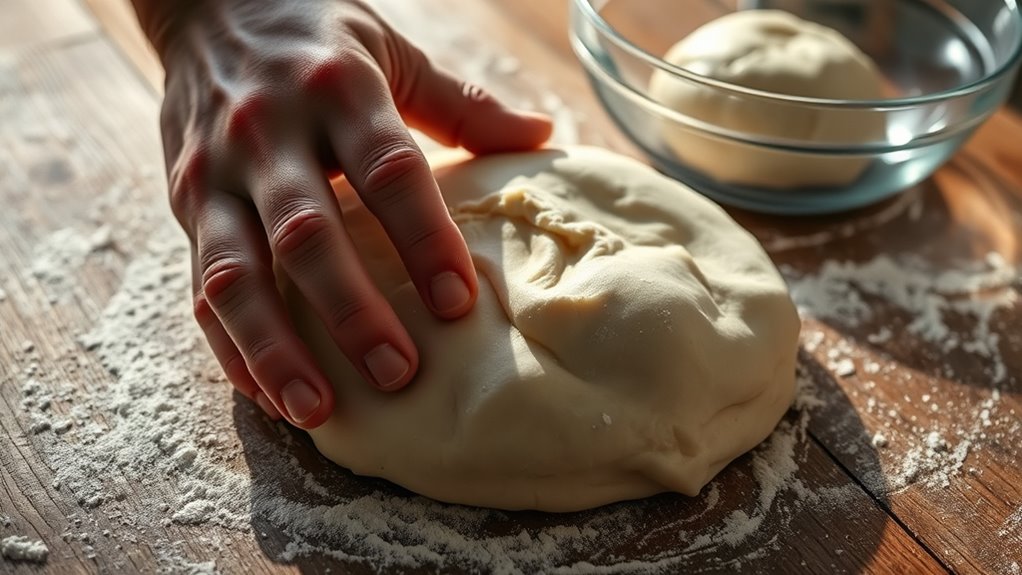
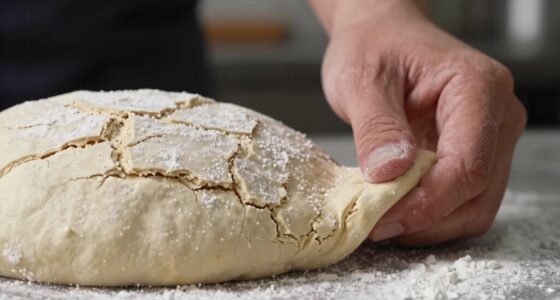
Fine-tuning your dough kneading and resting processes is essential to achieving the perfect high-altitude pizza crust. Proper kneading develops dough elasticity, which ensures a light, airy texture, while also promoting even gluten formation. Be mindful not to over-knead, as this can toughen the dough, making it difficult to stretch. Resting the dough long enough allows gluten strands to relax, improving stretchability and shaping ease. Additionally, a proper resting period enhances flavor development, giving your crust a richer, more complex taste. Use a slightly longer resting time at high altitudes to compensate for quicker fermentation and gas escape. Incorporating a proper resting period can further improve dough extensibility and flavor. Consistent kneading and resting routines help you control dough consistency, resulting in a well-structured, flavorful crust every time.
Altering Leavening Agents and Their Impact on Rise

Adjusting the leavening agents in your high-altitude pizza dough can markedly influence how well it rises and develops structure. By experimenting with different types or amounts, you control fermentation and gas production, which impacts dough lift and texture. For example, increasing yeast may boost fermentation control, enhancing rise, but too much can cause over-proofing. Baking powder adjustments can also help counteract altitude-related rapid rising. Use this table to guide your tweaks:
| Leavening Agent | Effect at High Altitude |
|---|---|
| Yeast | More fermentation, better rise with careful control |
| Baking Powder | Adjustments mitigate rapid rise and collapse |
| Baking Soda | Less common, but can influence fermentation balance |
| Commercial Mixes | Pre-measured for altitude, ideal for consistency |
Additionally, understanding how dough structure responds to leavening adjustments can help you fine-tune your recipe for optimal results.
Optimizing Oven Temperature and Baking Duration
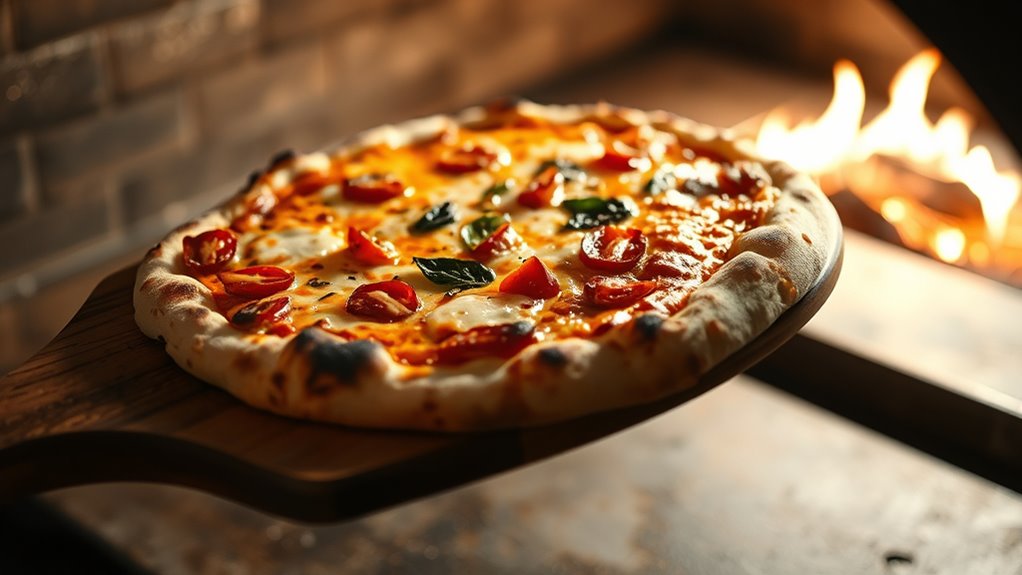
To get the best crust, you need to adjust your oven temperature carefully and set the right baking time. Keep an eye on your pizza as it cooks to make sure it doesn’t over- or under-bake. Monitoring the process guarantees you’ll achieve that perfect balance of crispiness and tenderness.
Adjusting Temperature Settings
Since oven temperature and baking time directly influence your pizza’s crust and toppings, it’s essential to set these parameters carefully. Start by checking your oven calibration, as inaccurate readings can cause temperature fluctuation, leading to uneven baking. Use an oven thermometer to verify the actual temperature and adjust the dial accordingly. High-altitude ovens often require higher temperatures, so tweak your settings based on your calibration findings. Keep in mind that even small fluctuations can impact crust development and topping caramelization. Consistent temperature control ensures your pizza bakes evenly and achieves the perfect crust. By maintaining precise oven settings and minimizing temperature fluctuation, you’ll maximize your high-altitude baking success. Proper adjustment leads to a consistently delicious, well-cooked pizza every time.
Timing for Perfect Crust
Achieving the perfect crust at high altitude depends heavily on timing your bake just right. You need to balance oven temperature and baking duration to optimize dough elasticity and ingredient stability. Baking too long can dry out the crust, while too short a bake leaves it undercooked. Set your oven to a high enough temperature to promote rapid oven spring, but avoid overshooting, which can cause uneven browning. For timing, start checking your pizza around the minimum recommended bake time, and use visual cues like a golden crust and bubbly cheese as guides. Proper timing ensures the dough maintains its elasticity, resulting in a light, crisp crust that’s cooked through without becoming tough or dry. Precision here is key to achieving that high-altitude pizza perfection.
Monitoring Bake Progress
Monitoring your bake closely is essential for ensuring your pizza reaches perfection at high altitude. Keep an eye on the crust’s color and bubbling to judge doneness, adjusting oven temperature if needed. Since ingredient substitution can affect baking time and heat response, track how these changes influence your pizza’s progress. Use a thermometer to verify oven temperature, preventing over- or under-baking. Proper monitoring allows you to tweak baking duration for ideal results, ensuring the cheese melts evenly and the crust crisps perfectly. This attention to detail not only prevents burnt spots but also enhances flavor, as precise baking times preserve ingredient freshness. By staying attentive, you can fine-tune your process, achieving a flavorful, well-balanced pizza every time at high altitude.
Enhancing Crust Texture and Color at High Elevations
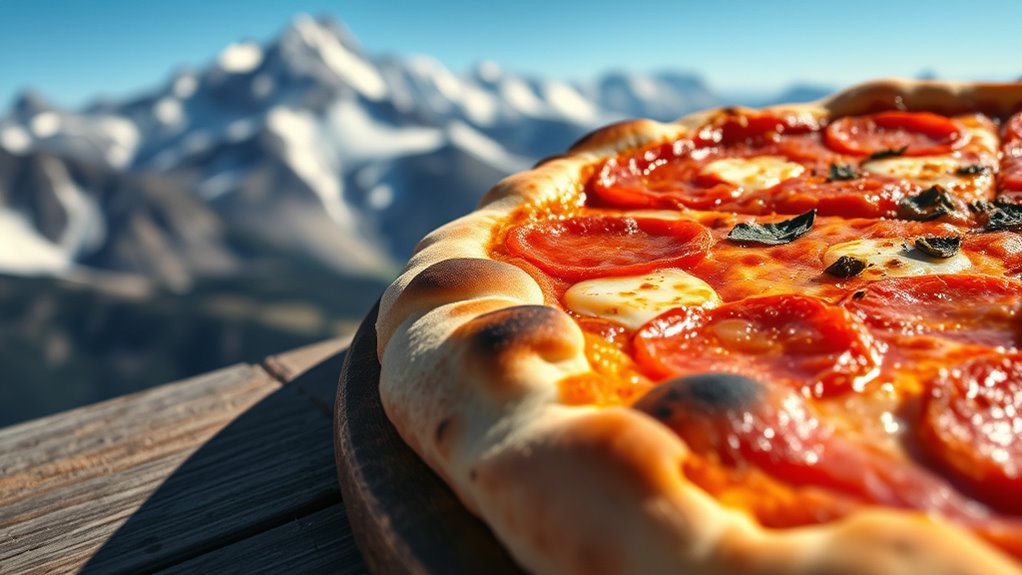
Adjusting your crust to achieve the perfect texture and color at high elevations requires specific tweaks to your baking process. To improve dough elasticity, consider slightly increasing hydration, which helps the dough stretch better and develop a tender crumb. This also promotes even fermentation, enhancing flavor development. Be mindful of bake time and oven temperature; a hotter oven can offset rapid crust browning caused by reduced atmospheric pressure. Using a baking stone or steel ensures even heat transfer, resulting in a crisp, golden crust. Additionally, a light brush of olive oil before baking can aid in achieving a rich color and improved crust texture. By fine-tuning these elements, you’ll produce a crust that’s both flavorful and visually appealing at high altitudes.
Selecting and Managing Toppings for Even Cooking
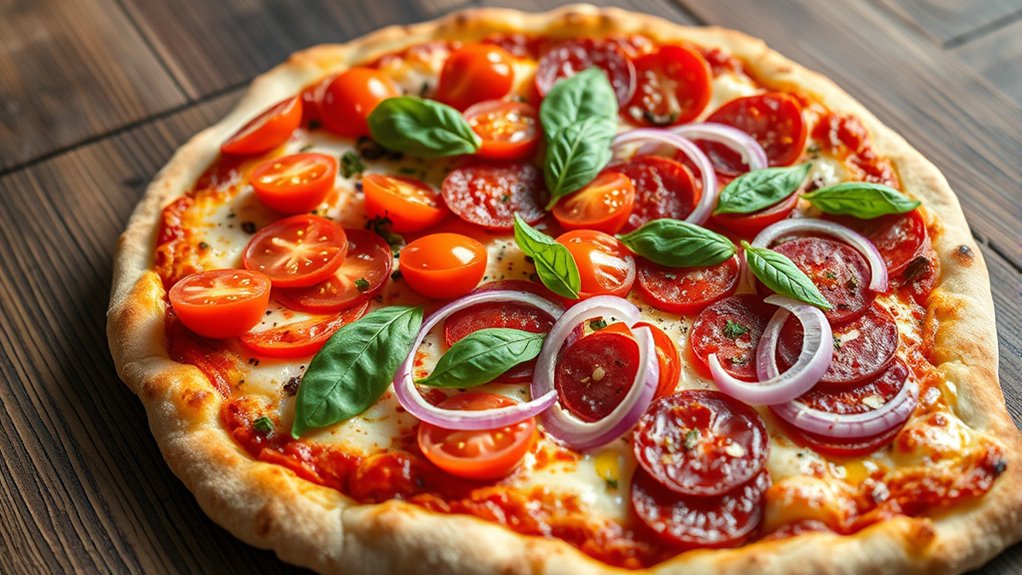
Choosing and managing toppings properly guarantees your pizza cooks evenly and looks appealing. Start with careful topping selection; avoid overly thick or high-moisture ingredients that can hinder even cooking. Instead, opt for ingredients that cook at similar rates, like pre-cooked or sliced items. Effective ingredient layering is essential—place moisture-rich toppings under cheese or other dry ingredients to prevent sogginess and ensure heat penetrates evenly. Spread toppings uniformly, avoiding clumps that can cause uneven cooking or burning. By controlling the quantity and placement of each topping, you promote consistent heat transfer across the pizza. Remember, balancing ingredient types and layering them thoughtfully helps achieve a perfectly cooked, visually appealing result at high altitudes.
Troubleshooting Common High Altitude Pizza Issues
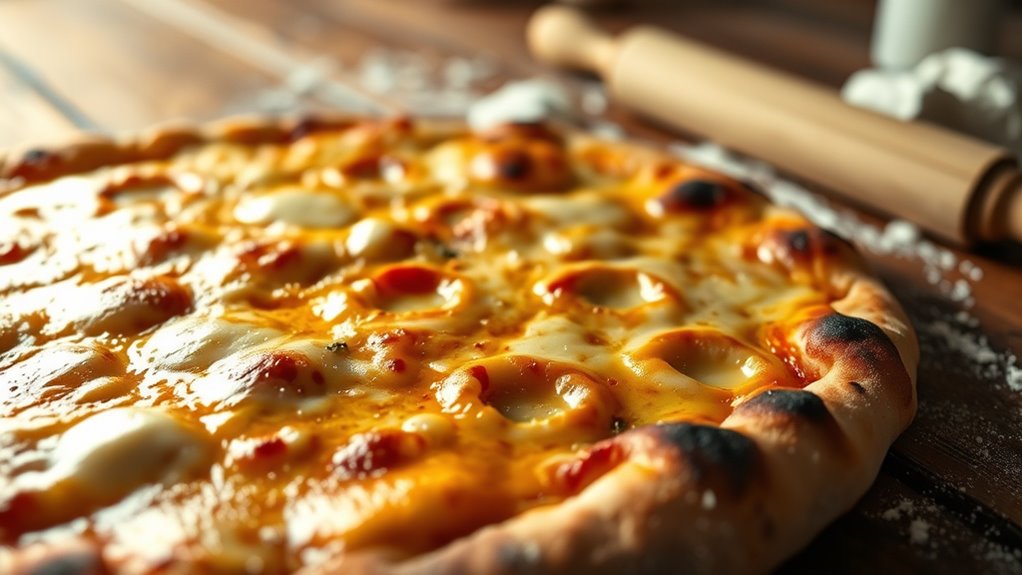
High altitude baking presents unique challenges that can cause common pizza issues like undercooked crust, sogginess, or uneven toppings. To troubleshoot, start by adjusting ingredient substitutions—using less water or oil can help improve crust firmness and prevent sogginess. If the crust remains undercooked, increase baking time or raise the oven temperature slightly. For flavor enhancements, consider adding a touch of sugar or malt to improve browning and depth. If toppings cook unevenly, try pre-cooking certain ingredients or spreading toppings more evenly to avoid sogginess. Remember, small tweaks make a big difference. Testing different ingredient substitutions and flavor adjustments allows you to pinpoint what works best at high altitude, ensuring your pizza turns out perfectly cooked and flavorful every time.
Tips for Experimentation and Personalizing Your Pizza Recipes
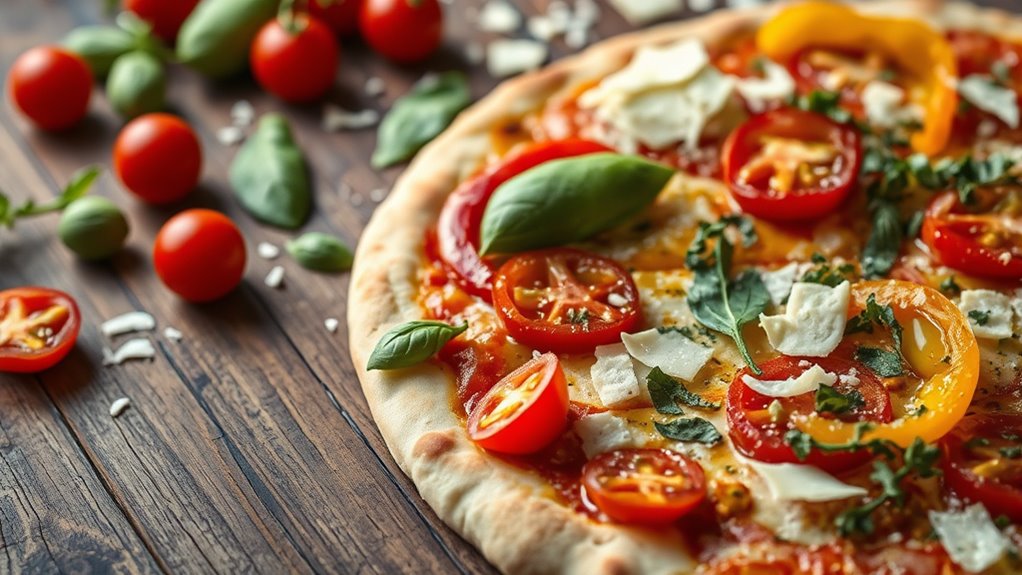
Experimenting with your pizza recipes is the best way to discover what works perfectly for your taste and altitude conditions. Embrace trial and error to develop signature flavors that stand out. Try mixing innovative flavor combinations, like spicy honey and goat cheese or smoked salmon with dill, to elevate your pies. Don’t shy away from creative presentation ideas—use colorful toppings, unique shapes, or layered ingredients to make your pizza visually appealing. Keep notes on each tweak so you can refine your process. To keep things exciting, consider:
- Combining unexpected ingredients for bold flavors
- Experimenting with different dough techniques for texture variation
- Using vibrant garnishes to enhance visual appeal
Personalization makes your pizza uniquely yours and ensures every bake is a new adventure.
Frequently Asked Questions
How Can I Prevent My Pizza From Becoming Too Dry at High Altitudes?
To prevent your pizza from becoming too dry at high altitudes, focus on moisture retention by adjusting your dough recipe with a bit more water or oil. Use a slightly lower oven temperature and shorter baking time to preserve moisture and improve crust texture. Cover the pizza with foil during the first part of baking if needed. These tweaks help keep your pizza moist, tender, and with a perfect crust even at higher elevations.
What Are the Best Types of Flour for High-Altitude Pizza Baking?
You should use high-protein bread flour or bread flour blends for high-altitude pizza baking. These flours promote better gluten formation, which gives your crust strength and elasticity. Keep hydration levels slightly higher than usual because the thinner air causes quicker moisture loss. Using a flour with good gluten content helps your dough hold up well at altitude, ensuring a chewy, well-structured crust without becoming dry or tough.
How Does Altitude Affect Cheese Melting and Topping Stability?
Altitude lifts your pizza to new heights, but it can cause cheese to lose its melt and toppings to slide off like runaway trains. You’ll notice less cheese stretch and weaker topping adhesion because the lower air pressure bubbles your cheese faster, making it less gooey and more prone to sliding. To combat this, try using cheese with higher moisture content and adjusting baking times, so your toppings stay firmly in place, deliciously intact.
Can I Use Alternative Leavening Agents for Better Rise at High Elevations?
Yes, you can use alternative leavening agents like baking soda, baking powder, or even natural options like yeast for better rise enhancement at high elevations. These alternatives help compensate for reduced atmospheric pressure, ensuring your dough puffs up nicely. Experiment with different leavening amounts to find the ideal rise, and consider combining them for a more stable and airy crust that holds toppings well.
What Adjustments Are Needed for Gluten Development in High-Altitude Doughs?
You need to boost gluten strength by carefully adjusting dough hydration, since higher hydration promotes better gluten development at altitude. Use slightly more water to encourage elasticity and extensibility in the dough, but avoid overdoing it, as excess moisture can weaken structure. Incorporate gentle kneading and longer resting times to develop gluten thoroughly. These tweaks help your dough rise well, resulting in a light, airy crust with ideal texture.
Conclusion
Mastering high altitude pizza is like tuning a fine instrument—you’ll need to adjust your techniques, but with patience, you’ll create a symphony of flavors. Keep experimenting, trust your senses, and don’t get discouraged by setbacks. Every tweak brings you closer to pizza perfection, even when the altitude challenges try to throw you off course. Soon, you’ll be crafting pies that rise beautifully and taste even better—your culinary mountain summit awaits!
Halloween Picks
halloween
As an affiliate, we earn on qualifying purchases.