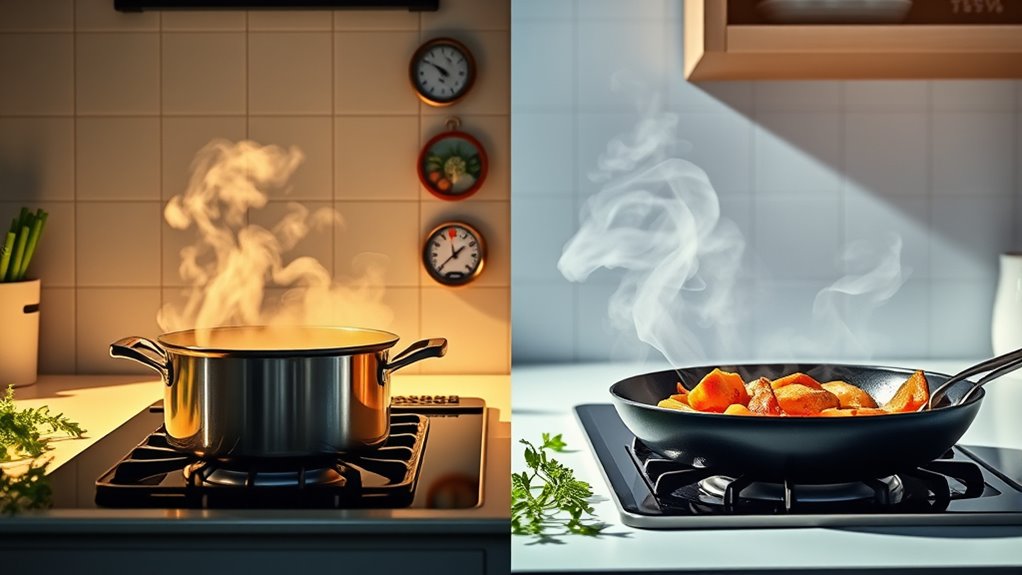
On hot days, your appliances tend to cook faster, so you may need to lower the heat or cut cooking time to prevent overcooking. Conversely, cool days can cause heat to dissipate more quickly, meaning you should increase the heat or extend cooking times for even results. Adjusting for outdoor temperature involves monitoring your cookware and appliances closely. Keep exploring these tips to master consistent cooking, regardless of the weather.
Key Takeaways
- Increase cooking time or heat on cooler days to compensate for heat loss and slower heat transfer.
- Reduce cooking duration or heat on hot days to prevent overcooking due to faster heat retention.
- Use insulated cookware to maintain consistent temperatures regardless of outdoor conditions.
- Preheat appliances longer on cold days and monitor closely on hot days for optimal results.
- Adjust stove or oven settings based on ambient temperature to ensure even and thorough cooking.
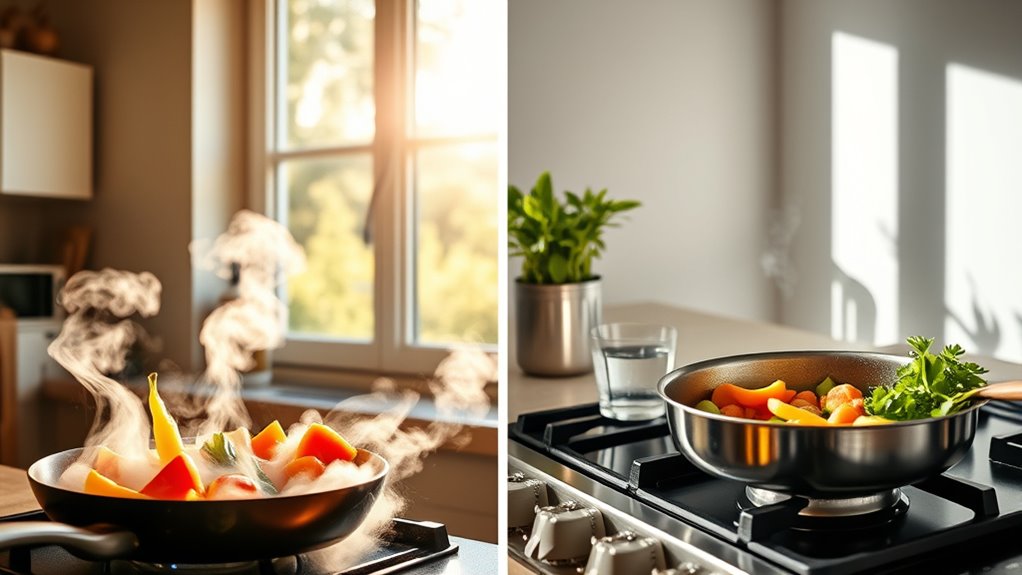
Adjusting cooking times is essential when you’re working with different recipes, appliances, or ingredient variations. One of the most overlooked factors that influence cooking times is the ambient temperature, especially when cooking on hot versus cool days. When the weather shifts, your kitchen environment changes, which can affect how your food cooks. To maintain consistent results, you need to consider temperature adjustments not only for your ingredients but also for your cookware efficiency. Cooler days often mean your kitchen is less warm, so heat may dissipate faster, requiring longer cooking times. Conversely, on hot days, your kitchen might retain heat better, possibly leading to faster cooking if you don’t adjust accordingly.
Your cookware plays a critical role in this process. The efficiency of your pots and pans impacts how heat is transferred to your food. For instance, high-quality, well-insulated cookware tends to hold heat better, meaning it can help compensate for cooler ambient temperatures. When it’s chilly outside or in your kitchen, you might notice your usual cooking times are a bit off because your cookware isn’t reaching or maintaining the ideal temperature as quickly. In such cases, increasing heat slightly or extending cooking time can ensure your dishes are cooked thoroughly. Conversely, on hot days, your cookware may heat quicker, so you should be vigilant to prevent overcooking or burning.
Temperature adjustments also involve understanding how your stove and oven respond to external conditions. For example, an electric stove may take longer to reach the desired temperature when it’s cold, while a gas stove might heat up faster but also lose heat more quickly in a cool environment. This means you might need to preheat longer or adjust your burner settings to compensate. On hot days, your appliances might run more efficiently, but you also risk overheating your kitchen or your food if you don’t dial down the heat. Monitoring and adjusting your cooking times accordingly helps ensure your food is cooked evenly and safely. Additionally, incorporating remote hackathons or virtual collaboration tools can help you share and learn new cooking techniques from a community of enthusiasts, even if you’re experimenting on different days.
Frequently Asked Questions
How Does Humidity Affect Cooking Times?
Humidity impact markedly influences your cooking times by affecting moisture content in ingredients. When humidity is high, foods tend to retain more moisture, which can make them take longer to cook or require adjustments in temperature. Conversely, low humidity causes foods to lose moisture faster, possibly speeding up cooking. By understanding these humidity effects, you can better gauge when to extend or shorten your cooking times for perfect results.
Should I Adjust Oven Temperature on Hot Days?
Think of your oven as a compass needing calibration; on hot days, you may need to adjust the temperature slightly lower to prevent overcooking. Your kitchen’s insulation plays a role too, trapping heat and affecting cooking times. Check your oven’s calibration regularly, especially when the weather shifts, and consider lowering the temperature by a few degrees to maintain perfect results without overdoing it.
Do Outdoor Grills Require Different Cooking Times in Summer?
Yes, outdoor grills often need different cooking times in summer. You should pay attention to grill preheating and charcoal ignition, as hot weather can cause temperatures to rise quickly, making your grill hotter than usual. This means you might need to reduce cooking times slightly or adjust the heat to avoid overcooking. Always monitor your food closely, especially during peak summer heat, to guarantee perfect results.
How Does Ambient Temperature Influence Simmering or Boiling?
A watched pot never boils, but ambient heat definitely influences simmering or boiling. When temperatures are higher, ambient heat boosts the cooking temperature, making your food cook faster and potentially affecting cooking consistency. Conversely, cooler days might slow down the process. So, you should keep an eye on your stove and adjust your simmering or boiling times accordingly to maintain the right consistency and avoid overcooking.
Is It Necessary to Refrigerate Ingredients Longer in Warm Weather?
Yes, you should refrigerate ingredients longer in warm weather to guarantee ingredient freshness and food safety. Hot temperatures speed up bacterial growth, so keeping perishable items cold helps prevent spoilage. Always store ingredients promptly and check for signs of spoilage before use. Proper refrigeration maintains freshness and reduces the risk of foodborne illnesses, making your meals safer and more enjoyable, especially during warmer days.
Conclusion
Whether it’s a hot day or a cool one, adjust your cooking times accordingly. Embrace the heat with shorter cooking times, and welcome the chill with longer ones. Let the temperature guide your pace, matching your methods to the weather’s mood. Keep your eye on the clock, stay flexible, and cook with confidence. By tuning into the environment, you’ll serve perfectly cooked meals every time, no matter the weather’s dance.