
On rainy days, protecting your oven and maintaining a steady temperature mainly depends on good insulation and moisture control. Make sure your oven is well-insulated to lock in heat and prevent cold air from affecting it. Keep your kitchen ventilated and use seals around doors and vents to block moisture intrusion. Monitoring the temperature with a reliable oven thermometer helps you make adjustments as needed. Keep these tips in mind, and you’ll discover more ways to perfect your pizza on gloomy days.
Key Takeaways
- Insulate the oven properly to prevent heat loss caused by moisture and cold weather.
- Keep the kitchen well-ventilated and use dehumidifiers to reduce humidity levels.
- Seal oven doors and vents to prevent moisture infiltration and condensation.
- Use an oven thermometer to monitor temperature and make adjustments for consistent cooking.
- Maintain moisture control in the kitchen to ensure stable oven temperature and optimal pizza results.

Rainy days have a way of making you crave cozy comfort foods, and there’s no better remedy than a hot, fresh pizza. When the skies are gray and the rain taps against the window, your oven becomes the heart of your comfort. However, to get that perfect crust and evenly cooked toppings, you need to pay attention to how your oven performs during damp weather. Proper oven insulation and moisture control are essential to maintaining consistent temperatures and protecting your equipment. Without good insulation, heat escapes more easily, forcing your oven to work harder and increasing energy consumption. This not only affects cooking times but also makes it harder to achieve that ideal crispness you’re after. Ensuring your oven is well-insulated keeps the heat locked in, so every pizza comes out just right, even when the weather outside is gloomy.
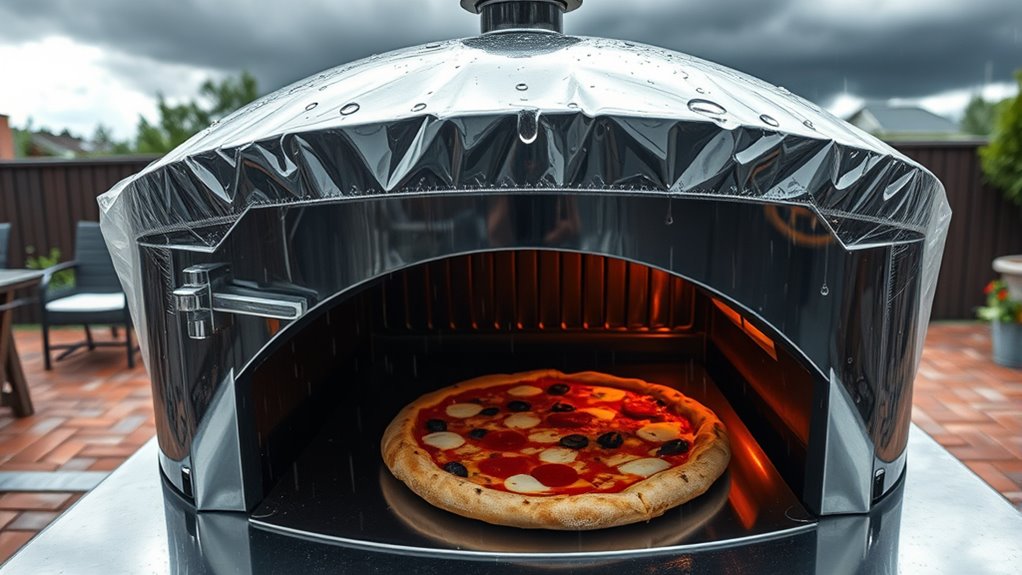
Moisture control plays an equally crucial role. Humidity from rainy days can seep into your kitchen and impact your oven’s internal environment. Excess moisture can cause condensation inside the oven, which disrupts the heating process and leads to uneven cooking. It can also cause rust and corrosion over time, damaging the oven’s components. To combat this, you should keep your kitchen well-ventilated and consider using dehumidifiers if necessary. Covering the oven with a protective barrier or ensuring proper sealing around doors and vents can prevent moisture from infiltrating the appliance. When your oven remains dry and insulated, it can reach and sustain the high temperatures needed to bake a perfect pizza crust, regardless of the outside weather. Additionally, maintaining proper oven temperature is crucial to achieving consistent results.
During rainy days, you also want to monitor your oven’s temperature closely. Fluctuations caused by poor insulation or moisture buildup can lead to inconsistent results. Using an oven thermometer helps you keep track of the actual temperature inside, so you can adjust your cooking time accordingly. Additionally, preheating the oven thoroughly ensures that it reaches the ideal heat level before you slide in your pizza. With good insulation and moisture control, your oven stays stable, and you’re less likely to experience cold spots or uneven cooking. This consistency allows you to focus on enjoying your rainy day comfort food without worrying about the technicalities of oven performance. When you prioritize these elements, every slice you pull out will be just as delicious as the last, turning a gloomy day into a perfect pizza night.
Frequently Asked Questions
How Can I Prevent Moisture Buildup Inside My Oven During Rain?
To prevent moisture buildup inside your oven during rain, focus on proper ventilation strategies, like using exhaust fans or open vents to allow humid air to escape. Additionally, install moisture barriers around the oven area to block dampness from seeping in. Keep the oven door closed when not in use, and consider dehumidifiers nearby. These steps help maintain ideal temperature and protect your oven from moisture-related issues.
What Materials Best Insulate My Oven From Humidity?
Ironically, your best insulation materials against humidity are actually simple: use ceramic fiber or mineral wool to insulate your oven, and add a vapor barrier like aluminum foil or plastic sheeting. These humidity barriers prevent moisture from seeping in, keeping your oven dry and stable. You’ll maintain consistent temperatures and avoid rust or mold, making your pizza nights more reliable, even in the rain.
Does Rain Affect the Energy Efficiency of Outdoor Pizza Ovens?
Yes, rain can diminish your outdoor pizza oven’s energy efficiency. Moisture absorbs heat and cools surfaces, making it harder to conserve energy. To combat this, you should implement weatherproofing techniques like installing covers or enclosures to protect your oven from rain. By doing so, you improve energy conservation, maintain consistent temperatures, and ensure your pizza stays perfectly cooked, rain or shine.
How Often Should I Clean My Oven After Rainy Weather?
You should clean your oven after rainy weather as part of your regular oven maintenance, ideally within a day or two. Rain can cause moisture buildup and debris, which can affect performance. Stick to a consistent cleaning schedule, focusing on removing any wet or dirty spots. Regular cleaning helps maintain temperature stability and prolongs your oven’s lifespan, ensuring it stays in top condition for delicious pizzas every time.
Are There Safety Concerns With Electric vs. Gas Ovens in Rain?
They say safety first, and that’s true for electric and gas ovens in rain. Electric safety is generally higher because there’s no risk of gas leaks or explosions. Gas safety concerns include potential leaks and carbon monoxide risks if ventilation isn’t proper. Keep your appliances well-maintained, and avoid using them during storms. Always follow manufacturer instructions and have your system inspected regularly to guarantee safe operation in all weather conditions.
Conclusion
On rainy days, protecting your oven and maintaining the right temperature is key to perfect pizza. Did you know that indoor ovens can lose up to 20% of their heat during damp weather? By using a protective cover and preheating thoroughly, you keep your oven’s heat steady, ensuring a crispy crust and gooey cheese every time. So next time it rains, stay confident—your delicious pizza is just a few smart steps away!