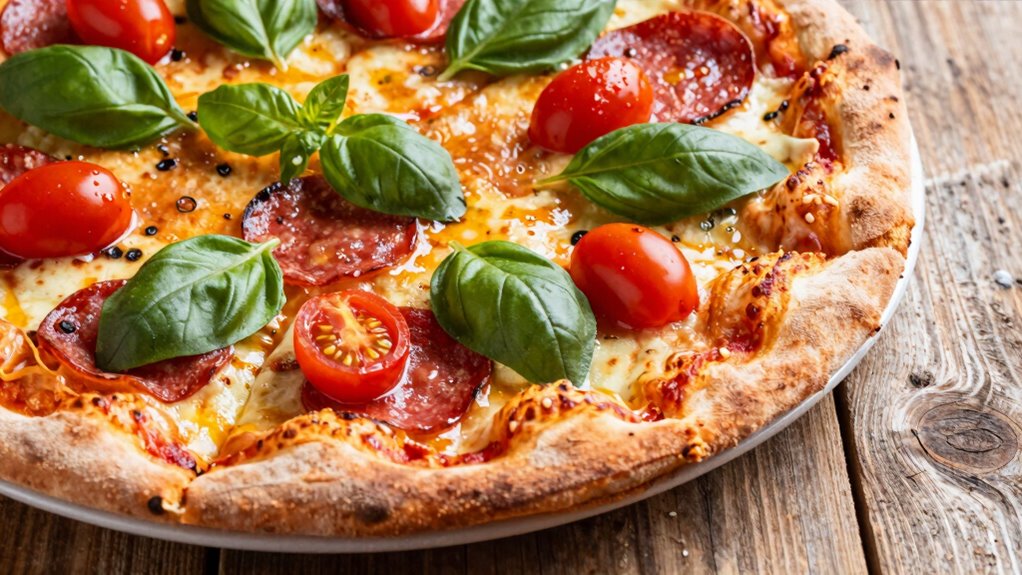

To fix toppings sliding to one side during launch, make sure your dough is even and not too soft or sticky, so toppings stay in place. Distribute toppings evenly and avoid overloading one area. Drain excess moisture from wet ingredients to prevent slipperiness. Handle the dough carefully, supporting its edges, and lift slightly to check if toppings shift. For more tips on perfecting your pizza launch technique, keep exploring these helpful strategies.

Get baking supplies delivered free with Prime
- Fast, free delivery on millions of items
- Prime Video, Amazon Music and more included
- Member-only deals all year
Key Takeaways
- Ensure toppings are evenly distributed and not piled in one area to maintain balance.
- Drain excess moisture from toppings to prevent slipperiness and shifting.
- Use a firm, uniformly rolled dough to provide a stable base.
- Support the pizza edges firmly during handling and launch to prevent shifting.
- Practice consistent handling and testing to refine techniques for better stability.
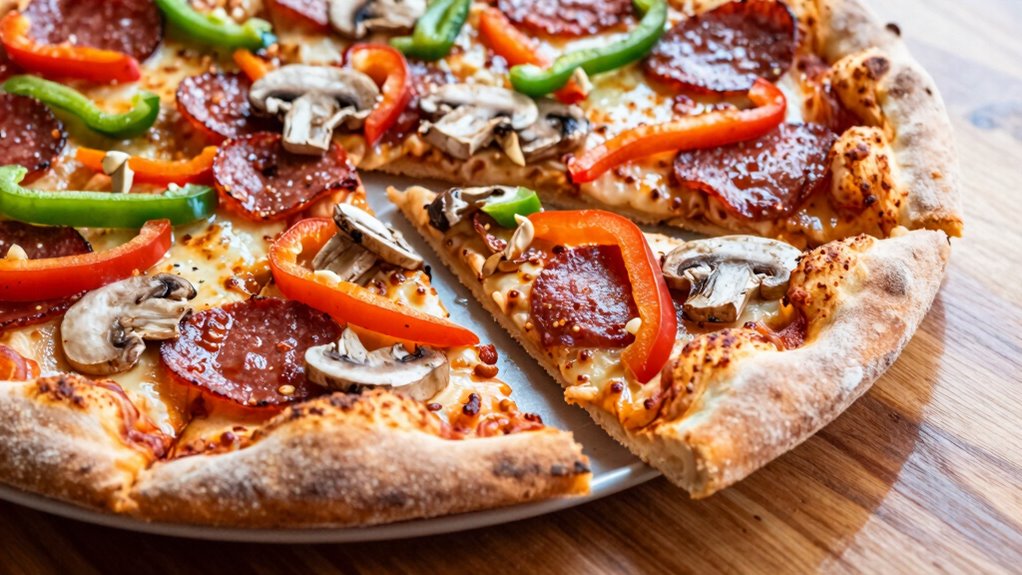
If your toppings tend to slide to one side during launch, it can ruin the presentation and even affect the overall experience. The key to preventing this is understanding how the pizza dough and topping distribution work together. When you’re preparing your pizza, the way you handle the dough and distribute the toppings makes all the difference. A well-balanced pizza dough provides a sturdy base, while even topping distribution ensures weight is spread out, reducing the chance of toppings shifting mid-flight.
Start by selecting the right pizza dough. It should be pliable but not too sticky or too dry. If your dough is too soft, toppings are more likely to slide off during launch. Conversely, if it’s too firm, it might be difficult to work with, but it will hold toppings better. Roll the dough evenly to a consistent thickness—about 1/4 inch—so that it maintains uniform tension and stability. An uneven crust can cause toppings to settle unevenly, which increases the likelihood of sliding.
Choose pliable, not sticky or dry dough, and roll evenly to ensure stability and prevent toppings from sliding during launch.
Next, pay close attention to topping distribution. Instead of piling toppings in the center, spread them out evenly across the entire surface of the dough. Use a light hand—overloading one side will imbalance the weight and cause toppings to slide. Distribute ingredients in a thin, even layer, ensuring that no area is overly dense. For toppings with high moisture content, like fresh tomatoes or mozzarella, consider draining excess liquid beforehand. Excess moisture can make toppings slippery and unstable.
When it’s time to launch your pizza, consider how you hold it. Support the pizza from the bottom with your fingers, keeping a firm grip around the edges to prevent any shifting. Slightly lift the pizza to see if the toppings stay in place—if they slide, you might need to adjust the topping placement or check your dough’s consistency. A good technique is to give a gentle shake before launching, ensuring the toppings are settled and evenly distributed. Understanding the importance of content structure can help you achieve better results during the launch.
Finally, practice makes perfect. Experiment with different dough recipes and topping arrangements to find what works best for you. Pay attention to how different toppings behave during launch and adjust your method accordingly. With consistent attention to dough handling and topping distribution, you’ll minimize sliding and deliver a perfectly presented pizza every time.
As an affiliate, we earn on qualifying purchases.
Frequently Asked Questions
What Types of Toppings Are Most Prone to Sliding?
Vegetable toppings and oily ingredients are most prone to sliding during launch. Vegetables like tomatoes or cucumbers release moisture, making toppings slippery, while oily ingredients such as pesto or greasy meats create a slick surface. To prevent this, you can pat vegetables dry and use less oily toppings. Properly spreading toppings and adding a layer of cheese or sauce underneath also helps keep everything in place during acceleration.
Does the Type of Pizza Crust Affect Topping Stability?
Think of your crust like a vintage vinyl record—its quality affects everything. Yes, the type of pizza crust matters. A dough with good elasticity helps toppings stay put, while poor adhesion can cause sliding. Thinner or flaky crusts might struggle more, whereas thicker, well-kneaded dough offers better support. So, choosing a crust with ideal dough elasticity and ensuring proper topping adhesion can keep toppings perfectly in place during launch.
How Does Temperature Influence Topping Adherence?
Temperature effects play a vital role in topping adhesion. When the oven temperature is too low, toppings don’t bond well and slide off easily. Conversely, a higher, consistent temperature helps toppings stick firmly by melting cheese and activating glue-like ingredients. To guarantee toppings stay in place during launch, preheat your oven properly, and bake at the recommended temperature, allowing the toppings to adhere securely and prevent sliding.
Are There Specific Tools to Prevent Toppings From Sliding?
You can use specific tools like topping adhesives to prevent toppings from sliding during launch. These adhesives act as a barrier, keeping toppings in place. Additionally, employing proper baking techniques—such as pre-setting toppings slightly before baking or applying gentle pressure—helps secure them. Using these tools and techniques guarantees even adherence, reducing the chances of toppings sliding to one side. Always test adhesives and methods on small batches first for best results.
Can Alternative Cheese or Sauce Choices Reduce Sliding?
Switching up cheese alternatives or sauce variations can help keep your toppings in line, like guiding a gentle river instead of a rushing flood. Try firmer cheeses or less watery sauces, which anchor toppings more securely. Thickened sauces or creamy cheeses act like sturdy ships, preventing sliding. Experiment with these options to create a more stable launch, ensuring your toppings stay in place and your dish looks as good as it tastes.
As an affiliate, we earn on qualifying purchases.
Conclusion
Now that you know how to prevent toppings from sliding during launch, you’re better equipped to enjoy a perfectly balanced experience every time. With a few simple tweaks, you can keep those toppings in place and avoid messy surprises. Isn’t it worth taking a moment to guarantee everything stays just right? After all, a smooth launch is all about the little details—so why not make those details work in your favor?
As an affiliate, we earn on qualifying purchases.
As an affiliate, we earn on qualifying purchases.
Fall Picks
fall essentials
As an affiliate, we earn on qualifying purchases.