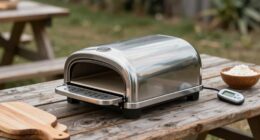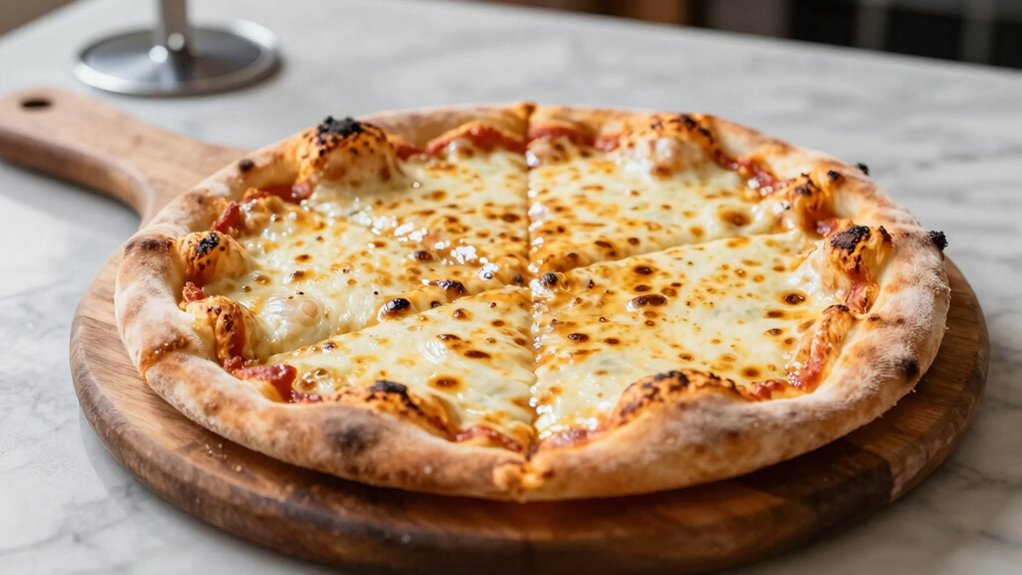
To fix a lopsided pizza, start by ensuring your oven is properly calibrated with an oven thermometer, as uneven heat causes uneven baking. Use a pizza stone or steel, preheated for ideal heat transfer, and position your pizza on the middle rack, rotating halfway through. Check that racks are level and stable to prevent tilting. Paying attention to dough consistency and regularly adjusting for hot spots can go a long way. Continue exploring for more tips to perfect your bake.
Key Takeaways
- Use an oven thermometer to ensure accurate temperature and proper oven calibration.
- Position the pizza on the middle rack and rotate halfway for even heat exposure.
- Preheat baking stones or steels thoroughly for better heat transfer.
- Verify that oven racks are level and stable before baking.
- Check for hot spots and adjust pizza placement accordingly during baking.
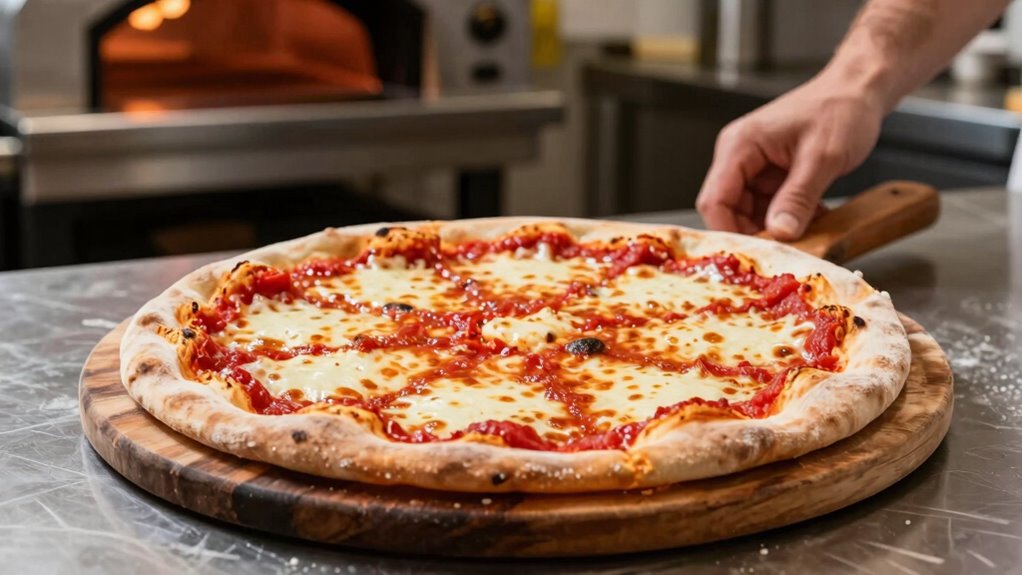
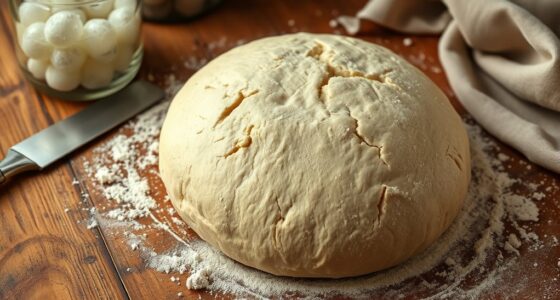
If your pizza consistently bakes lopsided, it’s likely due to uneven heat distribution or an unbalanced oven rack. But before you start adjusting your oven settings, take a close look at your dough consistency. If the dough is too sticky or too dry, it won’t hold its shape evenly during baking. Make sure you’re measuring ingredients accurately, and kneading the dough until it’s smooth and elastic. Proper dough consistency helps it bake uniformly, reducing the chance of uneven rising or sinking in certain areas. When your dough is well-balanced, it’s less likely to shift or warp, which can contribute to lopsided results.
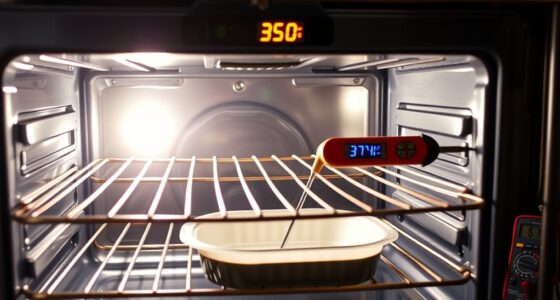
Next, consider your oven calibration. Even if you think your oven heats evenly, it might be miscalibrated, causing certain spots to be hotter than others. Use an oven thermometer to check the actual temperature inside your oven. If you notice discrepancies, consult your oven’s manual for calibration instructions, or contact a professional for adjustments. Correct oven calibration guarantees heat is distributed evenly across the entire baking chamber, making your pizza bake uniformly, from crust to toppings. This step is vital because, without proper calibration, even the best dough won’t bake evenly. Additionally, understanding heat distribution in your oven can help you troubleshoot uneven baking more effectively.
Proper oven calibration ensures even heat distribution for perfectly baked, uniform pizzas every time.
Additionally, pay attention to how you position your pizza inside the oven. Always place it on the middle rack to maximize heat exposure on all sides. If your oven has hot spots, rotate the pizza halfway through baking to ensure even cooking. Using a baking stone or steel can also help distribute heat more evenly, preventing certain areas from getting over- or undercooked. These tools absorb and radiate heat uniformly, giving your pizza a consistent crust and preventing it from baking lopsided. Properly preheating these tools can further improve heat transfer, resulting in a more evenly baked pizza.
Don’t overlook the importance of oven rack balance. An unbalanced or uneven rack can cause the pizza to tilt or cook unevenly. Make sure your oven racks are properly aligned and stable before placing your pizza inside. If your oven has uneven surfaces or loose racks, fix or replace them to guarantee stable support during baking.

AcuRite 00620A2 Stainless Steel Oven Thermometer (150°F to 600°F)
Oven and grill safe for leave-in use while cooking
As an affiliate, we earn on qualifying purchases.
As an affiliate, we earn on qualifying purchases.
Frequently Asked Questions
Can Uneven Oven Heat Cause My Pizza to Bake Lopsided?
Yes, uneven oven heat can cause your pizza to bake lopsided. You should measure oven temperature regularly to guarantee accurate heat distribution. Using a pizza stone helps evenly transfer heat, reducing hot spots that cause uneven baking. Place the stone properly in the oven and preheat it thoroughly. These steps help stabilize the heat, ensuring your pizza bakes evenly and prevents it from turning out lopsided every time.
Does the Type of Baking Surface Affect Pizza Shape?
Imagine placing your pizza on a flimsy baking sheet, and it warps during baking, causing uneven shape. The type of baking surface definitely influences your pizza’s shape. For example, a sturdy pizza stone absorbs heat evenly, helping your dough toppings bake uniformly. Proper oven rack placement also matters—position it in the middle for even heat. Using the right baking surface and rack placement guarantees your pizza bakes evenly and keeps its perfect shape.
How Does Dough Temperature Influence Baking Unevenness?
Dough temperature greatly influences baking unevenness because it affects dough fermentation and ingredient temperature. When your dough is too cold, it slows fermentation, causing uneven rising and baking. Conversely, if it’s too warm, fermentation speeds up unevenly, leading to lopsided results. To fix this, guarantee consistent ingredient temperature and maintain dough at a steady, ideal temperature before shaping. This helps achieve even baking and a balanced pizza shape.
Can Improper Pizza Dough Stretching Lead to Lopsided Pies?
Yes, improper pizza dough stretching can lead to lopsided pies. When you neglect dough elasticity and gluten development, the dough becomes less flexible and more prone to uneven stretching. This causes uneven thickness, resulting in an imbalanced bake. To prevent this, work on developing gluten properly by kneading thoroughly and gently stretching your dough. A well-developed gluten network ensures an elastic, even stretch, leading to a perfectly proportioned, symmetrical pizza.
What Role Does Rack Position Play in Baking Consistency?
Your rack position greatly impacts baking consistency because it affects heat distribution. Placing the pizza on a lower rack with a baking stone ensures even heat transfer, preventing lopsided baking. Make certain your oven is properly calibrated so the temperature matches the setting. Proper baking stone placement and oven calibration work together to create a stable environment, helping your pizza bake evenly and avoid those uneven, lopsided results.

Old Stone Round Pizza Stone, 16-Inch
Makes restaurant quality pizzas, bread, pastries and vegetables
As an affiliate, we earn on qualifying purchases.
As an affiliate, we earn on qualifying purchases.
Conclusion
Remember, a balanced pizza starts with careful prep and attention to detail. By ensuring your dough is evenly stretched, your oven is properly preheated, and your baking surface is level, you can avoid lopsided results. Don’t get discouraged—practice makes perfect. Like the saying goes, “A journey of a thousand miles begins with a single step.” Keep refining your technique, and soon you’ll be serving perfectly baked, evenly cooked pizzas every time.

ThermiChef 16" by 16" Pizza Steel (1/4" Thickness) – Multipurpose Cooking Steel for Ovens & Grills – Made in the USA
RESTAURANT RESULTS – Achieve wood-fired-style pizza with delicious, crispy crust at home! This 16" by 16" pizza steel…
As an affiliate, we earn on qualifying purchases.
As an affiliate, we earn on qualifying purchases.

Silicone Oven Guards for Racks by Linda’s Essentials (3 Pack) – Heat-Resistant Rack Protectors Shield, Prevents Burns & Scars, Easy to Fit Design, Must-Have Kitchen Safety 14 Inches Long (Black)
NO MORE NASTY BURNS: Our silicone oven rack guards protect your hands and forearms from hot oven racks…
As an affiliate, we earn on qualifying purchases.
As an affiliate, we earn on qualifying purchases.